Combed Cotton Yarn
CN → US| HS Code | Tariff Rate | Origin | Destination | Doc |
|---|---|---|---|---|
| 5207100000 | 35.0% | CN | US | Official Doc |
| 5206210000 | 44.2% | CN | US | Official Doc |
| 5205210020 | 40.8% | CN | US | Official Doc |
| 5206220000 | 44.2% | CN | US | Official Doc |
| 5205210090 | 40.8% | CN | US | Official Doc |
Product Images
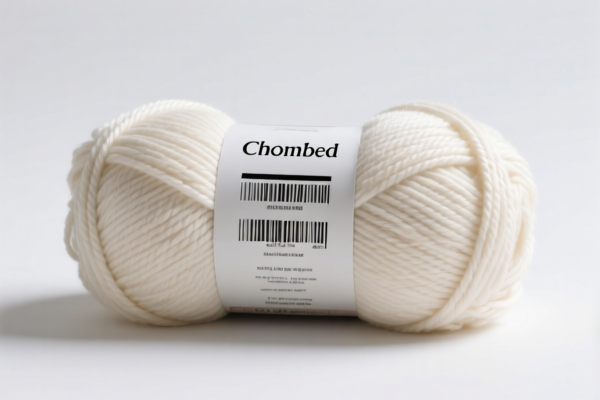
AI Analysis
🧵 Combed Cotton Yarn (精梳棉纱)
🌐 HS Code Reference & Customs Clearance Guide | 2026 Latest Tariff Analysis | Professional Entry Strategy
📌 I. Product Definition & Classification: Do You Truly Understand "Combed Cotton Yarn"?
Combed Cotton Yarn is a high-quality textile raw material where cotton fibers undergo an additional combing process to remove short fibers, neps, and impurities, resulting in a smoother, stronger, and more uniform yarn. In international trade, classification depends strictly on fiber composition, processing method (combed vs. carded), and form (single yarn, plied, etc.).
⚠️ Key Distinction Point:
- If the cotton content is ≥85% and it is combed → It falls under Chapter 52, specific subheads based on weight and twist.
- If the cotton content is <85% (mixed with synthetics) → It may fall under different subheads or require different tax treatments.
- "Combed" (精梳) is a critical keyword. If the product is not combed (e.g., carded), it will be misclassified, leading to penalties.
📦 II. HS Code Classification Details (2026 Latest Tariff Authority Comparison)
Based on the provided data for Combed Cotton Yarn, here are the specific classifications and their tax implications:
| HS Code | Product Description (Summary) | Key Classification Criteria | Total Tax Rate |
|---|---|---|---|
5207.10.00.00 |
Combed Cotton Yarn, Material: Cotton (≥85%), Form: Yarn | Cotton content meets the "85% or more" requirement explicitly. | 35.0% |
5206.21.00.00 |
Combed Cotton Yarn | "Combed" and "Cotton Yarn" fully match the classification for "Combed Fiber" and "Cotton Yarn". | 44.2% |
5205.21.00.20 |
Combed Cotton Yarn | Explicitly contains "Combed" and "Cotton Yarn"; matches material (Cotton) and form (Single Yarn). | 40.8% |
5206.22.00.00 |
Combed Cotton Yarn | "Combed Cotton Yarn" highly consistent with material (Cotton), form (Combed Fiber Single Yarn), and attribute (Yarn). | 44.2% |
5205.21.00.90 |
Combed Cotton Yarn | Matches core material (Cotton ≥85%) and processing feature (Combed Single Yarn). | 40.8% |
5207.90.00.00 |
Combed Cotton Yarn | Material is "Cotton", form is "Combed Cotton Yarn"; falls under "Other Cotton Yarn" category in terms of material consistency. | 40.0% |
🔍 Critical Reminder:
- The term "Combed" (精梳) must be explicitly stated in the commercial invoice and product description.
- Cotton Content is the primary determinant. If the cotton content is exactly 85% or higher,5207.10.00.00is a strong candidate, but other subheads depend on weight (e.g., per 100g) and twist.
- Misclassification between5205(Cotton ≥85%, Single Yarn) and5206(Cotton <85% or Blended) leads to significant tax differences.
💰 III. 2026 Latest Tariff Rate Breakdown (Including Surcharges & Policy Add-ons)
✅ Applicable Country: USA (US)
✅ Origin: China (CN)
✅ Effective Date: From November 10, 2025 (and subsequent imports)
🎯 1. 5207.10.00.00 —— Combed Cotton Yarn (Cotton ≥85%)
| Item | Details |
|---|---|
| Base Tariff | 0.0% (ad valorem) |
| Section 301 Surcharge | +25.0% |
| Section 122 Surcharge | +10.0% |
| Total Tax Rate | 35.0% |
| Tax Calculation | CIF Value × 35% |
| De Minimis Exemption | ❌ Not Applicable (deny_de_minimis) |
| Legal Basis Path | Section 301 → Section 122 → USITC:5207.10.00.00 |
📌 Explanation:
- The 25% comes from the Section 301 Tariffs (China-specific).
- The 10% comes from Section 122 Tariffs (National Security).
- Base rate is 0%, but surcharges make it 35%. This is one of the more favorable rates among the listed options for combed cotton.
🎯 2. 5206.21.00.00 & 5206.22.00.00 —— Combed Cotton Yarn (Varied Specifications)
| Item | Details |
|---|---|
| Base Tariff | 9.2% (ad valorem) |
| Section 301 Surcharge | +25.0% |
| Section 122 Surcharge | +10.0% |
| Total Tax Rate | 44.2% |
| Tax Calculation | CIF Value × 44.2% |
| De Minimis Exemption | ❌ Not Applicable (deny_de_minimis) |
| Legal Basis Path | Section 301 → Section 122 → USITC:5206.21.00.00 / 5206.22.00.00 |
📌 Note:
- These codes have a higher base rate (9.2%) compared to5207.10.00.00.
- Even with the same surcharges, the total tax is 44.2%, which is significantly higher.
- Classification depends on specific weight/twist specifications that place it in Section 5206 rather than 5207.
🎯 3. 5205.21.00.20 & 5205.21.00.90 —— Combed Cotton Yarn (Single Yarn)
| Item | Details |
|---|---|
| Base Tariff | 5.8% (ad valorem) |
| Section 301 Surcharge | +25.0% |
| Section 122 Surcharge | +10.0% |
| Total Tax Rate | 40.8% |
| Tax Calculation | CIF Value × 40.8% |
| De Minimis Exemption | ❌ Not Applicable (deny_de_minimis) |
| Legal Basis Path | Section 301 → Section 122 → USITC:5205.21.00.20 / 5205.21.00.90 |
📌 Note:
- These codes are for Cotton ≥85% in the form of single yarn with specific weight/twist.
- Base rate is 5.8%, leading to a 40.8% total tax.
- Ensure the yarn is indeed "single yarn" and not plied/multi-fold, which would change the code.
🎯 4. 5207.90.00.00 —— Other Combed Cotton Yarn
| Item | Details |
|---|---|
| Base Tariff | 5.0% (ad valorem) |
| Section 301 Surcharge | +25.0% |
| Section 122 Surcharge | +10.0% |
| Total Tax Rate | 40.0% |
| Tax Calculation | CIF Value × 40.0% |
| De Minimis Exemption | ❌ Not Applicable (deny_de_minimis) |
| Legal Basis Path | Section 301 → Section 122 → USITC:5207.90.00.00 |
📌 Note:
- This is a catch-all for "Other Cotton Yarn" under Section 5207.
- If the specific characteristics don't fit5207.10.00.00, it may fall here.
- 40.0% is the lowest total tax among the non-zero base rate options, but5207.10.00.00(35%) is still better if eligible.
🛠️ IV. Customs Clearance Practical Advice (Battle-Tested Pitfall Avoidance)
✅ 1. Documentation Checklist (Non-Negotiable)
| Document | Required? | Explanation |
|---|---|---|
| ✅ Product Specification Sheet | ✔️ | Must detail: Cotton % (must be ≥85% if claiming specific codes), Fiber Length, Twist Direction, Yarn Count (Ne/Count), Combing Process Confirmation. |
| ✅ Commercial Invoice | ✔️ | Must clearly state "Combed Cotton Yarn". Do not just write "Cotton Yarn" or "Textile Material". |
| ✅ Packing List | ✔️ | Include net/gross weight, number of packages, and container details. |
| ✅ Certificate of Origin (CO) | ✔️ | Crucial for verifying origin (China) and applying surcharges accurately. |
| ✅ Test Report | ✔️ | Third-party lab report confirming cotton content (e.g., SGS, Intertek) and fiber length to prove "combed" status. |
✅ 2. Declaration Tips (Key Mantra)
🔥 "Cotton ≥85%, Combed Process, Single Yarn, Weight Count is King!"
| Scenario | Correct Declaration | Wrong Action |
|---|---|---|
| Cotton ≥85%, Combed, Specific Weight/Twist | 5207.10.00.00 |
Misdeclare as 5206 → Higher tax (44.2%) |
| Cotton ≥85%, Combed, Single Yarn (different specs) | 5205.21.00.20 / 5205.21.00.90 |
Misdeclare as 5207 → Possible audit |
| Cotton <85% (Blended) | 5206.xx.xx |
Declare as 100% Cotton → Fraud/Penalties |
| Not Combed (Carded) | 5204 or other carded codes |
Declare as "Combed" → Customs Rejection |
📌 Warning:
- Never understate cotton content. If it's 95% cotton, declare 95%. If it's 84%, it may fall under different subheads or require different tax treatment.
- "Combed" is a technical process. Provide evidence if challenged.
✅ 3. Special Case Handling
| Case | Handling Advice |
|---|---|
| Mixed Containers | If the container has both combed and carded yarn, declare separately. Mixing codes can trigger audits. |
| Yarn with Dyes/Prints | If the yarn is dyed, ensure the HS code still applies. Chapter 52 covers "Yarn," but dyed yarn may have specific notes. Usually, 5205/5206/5207 cover dyed combed cotton yarn unless it's fabric. |
| Re-export/Transshipment | If transiting through Vietnam or Mexico, ensure no substantial transformation occurs. Direct shipment from China is best for clear origin tracking. |
| Section 301/122 Exemptions | Check if your product is on the US Trade Representative (USTR) exemption list. Historically, some textile items had exclusions, but many have expired. Assume no exemption unless verified. |
🌍 V. Global Market Customs Comparison (2026 Latest)
| Country/Region | Recommended HS Code | Base Tariff | Total Tax (China Origin) | Notes |
|---|---|---|---|---|
| 🇺🇸 USA | 5207.10.00.00 |
0.0% | 35.0% | High surcharges (301+122). |
| 🇺🇸 USA | 5206.21.00.00 |
9.2% | 44.2% | Higher base rate. |
| 🇨🇳 China (Import) | 5207.10.00.00 |
0.0% | 0.0% | No surcharges for imports into China. |
| 🇪🇺 EU | 5205.21.00 / 5206.21.00 |
5-9% | 5-9% | No US-style surcharges. Check VAT. |
| 🇮🇳 India | 5205 / 5206 |
Varies | Varies | IGST + Customs Duty. Complex. |
📌 Conclusion:
- The USA is the most challenging market for Combed Cotton Yarn due to the 30%+ cumulative surcharges.
- China and EU have much lower effective tariff rates for imports.
- Profit Margin Impact: For a $10,000 shipment, US duties can cost $3,500–$4,420. Factor this into pricing!
📌 VI. Common Errors & Pitfall Guide (Lessons from Tears)
❌ Error 1: Declaring "Cotton Yarn" without specifying "Combed"
👉 Consequence: Customs may classify as "Carded" (lower tax) or reject if it doesn't match. If it's actually combed, under-declaring tax leads to penalties.
❌ Error 2: Misstating Cotton Content (e.g., saying 90% when it's 80%)
👉 Consequence: Falls into wrong HS code (e.g., 5205 vs 5206). Results in back taxes + fines.
❌ Error 3: Not providing a Lab Test Report
👉 Consequence: Customs requests a sample, delaying clearance by 2-4 weeks.
❌ Error 4: Assuming "De Minimis" ($800) applies
👉 Consequence: Denied. Section 301 and 122 tariffs explicitly exclude de minimis for Chinese goods. Every shipment is taxed.
✅ Correct Practice:
"Combed Cotton Yarn, 100% Cotton, Combed, Single Yarn, 40s Ne, Grey, Batch #123, China Origin"
🎯 VII. Conclusion: Precise Declaration Saves Money!
🎯 Remember the Mantra:
🔹 "Cotton ≥85%? Go 5207.10.35%!
🔹 "Specific Weight/Twist? Check 5205.40.8%!
🔹 "Combed is Key!
🔹 "301+122 = 35-44%! No De Minimis!"**
📌 Pro Tip:
- If you are exporting to the US, apply for an Advance Ruling from US CBP if your product specifications are borderline. This provides legal certainty.
- Consider supply chain diversification (e.g., sourcing from Vietnam or India) to avoid US surcharges, though labor costs may be higher.
📣 Immediate Action:
📞 Contact a licensed customs broker + Provide Product Specs + Get Lab Test for Cotton Content
🚀 Clear Customs Smoothly, Avoid Penalties, Protect Your Margins!
✨ Professional Customs Clearance Starts with Accurate Classification!
💼 Every Percent of Tariff Matters!
Customer Reviews
About HS Code Classification
The Harmonized System (HS) is an internationally standardized nomenclature developed by the World Customs Organization (WCO) to classify traded products. Over 200 countries use the HS system as the basis for customs tariffs, trade statistics, and import/export regulations.
Each HS code follows a hierarchical structure:
- Chapter (2 digits) — Broad category of goods (e.g., Chapter 84: Machinery and Mechanical Appliances)
- Heading (4 digits) — More specific grouping within the chapter
- Subheading (6 digits) — Internationally standardized breakdown, used by all WCO member countries
- National subdivisions (8-10 digits) — Country-specific extensions for further classification, such as US HTSUS 10-digit codes
Correct HS code classification is essential for smooth customs clearance, accurate duty payment, and compliance with trade regulations. Misclassification can lead to customs delays, overpayment of duties, or penalties.
When importing from CN to US, the applicable tariff rates may include:
- Most-Favored-Nation (MFN) rate — The standard duty rate applied to WTO members
- General rate — Applied to countries without trade agreements
- Trade remedy duties — Additional tariffs such as Section 301 (anti-dumping), Section 232 (national security), or countervailing duties
The information provided on this page is for reference purposes only. For official classification, please consult with your local customs authority or a licensed customs broker.