Combed Yarn
CN → US| HS Code | Tariff Rate | Origin | Destination | Doc |
|---|---|---|---|---|
| 8445200000 | 17.5% | CN | US | Official Doc |
| 5205210090 | 40.8% | CN | US | Official Doc |
| 8445120000 | 17.5% | CN | US | Official Doc |
Product Images
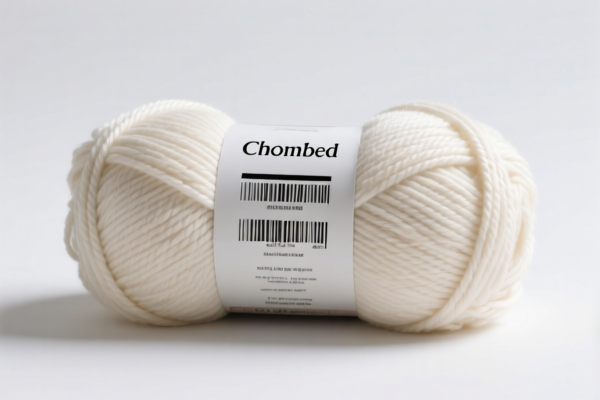
AI Analysis
🧵 Combed Yarn (Textile Yarn Preparation & Products)
🌐 HS Code Reference & Customs Clearance Guide | 2026 Latest Tariff Analysis | Professional Clearance Strategy 📌 I. Product Definition & Classification: Do You Really Understand "Combed Yarn"?
"Combed Yarn" in international trade is a ambiguous term that can refer to either: 1. The Machinery: Equipment used for combing cotton or other fibers to prepare them for spinning (Classified under HS 8445). 2. The Product: The actual yarn produced after the combing process (Classified under HS 5205 for Cotton).
The classification depends entirely on the physical nature of the goods declared. Misclassification here leads to significant tariff discrepancies (e.g., 17.5% vs. 40.8%).
⚠️ Critical Distinction: * If the goods are MACHINES (mechanical apparatus for preparing textile fibers): → Go to HS 8445. * If the goods are YARN (fibrous material ready for weaving/knitting): → Go to HS 5205.
📦 II. HS Code Classification Details (2026 Latest Tariff Authority Comparison)
| HS Code | Product Description | Application Scenario | Tariff Rate |
|---|---|---|---|
8445.20.00.00 |
Machinery: Combing machines and other fiber-preparation machinery | Machinery used to comb cotton/flax fibers before spinning. | 17.5% |
5205.21.00.90 |
Yarn: Cotton yarn (other than sewing thread), >= 85 decitex, non-cond. combed | Product: The actual yarn resulting from the combing process. | 40.8% |
8445.12.00.00 |
Machinery: Drawing frames, slubbing frames, roving frames | Machinery often grouped with combing as "fiber preparation" equipment. | 17.5% |
🔍 Key Reminder: * "Combed Yarn" as a physical product refers to the textile material. It falls under 5205.21.00.90. The summary confirms match based on "combed single yarn" process characteristics. * "Combing Machine": If the user is importing the machine that does the combing, it falls under 8445.20.00.00. The summary notes "spinning" and "fiber preparation" usage. * Risk: Declaring yarn as machinery (or vice versa) is a major customs violation risk.
💰 III. 2026 Latest Tariff Rate Breakdown (Detailed Tax Clauses)
✅ Applicable Country: United States (US) ✅ Origin: China (CN) ✅ Effective Date: From November 10, 2025 (Including subsequent imports)
🎯 1. 8445.20.00.00 —— Combing Machines & Fiber Preparation Machinery
| Item | Content |
|---|---|
| Base Tariff | 0.0% (Ad Valorem) |
| USITC Add-on Tariff | +7.5% (Section 301 related adjustment for specific machinery) |
| IEEPA Add-on Tariff | +10% (针对中国/香港产品,自2025年11月10日起) |
| Total Tariff | 17.5% |
| Tax Calculation | CIF Value × 17.5% |
| De Minimis Eligibility | ❌ Not Eligible (Industrial machinery usually excluded or high value) |
| Legal Basis Path | IEEPA:9903.01.24 → USITC:8445.20.00.00 → Footnote: 7.5% specific machinery add-on |
📌 Explanation: * While the base tariff for machinery is often 0%, the 7.5% and 10% surcharges drive the total to 17.5%. * This is significantly lower than the yarn tariff, making it crucial to correctly identify if you are importing the tool or the material.
🎯 2. 5205.21.00.90 —— Cotton Combed Yarn (>= 85 decitex)
| Item | Content |
|---|---|
| Base Tariff | 5.8% (Ad Valorem) |
| USITC Add-on Tariff | +25.0% (Section 301 High Tariff for Textiles/Apparel) |
| IEEPA Add-on Tariff | +10% (针对中国/香港产品,自2025年11月10日起) |
| Total Tariff | 40.8% |
| Tax Calculation | CIF Value × 40.8% |
| De Minimis Eligibility | ❌ Not Eligible (Textiles are strictly controlled) |
| Legal Basis Path | IEEPA:9903.01.24 → USITC:5205.21.00.90 → Footnote: 25% textile add-on |
📌 Explanation: * "Combed" matches "Combed Single Yarn": The summary explicitly states that "combed" matches the process characteristic of "combed single yarn" in HS 5205. * High Burden: With a 40.8% total rate, this is a high-cost import. The 25% USITC tariff is the major driver. * No Conflict: The summary notes no material or form conflicts, confirming this is the correct code for the yarn itself.
🎯 3. 8445.12.00.00 —— Drawing/Slubbing/Roving Frames (Fiber Preparation Machinery)
| Item | Content |
|---|---|
| Base Tariff | 0.0% |
| USITC Add-on Tariff | +7.5% |
| IEEPA Add-on Tariff | +10% |
| Total Tariff | 17.5% |
| Tax Calculation | CIF Value × 17.5% |
| Legal Basis Path | IEEPA:9903.01.24 → USITC:8445.12.00.00 |
📌 Note: * Often confused with combing machines. If the "Combed Yarn" product involves importing the machines that draw, slub, or rove the fibers, this code applies. * The summary links "spinning, drawing, or twisting" functions to this HS code.
🛠️ IV. Customs Clearance Practical Advice (Battle-Tested Pitfall Guide)
✅ 1. Documentation Checklist (Non-negotiable)
| Document | Required | Explanation |
|---|---|---|
| ✅ Product Specification Sheet | ✔️ | Must clearly state: Is it a Machine or Yarn? If yarn: Count (decitex/tex), Composition (100% Cotton?), Process (Combed). |
| ✅ Commercial Invoice | ✔️ | Must match HS Code exactly. Use precise English terms: "Cotton Combed Yarn" OR "Combing Machine for Textile Fiber". |
| ✅ Photos of Goods | ✔️ | Crucial: Show the label, the physical object, and any packaging. For yarn, show the skein/bobbin. For machines, show the control panel/brand. |
| ✅ Certificate of Origin (CO) | ✔️ | Required for US imports to verify China origin and apply/verify surcharges. |
| ✅ Tariff Schedule Printout | ✔️ | Attach the specific HS code page to justify classification if audited. |
✅ 2. Declaration Strategy (Key Mantras)
🔥 "Yarn is Fiber, Machine is Metal; Don't Mix Them!"
| Scenario | Correct Declaration | Wrong Practice |
|---|---|---|
| Importing Cotton Yarn that has been combed | 5205.21.00.90 |
Declare as "Textile Accessories" → Audit Risk |
| Importing a Combing Machine | 8445.20.00.00 |
Declare as "Yarn" → 40.8% instead of 17.5% (or visa versa) |
| Importing Drawing Frames | 8445.12.00.00 |
Declaring as "Spinning Machinery" generally is okay, but specificity helps. |
📌 Critical Tip: * If you are importing Yarn, ensure the description includes "Combed" and the Decitex/Tex count. HS 5205.21 requires yarn to be >= 85 decitex. If it's finer, it might fall under a different subheading (not listed in DATA, but implied by general HS rules). * If you are importing Machinery, ensure the description highlights "Fiber Preparation" and "Combing".
✅ 3. Special Situations
| Situation | Handling Advice |
|---|---|
| "Combed Cotton" vs "Combed Yarn" | "Combed Cotton" (fibers) is HS 5203. "Combed Yarn" is HS 5205. Do not confuse Fiber with Yarn. |
| Mixed Shipment | If Machine and Yarn are in one container, must split declaration. Mixed declarations cause delays. |
| Origin Marking | Ensure the "Made in China" label is visible on both machines and yarn bobbins/labels. |
🌍 V. Global Market Comparison (2026 Latest)
| Country/Region | Recommended HS Code (Yarn) | Tariff (China Origin) | Certification | Note |
|---|---|---|---|---|
| 🇺🇸 USA | 5205.21.00.90 |
40.8% (High) | N/A | Heavy Section 301 + IEEPA tariffs. |
| 🇨🇳 China | 5205.21.00.90 |
~6-7% (Import) | CCC (if applicable) | Low base tariff, no US surcharges. |
| 🇪🇺 EU | 5205.21.00.90 |
~6-7% | REACH + OEKO-TEX | No Section 301 tariffs, but strict chemical standards. |
| 🇬🇧 UK | 5205.21.00.90 |
~6-7% | UKCA | Post-Brexit rules apply. |
📌 Conclusion: * The USA imposes a 2x tariff burden on combed cotton yarn compared to most other major markets due to geopolitical trade policies. * Cost optimization must consider this 40.8% rate. Many exporters switch sourcing or use Free Trade Zones to mitigate this.
📌 VI. Common Errors & Pitfalls (Blood Lessons)
❌ Error 1: Declaring Combed Yarn as "Cotton Fabric" 👉 Consequence: Wrong HS code (likely 5208/5209), potential penalty for misclassification. Tariff rates differ significantly.
❌ Error 2: Declaring a Combing Machine as "Spinning Machine" (Generic) 👉 Consequence: While 8445.12 and 8445.20 are close, specific duties might vary, or customs may request detailed technical manuals, causing delays.
❌ Error 3: Ignoring the Decitex/Tex Count for Yarn 👉 Consequence: HS 5205.21 is for >= 85 decitex. If the yarn is finer, it falls under 5205.22 or 5205.23, which have different 25% surcharge nuances. Check the count!
✅ Correct Practice:
For Yarn: "100% Cotton Combed Yarn, 100% Combed, 100% Cotton, Count: 21s/1 (approx 85 decitex), Dyed White, in Skeins, Origin: China." For Machine: "Automatic Cotton Combing Machine, Model XYZ, For Textile Fiber Preparation, Origin: China."
🎯 VII. Conclusion: Precision in Classification Saves Money!
🎯 Remember the Mantra:
🔹 "Yarn is 40.8%, Machine is 17.5%; Don't mix fiber with steel!" 🔹 "Combed Yarn = 5205; Combing Machine = 8445; One mistake costs thousands!"
✨ Professional Clearance Starts with Accurate Classification! 💼 Your every cent of duty is worth precise calculation!
📣 Immediate Action:
📞 Contact a licensed customs broker + Provide Product Specs + Verify HS Code Pre-ruling if volume is high. 🚀 Let your Combed Yarn/Machinery clear customs smoothly, maximize profits!
Customer Reviews
About HS Code Classification
The Harmonized System (HS) is an internationally standardized nomenclature developed by the World Customs Organization (WCO) to classify traded products. Over 200 countries use the HS system as the basis for customs tariffs, trade statistics, and import/export regulations.
Each HS code follows a hierarchical structure:
- Chapter (2 digits) — Broad category of goods (e.g., Chapter 84: Machinery and Mechanical Appliances)
- Heading (4 digits) — More specific grouping within the chapter
- Subheading (6 digits) — Internationally standardized breakdown, used by all WCO member countries
- National subdivisions (8-10 digits) — Country-specific extensions for further classification, such as US HTSUS 10-digit codes
Correct HS code classification is essential for smooth customs clearance, accurate duty payment, and compliance with trade regulations. Misclassification can lead to customs delays, overpayment of duties, or penalties.
When importing from CN to US, the applicable tariff rates may include:
- Most-Favored-Nation (MFN) rate — The standard duty rate applied to WTO members
- General rate — Applied to countries without trade agreements
- Trade remedy duties — Additional tariffs such as Section 301 (anti-dumping), Section 232 (national security), or countervailing duties
The information provided on this page is for reference purposes only. For official classification, please consult with your local customs authority or a licensed customs broker.