Combine Harvester
CN → US| HS Code | Tariff Rate | Origin | Destination | Doc |
|---|---|---|---|---|
| 8433510010 | 35.0% | CN | US | Official Doc |
| 8433510090 | 35.0% | CN | US | Official Doc |
Product Images
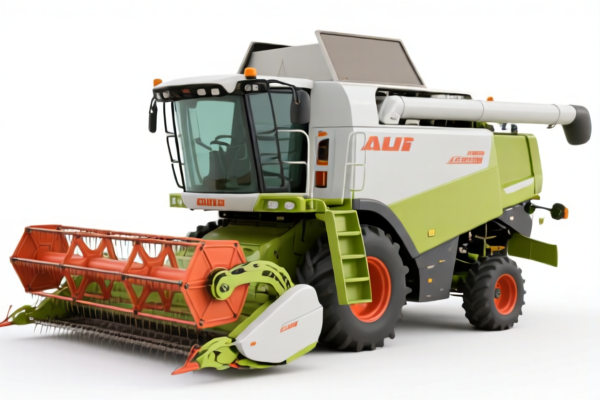
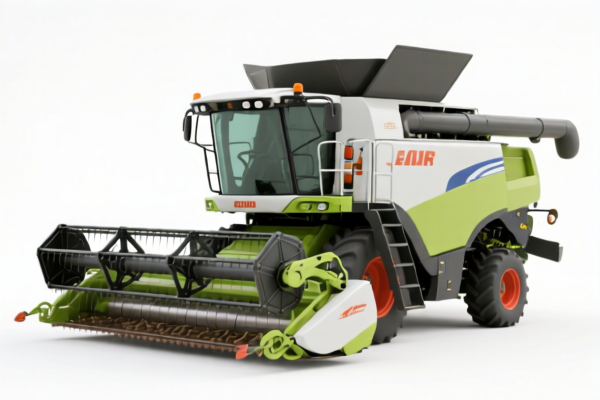
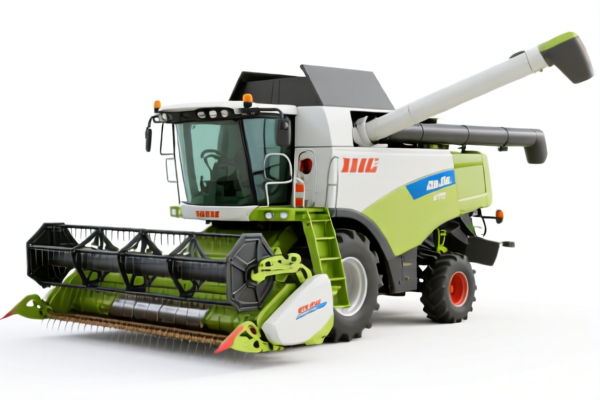
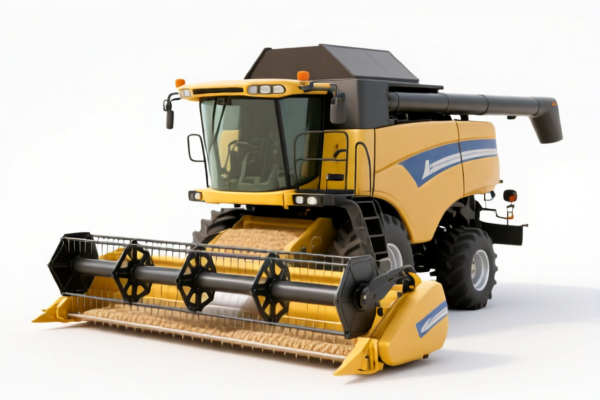
AI Analysis
🚜 Combine Harvester (Self-Propelled)
🌐 HS Code Reference & Customs Clearance Guide | 2026 Latest Tariff Analysis | Professional Clearance Strategy
📌 I. Product Definition & Classification: What Exactly is a "Combine Harvester"?
A Combine Harvester is a sophisticated agricultural machine that performs multiple harvesting tasks in a single pass. It combines the functions of reaping, threshing, and winnowing (cleaning).
In international trade, specifically under Heading 8433, these machines are strictly categorized by their propulsion method. The distinction is critical because it determines the HS Code and, consequently, the tariff liability.
⚠️ Key Distinction:
- Self-Propelled (Self-Driven): The machine has its own engine and drives itself across the field. → HS 8433.51
- Drawn/Towed: The machine is pulled by a tractor. → HS 8433.20 (Not applicable to this specific data set, but crucial for context)
- Parts: Separate parts of combine harvesters. → HS 8433.90 (Not applicable to this specific data set)
For this guide, we focus exclusively on Self-Propelled Combine Harvesters, which fall under subheading 8433.51.
📦 II. HS Code Classification Details (2026 Latest Tariff Authority)
Based on the provided <DATA>, there are two specific 10-digit HS Codes for Self-Propelled Combine Harvesters. The distinction lies in whether the item is defined specifically as a "Combine Harvester-Thresher" (a specific functional subset) or generally as "Other."
| HS Code | Product Description | Applicability | Tax Rate |
|---|---|---|---|
8433.51.00.10 |
Combine harvester-threshers (Self-propelled) | Specific functional classification for machines explicitly categorized as "thresher-combines" under this subheading. | 25.0% |
8433.51.00.90 |
Other harvesting machinery (Self-propelled) | Any self-propelled combine harvester that does not fit the specific definition of 8433.51.00.10. This is the "catch-all" for other self-propelled combines. |
25.0% |
🔍 Important Note:
- Both codes fall under Heading 8433 (Harvesting or threshing machinery).
- Both codes carry the same total tax rate of 25.0%.
- The difference between.10and.90is often administrative or based on specific manufacturer classifications within the 6-digit subheading 8433.51.
- Do not confuse with Heading 8437 (Machinery for cleaning, sorting, or grading eggs, fruit, etc.), which is explicitly excluded.
💰 III. 2026 Latest Tariff Rate Breakdown (Including Surtaxes)
✅ Applicable Country: United States (US)
✅ Origin: China (CN)
✅ Effective Time: 2026 Tariff Schedule
🎯 1. 8433.51.00.10 —— Self-Propelled Combine Harvester-Thresher
| Item | Content |
|---|---|
| Base Tariff | 0.0% (ad valorem) |
| Surtax (Section 301 / USITC) | +25.0% |
| Total Tariff Rate | 25.0% |
| Tax Calculation | CIF Value × 25.0% |
| De Minimis Exemption | ❌ Not Applicable (High-value machinery does not qualify) |
| Legal Basis | HTSUS 8433.51.00.10 → USITC Footnote 301 (25% surtax on Chinese goods) |
📌 Explanation:
- Agricultural machinery from China is subject to a 25% additional duty under Section 301 of the Trade Act.
- Although the base MFN tariff for many agricultural machines is 0%, the 25% surtax dominates the cost.
- Total Cost Impact: You will pay 25% extra on top of the CIF value.
🎯 2. 8433.51.00.90 —— Other Self-Propelled Harvesting Machinery
| Item | Content |
|---|---|
| Base Tariff | 0.0% (ad valorem) |
| Surtax (Section 301 / USITC) | +25.0% |
| Total Tariff Rate | 25.0% |
| Tax Calculation | CIF Value × 25.0% |
| De Minimis Exemption | ❌ Not Applicable |
| Legal Basis | HTSUS 8433.51.00.90 → USITC Footnote 301 (25% surtax on Chinese goods) |
📌 Note:
- Same tax structure as.10.
- If your specific machine model is not listed as a "thresher" under.10, it defaults to.90, but the tax burden remains identical.
🛠️ IV. Customs Clearance Practical Advice (Field Avoidance Guide)
✅ 1. Required Documentation Checklist
| Document | Mandatory? | Description |
|---|---|---|
| ✅ Commercial Invoice | ✔️ | Must clearly state "Self-Propelled Combine Harvester," Model Number, and Year of Manufacture. |
| ✅ Packing List | ✔️ | Detail the machine, optional attachments (e.g., corn headers, wheat heads), and spare parts. |
| ✅ Product Photographs | ✔️ | Clear images of the machine, engine serial plate, and VIN/Serial Number. |
| ✅ Specifications Sheet | ✔️ | Include engine power, harvesting width, capacity, and whether it is "self-propelled." |
| ✅ Certification (EPA) | ✔️ | Critical for US: Non-road diesel engines require EPA certification. Without EPA compliance, clearance will be blocked. |
| ✅ Certification (EPA/Tier) | ✔️ | Specify the emission tier (e.g., Tier 4 Final). |
| ✅ Country of Origin Certificate | ✔️ | Proof of Chinese origin to assess correct surtax. |
✅ 2. Declaration Strategy (Key Mantras)
🔥 “Self-Propelled is Key, EPA is King, Header Details Matter!”
| Scenario | Correct Declaration | Wrong Practice |
|---|---|---|
| Machine with Headers | Declare as Complete Machine + Optional Attachments. Use 8433.51.00.10 or .90. |
Declaring headers separately as "parts" → Parts may have different rates or restrictions. |
| Drawn Harvester | Use HS 8433.20 (Not in current data set). | Misdeclaring a drawn harvester as self-propelled → Classification Error. |
| Used Machine | Declare as Used. Provide age and condition report. | Failing to disclose "Used" status → Potential fraud/penalty. |
| Spare Parts | If shipped separately, use HS 8433.90. | Declaring spare parts as "main machine" → Valuation Discrepancy. |
✅ 3. Special Considerations
| Issue | Recommendation |
|---|---|
| EPA Compliance | US Customs and Border Protection (CBP) strictly enforces EPA rules for agricultural machinery. Ensure the engine meets US EPA Tier 4 Final standards. Non-compliant engines will be refused entry. |
| Optional Headers | Corn heads, grain platforms, etc., are often shipped with the machine. Declare them as "Optional Attachments" on the same invoice line or separate lines under the same HS Code if they are considered part of the machine. |
| Valuation | Include the cost of headers, spare parts kits, and software licenses in the dutiable value if they are sold with the machine. |
| Anti-Dumping/Countervailing Duties | Check if specific agricultural machinery from China is subject to additional AD/CVD measures. Currently, the 25% surtax is the primary cost driver. |
🌍 V. Global Market Comparison (2026 Latest)
| Country/Region | Recommended HS Code | Tariff Rate | Certification | Remarks |
|---|---|---|---|---|
| 🇺🇸 United States | 8433.51.00.10 / .90 |
25.0% (25% surtax on 0% base) | EPA + USDA | High tax burden due to Section 301. |
| 🇨🇳 China | 8433.51.00.00 |
0% | CCC | No surtax. Domestic use is tax-free. |
| 🇪🇺 European Union | 8433.51.00 |
0% | CE Mark | No additional surtax. |
| 🇨🇦 Canada | 8433.51.00 |
0% | CFIA | No surtax. CUSMA benefits may apply if assembled in US/Mexico. |
| 🇲🇽 Mexico | 8433.51.00 |
0% | NOM | No surtax. |
| 🇦🇺 Australia | 8433.51.00 |
5% | SAA | Standard MFN rate. |
📌 Conclusion:
- The US is the most expensive market for Chinese combine harvesters due to the 25% additional tariff.
- Canada, Mexico, and the EU offer 0% duty, making them more competitive for re-export or local use.
- EPA Compliance is the single biggest hurdle for US importation.
📌 VI. Common Mistakes & Pitfalls (Lessons Learned)
❌ Mistake 1: Importing without EPA Certification
👉 Consequence: Goods seized and destroyed by CBP. EPA is non-negotiable for non-road diesel engines in the US.
❌ Mistake 2: Misdeclaring "Self-Propelled" as "Drawn"
👉 Consequence: Misclassification. Drawn harvesters (HS 8433.20) may have different tariff implications or restrictions.
❌ Mistake 3: Ignoring Optional Headers in Valuation
👉 Consequence: Under-declaration of value. CBP may assess penalties for undervalued imports.
❌ Mistake 4: Confusing "Parts" with "Machines"
👉 Consequence: Shipping headers separately as "parts" (HS 8433.90) when they should be part of the main machine declaration. This can lead to complexity and higher scrutiny.
✅ Correct Approach:
"Self-Propelled Combine Harvester, Model XYZ, EPA Tier 4 Final, Serial No. ABC123, including optional corn header and spare parts kit. Origin: China."
🎯 VII. Conclusion: Professional Clearance, Cost Efficiency, and Compliance!
🎯 Remember the Mantra:
🔹 "Self-Propelled is 8433.51, EPA is a Must, 25% Surtax is the Cost, Compliance is the Key!"
🔹 "No EPA, No Entry. No Declaration, No Clearance."
📌 Pro Tip:
- If your combine harvester is assembled in Canada or Mexico (even with Chinese parts), it may qualify for CUSMA/USMCA benefits, potentially reducing or eliminating the 25% surtax.
- Apply for an Advance Ruling with CBP if you are unsure about the classification of optional attachments.
📣 Take Action Now:
📞 Contact your freight forwarder + Provide EPA Certification + Ensure HS Code
8433.51.00.10or.90is accurate
🚀 Ensure smooth clearance, avoid seizures, and maximize your agricultural equipment export profits!
✨ Professional clearance starts with accurate classification!
💼 Every tariff dollar counts; protect your bottom line with precision!
Customer Reviews
About HS Code Classification
The Harmonized System (HS) is an internationally standardized nomenclature developed by the World Customs Organization (WCO) to classify traded products. Over 200 countries use the HS system as the basis for customs tariffs, trade statistics, and import/export regulations.
Each HS code follows a hierarchical structure:
- Chapter (2 digits) — Broad category of goods (e.g., Chapter 84: Machinery and Mechanical Appliances)
- Heading (4 digits) — More specific grouping within the chapter
- Subheading (6 digits) — Internationally standardized breakdown, used by all WCO member countries
- National subdivisions (8-10 digits) — Country-specific extensions for further classification, such as US HTSUS 10-digit codes
Correct HS code classification is essential for smooth customs clearance, accurate duty payment, and compliance with trade regulations. Misclassification can lead to customs delays, overpayment of duties, or penalties.
When importing from CN to US, the applicable tariff rates may include:
- Most-Favored-Nation (MFN) rate — The standard duty rate applied to WTO members
- General rate — Applied to countries without trade agreements
- Trade remedy duties — Additional tariffs such as Section 301 (anti-dumping), Section 232 (national security), or countervailing duties
The information provided on this page is for reference purposes only. For official classification, please consult with your local customs authority or a licensed customs broker.