Combustible Wood Sawdust Fuel
CN → US| HS Code | Tariff Rate | Origin | Destination | Doc |
|---|---|---|---|---|
| 4401310000 | 35.0% | CN | US | Official Doc |
| 4401394210 | 35.0% | CN | US | Official Doc |
| 4405000000 | 38.2% | CN | US | Official Doc |
| 3606908000 | 22.5% | CN | US | Official Doc |
| 4402900100 | 35.0% | CN | US | Official Doc |
Product Images
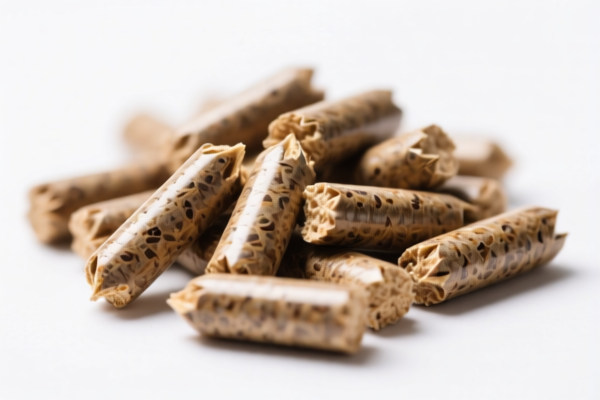
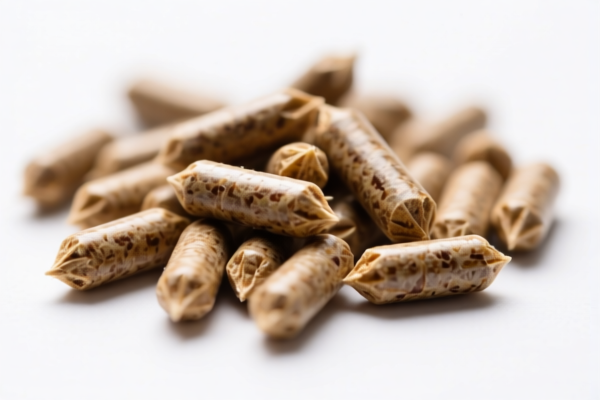
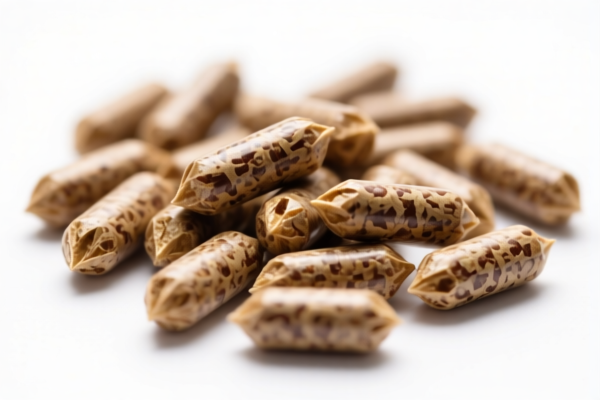
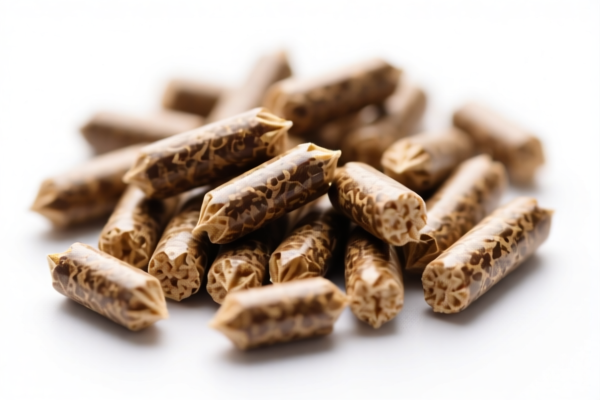
AI Analysis
🌲 Combustible Wood Sawdust Fuel (Biomass Pellets & Briquettes)
🌐 HS Code Reference & Customs Clearance Guide | 2026 Latest Tariff Analysis | Strategic通关 Strategies for Biomass Energy
📌 I. Product Definition & Classification: What Exactly Is "Wood Sawdust Fuel"?
Combustible wood sawdust fuel is a renewable energy source derived from wood processing by-products (sawdust, shavings). In international trade, it is strictly categorized based on form (pellets, briquettes, blocks) and processing level. Misclassification can lead to severe penalties due to the high附加税 rates associated with Chinese-origin biomass products entering specific markets (e.g., US).
Core Distinctions: 1. Raw Biomass vs. Processed Fuel: * Pellets/Briquettes: Compressed, uniform shape. Often classified under Chapter 44 (Wood) or Chapter 36 (if treated as prepared explosives/igniters). * Raw Sawdust: Loose powder. Less common as a direct fuel export due to bulkiness; usually processed into pellets first. 2. End-Use Purpose: * General Fuel: For heating, power generation. * Lighting Aids: "Fire starters" or "kindling blocks" with chemical additives.
⚠️ Critical Classification Point:
- If it is standard compressed wood pellets (no chemical ignition aid) → Chapter 44.
- If it is charcoal-like briquettes (carbonized) → Chapter 44 (Charcoal) or Chapter 36.
- If it is pre-made fire starter blocks (organic + wax/chemical) → Chapter 36 (Other combustible materials).
📦 II. HS Code Classification Matrix (2026 Latest Tariff Authority)
| HS Code | Product Description | Form | Key Feature | Tax Rate (Total) |
|---|---|---|---|---|
4401.31.00.00 |
Wood sawdust biomass fuel pellets | Pellets | Standard compressed wood sawdust | 35.0% |
4401.39.42.10 |
Wood sawdust fuel (pellets/briquettes) | Pellets/Briquettes | General category for wood fuel | 35.0% |
4405.00.00.00 |
Wood sawdust pellets | Pellets | Powder/Pellet form, specific subheading | 38.2% |
3606.90.80.00 |
Wood sawdust fuel lighters/fire starters | Blocks/Lumps | Contains ignition aids; "Other combustible materials" | 22.5% |
4402.90.01.00 |
Wood sawdust briquette fuel | Briquettes | Carbonized/Charcoal-like appearance | 35.0% |
🔍 Important Note:
- The key difference between4401and4405is often the processing depth and specific description in the tariff schedule.4405typically covers "wood charcoal" or specific pellet forms not fully covered by4401.
-3606is for specialized fire starters, not bulk fuel. Do not misclassify bulk fuel as3606to save tax; customs will reject this if no ignition aids are present.
💰 III. 2026 Latest Tariff Rate Breakdown (Detailed Tax Components)
✅ Applicable Market: United States (US)
✅ Origin: China (CN)
✅ Effective Date: 2025+ (Current active rates)
🎯 1. 4401.31.00.00 — Biomass Pellets (Standard)
| Item | Detail |
|---|---|
| Base Duty | 0.0% |
| Section 301 Tariff (Add-on) | +25.0% |
| Section 122 Tariff | +10.0% |
| Total Tax Rate | 35.0% |
| Calculation | CIF Value × 35% |
| De Minimis Eligibility | ❌ NO (Deny de minimis) |
| Legal Path | USITC:4401.31.00.00 → 301:Footnote 9903.88.01 → 122:Section 122 |
📌 Explanation:
- Base 0%: Wood fuel often has low base duties.
- 25% Section 301: Standard trade war tariff on Chinese wood products.
- 10% Section 122: Additional tariff on specific energy/materials.
- Total 35%: High barrier. Must be included in landed cost calculations.
🎯 2. 4401.39.42.10 — Other Wood Fuel (Pellets/Briquettes)
| Item | Detail |
|---|---|
| Base Duty | 0.0% |
| Section 301 Tariff | +25.0% |
| Section 122 Tariff | +10.0% |
| Total Tax Rate | 35.0% |
| Calculation | CIF Value × 35% |
| De Minimis Eligibility | ❌ NO |
| Legal Path | USITC:4401.39.42.10 → 301 → 122 |
📌 Note: Same as above. Often used for non-standard pellet shapes or mixed wood species.
🎯 3. 4405.00.00.00 — Wood Sawdust/Pellets (Specific Subheading)
| Item | Detail |
|---|---|
| Base Duty | 3.2% |
| Section 301 Tariff | +25.0% |
| Section 122 Tariff | +10.0% |
| Total Tax Rate | 38.2% |
| Calculation | CIF Value × 38.2% |
| De Minimis Eligibility | ❌ NO |
| Legal Path | USITC:4405.00.00.00 → 301 → 122 |
📌 Warning: This is the most expensive standard fuel category due to the 3.2% base duty. Ensure your product description matches
4401(0% base) if possible, as4405is more restrictive.
🎯 4. 3606.90.80.00 — Fire Starter Blocks
| Item | Detail |
|---|---|
| Base Duty | 5.0% |
| Section 301 Tariff | +7.5% |
| Section 122 Tariff | +10.0% |
| Total Tax Rate | 22.5% |
| Calculation | CIF Value × 22.5% |
| De Minimis Eligibility | ❌ NO |
| Legal Path | USITC:3606.90.80.00 → 301 → 122 |
📌 Strategy: Only use this HS Code if your product is explicitly marketed as a "lighter" or "fire starter" with added ignition chemicals/wax. Do not use for bulk fuel.
🎯 5. 4402.90.01.00 — Briquette Charcoal
| Item | Detail |
|---|---|
| Base Duty | 0.0% |
| Section 301 Tariff | +25.0% |
| Section 122 Tariff | +10.0% |
| Total Tax Rate | 35.0% |
| Calculation | CIF Value × 35% |
| De Minimis Eligibility | ❌ NO |
| Legal Path | USITC:4402.90.01.00 → 301 → 122 |
📌 Clarification: This applies to carbonized briquettes. If your product is NOT carbonized (just compressed sawdust), use
4401.31.00.00.
🛠️ IV. Customs Clearance Practical Advice (Avoiding Pitfalls)
✅ 1. Required Documentation Checklist
| Document | Mandatory? | Notes |
|---|---|---|
| Commercial Invoice | ✅ Yes | Must clearly state "Wood Sawdust Pellets" or "Fire Starters". Do not use vague terms like "Biomass". |
| Packing List | ✅ Yes | Detail weight, volume, and package type. |
| Certificate of Origin (CO) | ✅ Yes | To prove origin (China). |
| Product Specification Sheet | ✅ Yes | Include moisture content, ash content, density, and dimensions. |
| Material Safety Data Sheet (MSDS) | ✅ Yes | Required for shipping safety, especially if chemical binders are used. |
| Fumigation Certificate | ✅ Yes | ISPM 15 standard often required for wood products. |
| Third-Party Lab Test | ✅ Recommended | Proves carbonization level (for 4402 vs 4401) or ignition aid content (for 3606). |
✅ 2. Declaration Strategy (Key Tips)
🔥 "Form Determines Code, Content Determines Tax!"
| Scenario | Correct HS Code | Incorrect Action | Consequence |
|---|---|---|---|
| Standard Wood Pellets | 4401.31.00.00 |
Declare as 4405 |
Overpay tax by 3.2% |
| Carbonized Briquettes | 4402.90.01.00 |
Declare as 4401 |
Misclassification; potential penalty |
| Fire Starter Blocks | 3606.90.80.00 |
Declare as 4401 |
Undervaluation; audit risk |
| Bulk Sawdust (Loose) | Check 4401.10 |
Declare as 4401.31 |
Wrong form; rejection |
✅ 3. Special Handling Cases
| Case | Recommendation |
|---|---|
| Mixed Pellets | If pellets contain >5% non-wood material, customs may reclassify. Ensure purity is declared. |
| OEM/Private Label | Provide OEM agreement to prove brand ownership. Do not change product description. |
| High Moisture Content | If moisture >25%, it may be considered "green waste" not "fuel". Ensure moisture <20% for standard fuel classification. |
| Chemical Additives | If wax/oil is added, move to 3606 (if lighters) or 4401 (if still fuel). Declare additives in MSDS. |
🌍 V. Global Market Comparison (2026 Update)
| Country | Recommended HS Code | Base Duty | Section 301/122 | Total Rate | Notes |
|---|---|---|---|---|---|
| 🇺🇸 USA | 4401.31.00.00 |
0% | +35% | 35.0% | Highest barrier. De minimis not available. |
| 🇨🇳 China (Import) | 4401.31.00.00 |
0% | None | 0.0% | No additional tariffs. |
| 🇪🇺 EU | 4401.31.00 |
0% | None | 0.0% | CBAM may apply (Carbon Border Adjustment). |
| 🇬🇧 UK | 4401.31.00 |
0% | None | 0.0% | Post-Brexit rules. |
| 🇯🇵 Japan | 4401.31.00 |
5.5% | None | 5.5% | No 301/122 tariffs. |
📌 Conclusion:
- The US market is the most expensive due to combined 301 and 122 tariffs.
- EU/UK/Japan have low base duties but may impose carbon taxes (CBAM in EU).
- China is duty-free for imports, making it a hub for re-export if rules of origin allow.
📌 VI. Common Errors & Pitfalls (Lessons Learned)
❌ Error 1: Declaring "Fire Starters" as 4401 to avoid higher base tax
👉 Consequence: If customs finds ignition aids, they will reclassify to 3606 and fine for undervaluation.
✅ Fix: If it has ignition aids, use 3606. If not, use 4401.
❌ Error 2: Using 4405.00.00.00 for standard pellets
👉 Consequence: Paying extra 3.2% base duty unnecessarily.
✅ Fix: Use 4401.31.00.00 for standard wood pellets unless specific "powder" criteria are met.
❌ Error 3: Ignoring De Minimis Rules
👉 Consequence: Shipments under $800 are NOT exempt for these HS codes.
✅ Fix: Plan for full tax payment even for small parcels.
🎯 VII. Final Advice: Professional Clearance for Maximum Efficiency
🎯 Remember:
🔹 "Pellets are 4401, Briquettes are 4402, Lighters are 3606."
🔹 "US Tariffs are 35% for fuel, 22.5% for lighters."
🔹 "No De Minimis! Pay tax on every shipment."
📌 Pro Tip:
If you are exporting to the US, consider supplier diversification (e.g., Vietnam, Malaysia) to avoid Section 301/122 tariffs.
Apply for Advance Ruling from US CBP if unsure about product classification.
📣 Call to Action:
📞 Contact a licensed customs broker + Provide Product Specs + Request HS Code Advance Ruling
🚀 Ensure smooth customs clearance, accurate tax payment, and profit maximization!
✨ Professional clearance starts with precise classification!
💼 Every percent of tax saved is pure profit!
Customer Reviews
About HS Code Classification
The Harmonized System (HS) is an internationally standardized nomenclature developed by the World Customs Organization (WCO) to classify traded products. Over 200 countries use the HS system as the basis for customs tariffs, trade statistics, and import/export regulations.
Each HS code follows a hierarchical structure:
- Chapter (2 digits) — Broad category of goods (e.g., Chapter 84: Machinery and Mechanical Appliances)
- Heading (4 digits) — More specific grouping within the chapter
- Subheading (6 digits) — Internationally standardized breakdown, used by all WCO member countries
- National subdivisions (8-10 digits) — Country-specific extensions for further classification, such as US HTSUS 10-digit codes
Correct HS code classification is essential for smooth customs clearance, accurate duty payment, and compliance with trade regulations. Misclassification can lead to customs delays, overpayment of duties, or penalties.
When importing from CN to US, the applicable tariff rates may include:
- Most-Favored-Nation (MFN) rate — The standard duty rate applied to WTO members
- General rate — Applied to countries without trade agreements
- Trade remedy duties — Additional tariffs such as Section 301 (anti-dumping), Section 232 (national security), or countervailing duties
The information provided on this page is for reference purposes only. For official classification, please consult with your local customs authority or a licensed customs broker.