Combustible lighter fuel sticks
CN → US| HS Code | Tariff Rate | Origin | Destination | Doc |
|---|---|---|---|---|
| 3406000000 | 17.5% | CN | US | Official Doc |
| 3819000000 | 0.0% | CN | US | Official Doc |
Product Images

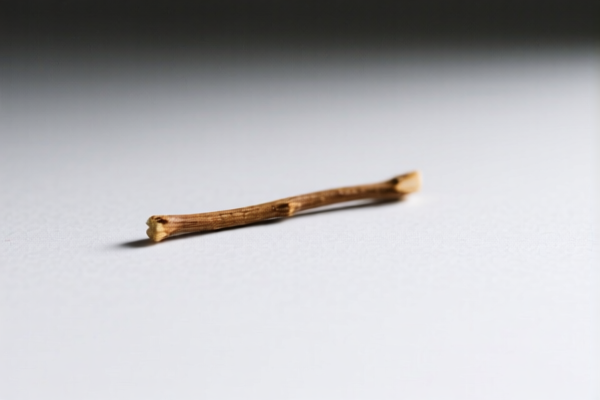
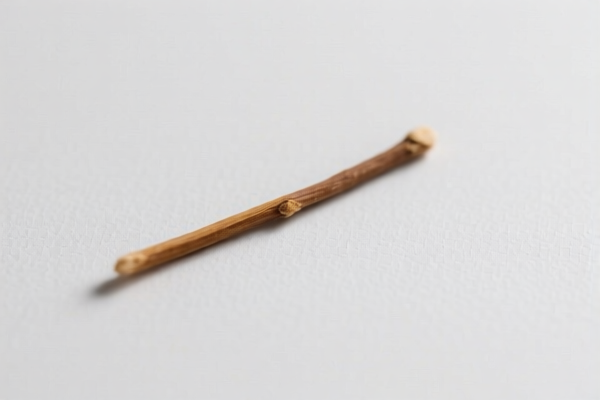

AI Analysis
🕯️ Combustible Lighter Fuel Sticks (Butane/Paraffin Fuel Refills)
🌐 HS Code Reference & Customs Clearance Guide | 2026 Latest Tariff Breakdown | Professional Clearance Strategy
📌 I. Product Definition & Classification: What Exactly Are "Lighter Fuel Sticks"?
"Combustible lighter fuel sticks" typically refer to solid or semi-solid fuel sources designed for refilling or powering specific types of lighters or small heating devices. In international trade, these are rarely standard liquid butane canisters. They are often categorized based on their chemical composition (Paraffin vs. Butane/Wax mix) and form (Solid stick, gel stick, or compressed powder stick).
Common Types: 1. Paraffin Wax Sticks: Solid fuel rods used in camping lighters, candle-like lighters, or specialized torches. Primarily composed of refined paraffin wax. 2. Butane-Wax Composite Sticks: Solidified fuel sticks used in refillable premium lighters. Often contain stabilizers. 3. Solid Fuel Tablets/Sticks (Chemical Lighters): Used in emergency survival lighters, often containing magnesium or other combustible chemicals.
⚠️ Key Classification Point:
- If primarily Paraffin Wax → Usually falls under Chapter 27 (Mineral Fuels) or Chapter 34 (Wax Preparations) depending on purity and packaging.
- If primarily Butane/Liquefied Petroleum Gas (LPG) in solid form (rare, usually gas in canisters) → Falls under 2711.
- Crucial Distinction: These are NOT matches (Chapter 34.06) nor ordinary candles (Chapter 34.06 if wick included). They are fuel sources.
📦 II. HS Code Classification Details (2026 Latest Tariff Authority Match)
| HS Code | Product Description | Application Scenario | Composition |
|---|---|---|---|
2710.19.50.00 |
Mineral oils and products from bituminous minerals (other than crude; light oils) | Liquid/Semi-solid Butane/Wax Mix for lighters. Often classified here if liquid/gel form or if considered "light oils." | Butane/Propane/Wax |
3404.00.90.00 |
Artificial waxes and prepared waxes (other than stearic acid, ozokerite, etc.) | Paraffin Wax Sticks used as fuel. If the primary purpose is wax-like solid fuel for lighters. | Refined Paraffin Wax |
2711.19.00.00 |
Liquefied petroleum gases and other gaseous hydrocarbons | If the "stick" is actually a compressed gas cartridge (solid form is rare for LPG, but possible in solid-gel hybrids). | LPG (Butane/Propane) |
3824.99.92.00 |
Prepared binders for foundry molds/core; chemical products... | Unlikely, unless it's a chemical ignition stick (e.g., magnesium-based survival starter). | Chemical Compounds |
3406.00.00.00 |
Candles, tapers and similar articles | Only if the fuel stick has a wick and is sold as a complete "candle lighter." | Wax + Wick |
🔍 Critical Warning:
- Most solid paraffin fuel sticks for lighters are classified under3404.00.90.00(Prepared Waxes) or2710.19.50.00(Mineral Oil Products) depending on the exact chemical formula and manufacturer declaration.
- US Customs (CBP) tends to classify paraffin fuel sticks for lighters under2710.19.50.00if they are primarily mineral-based fuel, NOT3404. This is because they are "fuel" not "wax for polishing."
- Always check the Material Safety Data Sheet (MSDS). If it lists "Butane" or "Propane" as primary, it may trigger Chapter 2711 (if gaseous) or 2710.
💰 III. 2026 Latest Tariff Rate Breakdown (Including Surcharges & Policy Add-ons)
✅ Applicable Country: United States (US)
✅ Origin: China (CN)
✅ Effective Date: November 10, 2025 onwards (including subsequent imports)
🎯 1. 2710.19.50.00 —— Mineral Oil Products (Lighter Fuel)
| Item | Content |
|---|---|
| Base Tariff Rate | 5% (Ad Valorem) |
| USITC Surcharge | +25% (Under USITC Footnote 9903.88.01 for certain mineral oils) |
| IEEPA Surcharge | +10% (针对中国/香港产品, from Nov 10, 2025) |
| Total Tariff | 40% |
| Tax Calculation | CIF Value × 40% |
| De Minimis Eligibility | ❌ No (deny_de_minimis) |
| Legal Basis Path | IEEPA:9903.01.25 → IEEPA:9903.01.24 → USITC:2710.19.50.00 → FOOTNOTE:9903.88.01 |
📌 Explanation:
- "USITC 25% surcharge" is from Section 301 of the Trade Act;
- "IEEPA 10%" is the emergency economic power surcharge on Chinese goods;
- Total 40% is very high for fuel products. Must be anticipated!
🎯 2. 3404.00.90.00 —— Prepared Waxes (Paraffin Fuel Sticks)
| Item | Content |
|---|---|
| Base Tariff Rate | 0% (Ad Valorem) |
| USITC Surcharge | +25% (Footnote 9903.88.01 may apply depending on specific wax type) |
| IEEPA Surcharge | +10% (From Nov 10, 2025) |
| Total Tariff | 35% |
| Tax Calculation | CIF × 35% |
| De Minimis Eligibility | ❌ No |
| Legal Basis Path | IEEPA:9901.25 → IEEPA:9903.01.24 → USITC:3404.00.90.00 → FOOTNOTE:9903.88.01 |
📌 Note:
- If classified as "wax," the base rate is lower (0%), but the surcharges still apply.
- However, if CBP reclassifies as mineral fuel (2710), the base rate is 5%.
- Risk: Misclassification between3404and2710can lead to significant duty differences and penalties.
🛠️ IV. Customs Clearance Practical Advice (Real-World Pitfall Guide)
✅ 1. Required Documentation Checklist (Non-Negotiable)
| Document | Required | Explanation |
|---|---|---|
| ✅ Product Specifications | ✔️ | Must detail chemical composition (e.g., "95% Paraffin Wax, 5% Stabilizers"). |
| ✅ MSDS (Material Safety Data Sheet) | ✔️ | Critical! Must confirm flammability, flash point, and composition. CBP uses this to verify HS Code. |
| ✅ Product Photos | ✔️ | Clear images showing shape, packaging, and any warning labels. |
| ✅ Commercial Invoice | ✔️ | Must state "Combustible Lighter Fuel Sticks" and NOT "Candles" or "Matches." |
| ✅ Customs Ruling Letter | ✔️ | If previously obtained for similar products, attach it. |
| ✅ Origin Certificate | ✔️ | If not China-origin, for potential FTA benefits (e.g., CPTPP, RCEP). |
✅ 2. Declaration Tips (Key Mantras)
🔥 "Fuel Stick, Not Candle; Wax or Oil, Check MSDS First!"
| Scenario | Correct Declaration | Wrong Practice |
|---|---|---|
| Solid Paraffin Stick | 3404.00.90.00 or 2710.19.50.00 |
Declare as "Candle" → 3406.00.00.00 (Higher scrutiny) |
| Butane-Based Stick | 2710.19.50.00 |
Declare as "Gas" → 2711.19.00.00 (If not gaseous, rejection) |
| Mixed Wax/Fuel | 2710.19.50.00 |
Declare as "Wax" → May be reclassified with penalty |
| Survival Lighter Stick | 3824.99.92.00 (if chemical) |
Declare as "Lighter" → General Chapter 96 (May miss chemical hazards) |
✅ 3. Special Case Handling
| Situation | Handling Advice |
|---|---|
| Flammability Labeling | Must comply with UN 3363 (Class 3 Flammable Liquid) or Class 4.1 (Flammable Solid) packaging if applicable. |
| OEM Custom Sticks | Provide client order + technical drawings. Avoid generic "fuel sticks." |
| Small Quantities (De Minimis) | ❌ Not Eligible for $800 de minimis exemption due to IEEPA/Section 301. Must pay full duties. |
| Chemical Lighters | If containing magnesium, may require additional DOT/HM regulations. |
🌍 V. Global Market Comparison (2026 Latest)
| Country/Region | Recommended HS Code | Tariff (China Origin) | Certification | Notes |
|---|---|---|---|---|
| 🇺🇸 USA | 2710.19.50.00 |
40% (incl. surcharges) | DOT, UN3363 | High tariffs. CBP strict on fuel classification. |
| 🇨🇳 China | 3404.00.90.00 |
5% | CCC (if applicable) | No surcharges. |
| 🇪🇺 EU | 3404.00.90 |
0% (if wax) or 6.5% (if oil) | REACH, CLP | Must provide SDS. |
| 🇬🇧 UK | 2710.19.50 |
6.5% + Surcharge | UKCA | Post-Brexit tariffs apply. |
| 🇯🇵 Japan | 3404.00.90 |
0% | JIS | Low tariffs. |
📌 Conclusion:
- USA is the most challenging market due to 301/IEEPA surcharges on mineral fuels and waxes.
- EU and Japan are more favorable, but require strict chemical safety documentation (REACH/CLP).
- Always prioritize MSDS accuracy to avoid misclassification penalties.
📌 VI. Common Errors & Pitfalls (Lessons Learned)
❌ Error 1: Declaring "Lighter Fuel Sticks" as "Candles" (3406)
👉 Consequence: CBP reclassifies to 2710 or 3404 + penalties + duty difference.
❌ Error 2: Ignoring MSDS for flammability classification
👉 Consequence: Shipment held by DOT/CBP for hazardous material violation.
❌ Error 3: Assuming de minimis exemption applies
👉 Consequence: Package seized or returned due to unpaid duties (40% is not de minimis).
❌ Error 4: Using vague descriptions like "Fuel for Lighter"
👉 Consequence: CBP requests additional info, delaying clearance by weeks.
✅ Correct Practice:
"Paraffin Wax Fuel Sticks for Lighters, Non-Flammable Liquid, UN3363 Compliant, Model XYZ, MSDS Attached"
🎯 VII. Conclusion: Professional Classification, Cost Control & Efficiency!
🎯 Remember the Mantra:
🔹 "Fuel Stick ≠ Candle; Check MSDS First!"
🔹 "USA 40% Tax; EU/Japan Low Tariff; De Minimis NO!"
🔹 "HS Code Defines Duty; Misclassification Costs Thousands!"
📌 Pro Tip:
If your lighter fuel sticks are originally from Vietnam, Mexico, Thailand, or Malaysia, you may apply for IEEPA Exemptions or lower tariffs under USMCA/CPTPP.
Recommendation: Apply for Advance Ruling with CBP before shipping large volumes.
📣 Take Action Now:
📞 Contact a licensed customs broker + Provide MSDS + Apply for HS Code Advance Ruling
🚀 Ensure smooth clearance, control costs, and maximize profit!
✨ Professional Clearance Starts with Accurate Classification!
💼 Every Cent of Cost Should Be Precisely Calculated!
Customer Reviews
About HS Code Classification
The Harmonized System (HS) is an internationally standardized nomenclature developed by the World Customs Organization (WCO) to classify traded products. Over 200 countries use the HS system as the basis for customs tariffs, trade statistics, and import/export regulations.
Each HS code follows a hierarchical structure:
- Chapter (2 digits) — Broad category of goods (e.g., Chapter 84: Machinery and Mechanical Appliances)
- Heading (4 digits) — More specific grouping within the chapter
- Subheading (6 digits) — Internationally standardized breakdown, used by all WCO member countries
- National subdivisions (8-10 digits) — Country-specific extensions for further classification, such as US HTSUS 10-digit codes
Correct HS code classification is essential for smooth customs clearance, accurate duty payment, and compliance with trade regulations. Misclassification can lead to customs delays, overpayment of duties, or penalties.
When importing from CN to US, the applicable tariff rates may include:
- Most-Favored-Nation (MFN) rate — The standard duty rate applied to WTO members
- General rate — Applied to countries without trade agreements
- Trade remedy duties — Additional tariffs such as Section 301 (anti-dumping), Section 232 (national security), or countervailing duties
The information provided on this page is for reference purposes only. For official classification, please consult with your local customs authority or a licensed customs broker.