Commercial Composite Board
CN → US| HS Code | Tariff Rate | Origin | Destination | Doc |
|---|---|---|---|---|
| 4823908680 | 35.0% | CN | US | Official Doc |
| 4811512040 | 35.0% | CN | US | Official Doc |
| 4807009200 | 35.0% | CN | US | Official Doc |
| 4807009400 | 35.0% | CN | US | Official Doc |
| 4811512020 | 35.0% | CN | US | Official Doc |
Product Images
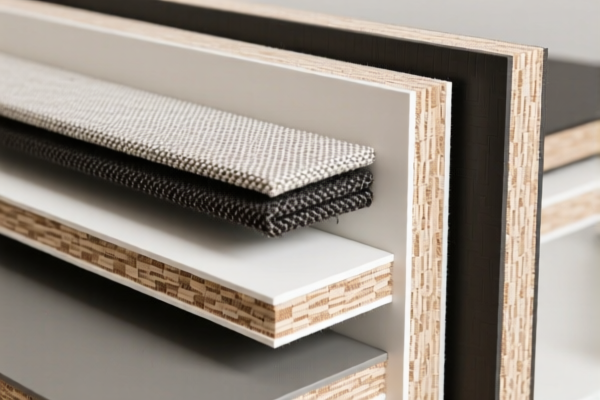
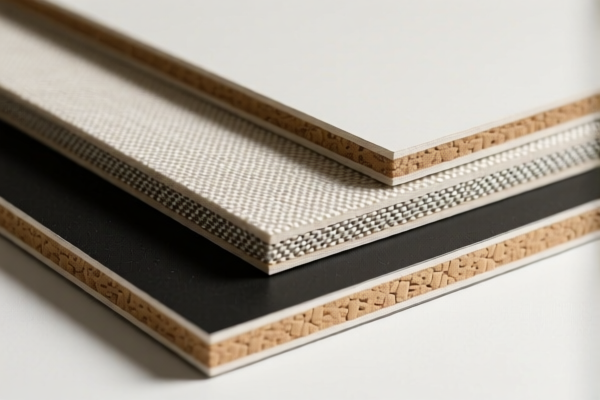
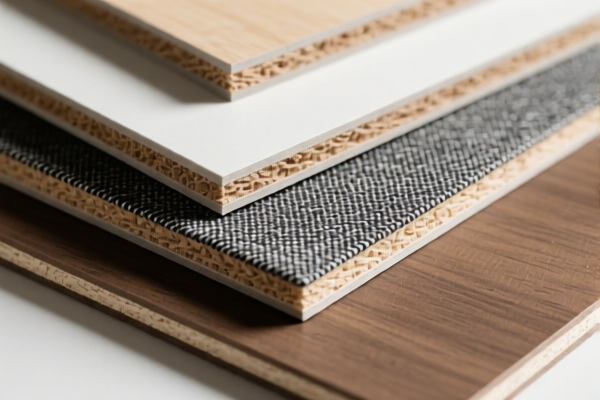
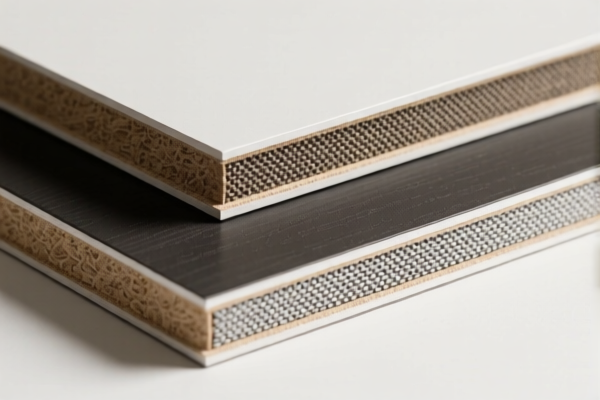
AI Analysis
📦 Commercial Composite Board (Industrial Paper-Based)
🌐 HS Code Reference & Customs Clearance Guide | 2026 Latest Tariff Analysis | Professional Clearance Strategy
📌 I. Product Definition & Classification: What is "Commercial Composite Board"?
Commercial Composite Board refers to industrial-grade paper products made by bonding, laminating, or coating multiple layers of paper, paperboard, or other fibrous materials. In international trade, these are categorized based on their composition, surface treatment, and structural integrity.
⚠️ Key Distinction:
- If the product is laminated/coated (e.g., with plastic, foil, or wax) → Often falls under Chapter 48.11 (Coated/Impregnated Paper).
- If it is layered/consolidated without surface coating → Often falls under Chapter 48.07 (Compacted/Composite Paper).
- If it is a general industrial composite without specific coating → Falls under Chapter 48.23 (Other paper articles).
📊 II. HS Code Classification Details (2026 Latest Tariff Authority Cross-Reference)
| HS Code | Product Description | Applicable Scenario | Key Characteristics |
|---|---|---|---|
4823.90.86.80 |
Other articles of paper/paperboard, incl. compounded paper | General industrial composite board; no specific coating | ✅ Uncoated/General Use |
4811.51.20.40 |
Coated/covered paperboard, >150g/m², self-adhesive or laminated | Packaging-grade composite board; coated/laminated | ✅ Coated/Laminated |
4807.00.92.00 |
Other compounded paper/paperboard (consolidated) | Multi-layer industrial board; bonded layers | ✅ Consolidated Layers |
4807.00.94.00 |
Other compounded paper/paperboard (consolidated) | Industrial composite board; structural consistency | ✅ Consolidated Layers |
4811.51.20.20 |
Other coated/covered paperboard, >150g/m² | Fallback classification for industrial paperboard | ✅ Coated/General Paper |
🔍 Critical Note:
- 4811.51.xxxx codes are for coated/laminated boards (e.g., for packaging, labels).
- 4807.00.xxxx codes are for consolidated/composite boards (multi-layer, bonded).
- 4823.90.xxxx is a catch-all for other paper articles not specified elsewhere.
💰 III. 2026 Latest Tariff Rate Details (Including Surcharge & Policy Add-ons)
✅ Applicable Country: United States (US)
✅ Origin: China (CN)
✅ Effective Date: 2025/11/10 onwards (including subsequent imports)
🎯 1. 4823.90.86.80 —— Other Paper Articles (General Composite)
| Item | Content |
|---|---|
| Base Tariff | 0% (ad valorem) |
| USITC Surcharge | +25% (Section 301 Duties) |
| 122 Clause Surcharge | +10% (Specific China-targeted levy) |
| Total Tariff | 35.0% |
| Calculation | CIF Value × 35% |
| De Minimis Exemption | ❌ Not Eligible (deny_de_minimis) |
| Legal Basis | Section 301:4823.90.86.80 → 122 Clause: 10% |
📌 Explanation:
- 25% is the standard Section 301 surcharge on Chinese paper products.
- 10% is the additional "122 Clause" tariff targeting specific industrial materials.
- Total: 35%. This is a high-duty item. Pre-clearance assessment is mandatory.
🎯 2. 4811.51.20.40 —— Coated/Laminated Paperboard (>150g/m²)
| Item | Content |
|---|---|
| Base Tariff | 0% |
| USITC Surcharge | +25% |
| 122 Clause Surcharge | +10% |
| Total Tariff | 35.0% |
| Calculation | CIF Value × 35% |
| De Minimis Exemption | ❌ Not Eligible |
| Legal Basis | Section 301:4811.51.20.40 → 122 Clause: 10% |
📌 Note:
- Applies to packaging-grade composite boards with coatings/laminations.
- Same 35% rate as general composite. No difference in surcharge structure.
🎯 3. 4807.00.92.00 & 4807.00.94.00 —— Consolidated Composite Paper
| Item | Content |
|---|---|
| Base Tariff | 0% |
| USITC Surcharge | +25% |
| 122 Clause Surcharge | +10% |
| Total Tariff | 35.0% |
| Calculation | CIF Value × 35% |
| De Minimis Exemption | ❌ Not Eligible |
| Legal Basis | Section 301:4807.00.92.00 / 94.00 → 122 Clause: 10% |
📌 Note:
- Applies to multi-layer, bonded industrial boards.
- Identical 35% rate. The distinction between92.00and94.00is technical (grade/consistency), but tariff treatment is identical.
🎯 4. 4811.51.20.20 —— Other Coated Paperboard (Fallback)
| Item | Content |
|---|---|
| Base Tariff | 0% |
| USITC Surcharge | +25% |
| 122 Clause Surcharge | +10% |
| Total Tariff | 35.0% |
| Calculation | CIF Value × 35% |
| De Minimis Exemption | ❌ Not Eligible |
| Legal Basis | Section 301:4811.51.20.20 → 122 Clause: 10% |
📌 Note:
- A fallback classification for paperboard that doesn't fit specific coated categories.
- Still subject to the 35% total duty.
🛠️ IV. Customs Clearance Practical Advice (Avoid Pitfalls)
✅ 1. Required Documentation (Mandatory)
| Document | Required? | Notes |
|---|---|---|
| ✅ Product Specification Sheet | ✔️ | Must detail layers, coatings, weight (g/m²), dimensions |
| ✅ Material Composition Report | ✔️ | Specify if coated, laminated, or consolidated |
| ✅ Product Photos | ✔️ | Show cross-section (to prove composite structure) |
| ✅ Commercial Invoice | ✔️ | Clearly state "Industrial Composite Board" |
| ✅ Packing List | ✔️ | Detail weight, volume, and package count |
| ✅ Certificate of Origin | ✔️ | If applicable for preferential treatment (rare for US) |
✅ 2. Declaration Tips (Key Mantra)
🔥 "Know Your Layer, Declare Your Coat, Avoid 'Generic' Traps!"
| Scenario | Correct HS Code | Wrong Approach |
|---|---|---|
| Multi-layer bonded board | 4807.00.92.00 or 94.00 |
Declare as "Cardboard" → Risk of reclassification |
| Coated/Laminated packaging board | 4811.51.20.40 |
Declare as "Uncoated" → Lower duty risk, but audit flag |
| General industrial composite | 4823.90.86.80 |
Declare as "Plastic Sheet" → Wrong chapter, high penalty |
| Unspecified paper article | 4811.51.20.20 |
Use only as fallback if unsure |
⚠️ Warning:
- Do not declare composite boards as "Plastic" or "Metal" to avoid tariffs.
- Do not split shipments to bypass de minimis (under $800). All components are subject to 35% duty.
✅ 3. Special Cases
| Case | Handling Advice |
|---|---|
| OEM Custom Boards | Provide client specs + material test reports. |
| Recycled Composite Board | Still subject to 35% if origin is China. |
| Sample Shipments | If >$800 CIF, full duty applies. No de minimis. |
| Mixed Containers | Ensure accurate HS Code per item. Mixed misdeclaration = penalty. |
🌍 V. Global Market Comparison (2026)
| Country/Region | Recommended HS Code | Tariff Rate | Certification | Notes |
|---|---|---|---|---|
| 🇺🇸 USA | 4823.90.86.80 / 4811.51.20.40 / 4807.00.92.00 |
35% | No special cert | High duty due to Section 301 + 122 Clause |
| 🇨🇳 China | 4823.90.86.80 |
5% - 10% | CCC (if applicable) | Lower duty for domestic use |
| 🇪🇺 EU | 4823.90.86.80 |
6.5% | CE (if applicable) | No Section 301 equivalent |
| 🇬🇧 UK | 4823.90.86.80 |
6.5% | UKCA | Post-Brexit tariffs apply |
| 🇨🇦 Canada | 4823.90.86.80 |
5% - 10% | N/A | CUSMA may apply if origin qualifies |
📌 Conclusion:
- USA is the highest-duty market for Chinese composite boards.
- EU/UK/Canada are more favorable, but still require accurate classification.
📌 VI. Common Mistakes & Pitfalls
❌ Mistake 1: Declaring "Composite Board" as "Paperboard" (4804/4805)
👉 Result: Incorrect HS Code → 35% vs. 0-5% difference + penalties.
❌ Mistake 2: Ignoring the "Coated" vs. "Uncoated" distinction
👉 Result: Misclassification under 4811 vs. 4807 → Audit risk.
❌ Mistake 3: Assuming de minimis ($800) applies
👉 Result: Denied. All these HS Codes are deny_de_minimis for China.
❌ Mistake 4: Not providing cross-section photos
👉 Result: Customs cannot verify "composite" structure → Hold/Release Delay.
✅ Correct Practice:
"Industrial Composite Board, Multi-layer Paper-based, Coated/Laminated, 300g/m², For Packaging Use, HS 4811.51.20.40, Made in China"
🎯 VII. Conclusion: Precision in Classification Saves Money!
🎯 Remember:
🔹 "Coated? 4811. Consolidated? 4807. General? 4823."
🔹 "35% Duty is Non-Negotiable for China Origin."
🔹 "Photos + Specs = Faster Clearance."
📌 Pro Tip:
If your composite board contains >20% plastic or metal by weight, it may fall under Chapter 39 (Plastics) or 73 (Iron/Steel). Re-evaluate classification if material mix is complex.
📣 Action Required:
📞 Consult a customs broker + Submit Pre-Ruling Request to CBP
🚀 Ensure accurate HS Code before shipment to avoid 35% duty surprises!
✨ Professional Clearance Starts with Accurate Classification!
💼 Every Dollar Saved on Duty is Pure Profit!
Customer Reviews
About HS Code Classification
The Harmonized System (HS) is an internationally standardized nomenclature developed by the World Customs Organization (WCO) to classify traded products. Over 200 countries use the HS system as the basis for customs tariffs, trade statistics, and import/export regulations.
Each HS code follows a hierarchical structure:
- Chapter (2 digits) — Broad category of goods (e.g., Chapter 84: Machinery and Mechanical Appliances)
- Heading (4 digits) — More specific grouping within the chapter
- Subheading (6 digits) — Internationally standardized breakdown, used by all WCO member countries
- National subdivisions (8-10 digits) — Country-specific extensions for further classification, such as US HTSUS 10-digit codes
Correct HS code classification is essential for smooth customs clearance, accurate duty payment, and compliance with trade regulations. Misclassification can lead to customs delays, overpayment of duties, or penalties.
When importing from CN to US, the applicable tariff rates may include:
- Most-Favored-Nation (MFN) rate — The standard duty rate applied to WTO members
- General rate — Applied to countries without trade agreements
- Trade remedy duties — Additional tariffs such as Section 301 (anti-dumping), Section 232 (national security), or countervailing duties
The information provided on this page is for reference purposes only. For official classification, please consult with your local customs authority or a licensed customs broker.