Commercial Composite Boards
CN → US| HS Code | Tariff Rate | Origin | Destination | Doc |
|---|---|---|---|---|
| 3920992000 | 39.2% | CN | US | Official Doc |
| 3921905050 | 39.8% | CN | US | Official Doc |
| 3921904090 | 39.2% | CN | US | Official Doc |
Product Images
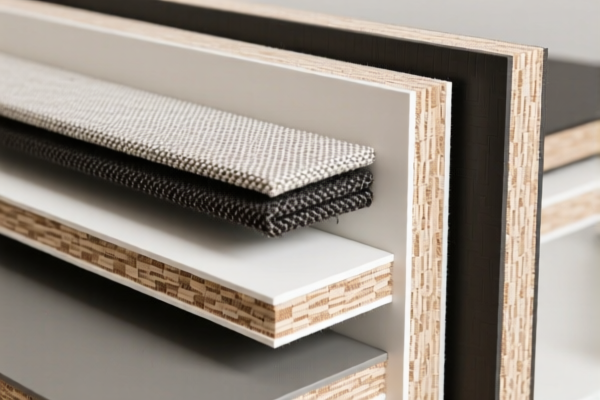
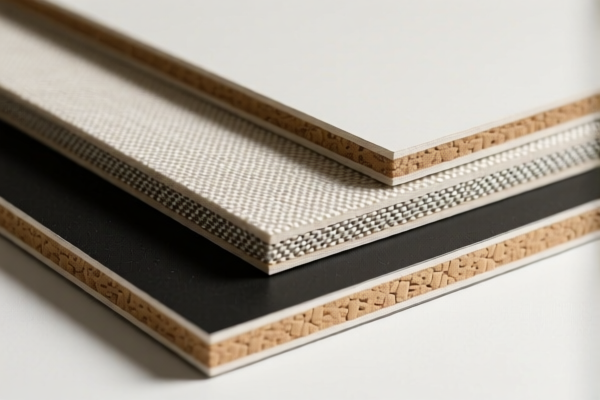
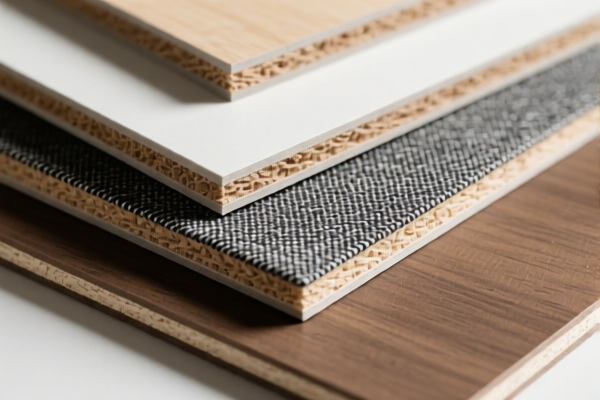
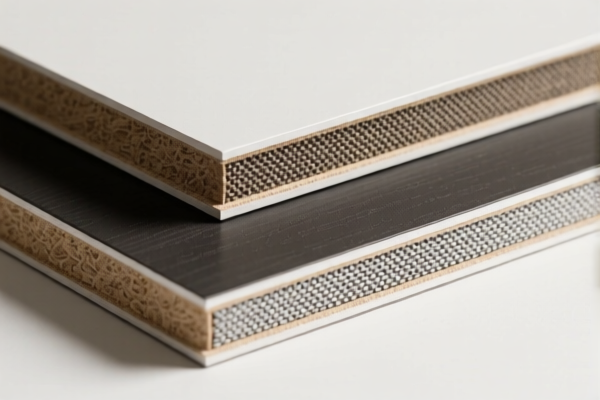
AI Analysis
🛠️ Commercial Composite Boards (Plastic-Based)
🌐 HS Code Reference & Customs Clearance Guide | 2026 Latest Tariff Analysis | Professional Clearance Strategy
📌 I. Product Definition & Classification: Do You Really Understand "Commercial Composite Boards"?
Commercial composite boards, in the context of international trade involving plastic materials, are generally classified into two main categories based on their structure and manufacturing process:
1. Laminated or Combined Plastic Materials (Composite Sheets/Boards):
These are products formed by bonding multiple layers of plastic or other materials together under heat and pressure. They are characterized by their layered structure (lamination).
2. Single-Layer Plastic Plates, Sheets, Film, Foil, and Strip:
These are solid plastic boards or sheets that are not laminated or combined with other materials in a composite structure. They fall under the general category of plastic articles.
⚠️ Key Distinction Point:
- If the product is layered, laminated, or combined (e.g., plastic + adhesive + plastic, or multi-layer extrusion) →归入 3920.99.20.00 (Plastic Composite Boards)
- If the product is a solid, single-material plastic board without lamination →归入 3921.90.50.50 or 3921.90.40.90 (Plastic Plates/Sheets)
📦 II. HS Code Classification Details (2026 Latest Tariff Authority Comparison)
| HS Code | Product Description | Application Scenario | Structure Type |
|---|---|---|---|
3920.99.20.00 |
Plastic composite boards, made of plastic, in the form of laminated or combined materials | Multi-layer plastic panels, composite construction boards, laminated decor sheets | ✅ Layered/Composite |
3921.90.50.50 |
Plastic plates, sheets, film, foil, and strips; made of plastic, in the form of plates | Solid plastic boards, PVC sheets, Acrylic plates, PP sheets | ✅ Single-layer/Solid |
3921.90.40.90 |
Other plastic plates; reasonable match under other categories | Generic plastic boards not specified elsewhere, industrial plastic plates | ✅ Single-layer/Solid |
🔍 Important Reminder:
- Laminated/Composite products MUST be classified under 3920.99.20.00. Do not misclassify them as simple plastic plates; - Solid plastic boards (single material, no lamination) should be classified under 3921.90.50.50 or 3921.90.40.90, depending on specific sub-category accuracy; - If the product is a composite of plastic and non-plastic materials (e.g., wood-plastic composite), different HS codes may apply, but within the provided DATA, these are strictly plastic-based.
💰 III. 2026 Latest Tariff Rate Details (Including Additional Taxes, Policy Surcharges)
✅ Applicable Country: United States (US)
✅ Country of Origin: China (CN)
✅ Effective Date: From November 10, 2025 (including subsequent imports)
🎯 1. 3920.99.20.00 —— Plastic Composite Boards (Laminated/Combined)
| Item | Content |
|---|---|
| Base Tariff Rate | 4.2% (ad valorem) |
| Section 301 Additional Tariff | +25.0% (from USITC Footnote regarding Chinese imports) |
| Section 122 Tariff | +10.0% (Specific surcharge for certain plastic products) |
| Total Tariff Rate | 39.2% |
| Tax Calculation | CIF Value × 39.2% |
| De Minimis Eligibility | ❌ Not Eligible (deny_de_minimis applies to Section 301/122 tariffs) |
| Legal Basis Path | USITC:3920.99.20.00 → SECTION301:25% → SECTION122:10% |
📌 Explanation:
- "Base Tariff 4.2%": Standard most-favored-nation (MFN) rate for plastic composite articles; - "Section 301 Additional Tariff 25%": Imposed under U.S. Trade Act Section 301 against Chinese-origin goods; - "Section 122 Tariff 10%": Specific surcharge applied to certain plastic material imports; - Total 39.2%: A high tariff burden, requiring advance cost planning!
🎯 2. 3921.90.50.50 —— Plastic Plates, Sheets, Film, Foil, and Strip (Solid)
| Item | Content |
|---|---|
| Base Tariff Rate | 4.8% (ad valorem) |
| Section 301 Additional Tariff | +25.0% |
| Section 122 Tariff | +10.0% |
| Total Tariff Rate | 39.8% |
| Tax Calculation | CIF Value × 39.8% |
| De Minimis Eligibility | ❌ Not Eligible |
| Legal Basis Path | USITC:3921.90.50.50 → SECTION301:25% → SECTION122:10% |
📌 Note:
- Slightly higher base rate (4.8% vs 4.2%) due to classification under "other plastic plates"; - Same additional tariffs (25% + 10%) apply; - Applicable to PVC sheets, Acrylic plates, Polycarbonate sheets, etc.
🎯 3. 3921.90.40.90 —— Other Plastic Plates (Reasonable Match)
| Item | Content |
|---|---|
| Base Tariff Rate | 4.2% (ad valorem) |
| Section 301 Additional Tariff | +25.0% |
| Section 122 Tariff | +10.0% |
| Total Tariff Rate | 39.2% |
| Tax Calculation | CIF Value × 39.2% |
| De Minimis Eligibility | ❌ Not Eligible |
| Legal Basis Path | USITC:3921.90.40.90 → SECTION301:25% → SECTION122:10% |
📌 Note:
- This code is a reasonable match for plastic plates not specified in other sub-headings; - Same tax burden as3920.99.20.00; - Use when the specific type of plastic plate does not fit3921.90.50.50.
🛠️ IV. Customs Clearance Practical Advice (Battle-Tested Pitfall Avoidance Guide)
✅ 1. Required Documentation Checklist (All Essential)
| Document | Mandatory | Description |
|---|---|---|
| ✅ Product Specification Sheet | ✔️ | Include dimensions, thickness, material composition (100% plastic?), layer count |
| ✅ Structural Diagram | ✔️ | To prove whether the product is laminated/composite or single-layer |
| ✅ Product Photos (with Label) | ✔️ | Clear view of cross-section (to show layers) and surface label |
| ✅ Third-Party Test Report | ✔️ | SGS, Intertek, or similar report confirming material composition |
| ✅ Commercial Invoice | ✔️ | Must clearly state "Plastic Composite Board" or "Plastic Plate" |
| ✅ Packing List | ✔️ | Detail weight, dimensions, and packaging type |
| ✅ Certificate of Origin (CO) | ✔️ | If non-Chinese origin, may qualify for reduced tariffs |
✅ 2. Declaration Tips (Key Mantra)
🔥 "Composite is Layered, Solid is Single; Name Accurate, Tax Avoided!"
| Scenario | Correct Declaration | Wrong Practice |
|---|---|---|
| Multi-layer laminated plastic board | 3920.99.20.00 |
Misdeclare as "Plastic Plate" → 39.8% (slightly higher) |
| Solid PVC/Acrylic sheet | 3921.90.50.50 or 3921.90.40.90 |
Misdeclare as "Composite" → 39.2% (acceptable but less accurate) |
| Wood-Plastic Composite (WPC) | Different HS Code (Not in DATA) | Force into plastic code → Customs rejection |
| Plastic Film/Strips | 3921.90.50.50 |
Misdeclare as "Board" → Misclassification penalty |
✅ 3. Special Case Handling
| Scenario | Handling Advice |
|---|---|
| OEM Custom Composite Boards | Provide client order + design drawings to prove specific use and structure |
| Mixed Packaging (Board + Mounting Hardware) | Declare board only under HS Code 3920/3921; declare hardware separately if significant |
| Recycled Plastic Boards | Still classified under same HS Codes, but provide recycled content certificate for potential green incentives |
| Flame-Retardant Plastic Boards | Provide UL94 certification or fire safety test report for smoother clearance |
🌍 V. Global Market Clearance Comparison (2026 Latest)
| Country/Region | Recommended HS Code | Tariff (China Origin) | Certification Requirements | Notes |
|---|---|---|---|---|
| 🇺🇸 USA | 3920.99.20.00 / 3921.90.50.50 |
39.2% - 39.8% | None specific (but material safety may apply) | High tariff due to Section 301 & 122 |
| 🇨🇳 China | 3920.99.20.00 / 3921.90.50.50 |
~10-12% (Import Duty) | CCC (if applicable) | Lower burden for domestic sales |
| 🇪🇺 EU | 3920.99.20.00 / 3921.90.50.50 |
0-6.5% | REACH + RoHS | No Section 301 equivalent |
| 🇦🇺 Australia | 3920.99.20.00 / 3921.90.50.50 |
5% | None specific | Moderate tariff |
| 🇯🇵 Japan | 3920.99.20.00 / 3921.90.50.50 |
0-6% | PSE (if electrical contact) | Low tariff |
📌 Conclusion:
- USA is the most challenging market for plastic composite boards due to 39.2%-39.8% total tariffs; - EU, Australia, and Japan offer significantly lower tariff burdens; - Consider supply chain diversification if exporting to the US to mitigate high tariff costs.
📌 VI. Common Mistakes & Pitfall Avoidance (Lessons from Blood & Tears)
❌ Mistake 1: Declaring a laminated composite board as a single-layer plastic plate
👉 Consequence: Misclassification → Customs audit, fines, or detention
❌ Mistake 2: Not providing cross-section photos to prove layer structure
👉 Consequence: Customs cannot verify if it’s composite → Delay in clearance
❌ Mistake 3: Using vague descriptions like "Plastic Board" without specifying material composition
👉 Consequence: HS Code uncertainty → Higher provisional tariff or return
❌ Mistake 4: Assuming all plastic boards are the same
👉 Consequence: 3920 vs 3921 distinction is critical for accurate tariff calculation
✅ Correct Practice:
"Plastic Composite Board, Laminated Structure, 3 Layers, PVC Core with PET Skin, 2mm Thickness, Model XYZ, SGS Certified Material Composition"
🎯 VII. Conclusion: Precise Classification, Save Time, Reduce Costs, Boost Profits!
🎯 Remember the Mantra:
🔹 "Composite is Layered (3920), Solid is Single (3921);
🔹 Base Tax ~4%, Plus 25% (301), Plus 10% (122) = ~39%;
🔹 Name Accurately, Documents Complete, Avoid Delays and Fines!"
📌 Pro Tip:
If your plastic composite boards are originating from Vietnam, Mexico, Thailand, or Malaysia, you may qualify for IEEPA exemptions or preferential tariffs under USMCA or ASEAN agreements.
Recommend applying for an Advance Ruling to confirm HS Code and tariff rate before shipment.
📣 Immediate Action Required:
📞 Contact a Professional Customs Broker + Provide Product Photos + Apply for HS Code Advance Ruling
🚀 Ensure Your Plastic Boards Clear Customs Smoothly, Efficiently Export, and Maximize Profit!
✨ Professional Clearance Starts with Accurate Classification!
💼 Every Penny of Your Cost Deserves Precise Calculation!
Customer Reviews
About HS Code Classification
The Harmonized System (HS) is an internationally standardized nomenclature developed by the World Customs Organization (WCO) to classify traded products. Over 200 countries use the HS system as the basis for customs tariffs, trade statistics, and import/export regulations.
Each HS code follows a hierarchical structure:
- Chapter (2 digits) — Broad category of goods (e.g., Chapter 84: Machinery and Mechanical Appliances)
- Heading (4 digits) — More specific grouping within the chapter
- Subheading (6 digits) — Internationally standardized breakdown, used by all WCO member countries
- National subdivisions (8-10 digits) — Country-specific extensions for further classification, such as US HTSUS 10-digit codes
Correct HS code classification is essential for smooth customs clearance, accurate duty payment, and compliance with trade regulations. Misclassification can lead to customs delays, overpayment of duties, or penalties.
When importing from CN to US, the applicable tariff rates may include:
- Most-Favored-Nation (MFN) rate — The standard duty rate applied to WTO members
- General rate — Applied to countries without trade agreements
- Trade remedy duties — Additional tariffs such as Section 301 (anti-dumping), Section 232 (national security), or countervailing duties
The information provided on this page is for reference purposes only. For official classification, please consult with your local customs authority or a licensed customs broker.