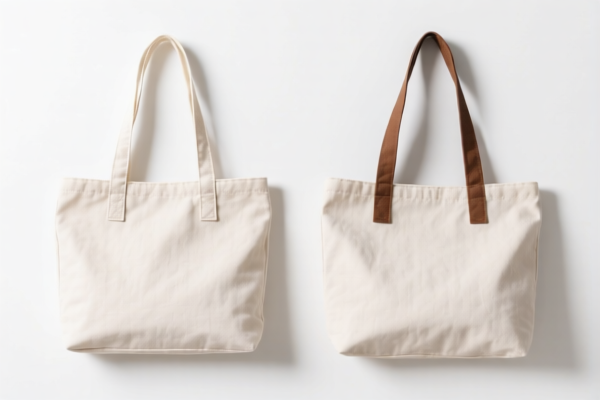
Commercial Cotton Handbag
CN → USProduct Images



AI Analysis
🛍️ Commercial Cotton Handbag (Cotton Handbags for Women/Men)
🌐 HS Code Reference & Clearance Guide | 2026 Duty Rate Breakdown | Professional Customs Strategy
📌 I. Product Definition & Classification: Do You Really Know "Cotton Handbags"?
Cotton handbags are a staple in global fashion and retail. In international trade, they are categorized based on fiber content and intended use. The critical distinction lies between:
- Handbags made of cotton (100% or >85% cotton): The primary classification key.
- Handbags with mixed fibers (e.g., cotton + polyester): Classified by the fiber constituting the greatest weight.
- Leather/Plastic-coated bags: Misclassified cotton bags often get wrongly sorted here.
⚠️ Key Differentiator:
- If the bag is primarily cotton fabric (even with cotton lining, leather trim < 50% by weight, or plastic zippers) → Classify under Textile Chapter 42 or 63.
- If it is leather or plastic with cotton lining → Do NOT use the cotton HS Code; use Leather/Plastic codes instead.
📦 II. HS Code Classification Details (2026 Harmonized System)
| HS Code | Product Description | Applicable Scenario | Primary Material |
|---|---|---|---|
4202.32.00 |
Handbags with outer surface of textile materials (including cotton) | Fashion handbags, tote bags, shoulder bags, shopping bags | ✅ Textile (Cotton) |
6302.60.00 |
Other made up of cotton textile articles (less common for bags) | Industrial/Utility cotton sacks, less common for fashion | ✅ Cotton |
4202.92.00 |
Other articles of leather or of composition leather | Misclassification Risk: Cotton bags with heavy leather trim | ❌ No (Leather) |
4205.00.00 |
Other articles of leather | Misclassification Risk: If the bag is mostly leather with cotton lining | ❌ No (Leather) |
🔍 Critical Note:
-4202.32.00is the standard and correct code for 100% cotton or cotton-majority handbags in the US, EU, and most major markets.
- If the cotton content is < 50% but the bag is mixed (e.g., 60% Polyester, 40% Cotton), it falls under Polyester codes, NOT cotton.
- Do not use4202.31.00(Leather) for a cotton bag just because it has a leather handle.
💰 III. 2026 Tariff Rate Breakdown (USA & Global Context)
✅ Target Market: United States (US)
✅ Origin: China (CN)
✅ Effective Date: 2025/2026 Import Regulations
🎯 1. 4202.32.00 —— Handbags, Outer Surface: Textile Materials (Cotton)
| Item | Details |
|---|---|
| General Duty | Free (0% or 4.2% depending on specific US sub-section) |
| USITC (Section 301) Duty | +25% (High risk for China origin) |
| Section 232 (if applicable) | N/A (Usually applies to steel/aluminum) |
| Total Rate (CN Origin) | ~25% - 29.2% |
| De Minimis (Section 321) | ✅ Eligible (If < $800 USD per shipment, duty may be waived for personal import, but not commercial bulk) |
| Legal Path | HTSUS:4202.32.00 + Section 301: 1001.71 (China specific) |
📌 Explanation:
- While the base duty for cotton bags is often low (0-4%), the Section 301 retaliatory tariff (25%) applies to China-origin textile bags due to trade tensions.
- Cotton Bags are NOT exempt from Section 301.
- De Minimis ($800): For small business samples or personal gifts under $800, you might avoid duties. For commercial shipments (> $800), the 25% applies strictly.
🎯 2. 6302.60.00 —— Other Made-up Cotton Articles (Non-Handbag)
⚠️ Warning: This code is rarely used for "Handbags." It is for cotton table linens or other textile goods. Do not use this for fashion handbags unless they are not classified as handbags by design.
🛠️ IV. Customs Clearance Practical Advice (Real-World Pitfall Avoidance)
✅ 1. Required Documentation Checklist (Mandatory)
| Document | Must Provide? | Why? |
|---|---|---|
| ✅ Product Specification Sheet | ✔️ | Must state: "100% Cotton" or "85% Cotton". Must list trim materials (e.g., "Polyester lining"). |
| ✅ Fiber Content Label | ✔️ | Physical label on the bag must match HS Code claim. |
| ✅ Bill of Materials (BOM) | ✔️ | To prove that cotton is the outer surface material. |
| ✅ Commercial Invoice | ✔️ | Must explicitly state "Cotton Handbag" and HS Code 4202.32.00. |
| ✅ Packing List | ✔️ | Weight breakdown (cotton weight vs. hardware weight). |
| ✅ Country of Origin Certificate | ✔️ | Critical for Section 301 duty determination. |
✅ 2. Declaration Strategy (Key Mnemonic)
🔥 "Cotton First, Textile Surface, Hardware Ignore!"
| Scenario | Correct Declaration | Wrong Declaration |
|---|---|---|
| 100% Cotton Bag | 4202.32.00 |
4202.11.00 (Leather) → Higher Duty/Seizure |
| Cotton + Leather Trim | 4202.32.00 |
4202.21.00 (Leather) → If leather trim > 50% weight |
| Cotton + Metal Hardware | 4202.32.00 |
7326.90 (Metal) → Hardware is minor component |
| Mixed Cotton/Polyester | 4202.32.00 (if Cotton > 85%) |
4202.92.00 (Polyester) → Wrong if Cotton is majority |
✅ 3. Special Circumstances
| Situation | Strategy |
|---|---|
| "Canvas" Bags | Often cotton. Classify under 4202.32.00. Do not call them "Bags" if they are "Totes." |
| Embroidered Cotton Bags | Still 4202.32.00. Embroidery does not change the material classification. |
| Bags for Kids | Still 4202.32.00. No special "children's toy" tax unless it's a stuffed animal. |
| Origin Shift | If you move manufacturing to Vietnam or Bangladesh, you may avoid Section 301 25% duty. |
🌍 V. Global Market Comparison (2026)
| Country/Region | Recommended HS Code | Tariff (China Origin) | Key Requirement | Note |
|---|---|---|---|---|
| 🇺🇸 USA | 4202.32.00 |
25% (Section 301) | FCC (no) / Labeling | High risk; check Vietnam/Bangladesh |
| 🇪🇺 EU | 4202.32 |
4.7% (General) | CE / REACH | No Section 301; GSP for developing nations |
| 🇨🇦 Canada | 4202.32.00 |
0% - 6% | Labeling | CETA helps if from EU |
| 🇦🇺 Australia | 4202.32.00 |
5% | Labeling | Low tariff, easy clearance |
| 🇯🇵 Japan | 4202.32.00 |
8% | Labeling | Moderate tariff |
📌 Conclusion:
- USA is the most expensive due to Section 301 (25%).
- EU/Canada/Australia offer much lower rates (4-8%) but require strict labeling.
- Strategy: If shipping to the US, consider sourcing from non-China factories (e.g., Vietnam) to cut costs by 25%.
📌 VI. Common Mistakes & Pitfalls (Lessons Learned)
❌ Mistake 1: Calling a cotton bag "Leather Handbag" because it has leather handles.
👉 Result: Wrong HS Code (4202.11), potential audit, back taxes.
❌ Mistake 2: Not declaring the "Cotton" content on the invoice.
👉 Result: Customs classifies as "Textile, not specified" → Penalty + Delay.
❌ Mistake 3: Assuming all "Tote Bags" are 4202.92 (Plastic).
👉 Result: If the outer surface is cotton, it is 4202.32.
✅ Correct Practice:
"Cotton Handbag, 100% Cotton Canvas, Polyester Lining, Leather Handles, 12x12 inches, Origin: China"
🎯 VII. Conclusion: Smart Sourcing, Smarter Clearance!
🎯 Remember:
🔹 "Cotton Surface = 4202.32"
🔹 "China Origin = 25% Extra Duty (USA)"
🔹 "Hardware/Trim = Ignore if < 50%"
🔹 "Vietnam/Bangladesh = Tax Savings!"
📌 Pro Tip:
If your cotton handbag is under $800 (De Minimis), you can ship via Section 321 to avoid most duties, but commercial bulk orders must pay the full 25%.
Recommendation: For US markets, diversify your supply chain to avoid the 301 tariff.
📣 Act Now:
📞 Contact a Customs Broker + Verify Fiber Content + Apply for Pre-Ruling (if unsure).
🚀 Let your cotton handbags cross borders smoothly, profitably, and legally!
✨ Professional Customs Clearance Starts with the Right Code!
💼 Your margins depend on accurate classification!
Customer Reviews
About HS Code Classification
The Harmonized System (HS) is an internationally standardized nomenclature developed by the World Customs Organization (WCO) to classify traded products. Over 200 countries use the HS system as the basis for customs tariffs, trade statistics, and import/export regulations.
Each HS code follows a hierarchical structure:
- Chapter (2 digits) — Broad category of goods (e.g., Chapter 84: Machinery and Mechanical Appliances)
- Heading (4 digits) — More specific grouping within the chapter
- Subheading (6 digits) — Internationally standardized breakdown, used by all WCO member countries
- National subdivisions (8-10 digits) — Country-specific extensions for further classification, such as US HTSUS 10-digit codes
Correct HS code classification is essential for smooth customs clearance, accurate duty payment, and compliance with trade regulations. Misclassification can lead to customs delays, overpayment of duties, or penalties.
When importing from CN to US, the applicable tariff rates may include:
- Most-Favored-Nation (MFN) rate — The standard duty rate applied to WTO members
- General rate — Applied to countries without trade agreements
- Trade remedy duties — Additional tariffs such as Section 301 (anti-dumping), Section 232 (national security), or countervailing duties
The information provided on this page is for reference purposes only. For official classification, please consult with your local customs authority or a licensed customs broker.