Commercial PVC Wall Film
CN → US| HS Code | Tariff Rate | Origin | Destination | Doc |
|---|---|---|---|---|
| 4811411000 | 35.0% | CN | US | Official Doc |
| 3919905060 | 40.8% | CN | US | Official Doc |
| 5907001500 | 43.0% | CN | US | Official Doc |
| 4811596000 | 35.0% | CN | US | Official Doc |
| 5907006000 | 35.0% | CN | US | Official Doc |
Product Images
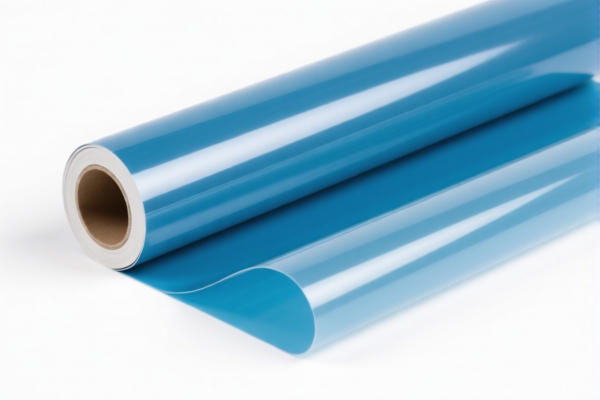
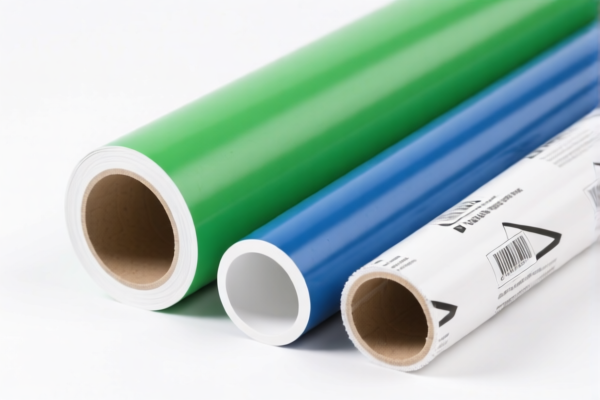
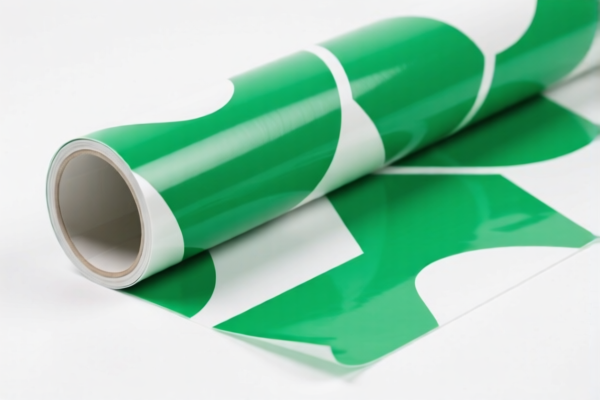
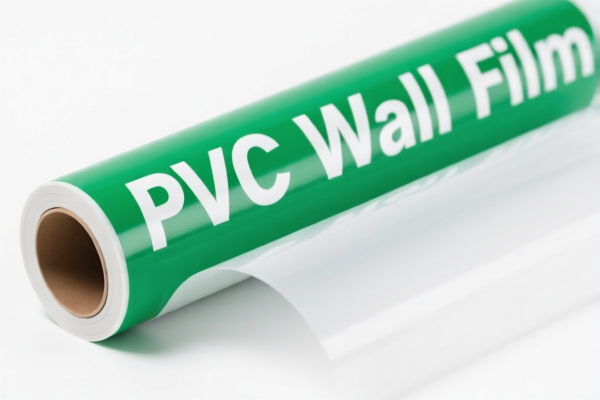
AI Analysis
🧱 PVC Wall Film (Commercial Decorative Vinyl)
🌐 HS Code Reference & Customs Clearance Guide | 2026 Latest Tariff Analysis | Strategic Compliance Strategy
📌 Part 1: Product Definition & Classification: Do You Really Understand "PVC Wall Film"?
PVC Wall Film (also known as Self-Adhesive Wallpaper or Vinyl Decorative Film) is a versatile plastic sheet used for interior decoration, furniture renovation, and surface protection. In international trade, the classification depends strictly on its material composition, form, and application. It is not a one-size-fits-all product; misclassification can lead to severe penalties due to the high "Section 301" and "Section 122" tariffs applied to Chinese-origin goods entering the US.
The key distinction lies in whether it is treated as:
1. Paper/Cardboard-based (if paper backing dominates): 4811 series.
2. Plastic Film/Sheet (if PVC is the main character): 3919 series.
3. Textile/Fabric-based (if impregnated on fabric): 5907 series.
⚠️ Critical Distinction:
- If the product is a self-adhesive plastic tape/film primarily made of PVC → 3919 or 4811 (depending on structure).
- If the product is a film impregnated on textile (e.g., fiberglass or woven PVC backing) → 5907.
- Note: All classifications below assume Origin: China (CN) and Destination: USA (US), triggering the highest penalty tariffs.
📦 Part 2: HS Code Classification Matrix (2026 Latest Tariff Authority)
| HS Code | Product Description | Application Scenario | Material/Form Key Feature |
|---|---|---|---|
4811.41.10.00 |
PVC Wall Film (Plastic) | Self-adhesive tape/film; paper-based backing with PVC coating | Self-adhesive paper/tape form |
3919.90.50.60 |
PVC Wall Film (Plastic) | Plastic sheet/film; wall decoration; self-adhesive | Pure plastic film/self-adhesive nature |
5907.00.15.00 |
PVC Wall Film (Polyvinyl Chloride) | Film covering textile; "covered textile fabric" | PVC on textile/fabric base |
4811.59.60.00 |
PVC Wall Film (Plastic) | Sheet-like; plastic-coated paper/fiber | Plastic-coated paper/fiber product |
5907.00.60.00 |
PVC Wall Film (Plastic) | Impregnated/coated textile fabric | General covered textile application |
🔍 Key Reminder:
- 3919 is the most common for "pure" self-adhesive vinyl stickers.
- 4811 applies if the product is essentially paper/cardboard that has been processed with PVC or adhesive.
- 5907 applies if the PVC is coated onto a textile (like felt or woven fabric).
- ALL these codes attract significant additional tariffs for Chinese exports.
💰 Part 3: 2026 Latest Tariff Rate Breakdown (Including Surtaxes & Policy Levies)
✅ Applicable Country: United States (US)
✅ Origin: China (CN)
✅ Effective Time: Current enforcement (Section 301 & IEEPA)
🎯 1. 4811.41.10.00 & 4811.59.60.00 —— PVC Wall Film (Paper-Based/Processed Paper)
| Item | Content |
|---|---|
| Base Tariff | 0.0% (ad valorem) |
| Section 301 Surtax | +25.0% (USITC Footnote 9903.88.01 / Trade Act Sec 301) |
| Section 122 / IEEPA Levy | +10.0% (Specific 122-clause tariff / IEEPA enforcement) |
| Total Tax Rate | 35.0% |
| Tax Calculation | CIF Value × 35% |
| De Minimis Exemption | ❌ Denied (deny_de_minimis applies to Section 301 items) |
| Legal Pathway | USITC:4811.xxxx → Section 301: Footnote → Section 122: Levy |
📌 Explanation:
- Although the base duty is 0%, the 25% Section 301 tariff is heavily enforced.
- The 10% Section 122 (or similar IEEPA measure) adds further cost.
- Total: 35%. This is a high-cost classification, but slightly cheaper than textile-based options.
🎯 2. 3919.90.50.60 —— PVC Wall Film (Plastic Film/Self-Adhesive Sheet)
| Item | Content |
|---|---|
| Base Tariff | 5.8% (ad valorem) |
| Section 301 Surtax | +25.0% (USITC Footnote 9903.88.01) |
| Section 122 / IEEPA Levy | +10.0% (Specific 122-clause tariff / IEEPA enforcement) |
| Total Tax Rate | 40.8% |
| Tax Calculation | CIF Value × 40.8% |
| De Minimis Exemption | ❌ Denied (deny_de_minimis applies) |
| Legal Pathway | USITC:3919.90.50.60 → Section 301: Footnote → Section 122: Levy |
📌 Explanation:
- This is the most common classification for pure self-adhesive PVC vinyl.
- Unlike paper-based films, plastic films (3919) have a 5.8% base duty.
- Adding 25% + 10% surtaxes results in a 40.8% total rate.
- Warning: This is the highest base duty among the plastic/paper options.
🎯 3. 5907.00.15.00 —— PVC Wall Film (Covered Textile/Fabric)
| Item | Content |
|---|---|
| Base Tariff | 8.0% (ad valorem) |
| Section 301 Surtax | +25.0% (USITC Footnote 9903.88.01) |
| Section 122 / IEEPA Levy | +10.0% (Specific 122-clause tariff / IEEPA enforcement) |
| Total Tax Rate | 43.0% |
| Tax Calculation | CIF Value × 43.0% |
| De Minimis Exemption | ❌ Denied (deny_de_minimis applies) |
| Legal Pathway | USITC:5907.00.15.00 → Section 301: Footnote → Section 122: Levy |
📌 Explanation:
- If your wall film has a fabric backing (e.g., fiberglass mesh or woven polyester), it falls under Chapter 59.
- Base duty is highest (8.0%).
- Total rate is 43.0%, making it the most expensive option for this product.
🎯 4. 5907.00.60.00 —— PVC Wall Film (Impregnated Textile)
| Item | Content |
|---|---|
| Base Tariff | 0.0% (ad valorem) |
| Section 301 Surtax | +25.0% (USITC Footnote 9903.88.01) |
| Section 122 / IEEPA Levy | +10.0% (Specific 122-clause tariff / IEEPA enforcement) |
| Total Tax Rate | 35.0% |
| Tax Calculation | CIF Value × 35.0% |
| De Minimis Exemption | ❌ Denied (deny_de_minimis applies) |
| Legal Pathway | USITC:5907.00.60.00 → Section 301: Footnote → Section 122: Levy |
📌 Explanation:
- Some impregnated textile films may qualify for 0% base duty depending on specific subheading interpretation.
- However, the 35% total is still punitive.
- Ensure the "textile" component is substantial enough to justify Chapter 59; otherwise, customs may reclassify to3919or4811.
🛠️ Part 4: Customs Clearance Practical Advice (Battle-Tested Pitfall Guide)
✅ 1. Preparation Checklist (Non-Negotiable)
| Document | Required? | Explanation |
|---|---|---|
| ✅ Product Specification Sheet | ✔️ | Must detail: Material (PVC%), Backing (Paper/Textile/None), Adhesive type, Thickness (mil/mm). |
| ✅ Product Photos | ✔️ | Show cross-section if possible to prove backing type. Clear label with HS code claim. |
| ✅ Commercial Invoice | ✔️ | Description must match HS code exactly. Avoid vague terms like "Decorations". Use "Self-Adhesive PVC Wall Film". |
| ✅ Certificate of Origin | ✔️ | Essential for proving Origin=China to apply (or dispute) surtaxes. |
| ✅ Material Safety Data Sheet (MSDS) | ✔️ | Required for chemical compliance, especially for PVC adhesives. |
✅ 2. Declaration Tips (Key Mnemonic)
🔥 "Backing Determines Code, Tariff Kills Profit! Be Precise!"
| Scenario | Correct Classification | Consequence of Error |
|---|---|---|
| Pure PVC Self-Adhesive Sheet | 3919.90.50.60 (40.8%) |
If declared as 4811 (35%) → Underpayment + Penalty. If declared as 6307 (Textile) → Rejection. |
| PVC on Paper Backing | 4811.41.10.00 or 4811.59.60.00 (35%) |
If declared as 3919 (40.8%) → Overpayment (minor issue, but looks suspicious). |
| PVC on Fabric Backing | 5907.00.15.00 (43%) |
If declared as 4811 (35%) → Major Audit Risk. Fabric backing must be proven. |
| Sample for Review | Still Subject to Tariff | ❌ No De Minimis Exemption for Section 301 goods. Even $1 samples are taxed at 35-43%. |
✅ 3. Special Handling
| Situation | Handling Advice |
|---|---|
| Mixed Materials | If the product is PVC + Fabric + Paper, the principal material determines the code. Usually, if PVC >50%, it leans towards 3919. |
| OEM Custom Prints | Provide design files and print specifications to prove it is a "printed film" and not a generic good. |
| Re-export from 3rd Party | If shipped from Vietnam/Malaysia, ensure Substantial Transformation occurred. Transshipment alone does NOT exempt from Section 301 tariffs. |
| Return Goods | If goods are returned to China due to defects, you may claim duty drawback, but provide proof of return and original entry data. |
🌍 Part 5: Global Market Comparison (2026 Latest)
| Country/Region | Recommended HS Code | Approx. Tariff (China Origin) | Certification | Notes |
|---|---|---|---|---|
| 🇺🇸 USA | 3919.90.50.60 |
40.8% (High Risk) | None (Non-regulated) | Highest cost. Section 301 + 122 applies. |
| 🇨🇳 China | 3919.90.50.60 |
0% (Import Duty) | None | Low duty for imports into China. |
| 🇪🇺 EU | 3919.10.00 |
6.5% + VAT | CE (if applicable) | No Section 301. Much cheaper than US. |
| 🇬🇧 UK | 3919.10.00 |
6.5% + VAT | UKCA | Post-Brexit tariffs apply. |
| 🇦🇺 Australia | 3919.10.00 |
5% | N/A | No major anti-dumping on PVC film. |
📌 Conclusion:
- The US market is the most expensive for PVC Wall Film from China due to layered tariffs (35-43%).
- European and Asian markets are significantly more favorable (5-7%).
- Strategy: If targeting the US, consider cost absorption or pricing adjustments. If possible, explore supply chain diversification (though transshipment is risky).
📌 Part 6: Common Errors & Pitfall Guide (Blood & Tears Lessons)
❌ Error 1: Using "Wallpaper" as the product name for customs.
👉 Risk: "Wallpaper" often triggers Chapter 48 (Paper) or Chapter 59 (Textile) ambiguities.
👉 Result: Customs may request reclassification, delaying clearance by 2-4 weeks.
❌ Error 2: Assuming De Minimis ($800) exemption applies.
👉 Risk: Section 301 goods are explicitly excluded from de minimis.
👉 Result: Even small samples shipped via FedEx/DHL will be charged ~35-43% tax by the courier, leading to rejected parcels.
❌ Error 3: Misidentifying the backing.
👉 Risk: Declaring fabric backing as "Paper backing".
👉 Result: If inspected and found to have fabric, tariff jumps from 35% to 43%. Penalty for undervaluation of duty.
✅ Correct Practice:
"Self-Adhesive PVC Decorative Film, 0.2mm Thickness, Backing: None (Pure Pressure Sensitive), For Wall Decoration, Model ABC."
🎯 Part 7: Conclusion: Professional Classification, Save Money, Save Time!
🎯 Remember the Mnemonic:
🔹 "Paper is 35, Plastic is 40.8, Fabric is 43."
🔹 "Check the backing first! Tariff war is real, don't lose your shirt."
🔹 "De Minimis is DEAD for PVC from China!"
📌 Pro Tip:
- If your product has a small amount of textile backing, try to prove the PVC is the essential character to stay in 3919 (40.8%) rather than 5907 (43%) if the base duty difference isn't worth the complexity.
- However, if the backing is paper, 4811 (35%) is the cheapest legal route.
- Recommendation: Always apply for a Binding Ruling from US Customs if volumes are high, to lock in the HS code and avoid surprise audits.
📣 Immediate Action:
📞 Consult a licensed customs broker.
📄 Submit photos and material breakdown.
💰 Calculate landed cost including the 35-43% tariff buffer.
🚀 Accurate HS Code is the only way to protect your margin in the US market!
✨ Professional Clearance Starts with Precise Classification!
💼 Every percentage point matters in the trade war!
Customer Reviews
About HS Code Classification
The Harmonized System (HS) is an internationally standardized nomenclature developed by the World Customs Organization (WCO) to classify traded products. Over 200 countries use the HS system as the basis for customs tariffs, trade statistics, and import/export regulations.
Each HS code follows a hierarchical structure:
- Chapter (2 digits) — Broad category of goods (e.g., Chapter 84: Machinery and Mechanical Appliances)
- Heading (4 digits) — More specific grouping within the chapter
- Subheading (6 digits) — Internationally standardized breakdown, used by all WCO member countries
- National subdivisions (8-10 digits) — Country-specific extensions for further classification, such as US HTSUS 10-digit codes
Correct HS code classification is essential for smooth customs clearance, accurate duty payment, and compliance with trade regulations. Misclassification can lead to customs delays, overpayment of duties, or penalties.
When importing from CN to US, the applicable tariff rates may include:
- Most-Favored-Nation (MFN) rate — The standard duty rate applied to WTO members
- General rate — Applied to countries without trade agreements
- Trade remedy duties — Additional tariffs such as Section 301 (anti-dumping), Section 232 (national security), or countervailing duties
The information provided on this page is for reference purposes only. For official classification, please consult with your local customs authority or a licensed customs broker.