Commercial Polyester Sheets
CN → US| HS Code | Tariff Rate | Origin | Destination | Doc |
|---|---|---|---|---|
| 5404198040 | 41.9% | CN | US | Official Doc |
| 5404900000 | 35.0% | CN | US | Official Doc |
| 3920632000 | 40.8% | CN | US | Official Doc |
| 3920992000 | 39.2% | CN | US | Official Doc |
| 3921901100 | 39.2% | CN | US | Official Doc |
| 3921902510 | 41.5% | CN | US | Official Doc |
Product Images
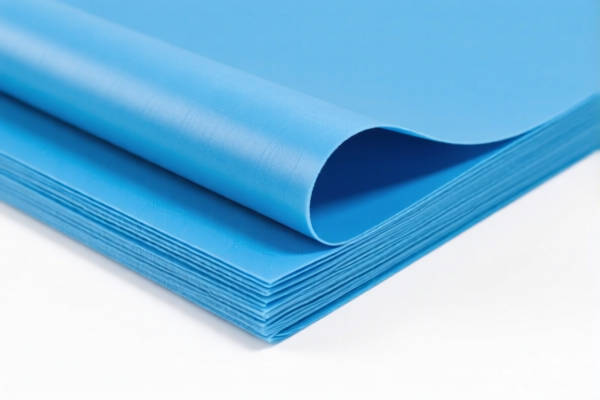
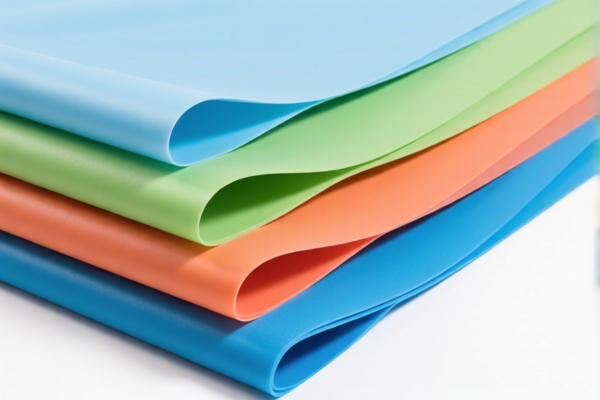
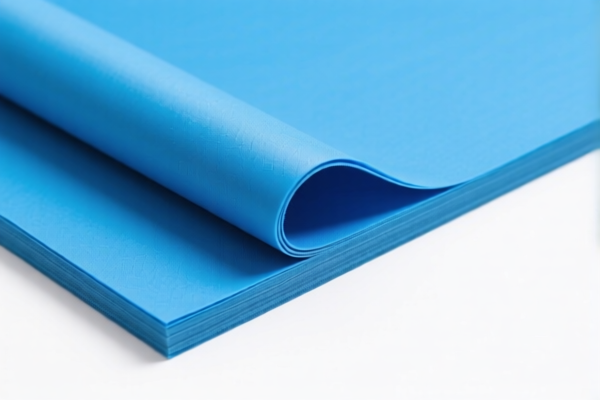
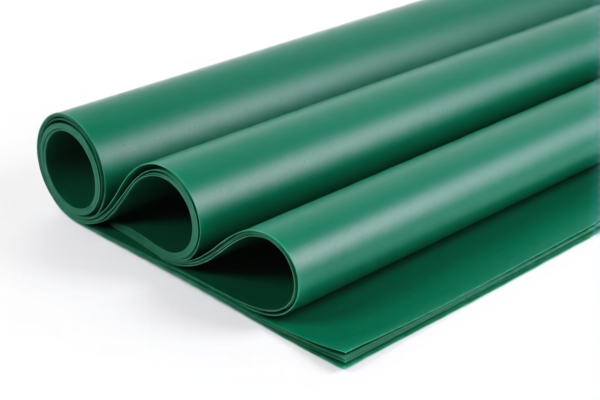
AI Analysis
🧵 Commercial Polyester Sheets
🌐 HS Code Reference & Customs Clearance Guide | 2026 Latest Tariff Analysis | Professional-Level Strategy
📌 Part 1: Product Definition & Classification: Do You Really Understand "Polyester Sheets"?
In international trade, "Commercial Polyester Sheets" is a broad term that can refer to two completely different types of goods, leading to vastly different tariff treatments. To avoid customs penalties or excessive duties, you must distinguish between:
1. Synthetic Monofilament & Strips (Polymer Filaments):
Thin, linear plastic strands or flat strips made of synthetic fibers (polyester). These are often used for industrial reinforcement, filtration, or artificial straw-like applications.
Key Feature: No cross-sectional dimension exceeds 1 mm (for filaments) or width ≤ 5 mm (for strips).
2. Plastics Sheets, Films, and Foils:
Flat, solid plastic products made from polyester (e.g., PET, Unsaturated Polyester Resin). These are used for packaging, construction, insulation, or lamination.
Key Feature: Solid plates, sheets, or film, not fiber-like strands.
⚠️ Critical Distinction:
- If the product is thin strands/strips → Look at Chapter 54 (Monofilament/Strip).
- If the product is solid sheets/film → Look at Chapter 39 (Plastics).
- Misclassification here is the #1 cause of customs seizures or 25%+ duty surprises.
📦 Part 2: HS Code Classification Details (2026 Latest Tariff Authority Match)
Based on the provided data, here are the exact HS Codes and descriptions available for Polyester Sheets/Filaments:
| HS Code | Product Description | Key Characteristics | Applicable Scenario |
|---|---|---|---|
5404.19.80.40 |
Synthetic Monofilament of ≥67 decitex... Other: Of polyesters | - No cross-sectional dimension > 1 mm - Width not specified for strip, but falls under monofilament rules - Material: Polyester specifically |
Industrial polyester threads, high-strength synthetic ropes, fine synthetic filaments |
5404.90.00.00 |
Synthetic Monofilament/Strip: Other | - No cross-sectional dimension > 1 mm or width ≤ 5 mm - Material: Synthetic (any type, not specified as polyester in this subheading, but often used as a catch-all) |
General synthetic strips/filaments not meeting the specific polyester definition of 5404.19 |
3921.90.11.00 |
Plastic Sheets/Film Combined with Textiles: ≤1.492 kg/m² | - Weight: ≤ 1.492 kg/m² - Textile components dominated by man-made fibers - Plastic content: > 70% by weight |
Lightweight laminated sheets, plastic-coated textiles, thin composite films |
3921.90.25.10 |
Plastic Sheets/Film Combined with Textiles: > 1.492 kg/m² | - Weight: > 1.492 kg/m² - Textile components dominated by man-made fibers - Plastic content: > 70% by weight |
Heavy-duty laminated sheets, reinforced plastic textiles, thick composite panels |
3920.63.20.00 |
Plastic Sheets (Non-cellular, Not Reinforced): Of Unsaturated Polyesters | - Material: Unsaturated Polyester specifically - Non-cellular (solid foam-free) - Not reinforced/laminated |
Pure polyester resin sheets, solid plastic plates, industrial polyester boards |
3920.99.20.00 |
Plastic Sheets/Film (Flexible): Other Plastics | - Material: Other Plastics (catch-all for non-specific plastics) - Flexible film/strip/sheet - Non-cellular, not reinforced |
General flexible polyester films, non-specific plastic sheets |
🔍 Key Reminder:
- Monofilaments (thin strands) go to 5404.
- Solid Sheets go to 3920 or 3921.
- Weight and Lamination determine the split between3921.90.11and3921.90.25.
- Material Specificity matters: "Unsaturated Polyester" has its own code (3920.63.20), while generic "Other Plastics" uses3920.99.20.
💰 Part 3: 2026 Latest Tariff Rate Breakdown (Detailed Tax Clauses)
✅ Applicable Country: United States (US)
✅ Origin: China (CN) (Implied by the 25% additional duty presence)
✅ Effective Time: Current 2026 Trade Policy
🎯 1. 5404.19.80.40 — Polyester Monofilament (≥67 decitex)
| Item | Content |
|---|---|
| Base Tariff | 0.0% |
| Additional Duty (USITC 301) | 0.0% |
| Total Tax Rate | 0.0% |
| Tax Calculation | CIF Value × 0% = $0 |
| Key Insight | ZERO DUTY. This is a highly favorable classification for polyester filaments. |
📌 Explanation:
- Polyester monofilament of specific decitex ranges enjoys 0% base + 0% additional duty.
- Ensure your product meets the ≥67 decitex and ≤1 mm cross-section criteria exactly.
🎯 2. 5404.90.00.00 — Other Synthetic Monofilament/Strip
| Item | Content |
|---|---|
| Base Tariff | 0.0% |
| Additional Duty (USITC 301) | +25.0% |
| Total Tax Rate | 25.0% |
| Tax Calculation | CIF Value × 25% |
| Key Insight | High Duty. If your product doesn’t fit the specific "polyester" subheading or other criteria, it falls here with a steep 25% tax. |
📌 Explanation:
- This is a "catch-all" for synthetic filaments/strips.
- Avoid this code if your product qualifies for5404.19.80.40(0% duty). Misclassification here costs 25% of the goods' value.
🎯 3. 3921.90.11.00 — Plastic Sheets Combined with Textiles (≤1.492 kg/m²)
| Item | Content |
|---|---|
| Base Tariff | 0.0% |
| Additional Duty (USITC 301) | 0.0% |
| Total Tax Rate | 0.0% |
| Tax Calculation | CIF Value × 0% = $0 |
| Key Insight | ZERO DUTY. For lightweight laminated sheets (<1.492 kg/m²). |
📌 Explanation:
- Must be ≤1.492 kg/m².
- Must have >70% plastic by weight.
- Textile component must be man-made fibers predominating.
🎯 4. 3921.90.25.10 — Plastic Sheets Combined with Textiles (>1.492 kg/m²)
| Item | Content |
|---|---|
| Base Tariff | 0.0% |
| Additional Duty (USITC 301) | 0.0% |
| Total Tax Rate | 0.0% |
| Tax Calculation | CIF Value × 0% = $0 |
| Key Insight | ZERO DUTY. For heavier laminated sheets (>1.492 kg/m²). |
📌 Explanation:
- The only difference from3921.90.11.00is the weight threshold.
- Both are 0% total duty, but you must classify correctly based on weight to avoid audit issues.
🎯 5. 3920.63.20.00 — Unsaturated Polyester Sheets (Non-cellular)
| Item | Content |
|---|---|
| Base Tariff | 0.0% |
| Additional Duty (USITC 301) | 0.0% |
| Total Tax Rate | 0.0% |
| Tax Calculation | CIF Value × 0% = $0 |
| Key Insight | ZERO DUTY. For pure, non-cellular unsaturated polyester sheets. |
📌 Explanation:
- Material must be Unsaturated Polyester.
- Must be Non-cellular (no foam).
- Must Not be reinforced/laminated with other materials.
🎯 6. 3920.99.20.00 — Other Flexible Plastic Sheets/Films
| Item | Content |
|---|---|
| Base Tariff | 4.2% |
| Additional Duty (USITC 301) | +25.0% |
| Total Tax Rate | 29.2% |
| Tax Calculation | CIF Value × 29.2% |
| Key Insight | HIGHEST DUTY. For generic flexible plastic sheets not fitting other specific categories. |
📌 Explanation:
- This is the "default" code for flexible plastics.
- Avoid if possible. If your product is a specific type of polyester (e.g., unsaturated), use3920.63.20.00instead to save 29.2%.
🛠️ Part 4: Customs Clearance Practical Advice (Real-World Pitfall Avoidance)
✅ 1. Preparation Checklist (Do Not Skip)
| Document | Required? | Notes |
|---|---|---|
| ✅ Product Specification Sheet | ✔️ | Must specify: Material (Polyester vs. Other), Form (Filament vs. Sheet), Weight (if laminated), Decitex (if monofilament). |
| ✅ Cross-Sectional Dimension Data | ✔️ | Critical for 5404 codes. Must prove no dimension >1 mm (for filaments). |
| ✅ Weight per Square Meter | ✔️ | Critical for 3921 codes. Must prove if ≤1.492 kg/m² or >1.492 kg/m². |
| ✅ Composition Analysis | ✔️ | Must prove >70% plastic by weight for 3921 codes. |
| ✅ Photos (Clear, Macro) | ✔️ | Show texture (flat sheet vs. strand) to distinguish Chapter 54 vs. Chapter 39. |
✅ 2. Declaration Tips (Key Mantra)
🔥 "Check the Shape, Check the Weight, Don't Miss the 0% Codes!"
| Situation | Correct HS Code | Wrong Code (High Risk) | Consequence |
|---|---|---|---|
| Thin Polyester Strands (≤1mm) | 5404.19.80.40 (0%) |
5404.90.00.00 (25%) |
Lose 25% of value |
| Lightweight Laminated Sheets (<1.492 kg/m²) | 3921.90.11.00 (0%) |
3920.99.20.00 (29.2%) |
Lose 29.2% of value |
| Heavy Laminated Sheets (>1.492 kg/m²) | 3921.90.25.10 (0%) |
3920.99.20.00 (29.2%) |
Lose 29.2% of value |
| Pure Unsaturated Polyester Sheets | 3920.63.20.00 (0%) |
3920.99.20.00 (29.2%) |
Lose 29.2% of value |
| Generic Flexible Plastic Film | 3920.99.20.00 (29.2%) |
N/A (Correct) | Pay 29.2% |
✅ 3. Special Handling Cases
| Situation | Recommendation |
|---|---|
| Product is Both Filament and Sheet? | Declare separately. Filaments go to Ch. 54, Sheets go to Ch. 39. Never mix. |
| Laminated Product? | Measure weight per square meter precisely. This is the sole determinant for 3921 subcodes. |
| Polyester Type Unknown? | Provide chemical analysis. If it's "Unsaturated Polyester," use 3920.63.20.00 (0%). If generic, 3920.99.20.00 (29.2%). |
| Customs Audit Risk? | Have lab reports ready to prove "Monofilament" definition (no dim >1mm) or "Polyester" composition. |
🌍 Part 5: Global Market Comparison (2026 Update)
| Country/Region | Recommended HS Code | Total Tariff (China Origin) | Notes |
|---|---|---|---|
| 🇺🇸 USA | Varies (See above) | 0% to 29.2% | Critical: 301 Section duties apply. Precision classification is vital. |
| 🇨🇳 China | Varies | ~5-15% | Lower base duties, but no 301 tariffs. |
| 🇪🇺 EU | Varies | ~6.5% | No additional 25% duty. Standard MFN rates apply. |
| 🇬🇧 UK | Varies | ~6.5% | Post-Brexit, similar to EU. |
| 🇦🇺 Australia | Varies | ~5% | No major additional tariffs. |
📌 Conclusion:
- The USA is the most complex market due to the 0% vs. 25-29% duty cliff.
- EU/UK/Australia have simpler, lower tariffs, but you still need accurate HS codes for statistical purposes.
📌 Part 6: Common Mistakes & Pitfalls (Lessons Learned)
❌ Mistake 1: Calling all polyester products "Sheets"
👉 Result: If it's a filament, it’s Ch. 54 (0-25%). If it’s a sheet, it’s Ch. 39 (0-29.2%). Wrong code = Audit.
❌ Mistake 2: Ignoring the 1.492 kg/m² weight threshold for laminated sheets
👉 Result: Both 3921.90.11.00 and 3921.90.25.10 are 0% duty. Misclassifying a heavy sheet as "other" (3920.99.20.00) triggers 29.2% duty.
❌ Mistake 3: Assuming all polyester filaments are 0%
👉 Result: Only 5404.19.80.40 (specific polyester filaments) is 0%. 5404.90.00.00 is 25%.
✅ Correct Approach:
"Polyester Monofilament, 100 decitex, 0.5mm diameter, industrial grade"
vs.
"Polyester Film, Unsaturated Resin, 2mm thickness, non-cellular"
vs.
"Laminated Polyester-Plastic Sheet, 1.2 kg/m²"
🎯 Part 7: Conclusion: Precision Classification Saves Money!
🎯 Remember the Mantra:
🔹 "Filament: Check Decitex & Dimension (0% vs 25%)"
🔹 "Sheet: Check Weight & Material (0% vs 29.2%)"
🔹 "Laminated: Check Weight Threshold (0% vs 29.2%)"
🔹 "One Wrong Digit, One Tax Bill Disaster!"
📌 Pro Tip:
If your product is generic flexible plastic film and you cannot prove it is "Unsaturated Polyester" or "Laminated," you will likely be stuck with 3920.99.20.00 (29.2%).
Action: Work with your supplier to obtain Material Safety Data Sheets (MSDS) and Composition Reports to justify a 0% duty code.
📣 Immediate Action:
📞 Provide Product Specs (Weight, Dimension, Material Type)
📄 Apply for Advance Ruling if shipment value is high
🚀 Accurate HS Code = Accurate Cost = Competitive Edge!
✨ Professional Customs Clearance Starts with Precise Classification!
💼 Every Percent Saved is Pure Profit!
Customer Reviews
About HS Code Classification
The Harmonized System (HS) is an internationally standardized nomenclature developed by the World Customs Organization (WCO) to classify traded products. Over 200 countries use the HS system as the basis for customs tariffs, trade statistics, and import/export regulations.
Each HS code follows a hierarchical structure:
- Chapter (2 digits) — Broad category of goods (e.g., Chapter 84: Machinery and Mechanical Appliances)
- Heading (4 digits) — More specific grouping within the chapter
- Subheading (6 digits) — Internationally standardized breakdown, used by all WCO member countries
- National subdivisions (8-10 digits) — Country-specific extensions for further classification, such as US HTSUS 10-digit codes
Correct HS code classification is essential for smooth customs clearance, accurate duty payment, and compliance with trade regulations. Misclassification can lead to customs delays, overpayment of duties, or penalties.
When importing from CN to US, the applicable tariff rates may include:
- Most-Favored-Nation (MFN) rate — The standard duty rate applied to WTO members
- General rate — Applied to countries without trade agreements
- Trade remedy duties — Additional tariffs such as Section 301 (anti-dumping), Section 232 (national security), or countervailing duties
The information provided on this page is for reference purposes only. For official classification, please consult with your local customs authority or a licensed customs broker.