Commercial Use Vegetable Fiber Woven Floor Mats
CN → US| HS Code | Tariff Rate | Origin | Destination | Doc |
|---|---|---|---|---|
| 5705002090 | 38.3% | CN | US | Official Doc |
| 4601214000 | 38.3% | CN | US | Official Doc |
| 3926909989 | 22.8% | CN | US | Official Doc |
| 5705001000 | 35.0% | CN | US | Official Doc |
| 4601296000 | 39.8% | CN | US | Official Doc |
Product Images
AI Analysis
🌿 Commercial Use Vegetable Fiber Woven Floor Mats: The Ultimate Import Compliance Guide (US Market)
🌐 HS Code Classification & Customs Clearance Strategy | 2026 Tariff Update | Professional Trade Compliance
📌 Part 1: Product Definition & The Classification Dilemma
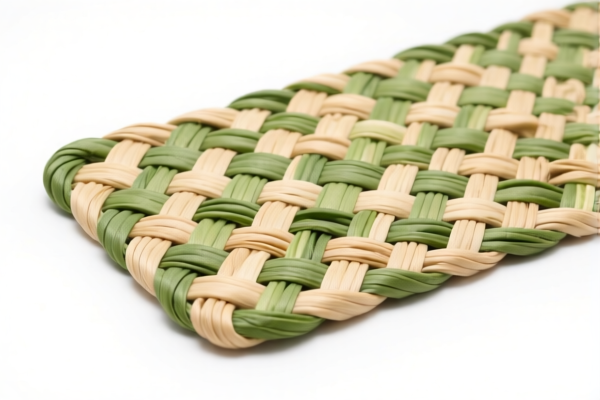
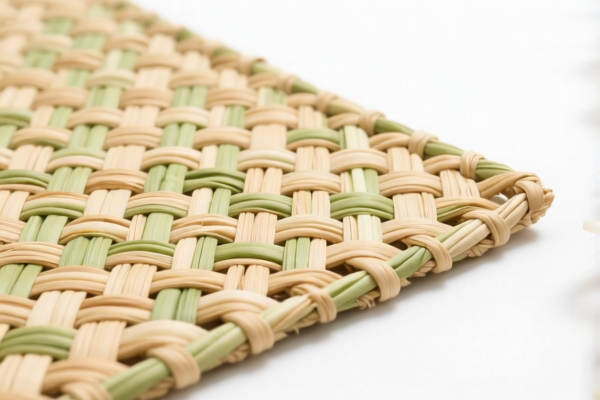
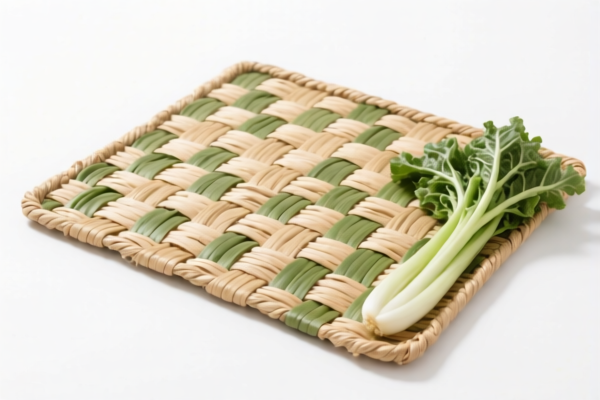
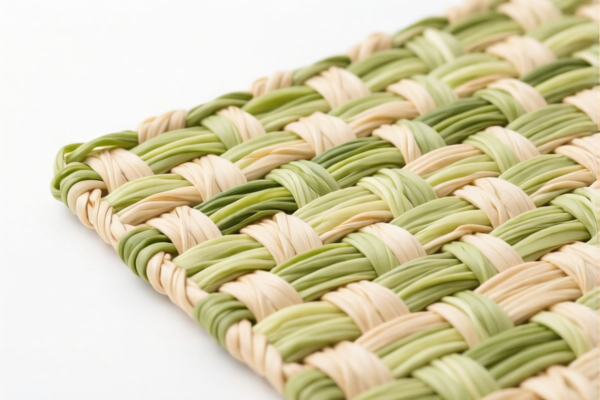
Commercial Use Vegetable Fiber Woven Floor Mats are durable, textured flooring solutions designed for high-traffic areas, entryways, patios, or industrial spaces. They are typically made from natural plant fibers (such as sisal, coir, jute, or similar botanical materials) woven into a solid mat structure.
In international trade, the classification of these mats is highly contentious because customs authorities may view them through three different lenses: 1. Textile/Floor Covering Lens: As a finished carpet or floor covering. 2. Woven Plant Material Lens: As an article of wicker, rush, or other plaiting materials. 3. Synthetic/Plastic Lens: If "vegetable fiber" is misinterpreted or if the binding agent is significant plastic.
⚠️ Critical Distinction:
- "Vegetable Fiber" usually implies natural plant fibers (coir, sisal, hemp, jute).
- "Woven" implies a structural integrity created by interlacing strands.
- "Floor Mats" vs. "Rugs": Mats often have backing or specific utility functions, but for HS Code purposes, the material and form dictate the heading more than the "mat" label alone.
📦 Part 2: HS Code Classification Matrix (2026 Official Data)
Based on the provided data, here are the four potential HS Codes with their corresponding tax implications for imports into the United States (assuming Chinese origin based on the 122/301 tariff details).
| HS Code | Product Description & Logic | Total Tax Rate | Tax Breakdown |
|---|---|---|---|
| 5705.00.20.90 | Textile Floor Coverings Viewed as other carpets or textile floor coverings made from vegetable fibers. |
38.3% | Base: 3.3% Add'l: 25.0% 122-Clause: 10% |
| 4601.21.40.00 | Woven Plant Materials (Bamboo/Plant) Vegetable fibers are classified as plant materials. This heading covers mats/plaits of bamboo or similar plant materials. |
38.3% | Base: 3.3% Add'l: 25.0% 122-Clause: 10% |
| 3926.90.99.89 | Plastic Articles (Miscellaneous) Applied if the commodity is inferred to be synthetic fiber or plastic-based, or if the vegetable fiber content is deemed negligible/bound heavily with plastic. |
22.8% | Base: 5.3% Add'l: 7.5% 122-Clause: 10% |
| 5705.00.10.00 | Coir-like Natural Fiber Carpets Specifically for mats made of natural fibers similar to coconut coir. |
35.0% | Base: 0.0% Add'l: 25.0% 122-Clause: 10% |
| 4601.29.60.00 | Other Woven Plant Mats Plaits and other products of plaiting materials (vegetable fiber), not elsewhere specified, used as mats. |
39.8% | Base: 4.8% Add'l: 25.0% 122-Clause: 10% |
🔍 Key Insight:
The tax rate fluctuates between 22.8% and 39.8% depending entirely on how Customs interprets the material composition and specific fiber type.
- Lowest Tax:3926.90.99.89(22.8%) – But risky if the product is 100% natural.
- Most Common for Natural Mats:5705or4601headings (35%–39.8%).
💰 Part 3: Detailed Tariff & Policy Analysis (US Import)
🎯 1. The "122-Clause" & Section 301 Tariffs
All classifications above (except the potentially lower plastic one) are subject to significant Additional Duties.
- Base Duty (MFN): Ranges from 0.0% (for coir-like mats under 5705.10) to 5.3% (for plastic articles).
- Section 301 Tariff (USITC Footnote): 25.0% applies to almost all textile and woven plant goods from China. This is the biggest cost driver.
- Section 122 Tariff (IEEPA): 10% applies specifically to goods from China/Hong Kong under the International Emergency Economic Powers Act.
📊 Tax Calculation Example (CIF Value: $10,000)
| HS Code | Base Duty | Sec 301 (25%) | Sec 122 (10%) | Total Tax Amount | Effective Rate |
|---|---|---|---|---|---|
| 3926.90.99.89 (Plastic) | $530 | $750 | $1,000 | $2,280 | 22.8% |
| 5705.00.10.00 (Coir) | $0 | $2,500 | $1,000 | $3,500 | 35.0% |
| 5705.00.20.90 (Textile) | $330 | $2,500 | $1,000 | $3,830 | 38.3% |
| 4601.29.60.00 (Plant Mats) | $480 | $2,500 | $1,000 | $3,980 | 39.8% |
📌 Note: The "Base Duty" is calculated on the CIF value. The 25% and 10% are typically additive or applied sequentially depending on the specific CBP ruling, but the Total Tax percentage provided in the data source is the definitive figure to use for cost estimation.
🛠️ Part 4: Customs Clearance & Risk Mitigation Strategy
✅ 1. Critical Documentation Requirements
To avoid misclassification audits, you must provide precise documentation that aligns with the chosen HS Code.
| Document | Requirement | Why It Matters |
|---|---|---|
| Product Description | Must specify: "Floor Mat," "Vegetable Fiber," "Woven," "Material % Composition." | Vague terms like "Decorative Mat" lead to default high rates or holds. |
| Material Composition | Detailed breakdown: e.g., "80% Sisal, 20% Cotton Backing" OR "100% Coir." | Determines if it's 4601 (Plant) or 5705 (Textile). |
| Material Safety Data Sheet (MSDS) | If plastic binding agents are used. | Crucial for justifying 3926 classification. |
| Process Description | Explain weaving process, drying, and treatment. | Proves it is a "woven product" (4601) vs. "carpet" (5705). |
| Commercial Invoice | Must match the HS Code description exactly. | Discrepancies trigger manual review. |
✅ 2. Classification Strategy: How to Choose the Right Code?
🟢 Scenario A: You want the LOWEST Tax (22.8%)
- Target HS Code:
3926.90.99.89 - Requirement: The product must be predominantly plastic or synthetic, OR the vegetable fiber is negligible and the product is considered a "plastic article" due to heavy polymer binding.
- Risk: HIGH. If Customs performs a physical inspection and finds 100% natural fibers, they will reclassify to
4601or5705, resulting in back taxes + penalties. - Advice: Only use this if the product contains significant synthetic components (e.g., rubber backing + plastic weave).
🟡 Scenario B: It is Pure Natural Fiber (Sisal/Coir/Jute)
- Target HS Codes:
5705.00.10.00(35.0%) or4601.21.40.00(38.3%) - Logic:
- If it resembles Coir (coconut fiber),
5705.00.10.00is the best option (0% base duty). - If it is Sisal/Jute/Bamboo woven like a basket/mat,
4601chapters are more accurate.
- If it resembles Coir (coconut fiber),
- Advice: Provide botanical evidence or lab tests confirming the fiber type.
🔴 Scenario C: Textile-Based Mat (Synthetic Blend or Heavy Textile Construction)
- Target HS Code:
5705.00.20.90(38.3%) - Logic: If the mat is woven like a carpet using textile yarns (even if natural), it falls under Chapter 57.
- Advice: Use this if the weaving technique mimics carpet manufacturing (tufted, woven pile) rather than plaited mat construction.
✅ 3. Common Customs Pitfalls & Avoidance
| Pitfall | Consequence | Solution |
|---|---|---|
| Mislabeling "Vegetable" as "Synthetic" | False Declaration Penalties | Never lie about material content. If it's natural, declare natural. |
| Vague "Floor Mat" Description | Customs Holds for "Missing Info" | Include fiber type, dimensions, and backing material in the description. |
| Ignoring Backing Material | Misclassification | If the backing is rubber/plastic, it might still fall under 3926 if the rubber is primary, but usually, the face material dictates Chapter 57/46. Check specific US CBP rulings. |
| Assuming 0% Duty for Natural Goods | Surprise Tax Bills | Remember: Even if Base Duty is 0%, 35% total tax (25% Sec 301 + 10% Sec 122) still applies. |
🌍 Part 5: Global Market Comparison (Quick Reference)
| Market | Typical HS Code | Est. Duty (CN Origin) | Key Requirement |
|---|---|---|---|
| 🇺🇸 USA | 4601 or 5705 |
35% - 39.8% | Strict Section 301 & 122 tariffs. |
| 🇨🇳 China | 4601 or 5705 |
5% - 10% | Standard Import Duty. |
| 🇪🇺 EU | 4601 or 5705 |
0% - 12% | No Section 301/122 equivalents. |
| 🇬🇧 UK | 4601 or 5705 |
0% - 12% | Post-Brexit trade terms apply. |
📌 Conclusion:
The US market is the most expensive for importing vegetable fiber mats due to the combination of Section 301 and Section 122 tariffs.
- Cost Saving Tip: If your product has a significant plastic/rubber component, argue for3926(22.8%) instead of4601/5705(38%+). However, this requires robust material proof.
- Best Natural Option: If 100% natural, aim for5705.00.10.00(Coir-like) to save the 3.3% base duty, though the 35% total remains high.
📌 Part 6: Final Recommendation for Importers
- Conduct a Material Audit: Determine the exact percentage of vegetable fiber vs. plastic/rubber backing.
- Seek a Binding Ruling: Before shipping, apply to CBP for a Binding Tariff Ruling using the specific product samples. This protects you from retroactive audits.
- Optimize Documentation: Ensure your invoice explicitly states: "Woven Floor Mat, 100% Sisal Fiber (Vegetable), No Plastic Binding" (if true) to support the
4601or5705classification. - Budget for 35-39% Tax: Do not assume natural materials qualify for low duties. The "Green" label does not exempt you from US trade wars.
✨ Professional Clearance Starts with Precision!
💼 Don't let misclassification eat your margins. Choose the right HS Code based on material reality, not marketing terms.
Customer Reviews
About HS Code Classification
The Harmonized System (HS) is an internationally standardized nomenclature developed by the World Customs Organization (WCO) to classify traded products. Over 200 countries use the HS system as the basis for customs tariffs, trade statistics, and import/export regulations.
Each HS code follows a hierarchical structure:
- Chapter (2 digits) — Broad category of goods (e.g., Chapter 84: Machinery and Mechanical Appliances)
- Heading (4 digits) — More specific grouping within the chapter
- Subheading (6 digits) — Internationally standardized breakdown, used by all WCO member countries
- National subdivisions (8-10 digits) — Country-specific extensions for further classification, such as US HTSUS 10-digit codes
Correct HS code classification is essential for smooth customs clearance, accurate duty payment, and compliance with trade regulations. Misclassification can lead to customs delays, overpayment of duties, or penalties.
When importing from CN to US, the applicable tariff rates may include:
- Most-Favored-Nation (MFN) rate — The standard duty rate applied to WTO members
- General rate — Applied to countries without trade agreements
- Trade remedy duties — Additional tariffs such as Section 301 (anti-dumping), Section 232 (national security), or countervailing duties
The information provided on this page is for reference purposes only. For official classification, please consult with your local customs authority or a licensed customs broker.