Commercial Vehicle Brake Fluid
CN → US| HS Code | Tariff Rate | Origin | Destination | Doc |
|---|---|---|---|---|
| 3403191000 | 35.2% | CN | US | Official Doc |
| 3403195000 | 40.8% | CN | US | Official Doc |
| 3819000010 | 41.5% | CN | US | Official Doc |
| 3824999310 | 40.0% | CN | US | Official Doc |
| 3824999330 | 40.0% | CN | US | Official Doc |
Product Images
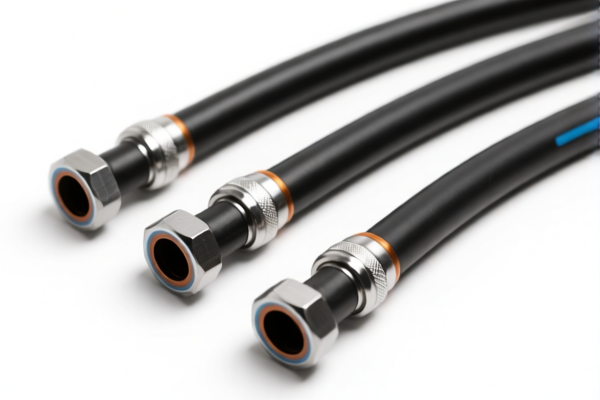
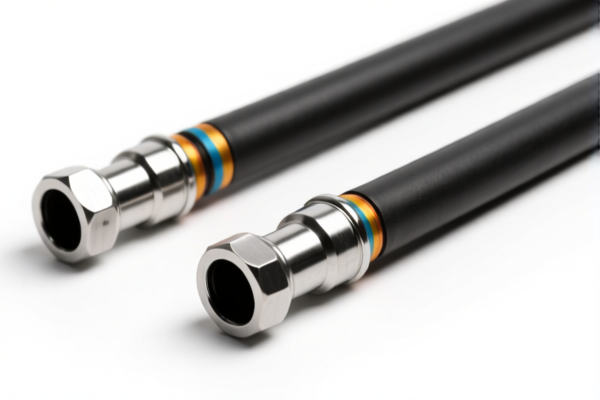
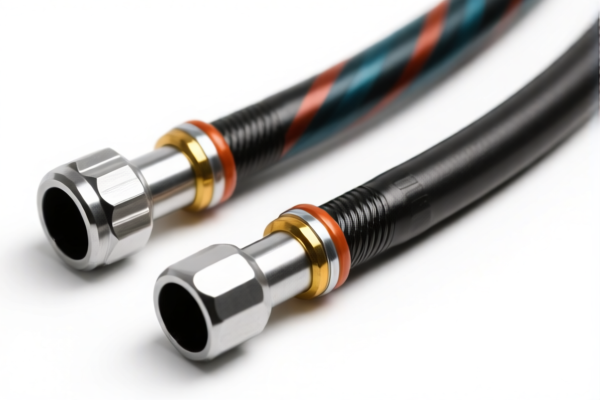
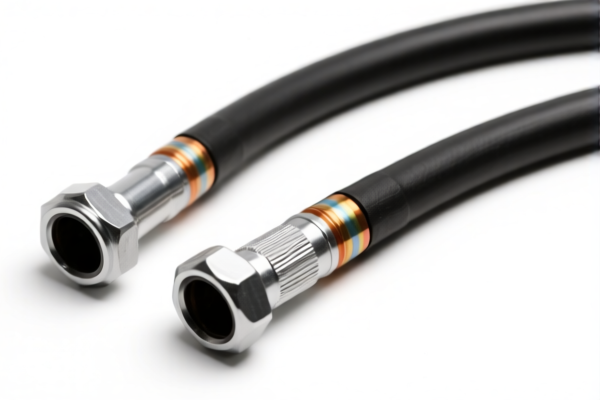
AI Analysis
🚛 Commercial Vehicle Brake Fluid (Hydraulic Brake Fluid)
🌐 HS Code Reference & Customs Clearance Guide | 2026 Latest Tariff Analysis | Professional Clearance Strategy
📌 I. Product Definition & Classification: Do You Really Understand "Brake Fluid"?
Commercial Vehicle Brake Fluid is a specialized liquid lubricant used in vehicle braking systems to transmit pressure and ensure optimal performance. In international trade, its classification depends heavily on its material composition and functional purpose. It is generally categorized as a preparation of lubricating substances or a chemical mixture.
Key Distinction Points: * Oil-Based/Mineral Oil Content: If the fluid contains petroleum oils or mineral oils, it leans towards Chapter 34 (Lubricating Preparations). * Alcohol-Based/Glycol-Based: If the fluid is primarily composed of non-cyclic, mono-hydroxy, unsubstituted alcohols (like ethylene glycol or propylene glycol), it leans towards Chapter 38 (Chemical Products & Preparations). * Hydraulic Function: If classified by its specific use as a hydraulic transmission fluid, it falls under specific subheadings in Chapter 38.
⚠️ Critical Note for Clearing:
- Misclassifying an oil-based fluid as an alcohol-based mixture (or vice versa) can lead to significant duty differences due to varying "Section Notes" and "Chapter Notes."
- All options below attract substantial Additional Duties (Section 301 & Section 122) if originating from China.
📦 II. HS Code Classification Details (2026 Latest Tariff Authority Mapping)
Based on the provided data, here are the five potential HS Code classifications for Commercial Vehicle Brake Fluid, along with their rationale and total tax burden.
| HS Code | Classification Logic & Summary | Total Tax Rate (China Origin) | Tax Breakdown |
|---|---|---|---|
| 3403.19.10.00 | Oil-Based Lubricant: Classified as liquid preparations containing petroleum or mineral oils, fitting the material characteristics of lubricating/handling preparations. | 35.2% | Base: 0.2% Add'l: 25.0% Sec 122: 10% |
| 3403.19.50.00 | Functional Lubricant: Classified as a liquid preparation for lubrication and pressure transmission in brake systems, fitting the functional characteristics of lubricating preparations. | 40.8% | Base: 5.8% Add'l: 25.0% Sec 122: 10% |
| 3819.00.00.10 | Hydraulic Transmission Fluid: Classified based on its consistent use with "hydraulic brake fluid" and its material as a pre-mixed liquid for hydraulic transmission. | 41.5% | Base: 6.5% Add'l: 25.0% Sec 122: 10% |
| 3824.99.93.10 | Alcohol Mixture (Inferred): Classified as a mixture of non-cyclic, mono-hydroxy, unsubstituted alcohols (e.g., ethylene or propylene glycol), fitting the material characteristics of alcohol mixtures. | 40.0% | Base: 5.0% Add'l: 25.0% Sec 122: 10% |
| 3824.99.93.30 | Chemical Mixture with Alcohol: Classified as a chemical mixture containing alcohol components, fitting the material attribute of "Other Chemical Products & Preparations." | 40.0% | Base: 5.0% Add'l: 25.0% Sec 122: 10% |
🔍 Key Insight:
- The lowest duty is 35.2% under3403.19.10.00, assuming the product is strictly defined as containing petroleum/mineral oils.
- The highest duty is 41.5% under3819.00.00.10.
- All categories incur the same Additional Duties: 25% (Section 301) + 10% (Section 122), totaling 35% in added tariffs on top of the base rate.
💰 III. 2026 Latest Tariff Rate Breakdown (Including Additional Duties & Policy Add-ons)
✅ Applicable Country: United States (US)
✅ Country of Origin: China (CN)
✅ Effective Date: 2025/2026 (Current Trade Policies)
🎯 1. 3403.19.10.00 —— Lubricating Preparations (Oil-Based)
- Best Case Scenario for Cost
| Item | Detail |
|------|--------|
| Base Duty Rate | 0.2% (ad valorem) |
| USITC Additional Duty | +25% (Section 301 Tariff) |
| Section 122 Additional Duty | +10% (Trade remedy/Section 122) |
| Total Landed Duty | 35.2% |
| Calculation Basis | CIF Value × 35.2% |
| De Minimis Exemption | ❌ Not Applicable (High value threshold issues) |
| Legal Path |
HTSUS:3403.19.10.00→USITC:25%→Section 122:10%|
📌 Explanation:
- This code assumes the brake fluid is primarily mineral oil-based.
- The base rate is minimal, but the 35%叠加附加税 (35% stacked additional duties) makes the total effective rate significant.
- Verification Needed: Chemical Safety Data Sheet (SDS) must explicitly state "Petroleum Oils" or "Mineral Oils" as primary ingredients.
🎯 2. 3403.19.50.00 —— Lubricating Preparations (Other Functional)
| Item | Detail |
|---|---|
| Base Duty Rate | 5.8% |
| USITC Additional Duty | +25% |
| Section 122 Additional Duty | +10% |
| Total Landed Duty | 40.8% |
| Calculation Basis | CIF Value × 40.8% |
| De Minimis Exemption | ❌ Not Applicable |
| Legal Path | HTSUS:3403.19.50.00 → USITC:25% → Section 122:10% |
📌 Note:
- Slightly higher base rate due to broader categorization of lubricating preparations not specifically listed elsewhere.
- Suitable if the fluid is a multi-functional lubricant but not strictly a hydraulic transmission fluid.
🎯 3. 3819.00.00.10 —— Hydraulic Transmission Fluids
| Item | Detail |
|---|---|
| Base Duty Rate | 6.5% |
| USITC Additional Duty | +25% |
| Section 122 Additional Duty | +10% |
| Total Landed Duty | 41.5% |
| Calculation Basis | CIF Value × 41.5% |
| De Minimis Exemption | ❌ Not Applicable |
| Legal Path | HTSUS:3819.00.00.10 → USITC:25% → Section 122:10% |
📌 Explanation:
- This is the most specific functional classification for hydraulic fluids.
- Highest Total Duty (41.5%).
- Use this only if the product is exclusively marketed and formulated as a hydraulic transmission fluid distinct from general lubricants.
🎯 4 & 5. 3824.99.93.10 & 3824.99.93.30 —— Chemical Mixtures (Alcohol-Based)
| Item | Detail |
|---|---|
| Base Duty Rate | 5.0% |
| USITC Additional Duty | +25% |
| Section 122 Additional Duty | +10% |
| Total Landed Duty | 40.0% |
| Calculation Basis | CIF Value × 40.0% |
| De Minimis Exemption | ❌ Not Applicable |
📌 Distinction between .10 and .30:
-.10: Focuses on the chemical structure (non-cyclic, mono-hydroxy alcohols like Ethylene Glycol).
-.30: Focuses on the product category (Chemical mixtures containing alcohol components).
- Both result in the same total duty (40.0%).
- Requirement: SDS must highlight Ethylene Glycol or Propylene Glycol as the primary solvent/base.
🛠️ IV. Customs Clearance Practical Advice (Avoid Pitfalls)
✅ 1. Documentation Checklist (Mandatory)
| Document | Required? | Purpose |
|---|---|---|
| ✅ Safety Data Sheet (SDS) | YES | Crucial. Must explicitly state chemical composition (Oil vs. Glycol) to justify HS Code. |
| ✅ Product Specification Sheet | YES | Details viscosity, flash point, and compatibility (DOT 3/4/5.1). |
| ✅ Commercial Invoice | YES | Clearly state "Commercial Vehicle Brake Fluid" and HS Code. |
| ✅ Certificate of Origin (CO) | YES | To prove China origin and apply/adduct correct tariffs. |
| ✅ Packaging List | YES | Show net weight and packaging type (drums, bottles). |
| ✅ Label/Marking Photos | YES | Show hazard labels (Flammable, Corrosive) to ensure compliance with DOT/HAZMAT. |
✅ 2. Classification Strategy (Key Rules)
| Scenario | Recommended HS Code | Risk if Misclassified |
|---|---|---|
| Mineral Oil Based | 3403.19.10.00 |
If declared as Chemical Mixture, may face higher duties or seizure for mismatched SDS. |
| Glycol Based (DOT 3/4) | 3824.99.93.10 |
If declared as Oil-Based, incorrect material claim → Penalties. |
| Hydraulic Specific | 3819.00.00.10 |
If declared as General Lubricant, underpaid duty → Audit Risk. |
🔥 "Code Determines Cost, SDS Determines Code!"
✅ 3. Special Considerations
| Issue | Handling Advice |
|---|---|
| Hazmat Classification | Brake fluid is often UN 1789 or UN 1993. Ensure IATA/IMDG/DOT compliance for air/sea freight. |
| Section 122 Tariffs | The 10% Section 122 duty is significant. Ensure no other exemptions apply (very rare for consumer/industrial chemicals from China). |
| Pre-Ruling | Strongly Recommended. Apply for a Binding Ruling from CBP before shipment to lock in the HS Code and avoid surprise duties. |
🌍 V. Global Market Comparison (2026)
| Region | Recommended HS Code | Est. Total Duty (China Origin) | Notes |
|---|---|---|---|
| 🇺🇸 USA | 3403.19.10.00 (Optimal) |
35.2% | Highest base option 3819 = 41.5%. All suffer 35% add-ons. |
| 🇨🇳 China | 3824.99.93.30 |
~1-2% | Low base duty. No Section 301/122. |
| 🇪🇺 EU | 3819.00.00 |
0-4% | No Section 301 tariffs. Standard MFN rates apply. |
| 🇬🇧 UK | 3819.00.00 |
0-4% | Similar to EU post-Brexit. |
📌 Conclusion:
- USA is the most expensive market for importing brake fluid from China due to Section 301 (25%) and Section 122 (10%) tariffs.
- China origin is the primary driver of high costs.
- Consider diversifying suppliers to Vietnam, Thailand, or Mexico if possible to mitigate tariff risks.
📌 VI. Common Mistakes & Pitfalls
❌ Mistake 1: Using generic name "Brake Fluid" without specifying chemical base.
👉 Consequence: CBP may reject the declaration or assign a default code with higher duty.
❌ Mistake 2: Ignoring the SDS chemical composition.
👉 Consequence: If SDS says "Glycol" but code is 3403 (Oil), it’s a material misrepresentation → Fines & Seizure.
❌ Mistake 3: Not accounting for Section 122.
👉 Consequence: Budgeting only for Base + Section 301 (25%) → Underpaying ~10% → Back Taxes & Interest.
✅ Correct Action:
“Specify Chemical Base in SDS, Match HS Code Precisely, Budget for 35%+ Add-Ons.”
🎯 VII. Conclusion: Professional Clearance, Cost Efficiency
🎯 Key Takeaway:
🔹 Mineral Oil Base →
3403.19.10.00→ 35.2% Total Duty (Lowest Option)
🔹 Glycol Base →3824.99.93.10→ 40.0% Total Duty
🔹 Hydraulic Specific →3819.00.00.10→ 41.5% Total Duty (Highest Option)
📌 Pro Tip:
If your brake fluid is Glycol-based, the duty difference between
3824(40%) and3819(41.5%) is small. However, if it is Oil-based,3403.19.10.00saves you ~5-6% compared to other options.
Always align your HS Code with your SDS!
📣 Immediate Action:
📞 Consult a Customs Broker to review your SDS.
📄 Apply for a CBP Binding Ruling before your first shipment to the US.
🚀 Optimize your supply chain to mitigate high US tariffs on Chinese goods.
✨ Precision in Classification, Profitability in Clearance!
💼 Don’t let duty miscalculations eat your margins!
Customer Reviews
About HS Code Classification
The Harmonized System (HS) is an internationally standardized nomenclature developed by the World Customs Organization (WCO) to classify traded products. Over 200 countries use the HS system as the basis for customs tariffs, trade statistics, and import/export regulations.
Each HS code follows a hierarchical structure:
- Chapter (2 digits) — Broad category of goods (e.g., Chapter 84: Machinery and Mechanical Appliances)
- Heading (4 digits) — More specific grouping within the chapter
- Subheading (6 digits) — Internationally standardized breakdown, used by all WCO member countries
- National subdivisions (8-10 digits) — Country-specific extensions for further classification, such as US HTSUS 10-digit codes
Correct HS code classification is essential for smooth customs clearance, accurate duty payment, and compliance with trade regulations. Misclassification can lead to customs delays, overpayment of duties, or penalties.
When importing from CN to US, the applicable tariff rates may include:
- Most-Favored-Nation (MFN) rate — The standard duty rate applied to WTO members
- General rate — Applied to countries without trade agreements
- Trade remedy duties — Additional tariffs such as Section 301 (anti-dumping), Section 232 (national security), or countervailing duties
The information provided on this page is for reference purposes only. For official classification, please consult with your local customs authority or a licensed customs broker.