Compartment Tray
CN → US| HS Code | Tariff Rate | Origin | Destination | Doc |
|---|---|---|---|---|
| 4419110000 | 13.2% | CN | US | Official Doc |
| 4602110900 | 45.0% | CN | US | Official Doc |
| 4602110700 | 35.0% | CN | US | Official Doc |
| 4419199000 | 13.2% | CN | US | Official Doc |
| 4414900000 | 21.4% | CN | US | Official Doc |
Product Images
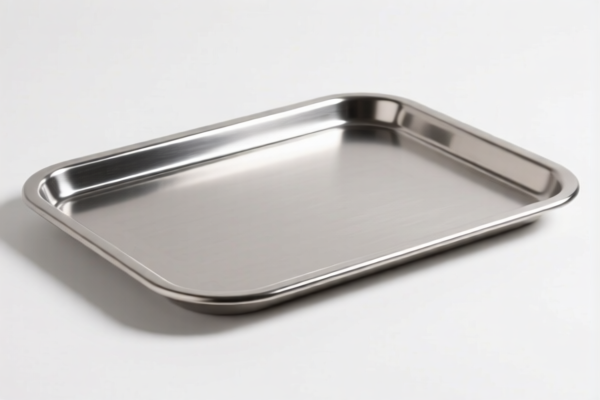
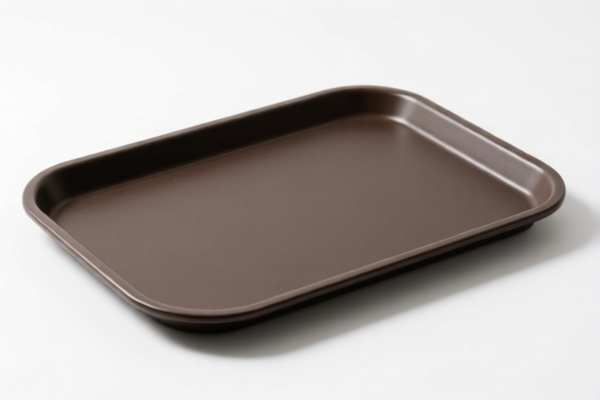
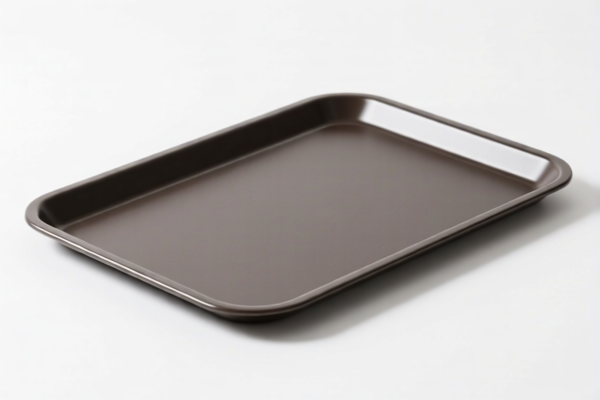

AI Analysis
🎋 Bamboo Compartment Tray: HS Code Classification & Duty Analysis (US Market)
🌐 HS Code Reference & Clearance Guide | 2026 Latest Tariff Rates | Professional Clearance Strategy
📌 I. Product Definition & Classification: What is a "Bamboo Compartment Tray"?
A Bamboo Compartment Tray is a tableware or kitchen utensil made primarily of bamboo, featuring divided sections (compartments) to separate different types of food. In international trade, the classification hinges on its primary use and construction method:
1. Tableware/Kitchen Utensils (Chapter 44):
If the item is clearly identifiable as a plate, dish, or tray used for serving food directly at the table or in the kitchen, it falls under "Tableware and kitchenware of bamboo." This is the most common and favorable classification for finished, ready-to-use serving trays.
2. Wickerwork/Basketry Articles (Chapter 46):
If the item is viewed as a woven container, basket, or carrier (emphasizing the weaving technique rather than its use as flatware/plate), it may be classified under "Baskets, wickerwork and other made-up articles." This classification often incurs significantly higher tariffs due to specific trade restrictions.
⚠️ Key Distinction:
- Finished Serving Tray → Likely Chapter 44 (Lower Duty)
- Woven Carrier/Basket-style Tray → Likely Chapter 46 (Higher Duty)
📦 II. HS Code Classification Details (2026 Latest Tariff Concordance)
| HS Code | Product Description | Scenario | Key Characteristic |
|---|---|---|---|
4419.11.00.00 |
Bamboo Tableware: Plates, Dishes, Trays (Similar to Plates) | Finished serving tray, flat design, used for dining | ✅ Tableware Category |
4419.19.90.00 |
Other Bamboo Tableware and Kitchenware | Other bamboo kitchen items not specifically listed as plates/trays | ✅ Tableware Category |
4602.11.09.00 |
Baskets and Other Wickerwork: Of Bamboo | Woven basket-like tray, carrier, or storage container | ❌ Wickerwork Category |
4602.11.07.00 |
Baskets and Other Wickerwork: Of Bamboo | Woven compartmentalized basket/tray | ❌ Wickerwork Category |
4414.90.00.00 |
Other Wooden Frames (Inferred as Wood/Bamboo Frame) | Tray structure viewed as a wooden framework/frame | ⚠️ Ambiguous/Framework |
🔍 Critical Note:
- Chapter 44 (Tableware/Kitchenware) is generally preferred for finished, flat serving trays.
- Chapter 46 (Wickerwork) applies if the item is considered a woven container or basket, even if used for serving. This distinction is crucial because duties differ drastically (13.2% vs. 35-45%).
- Chapter 44.14 is rarely applicable unless the "tray" is essentially a frame without a substantial base, but bamboo trays are typically classified as tableware or basketry.
💰 III. 2026 Latest Tariff Rates Detailed (Including Surtaxes & Policy Surcharges)
✅ Applicable Country: United States (US)
✅ Country of Origin: China (CN)
✅ Effective Date: From November 10, 2025 onwards (including subsequent imports)
🎯 1. 4419.11.00.00 & 4419.19.90.00 —— Bamboo Tableware (Recommended)
| Item | Details |
|---|---|
| Base Duty Rate | 3.2% (Ad Valorem) |
| Section 301 Surtax | 0.0% |
| 122 Section Surtax | 10.0% (Specific to certain Chinese imports) |
| Total Duty Rate | 13.2% |
| Tax Calculation | CIF Value × 13.2% |
| De Minimis Eligibility | ❌ No (Deny De Minimis) |
| Legal Basis Path | USITC:4419.11.00.00 → 122 Clause: 10% |
📌 Explanation:
- The Base Duty for bamboo tableware is low (3.2%).
- There is NO Section 301 (25%) surtax for these specific HS codes under the current data.
- However, a 10% "122 Clause" surtax applies, bringing the total to 13.2%.
- This is the most cost-effective classification if the product is clearly a tableware item.
🎯 2. 4602.11.09.00 & 4602.11.07.00 —— Bamboo Wickerwork/Baskets (High Risk)
A. 4602.11.09.00 (General Bamboo Baskets)
| Item | Details |
|---|---|
| Base Duty Rate | 10.0% (Ad Valorem) |
| Section 301 Surtax | 25.0% (Standard USITC Footnote for Chinese goods) |
| 122 Section Surtax | 10.0% |
| Total Duty Rate | 45.0% |
| Tax Calculation | CIF Value × 45.0% |
| De Minimis Eligibility | ❌ No (Deny De Minimis) |
| Legal Basis Path | USITC:4602.11.09.00 → Section 301: 25% → 122 Clause: 10% |
📌 Warning:
- This classification attracts the maximum penalty rate of 45%.
- It combines the base duty (10%), the heavy Section 301 tariff (25%), and the 122 Clause (10%).
- Avoid this classification if your product can reasonably be defined as tableware.
B. 4602.11.07.00 (Bamboo Compartment Baskets)
| Item | Details |
|---|---|
| Base Duty Rate | 0.0% |
| Section 301 Surtax | 25.0% |
| 122 Section Surtax | 10.0% |
| Total Duty Rate | 35.0% |
| Tax Calculation | CIF Value × 35.0% |
| De Minimis Eligibility | ❌ No (Deny De Minimis) |
| Legal Basis Path | USITC:4602.11.07.00 → Section 301: 25% → 122 Clause: 10% |
📌 Note:
- Although the base duty is 0%, the Section 301 and 122 surtaxes still apply, resulting in a 35% total rate.
- This is still significantly higher than the 13.2% for tableware.
🎯 3. 4414.90.00.00 —— Wooden Frames (Less Common for Trays)
| Item | Details |
|---|---|
| Base Duty Rate | 3.9% (Ad Valorem) |
| Section 301 Surtax | 7.5% |
| 122 Section Surtax | 10.0% |
| Total Duty Rate | 21.4% |
| Tax Calculation | CIF Value × 21.4% |
| De Minimis Eligibility | ❌ No (Deny De Minimis) |
| Legal Basis Path | USITC:4414.90.00.00 → Section 301: 7.5% → 122 Clause: 10% |
📌 Note:
- This classification assumes the tray is a "frame" rather than a plate or basket. It is an intermediate option (21.4%) but is legally riskier than Chapter 44.19 if the item is clearly used for serving food.
🛠️ IV. Clearance Practical Advice (Combat Pitfalls Guide)
✅ 1. Preparation Checklist (Indispensable)
| Document | Required | Explanation |
|---|---|---|
| ✅ Product Specification Sheet | ✔️ | Must state material (100% Bamboo), use (Tableware/Kitchenware), and dimensions. |
| ✅ Product Photos | ✔️ | Show the tray with food or in a dining setting to emphasize its tableware function. |
| ✅ Commercial Invoice | ✔️ | Description should read "Bamboo Serving Tray" or "Bamboo Kitchen Utensil", NOT "Woven Basket." |
| ✅ Origin Certificate (CO) | ✔️ | Proof of Chinese origin triggers the surtaxes. |
| ✅ Packing List | ✔️ | Ensure items are packed as complete sets, not disassembled. |
✅ 2. Declaration Strategy (Key Mantras)
🔥 "Serve, Don't Store: Emphasize Tableware, Not Basketry!"
| Scenario | Correct Declaration | Incorrect Declaration |
|---|---|---|
| Flat Tray for Serving Food | HS 4419.11.00.00 Name: "Bamboo Serving Tray" |
HS 4602.11.09.00 Name: "Woven Bamboo Basket" |
| Compartmentalized Tray | HS 4419.19.90.00 Name: "Bamboo Kitchen Organizer/Tray" |
HS 4602.11.07.00 Name: "Bamboo Compartment Basket" |
| Frame-only Structure | HS 4414.90.00.00 Name: "Bamboo Frame" |
Misclassified as Tableware if no base |
📌 Critical Tip:
- Do NOT use words like "Basket," "Carrier," or "Container" in the customs declaration description if the primary use is serving food.
- Use terms like "Serving Tray," "Dinner Tray," "Kitchen Utensil," or "Tableware."
- The function determines the classification. If it’s used to bring sushi to the table, it’s tableware (13.2%), not a basket (35-45%).
✅ 3. Special Cases & Handling
| Situation | Handling Advice |
|---|---|
| OEM Custom Design | Provide design drawings showing the tray’s intended use (e.g., diagram of food placement). |
| Mixed Materials | If handles are plastic, ensure bamboo is the principal material (>50% by weight) to stay in Chapter 44. |
| Packaging | Pack trays neatly. Do not pack them in a way that looks like storage baskets (e.g., don’t use mesh bags that imply "wickerwork"). |
| Pre-Ruling | For large volumes, apply for an Advance Ruling from US CBP to confirm HS 4419.11/19 applies. |
🌍 V. Global Market Clearance Comparison (2026 Latest)
| Country/Region | Recommended HS Code | Duty Rate | Certification | Notes |
|---|---|---|---|---|
| 🇺🇸 USA | 4419.11.00.00 |
13.2% | FDA (if food contact) | Avoid HS 4602 (45%) |
| 🇨🇳 China | 4419.11.00.00 |
~10-15% | None | Domestic trade |
| 🇪🇺 EU | 4419.11.00.00 |
0% | None | No surtaxes |
| 🇬🇧 UK | 4419.11.00.00 |
0% | None | Post-Brexit tariffs |
| 🇯🇵 Japan | 4419.11.00.00 |
0% | Food Sanitation Act | Low duty |
📌 Conclusion:
- USA is the only major market with high surtaxes for Chinese bamboo goods.
- Correct classification (Chapter 44 vs. 46) can save you up to 31.8% in duties (45% - 13.2%).
- Chapter 46 (Wickerwork) is a trap for finished tableware. Always argue for Tableware.
📌 VI. Common Mistakes & Pitfalls (Lessons Learned)
❌ Mistake 1: Declaring a "Serving Tray" as a "Woven Basket"
👉 Consequence: Duty jumps from 13.2% to 45%. Overpayment of 31.8%!
❌ Mistake 2: Using "Basket" or "Container" in the commercial invoice
👉 Consequence: Customs officers may reclassify under HS 4602, triggering penalties and higher taxes.
❌ Mistake 3: Failing to prove primary use as Tableware
👉 Consequence: If documentation is vague, CBP may default to the higher-duty category. Provide photos of the tray in use.
❌ Mistake 4: Ignoring the 122 Clause
👉 Consequence: Even for low-duty items, the 10% surtax applies. Do not assume 0% duty.
✅ Correct Approach:
"Bamboo Serving Tray, Model ABC, 100% Bamboo, for Tabletop Use, FDA Compliant"
🎯 VII. Conclusion: Precision Classification, Cost Savings!
🎯 Remember the Mantra:
🔹 "Tableware = 13.2%, Basket = 45%. Choose Words Wisely!"
🔹 "Serve, Don’t Store: Emphasize Function, Not Form!"
📌 Pro Tip:
If your bamboo tray is shipped from Vietnam, Thailand, or Malaysia (not China), you may qualify for lower or zero duties under USMCA or general trade agreements.
Always request a Certificate of Origin and consider Advance Rulings for high-value shipments.
📣 Immediate Action:
📞 Consult a Customs Broker + Provide Product Photos + Use "Serving Tray" in Invoice
🚀 Clear Customs Smoothly, Maximize Profits!
✨ Professional Clearance Starts with Accurate Classification!
💼 Every Percent Counts in International Trade!
Customer Reviews
About HS Code Classification
The Harmonized System (HS) is an internationally standardized nomenclature developed by the World Customs Organization (WCO) to classify traded products. Over 200 countries use the HS system as the basis for customs tariffs, trade statistics, and import/export regulations.
Each HS code follows a hierarchical structure:
- Chapter (2 digits) — Broad category of goods (e.g., Chapter 84: Machinery and Mechanical Appliances)
- Heading (4 digits) — More specific grouping within the chapter
- Subheading (6 digits) — Internationally standardized breakdown, used by all WCO member countries
- National subdivisions (8-10 digits) — Country-specific extensions for further classification, such as US HTSUS 10-digit codes
Correct HS code classification is essential for smooth customs clearance, accurate duty payment, and compliance with trade regulations. Misclassification can lead to customs delays, overpayment of duties, or penalties.
When importing from CN to US, the applicable tariff rates may include:
- Most-Favored-Nation (MFN) rate — The standard duty rate applied to WTO members
- General rate — Applied to countries without trade agreements
- Trade remedy duties — Additional tariffs such as Section 301 (anti-dumping), Section 232 (national security), or countervailing duties
The information provided on this page is for reference purposes only. For official classification, please consult with your local customs authority or a licensed customs broker.