Compass Knife
CN → US| HS Code | Tariff Rate | Origin | Destination | Doc |
|---|---|---|---|---|
| 9014101000 | 35.0% | CN | US | Official Doc |
| 9014801000 | 35.0% | CN | US | Official Doc |
| 8211930031 | 0.0% | CN | US | Official Doc |
| 8211930035 | 0.0% | CN | US | Official Doc |
Product Images
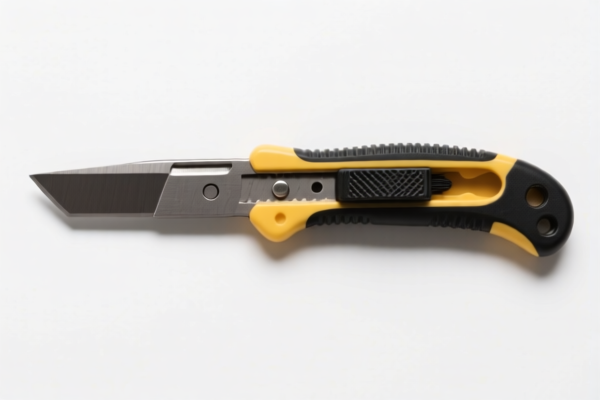
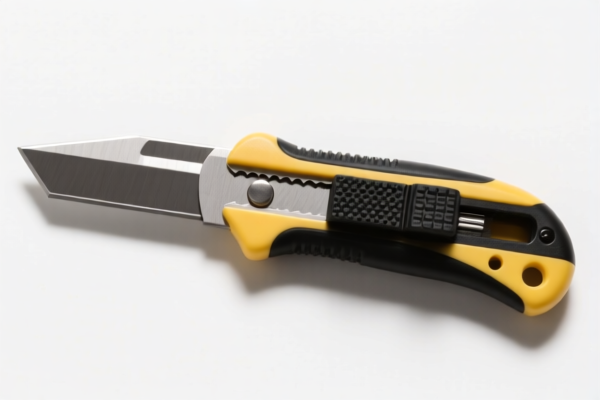
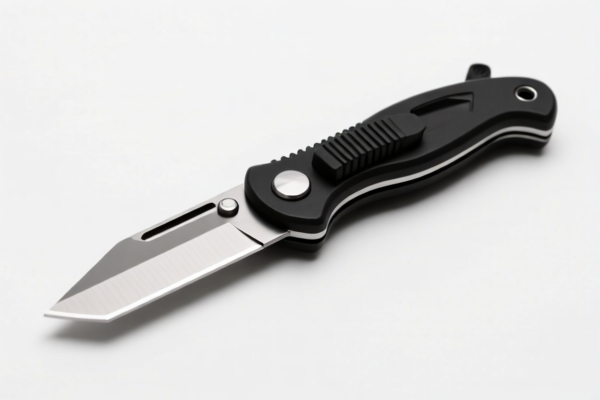
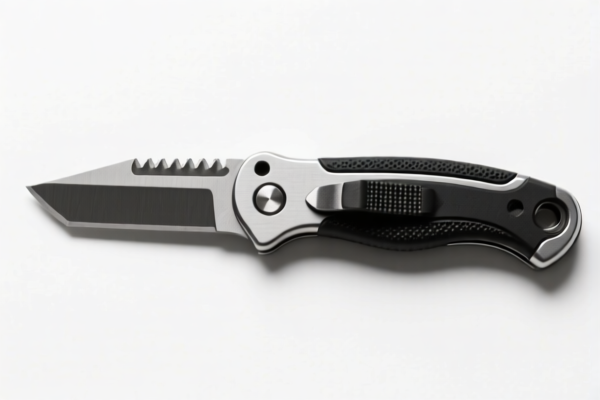
AI Analysis
🧭🔪 Compass Knife (Multi-Tool & Navigational Instruments)
🌐 HS Code Reference & Customs Clearance Guide | 2026 Latest Tariff Analysis | Professional Clearance Strategy
📌 I. Product Definition & Classification: Are You Clear on What a "Compass Knife" Is?
The term "Compass Knife" is ambiguous in international trade. It typically refers to two distinct categories of products depending on the intent and design:
- Multi-Use Folding Tools: Knives that fold into a handle, often accompanied by other tools (like a screwdriver or compass) in the handles. These are classified as Knives.
- Navigational Instruments: Devices primarily designed for direction-finding, which may be optical in nature. These are classified as Instruments.
⚠️ Critical Distinction Point:
- If the item is primarily a folding knife blade (even if it has a compass in the handle or is a multi-tool) → Classified under 8211 (Knives).
- If the item is primarily a direction-finding device (optical or mechanical) → Classified under 9014 (Navigational Instruments).
📦 II. HS Code Classification Details (2026 Latest Tariff Authority Comparison)
| HS Code | Product Description | Applicable Scenario | Key Feature |
|---|---|---|---|
8211.93.00.31 |
Knives with cutting blades... Other: Folding two-handled multi-use tools in which one or more tools are housed in each handle and one or more of the tools is a folding knife blade | Multi-tool knives (e.g., Swiss Army style, folding handles with blades inside) | ✅ Contains folding knife blade(s) housed in handles |
8211.93.00.35 |
Knives with cutting blades... Other: Pen knives, pocket knives and other knives which have folding blades | Standard folding pocket knives, pen knives, classic Swiss Army knives | ✅ Has folding blade (not necessarily two-handled multi-tool) |
9014.10.10.00 |
Direction finding compasses... Optical instruments | Optical compasses, high-end navigational compasses used for surveying/military | ❌ No knife blade; purely navigational |
9014.80.10.00 |
Direction finding compasses; other navigational instruments... Optical instruments | Other optical navigational instruments/appliances | ❌ No knife blade; purely navigational |
🔍 Key Reminder:
- If the product is a knife with a folding blade, even if it includes a compass as an accessory or is part of a multi-tool, it generally falls under 8211.
- If the product is a standalone compass (especially optical), it falls under 9014.
- Do not mix classifications: A folding knife with a compass is NOT a navigational instrument for HS purposes unless the primary function is navigation (which is rare for "knives").
💰 III. 2026 Latest Tariff Rate Details (Including Additional Taxes & Policy Add-ons)
✅ Applicable Country: United States (US)
✅ Origin: China (CN)
✅ Effective Time: 2025/2026 (Current Trade Context)
🎯 1. 8211.93.00.31 —— Folding Two-Handed Multi-Use Tools (Knife Blades)
| Item | Detail |
|---|---|
| Base Tariff | 3¢ each + 5.4% (Ad Valorem) |
| Section 301 Additional Tariff | +25.0% |
| Total Effective Rate | 5.4% + 25.0% + 3¢/unit |
| Tax Calculation | (CIF Value × 30.4%) + (Unit Count × $0.03) |
| De Minimis Exemption | ❌ Not Eligible (Section 301 goods generally exclude de minimis for China) |
| Legal Basis Path | HTSUS:8211.93.00.31 → USITC Footnote 25 (Section 301) |
📌 Explanation:
- This category applies to complex multi-tools where blades are housed in two-handled grips.
- The 3¢ per unit is a specific duty added to the ad valorem rate.
- The 25% additional tariff is standard for Chinese-origin knives under Section 301.
- Total Tax Burden: ~30.4% + 3¢/unit. High cost for high-volume low-value items due to the per-unit fee.
🎯 2. 8211.93.00.35 —— Pen Knives, Pocket Knives, Folding Blades
| Item | Detail |
|---|---|
| Base Tariff | 0.0% |
| Section 301 Additional Tariff | 0.0% |
| Total Effective Rate | 0.0% |
| Tax Calculation | Free of Duty |
| De Minimis Exemption | ✅ Eligible (If value < $800) |
| Legal Basis Path | HTSUS:8211.93.00.35 (No Section 301 footnote applied) |
📌 Key Advantage:
- This is the most tax-efficient classification for folding knives.
- If your product is a standard pocket knife or pen knife (not a two-handled multi-tool), it enjoys 0% duty.
- Strategy: If your "Compass Knife" is a single-hand folding knife, ensure it is described as such to qualify for this rate.
🎯 3. 9014.10.10.00 & 9014.80.10.00 —— Direction Finding Compasses (Optical)
| Item | Detail |
|---|---|
| Base Tariff | 0.0% |
| Section 301 Additional Tariff | +25.0% |
| Total Effective Rate | 25.0% |
| Tax Calculation | CIF Value × 25% |
| De Minimis Exemption | ❌ Not Eligible (Section 301 applies) |
| Legal Basis Path | HTSUS:9014.x0.x0.00 → USITC Footnote 25 |
📌 Explanation:
- If the item is a standalone optical compass (no knife), it incurs a 25% tariff.
- This is more expensive than the pocket knife (8211.93.00.35) which is 0%.
- Strategy: Avoid classifying a multi-tool knife as a "compass" if it contains a blade. It will be reclassified by Customs as a knife, but if you misdeclare it to save tax, you risk penalties.
🛠️ IV. Customs Clearance Practical Advice (Real-World Pitfall Guide)
✅ 1. Documentation Checklist (Must-Have)
| Document | Required? | Notes |
|---|---|---|
| ✅ Product Photos | ✔️ | Must clearly show folding mechanism, blade type, and any compass component. |
| ✅ Detailed Description | ✔️ | e.g., "Folding Pocket Knife with Compass," NOT just "Compass Knife." |
| ✅ Material Composition | ✔️ | Blade material (Stainless Steel, etc.), Handle material (Plastic, Wood, Metal). |
| ✅ Usage Statement | ✔️ | Confirm if it's a multi-tool or a simple pocket knife. |
| ✅ Invoice & Packing List | ✔️ | Value must match HS code risk level. |
✅ 2. Classification Strategy (Key Tips)
🔥 “Blade Determines Category, Handle Determines Sub-Category”
| Scenario | Correct HS Code | Tax Rate | Why? |
|---|---|---|---|
| Standard Pocket Knife (with or without compass) | 8211.93.00.35 |
0% | Classified as folding blade knife. No Section 301. |
| Two-Handed Multi-Tool (blades inside handles) | 8211.93.00.31 |
5.4% + 25% + 3¢/unit | Complex multi-tool structure triggers higher tax. |
| Standalone Optical Compass (No blade) | 9014.10.10.00 |
25% | Navigational instrument subject to Section 301. |
| Misclassified as "Tool" (Generic) | Risk of Audit | High | Customs may reclassify and penalize. |
📌 Critical Insight:
- If you have a folding knife, aim for8211.93.00.35. It is 0% duty.
- Do not force a folding knife into8211.93.00.31unless it truly is a two-handled multi-tool.
- Do not classify a knife as a compass (9014) to avoid knife taxes. Customs will reject it if a blade is present, leading to delays and fines.
✅ 3. Special Cases & Handling
| Case | Advice |
|---|---|
| Compass Attached to Knife Handle | Still classified as Knife (8211.93.00.35 or .31). The compass is an accessory. |
| Knife in a Gift Set with Compass | The primary function determines classification. If knife is primary → Knife HS Code. |
| Multi-Tool with Many Blades | Check if it fits "two-handled multi-use tools." If yes, .31 applies (Higher Tax). If it's a standard pliers/knife combo, .35 may still apply (Check USITC rulings). |
| Origin is Not China | If from Vietnam/Malaysia, check for de minimis eligibility and potential Section 301 exemptions. |
🌍 V. Global Market Comparison (2026 Latest)
| Country/Region | Recommended HS Code | Tariff Rate (China Origin) | Notes |
|---|---|---|---|
| 🇺🇸 USA | 8211.93.00.35 |
0% | Best option for folding knives. |
| 🇺🇸 USA | 8211.93.00.31 |
~30.4% + 3¢/unit | High tax for multi-tools. |
| 🇪🇺 EU | 8211.93.00 |
0% | Generally low duty, but VAT applies. |
| 🇨🇳 China (Import) | 8211.93.00 |
10-13% | Import duty + VAT. |
| 🇬🇧 UK | 8211.93.00 |
0% | Post-Brexit trade agreements may apply. |
📌 Conclusion:
- USA is the most complex market due to Section 301 tariffs.
- Optimize for8211.93.00.35to achieve 0% duty for folding knives.
- Avoid "Compass" classification for knives; it leads to 25% tax or rejection.
📌 VI. Common Mistakes & Pitfalls (Lessons Learned)
❌ Mistake 1: Calling a folding knife a "Compass" to avoid knife tariffs.
👉 Result: Customs seizes shipment, imposes penalties, reclassifies as knife + 25% tax.
❌ Mistake 2: Using 8211.93.00.31 for a standard pocket knife.
👉 Result: Overpaying by ~30%. You should use .35 for 0% tax.
❌ Mistake 3: Ignoring the "3¢ per unit" fee for multi-tools (.31).
👉 Result: For high-volume shipments, the per-unit fee adds significant cost on top of 30.4%.
❌ Mistake 4: Not providing photos of the folding mechanism.
👉 Result: Customs cannot verify "folding" status → Delays.
✅ Correct Practice:
"Folding Pocket Knife, Stainless Steel Blade, 3.5-inch, with Built-in Compass, Model XYZ, Origin: China"
→ Classify as8211.93.00.35→ 0% Duty.
🎯 VII. Conclusion: Precise Classification Saves Money!
🎯 Key Takeaway:
🔹 "If it folds, it’s a knife. If it’s a simple pocket knife, it’s 0%."
🔹 "Multi-tool = Higher Tax. Compass accessory = Irrelevant for HS."
🔹 "Don't let the word 'Compass' confuse your HS Code!"
📌 Pro Tip:
- If your product is a simple folding knife with a compass, insist on
8211.93.00.35.- Get an Advance Ruling from US CBP if unsure about "two-handled multi-use" definition.
- Always include photos and clear descriptions in your commercial invoice.
📣 Action Plan:
📞 Verify product structure: Single-hand folding? →
8211.93.00.35(0%).
📞 Two-handled multi-tool? →8211.93.00.31(30.4% + 3¢).
🚀 Clearance Efficient, Cost Optimized!
✨ Professional Clearance Starts with Accurate Classification!
💼 Every Dollar Saved in Duty is Pure Profit!
Customer Reviews
About HS Code Classification
The Harmonized System (HS) is an internationally standardized nomenclature developed by the World Customs Organization (WCO) to classify traded products. Over 200 countries use the HS system as the basis for customs tariffs, trade statistics, and import/export regulations.
Each HS code follows a hierarchical structure:
- Chapter (2 digits) — Broad category of goods (e.g., Chapter 84: Machinery and Mechanical Appliances)
- Heading (4 digits) — More specific grouping within the chapter
- Subheading (6 digits) — Internationally standardized breakdown, used by all WCO member countries
- National subdivisions (8-10 digits) — Country-specific extensions for further classification, such as US HTSUS 10-digit codes
Correct HS code classification is essential for smooth customs clearance, accurate duty payment, and compliance with trade regulations. Misclassification can lead to customs delays, overpayment of duties, or penalties.
When importing from CN to US, the applicable tariff rates may include:
- Most-Favored-Nation (MFN) rate — The standard duty rate applied to WTO members
- General rate — Applied to countries without trade agreements
- Trade remedy duties — Additional tariffs such as Section 301 (anti-dumping), Section 232 (national security), or countervailing duties
The information provided on this page is for reference purposes only. For official classification, please consult with your local customs authority or a licensed customs broker.