Components for audio or video signal recording or playback devices
CN → US| HS Code | Tariff Rate | Origin | Destination | Doc |
|---|---|---|---|---|
| 8527915000 | 17.5% | CN | US | Official Doc |
| 8527914000 | 10.0% | CN | US | Official Doc |
| 8521900000 | 17.5% | CN | US | Official Doc |
| 8519814150 | 10.0% | CN | US | Official Doc |
| 8519893000 | 17.5% | CN | US | Official Doc |
Product Images
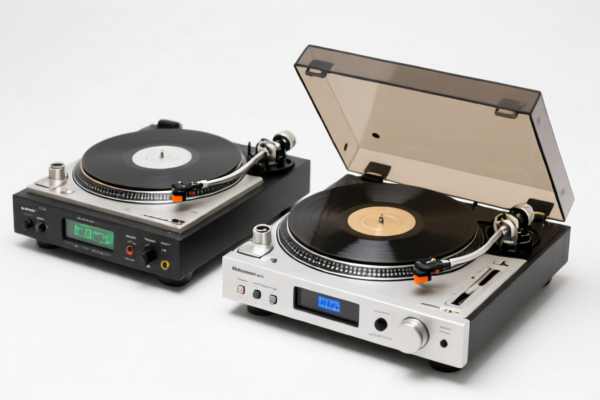
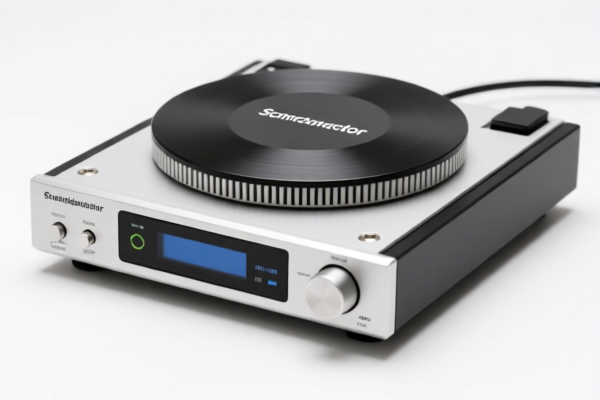
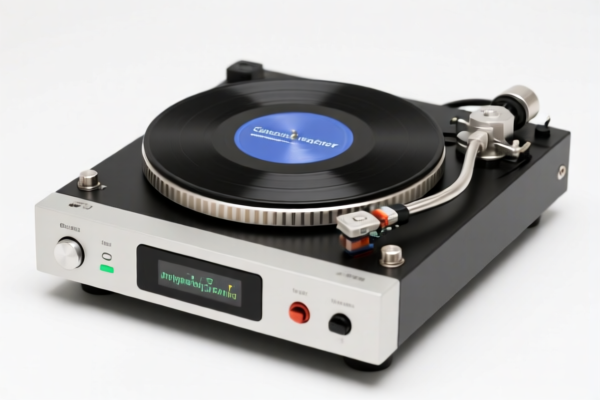
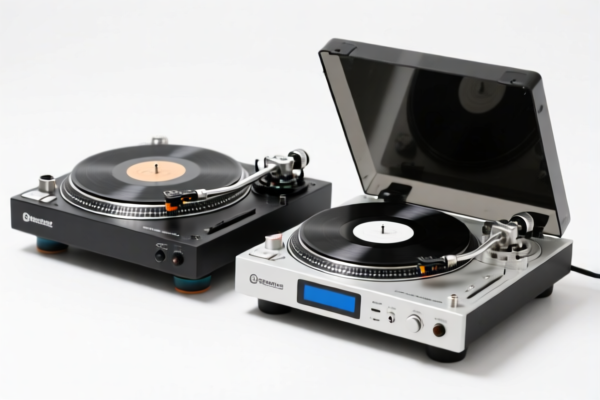
AI Analysis
🎧 Components for Audio or Video Signal Recording or Playback Devices
🌐 HS Code Reference & Customs Clearance Guide | 2026 Latest Tariff Analysis | Professional-Level通关 Strategy
📌 I. Product Definition & Classification: Do You Understand "Audio/Video Components"?
In international trade, "Components for audio or video signal recording or playback devices" is a broad category that often leads to classification errors. It generally refers to parts and accessories specifically designed for machines falling under Heading 8519 (Sound Recording/Reproducing Apparatus) or Heading 8527 (Radio Receivers with Sound Recording/Reproducing Device).
However, not all components are created equal in the eyes of customs. The critical distinction lies in whether the component is: 1. Specific/Identifiable: Clearly identifiable as a part of a specific audio/video device (e.g., a dedicated audio processing chip, a specific speaker assembly). 2. Generic: General-purpose parts (e.g., standard capacitors, resistors, generic cables) which usually fall under their own specific headings (e.g., Chapter 85 chapters for electrical parts).
⚠️ Key Distinction Point:
- If the part is specifically adapted for audio/video recording/playback and described as such in the invoice/specs → It may qualify for HS Codes in 8519 or 8527 (Parts/Categories). - If it is a general electronic component (e.g., a simple capacitor) → It does NOT fall under these codes, but rather under 8532, 8533, etc. - Crucially, if the product is an integrated device capable of recording/playback, it is NOT a "component," but a "machine," and may fall under different subheadings like 8521 or 8527.
📦 II. HS Code Classification Details (2026 Latest Tariff Authority Comparison)
Based on the provided data, here are the specific HS Codes applicable to devices/components described as related to audio/video signal recording or playback. Note that the provided data includes both finished devices and parts/categories often used for classification of components or integrated units.
| HS Code | Product Description | Application Scenario | Tax Rate (Total) | Tax Detail Breakdown |
|---|---|---|---|---|
8527.91.50.00 |
Sound recording or reproducing apparatus; capable of recording sound | Devices matching "sound record or reproduce" functions | 17.5% | Base: 0.0%, Additional: 7.5%, Section 301 (122): 10% |
8527.91.40.00 |
Sound recording or reproducing apparatus; capable of recording sound | Devices matching "record/play" functions | 10.0% | Base: 0.0%, Additional: 0.0%, Section 301 (122): 10% |
8521.90.00.00 |
Sound or video recording or reproducing apparatus | Devices matching "record or reproduce" functions | 17.5% | Base: 0.0%, Additional: 7.5%, Section 301 (122): 10% |
8519.81.41.50 |
Sound recording or reproducing apparatus | Devices matching "sound record or reproduce" functions | 10.0% | Base: 0.0%, Additional: 0.0%, Section 301 (122): 10% |
8519.89.30.00 |
Sound recording or reproducing apparatus | Devices matching "record or play" functions | 17.5% | Base: 0.0%, Additional: 7.5%, Section 301 (122): 10% |
🔍 Key Observation:
- The term "Components" in the user query is ambiguous. In the provided data, the HS codes listed are primarily for apparatus (devices) capable of recording/playback, not necessarily raw "parts." - However, in customs practice, if a "component" is a specialized integrated circuit or module that performs the core function of recording/playback, it might be classified under 8519 or 8527 as a "part of" the apparatus, or sometimes as a separate apparatus if it has independent function. - Do not assume all "audio components" fit here. Standard wires, batteries, or generic PCBs do not.
💰 III. 2026 Latest Tariff Rate Details (Including Additional Taxes)
✅ Applicable Country: United States (US)
✅ Origin: China (CN) (Inferred from "Section 301" mentions)
✅ Effective Date: 2025 onwards (Post-Section 301 adjustments)
🎯 1. 8527.91.50.00 & 8521.90.00.00 & 8519.89.30.00 —— High-Tariff Categories
| Item | Detail |
|---|---|
| Base Tariff | 0% (Most MFN rates for these subheadings are 0%) |
| Section 301 Additional Tariff | +7.5% (Specific to these subheadings in the provided data) |
| Section 122 / IEEPA Additional Tariff | +10% (Against China-origin goods) |
| Total Tariff | 17.5% |
| Tax Calculation | CIF Value × 17.5% |
| De Minimis Exemption | ❌ Not Applicable (Section 301 goods are excluded from de minimis) |
| Legal Basis Path | USITC:8527.91.50.00 → SECTION_301:7.5% → IEEPA:10% |
📌 Explanation:
- These codes carry a combined 17.5% burden. The 7.5% is specific to the Section 301 list for certain audio/video equipment, and the 10% is the baseline IEEPA tax on Chinese goods. - High Risk Category: Misclassification here can lead to significant underpayment penalties.
🎯 2. 8527.91.40.00 & 8519.81.41.50 —— Lower-Tariff Categories
| Item | Detail |
|---|---|
| Base Tariff | 0% |
| Section 301 Additional Tariff | +0.0% (Exempt or not listed in this specific subheading's 301 list) |
| Section 122 / IEEPA Additional Tariff | +10% (Against China-origin goods) |
| Total Tariff | 10.0% |
| Tax Calculation | CIF Value × 10.0% |
| De Minimis Exemption | ❌ Not Applicable (IEEPA tax still applies) |
| Legal Basis Path | USITC:8527.91.40.00 → IEEPA:10% |
📌 Explanation:
- These codes only attract the 10% IEEPA tax. The Section 301 component is 0%. - Strategic Advantage: If your product can be legally classified under these subheadings (e.g., specific types of sound recording apparatus), you save 7.5% compared to the other codes.
🛠️ IV. Customs Clearance Practical Advice (Real-World Pitfall Avoidance)
✅ 1. Preparation Checklist (Essential Documents)
| Document | Required? | Notes |
|---|---|---|
| ✅ Product Specification Sheet | ✔️ | Must clearly state: "Capable of recording/playback," "Signal processing function." |
| ✅ Circuit Diagram / Block Diagram | ✔️ | To prove the component is not generic but specific to audio/video function. |
| ✅ Product Photos (with Labels) | ✔️ | Show model numbers, input/output interfaces (HDMI, Optical, etc.). |
| ✅ Commercial Invoice | ✔️ | Description should match HS Code summary exactly (e.g., "Sound Recording Apparatus"). |
| ✅ Bill of Lading / Air Waybill | ✔️ | Standard shipping docs. |
| ✅ Certificate of Origin | ✔️ | To determine eligibility for IEEPA (if non-China, tax may be 0%). |
✅ 2. Classification Strategy & Tips
🔥 Golden Rule:
"Function Defines Code, Not Name!"
Don't just say "Audio Component." Say "Digital Audio Recorder Module" or "Sound Playback Apparatus."
| Scenario | Correct Classification | Risk if Wrong |
|---|---|---|
| Integrated Audio Recorder/Player | 8527.91.50.00 or 8521.90.00.00 (17.5%) |
Underpayment if misclassified as lower tax code. |
| Specific Sound Recording Apparatus (Low 301) | 8527.91.40.00 or 8519.81.41.50 (10%) |
Overpayment if classified as 17.5%. |
| Generic Capacitor/Resistor for Audio Device | ❌ Not these HS Codes | Go to Chapter 85 (e.g., 8532). Wrong code = Rejection. |
| Speaker Driver (Part) | ❌ Not these HS Codes | Usually 8518.21 (if specific) or 8518.22. |
💡 Pro Tip:
- If you are importing parts, ensure they are described as "Parts of Sound Recording Apparatus." However, note that the provided data lists apparatus (8527, 8519, 8521). If you have true parts (like a motor or a chip), they might fall under 8519.90 or 8527.90 "Parts," which may have different tax treatments. Verify with a customs broker if your item is a true "part" vs. a "component device."
✅ 3. Special Cases
| Case | Handling Advice |
|---|---|
| OEM Components | Provide manufacturer’s declaration stating the part’s specific function in audio/video recording/playback. |
| Hybrid Devices (Audio + Video) | If it records/playbacks both, it may fall under 8521 (Video) or 8527 (Audio). Check primary function. 8521 often has 17.5% rate in this data. |
| Non-China Origin | If from Vietnam/Mexico, IEEPA 10% may be waived. Result: 0% (for 8527.91.40) or 7.5% (for 8527.91.50). Apply for Certificate of Origin! |
🌍 V. Global Market Comparison (2026 Latest)
| Country/Region | Recommended HS Code | Tariff Rate (China Origin) | Key Requirements | Notes |
|---|---|---|---|---|
| 🇺🇸 USA | 8527.91.50.00 / 8521.90.00.00 |
17.5% | FCC, RoHS | High Section 301 + IEEPA |
| 🇺🇸 USA | 8527.91.40.00 / 8519.81.41.50 |
10.0% | FCC, RoHS | Lower Section 301 |
| 🇨🇳 China | Same HS Codes | 0% - 5% | CCC (if applicable) | No Section 301 |
| 🇪🇺 EU | Similar Codes (8519/8527) | 0% - 3.7% | CE, WEEE | No IEEPA/Section 301 |
| 🇬🇧 UK | Similar Codes | 0% - 4% | UKCA | Post-Brexit rules |
📌 Conclusion:
- USA is the highest cost market due to IEEPA (10%) + Section 301 (0-7.5%).
- EU/UK/China offer significant tariff advantages. Consider supply chain diversification if shipping to the US.
📌 VI. Common Errors & Pitfall Guide (Lessons Learned)
❌ Error 1: Classifying a complete audio recorder as "Parts" to get lower tax.
👉 Consequence: Customs will reclassify as 8521/8527 → Back taxes + Penalty.
❌ Error 2: Classifying generic cables as "Audio Components" under 8527.
👉 Consequence: Wrong HS Code → Seizure or Return.
❌ Error 3: Ignoring the Section 301 difference between 7.5% and 0%.
👉 Consequence: Overpaying 7.5% on 8527.91.40.00 which is eligible for 0% Section 301.
❌ Error 4: Not proving China Origin.
👉 Consequence: Paying 10% IEEPA when you could have claimed exemption with a valid non-China CO.
✅ Correct Approach:
“Digital Sound Recording Apparatus, Model XYZ, Capable of WAV/MP3 Recording, FCC ID: ABC123, Made in China”
🎯 VII. Conclusion: Precision in Classification, Savings in Clearance!
🎯 Remember the Mantra:
🔹 "Function First, Code Second."
🔹 "17.5% for High 301, 10% for Low 301, 0% for Non-China."
🔹 "Don't call it a 'part' if it's a 'device'!"
📌 Tip:
If your product is a module that can function independently as a sound recorder, classify as 8521/8527. If it is a component that only works inside another device, verify if it falls under 8519.90 (Parts) or remains under the apparatus code if deemed a "component apparatus." Consult a customs broker for true "parts" vs. "apparatus" classification.
📣 Immediate Action:
📞 Contact your customs broker with product specs and circuit diagrams.
🚀 Apply for Advance Ruling if possible to lock in the 10% vs 17.5% rate.
✨ Professional Clearance Starts with Accurate Classification!
💼 Every 7.5% Saved is Pure Profit!
Customer Reviews
About HS Code Classification
The Harmonized System (HS) is an internationally standardized nomenclature developed by the World Customs Organization (WCO) to classify traded products. Over 200 countries use the HS system as the basis for customs tariffs, trade statistics, and import/export regulations.
Each HS code follows a hierarchical structure:
- Chapter (2 digits) — Broad category of goods (e.g., Chapter 84: Machinery and Mechanical Appliances)
- Heading (4 digits) — More specific grouping within the chapter
- Subheading (6 digits) — Internationally standardized breakdown, used by all WCO member countries
- National subdivisions (8-10 digits) — Country-specific extensions for further classification, such as US HTSUS 10-digit codes
Correct HS code classification is essential for smooth customs clearance, accurate duty payment, and compliance with trade regulations. Misclassification can lead to customs delays, overpayment of duties, or penalties.
When importing from CN to US, the applicable tariff rates may include:
- Most-Favored-Nation (MFN) rate — The standard duty rate applied to WTO members
- General rate — Applied to countries without trade agreements
- Trade remedy duties — Additional tariffs such as Section 301 (anti-dumping), Section 232 (national security), or countervailing duties
The information provided on this page is for reference purposes only. For official classification, please consult with your local customs authority or a licensed customs broker.