Composite Board
CN → US| HS Code | Tariff Rate | Origin | Destination | Doc |
|---|---|---|---|---|
| 4811512020 | 35.0% | CN | US | Official Doc |
| 4811512040 | 35.0% | CN | US | Official Doc |
| 4823908680 | 35.0% | CN | US | Official Doc |
| 4807009200 | 35.0% | CN | US | Official Doc |
| 7210901000 | 35.0% | CN | US | Official Doc |
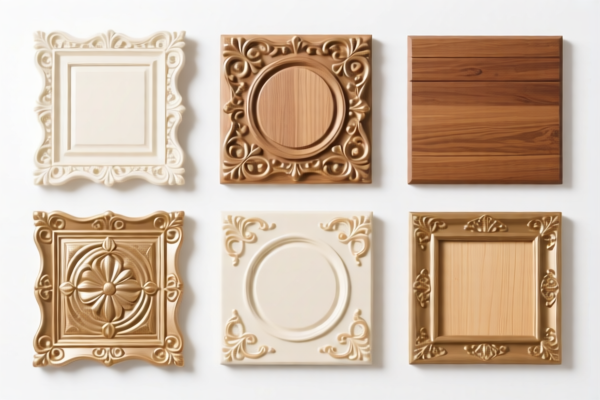
Product Images



AI Analysis
📦 Composite Board: The Ultimate 2026 Customs Guide & Taxation Strategy
HS Code Breakdown, Tax Pitfalls, and Smart Clearing Advice
🌐 Welcome to the World of Composite Board!
Whether you are importing raw industrial paper, finished board products, or complex multi-material laminates, getting the HS Code wrong can cost you 35% in unexpected taxes.This guide dissects the 5 specific HS Codes found in your dataset, explains exactly why they apply, breaks down the 35% Total Tax (0% Base + 25% Additional + 10% Section 122), and provides a professional strategy to clear customs smoothly.
🧩 I. What is "Composite Board"? (Product Definition)
In international trade, "Composite Board" is not a single product but a category covering: 1. Raw Industrial Paper: Unfinished sheets used as a substrate. 2. Processed Board: Sheets cut to specific industrial sizes. 3. Finished Industrial Articles: Products made from layered paper or cardboard. 4. Metal-Composite Materials: Rarely, paper-based materials laminated with metal (non-ferrous or steel).
⚠️ The Critical Risk: Misclassifying a "Raw Paper" as a "Finished Product" (or vice versa) or mixing up "Paper" with "Metal-Composite" can trigger customs audits or rejection due to incorrect tariff classification.
📋 II. HS Code Classification Matrix (2026 Data Analysis)
Based on the provided data, here is the authoritative breakdown of the 5 HS Codes, their definitions, and why they apply to "Composite Board".
| # | HS Code | Product Description (Summary) | Material & Form | Application Scenario | Why This Code? |
|---|---|---|---|---|---|
| 1 | 4811.51.20.20 | Composite Board, Industrial Use | Material: Paperboard Form: Paper (Raw/Unfinished) |
Industrial wrapping, packaging base. | Fits "Packaging Paper" category. It is composite board but treated as raw paper for industrial packaging use. |
| 2 | 4811.51.20.40 | Composite Board, Industrial Use | Material: Paperboard Form: Paper (Inferred) |
Industrial packaging, raw stock. | Identical to #1 but implies a specific inferred form of raw paper. Used when the physical form is strictly "sheet paper" without further processing. |
| 3 | 4823.90.86.80 | Composite Board, Industrial Use | Material: Paperboard Form: Industrial Article |
Cut-to-size boards, industrial components. | Fits "Other Paper Products". Unlike raw paper, this is a finished article (cut, shaped, or treated) ready for industrial use. |
| 4 | 4807.00.92.00 | Composite Board, Industrial Use | Material: Composite Paper/Board | General industrial use, no specific form conflict. | The "Catch-all" for composite paper/board. Used when the board doesn't fit specific sub-categories of 4811 or 4823 but is clearly a composite paper product. |
| 5 | 7210.90.10.00 | Composite Material (Metal-Based) | Material: Metal/Non-ferrous Steel Process: Composite |
Metal-composite panels, not pure paper. | ⚠️ Critical Distinction: This is NOT pure paper. It applies if the "Composite Board" contains a metal or non-alloy steel base with a composite process. |
💰 III. 2026 Tax Rate Deep Dive (The 35% Breakdown)
All 5 HS Codes listed above share the exact same tax structure in the provided data. Here is the detailed calculation:
🇺🇸 Target Market: USA (Implied by "Section 122" and "Additional Tariffs")
🇨🇳 Origin: China
📅 Effective Date: Current (2026)
📊 Tax Structure Table
| Tax Component | Rate | Legal Basis | Explanation |
|---|---|---|---|
| Base Duty | 0.0% | General Harmonized Tariff Schedule | No standard duty applies to these paper/composite categories. |
| Section 301 / Additional | +25.0% | US Trade Act Section 301 | The "China Tariff": Standard punitive tax on Chinese imports. |
| Section 122 / IEEPA | +10.0% | Section 122 (Trade Expansion Act) | Specific Add-on: Often applies to strategic sectors or specific Chinese goods lists. |
| TOTAL TAX | 35.0% | Sum of above | This is your final landed cost factor. |
🧮 Cost Calculation Example
If you import $10,000 worth of Composite Board under any of these 5 codes: * Base Duty: $0 * Section 301 (25%): $2,500 * Section 122 (10%): $1,000 * Total Tax to Pay: $3,500 * Effective Cost: $13,500
⚠️ Crucial Note: There is NO de minimis exemption (under $800) mentioned for these specific HS codes in the data. The full 35% applies to all commercial shipments.
🛠️ IV. Professional Clearing & Strategy Guide
To avoid delays, fines, or overpayment, follow these expert steps:
✅ 1. Document Preparation Checklist
Customs officers need to distinguish between "Paper" and "Metal-Composite".
* Technical Data Sheet: Must explicitly state Material Composition (e.g., "90% Paper, 10% Coating" vs "Steel Core with Paper Laminate").
* Photos: High-res images showing cross-sections (to prove if it's paper-based or metal-based).
* Usage Declaration: Clearly state "For Industrial Use Only" (e.g., for packaging machinery, not consumer retail).
* BOM (Bill of Materials): For HS Code 7210.90.10.00, prove the metal content.
✅ 2. Strategic Classification Advice (The "Do's and Don'ts")
| Strategy | Action | Why? |
|---|---|---|
| 🔹 Distinguish Paper vs. Metal | If it contains steel, use 7210.90.10.00. If pure paper, use 48xx series. | Mixing them leads to misclassification errors and potential audits. |
| 🔹 Raw vs. Finished | Use 4811.x.x for rolls/unprocessed sheets. Use 4823.x.x for cut-to-size articles. | Raw paper often has different "state of import" requirements than finished goods. |
| 🔹 Avoid "General" Terms | DO NOT write "Composite Material" on the commercial invoice. | Be specific: "Industrial Paper Board" or "Steel-Composite Panel". |
| 🔹 Verify "122 Clause" Applicability | Check if your specific material qualifies for Section 122. | Some materials might be exempt if they fall under a different trade agreement (rare for China). |
✅ 3. Customs Clearance Tips
- Pre-Arrival Filing: File ISF (Importer Security Filing) 24 hours before vessel loading to avoid $5k+ fines.
- CBP Ruling: If your product is a new type of composite, consider filing a Binding Ruling Request with CBP before shipping.
- Origin Marking: Ensure the country of origin ("Made in China") is clearly marked on the product and packaging.
🌍 V. Global Context & Comparison
While the data provided focuses on a 35% tariff scenario (likely US-China trade):
| Market | Typical Duty on Paper/Board | Notes |
|---|---|---|
| 🇺🇸 USA | 35% (0% + 25% + 10%) | High Risk. Strict Section 301 & 122 enforcement. |
| 🇪🇺 EU | ~6% - 10% | No Section 122; Standard tariffs apply. |
| 🇨🇦 Canada | ~5% - 10% | Generally lower than US, but CUSMA rules apply. |
| 🇦🇺 Australia | ~5% | Free Trade Agreement benefits may apply. |
🚀 Strategic Pivot: If the 35% US duty destroys your margin, consider: 1. Transshipment: Routing through Vietnam or Mexico (must ensure no "transshipment fraud"). 2. Value-Added Processing: If the "Composite Board" can be classified as a "Finished Product" with a different HS code (e.g., Machinery parts) in a non-punished sector.
📌 VI. Summary & Final Verdict
| Feature | Detail |
|---|---|
| Product | Composite Board (Industrial) |
| Applicable Codes | 4811.51.20.20, 4811.51.20.40, 4823.90.86.80, 4807.00.92.00, 7210.90.10.00 |
| Total Tax Rate | 35.0% (0% Base + 25% Add. + 10% Sec 122) |
| Key Risk | Misidentifying "Metal-Composite" vs. "Paper-Composite". |
| Best Practice | Clear Material Declaration + Technical Data Sheet in pre-arrival. |
🏁 Conclusion: Clear Faster, Pay Less
Getting the HS Code right is the difference between a smooth shipment and a $3,500 tax bill per $10k of goods. * For Paper Board: Stick to 48xx codes. * For Metal-Composite: Use 72xx codes. * Never Guess: Always verify the material composition against the HS Code descriptions.
✨ Ready to Ship?
Double-check your Material Safety Data Sheet (MSDS) and Product Spec against the 5 Codes above.
Customs Clearance starts with the right classification! 🚢📦
Disclaimer: This guide is based on the provided dataset and general trade principles for 2026. Tariff laws change frequently. Always consult a licensed customs broker for the final determination.
Customer Reviews
About HS Code Classification
The Harmonized System (HS) is an internationally standardized nomenclature developed by the World Customs Organization (WCO) to classify traded products. Over 200 countries use the HS system as the basis for customs tariffs, trade statistics, and import/export regulations.
Each HS code follows a hierarchical structure:
- Chapter (2 digits) — Broad category of goods (e.g., Chapter 84: Machinery and Mechanical Appliances)
- Heading (4 digits) — More specific grouping within the chapter
- Subheading (6 digits) — Internationally standardized breakdown, used by all WCO member countries
- National subdivisions (8-10 digits) — Country-specific extensions for further classification, such as US HTSUS 10-digit codes
Correct HS code classification is essential for smooth customs clearance, accurate duty payment, and compliance with trade regulations. Misclassification can lead to customs delays, overpayment of duties, or penalties.
When importing from CN to US, the applicable tariff rates may include:
- Most-Favored-Nation (MFN) rate — The standard duty rate applied to WTO members
- General rate — Applied to countries without trade agreements
- Trade remedy duties — Additional tariffs such as Section 301 (anti-dumping), Section 232 (national security), or countervailing duties
The information provided on this page is for reference purposes only. For official classification, please consult with your local customs authority or a licensed customs broker.