Composite Flooring Roll
CN → US| HS Code | Tariff Rate | Origin | Destination | Doc |
|---|---|---|---|---|
| 3918101040 | 40.3% | CN | US | Official Doc |
| 4504105000 | 35.0% | CN | US | Official Doc |
| 4504103000 | 35.0% | CN | US | Official Doc |
| 3918102000 | 40.3% | CN | US | Official Doc |
Product Images


AI Analysis
🏠 Composite Flooring Rolls (Vinyl, Cork & Laminated Flooring)
🌐 HS Code Reference & Customs Clearance Guide | 2024/2025 Latest Tariff Analysis | Professional Clearance Strategy
📌 1. Product Definition: What exactly is "Composite Flooring Roll"?
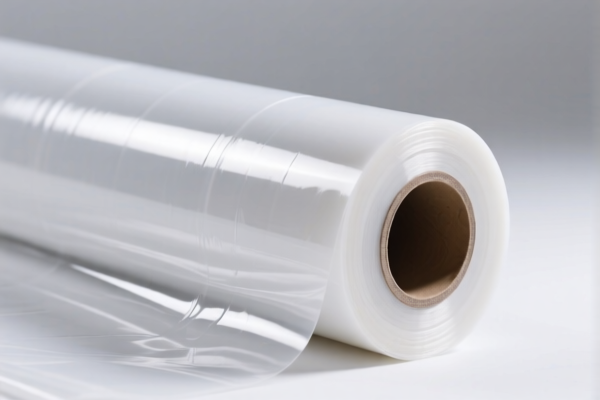
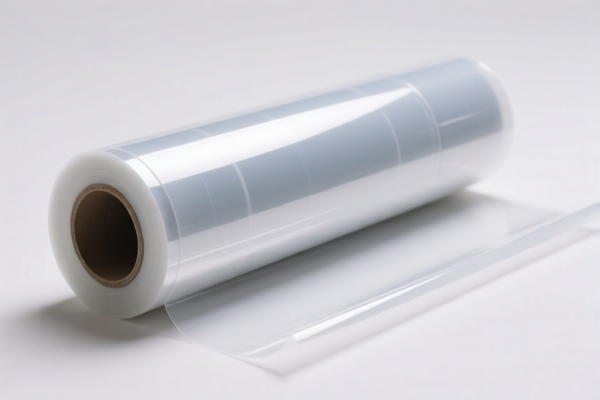
Composite flooring rolls are flexible, rolled flooring solutions used for residential and commercial interiors. In international trade, they are classified based on their primary material composition. The term "Composite" is a generic descriptor, but Customs requires specific material identification to determine the correct Harmonized System (HS) Code.
There are two main material categories: 1. Cork-Based or Wood-Composite Rolls: Made primarily from cork granules, wood fibers, or natural composite materials. 2. Plastic-Based Rolls (Vinyl/LVT): Made primarily from PVC (Polyvinyl Chloride), rubber, or other plastics, often mimicking wood or stone.
⚠️ Critical Distinction:
- If the material is Cork/Natural Composite → Falls under Chapter 45.
- If the material is PVC/Plastic → Falls under Chapter 39.
- Misclassification leads to massive tariff discrepancies (e.g., 35% vs. 40.3%) and potential customs delays.
📦 2. HS Code Classification Details (Based on Provided Data)
| HS Code | Product Description | Material Composition | Key Characteristics |
|---|---|---|---|
| 4504.10.50.00 | Composite Flooring Rolls (General) | Cork or Cork-Containing Composite | Flexible rolls; Material inferred as softwood/cork composite; General category. |
| 4504.10.30.00 | Composite Flooring Rolls (Specific) | Cork or Cork-Containing Composite | Flexible rolls; Specific use as ground covering; High cork content. |
| 3918.10.20.00 | Plastic Flooring Rolls (General) | PVC or Other Plastics | Flexible rolls; Contains Polyvinyl Chloride (PVC); General plastic category. |
| 3918.10.10.40 | Plastic Flooring Rolls (Tile/Sheet Defined) | PVC or Other Plastics | Flexible rolls; Meets definition of "Tiles" or "Sheets"; High PVC content. |
🔍 Key Note:
- Chapter 45 (HS 4504) covers agglomerated cork and articles of cork. Even if mixed with other materials, if cork is a significant component, it may fall here. - Chapter 39 (HS 3918) covers articles of plastics for flooring. This is the most common classification for modern LVT (Luxury Vinyl Tile) rolls or SPC (Stone Plastic Composite) rolls. - The "122 Clause" and "Section 301" taxes apply to ALL codes listed below for US-origin imports from China.
💰 3. 2024/2025 Latest Tariff Rate Breakdown (US Import from China)
✅ Applicable Country: USA (US)
✅ Origin: China (CN)
✅ Validity: Current rates as per the provided dataset (Includes Section 301 & Section 122 tariffs)
🎯 1. HS Code 4504.10.50.00 & 4504.10.30.00 (Cork/Natural Composite)
| Item | Detail |
|---|---|
| Base Duty Rate | 0.0% |
| Additional Duty (Section 301) | 25.0% |
| 122 Clause Tariff | 10.0% |
| Total Tax Rate | 35.0% |
| Tax Calculation | CIF Value × 35% |
| De Minimis Exemption? | ❌ NO (Cannot use $800 exemption for commercial shipments) |
| Legal Basis | Section 301 Tariffs + 122 Clause (BIS Enforcement) |
📌 Explanation:
- Although the base duty is 0%, the 25% Section 301 tariff (retaliatory tariff) and 10% 122 Clause tariff (enforcement-related) are stacked.
- Total Impact: You pay 35 cents for every $1 of CIF value. This is a high-cost entry point.
- Why these codes? These apply if your product is primarily cork-based or made of agglomerated wood/cork composite. If it's mostly PVC, do NOT use this code.
🎯 2. HS Code 3918.10.20.00 & 3918.10.10.40 (PVC/Plastic Based)
| Item | Detail |
|---|---|
| Base Duty Rate | 5.3% |
| Additional Duty (Section 301) | 25.0% |
| 122 Clause Tariff | 10.0% |
| Total Tax Rate | 40.3% |
| Tax Calculation | CIF Value × 40.3% |
| De Minimis Exemption? | ❌ NO |
| Legal Basis | Section 301 Tariffs + 122 Clause + Standard USITC Rates |
📌 Explanation:
- Higher Total Cost: Because the base duty is 5.3%, the total tax climbs to 40.3%.
- Why these codes? These apply to PVC flooring rolls, Vinyl rolls, and LVT/SPC rolls. Most modern "composite flooring rolls" on the market are plastic-based.
- Difference between .20 and .10.40:
-.20.00: General "Other" plastic flooring.
-.10.40: Specifically defined as "Tiles or Sheets" (often rigid-core SPC or specific vinyl sheets).
- Rate is identical (40.3%), so the choice depends on precise product definition and customs broker interpretation.
🛠️ 4. Customs Clearance Practical Advice (Avoid Pitfalls)
✅ 1. Essential Documentation Checklist
| Document | Required? | Notes |
|---|---|---|
| Product Specification Sheet | ✅ Yes | Must clearly state Material Composition (e.g., "60% PVC, 40% Calcium Carbonate" vs. "100% Agglomerated Cork"). |
| Material Safety Data Sheet (MSDS) | ✅ Yes | Required for plastic products to verify chemical content. |
| Commercial Invoice | ✅ Yes | Must explicitly state "Composite Flooring Rolls" and HS Code. Do not use vague terms like "Flooring Material." |
| Packing List | ✅ Yes | Include net/gross weight, dimensions, and number of rolls. |
| Certificate of Origin | ✅ Yes | Proof of Chinese origin triggers the 301/122 tariffs. |
| 122 Clause Compliance Statement | ✅ Yes | Declare that the goods are not from prohibited entities (if applicable under current BIS rules). |
✅ 2. Classification Strategy (Critical!)
🔥 Rule: "Material Dictates Code, Not Name!"
| Scenario | Correct HS Code | Risk if Wrong |
|---|---|---|
| Product is Cork-based (Natural, spongy, wood/cork mix) | 4504.10.xx |
If declared as PVC → Under-declaration of value/tax. Penalties + Back taxes. |
| Product is PVC/Vinyl (Harder, plastic smell, LVT/SPC) | 3918.10.xx |
If declared as Cork → Over-declaration risk? No, usually under if base rate is lower, but customs may audit for fraud. Main risk: Audit for misclassification. |
| Mixed Material (e.g., Cork layer + PVC backing) | Consult Broker | Typically, the principal material determines the code. For flooring, if PVC is structural, 3918 is often preferred. |
💡 Pro Tip:
- If your product is SPC (Stone Plastic Composite) or WPC (Wood Plastic Composite), it is PLASTIC-BASED. Use3918.10.10.40or3918.10.20.00. Do NOT use Cork codes.
- If your product is 100% Cork Roll (natural, no plastic backing), use4504.10.30.00or4504.10.50.00.
✅ 3. Special Considerations for "122 Clause"
⚠️ The 122 Clause is an Enforcement Mechanism:
- It does not have a fixed "tariff line" but adds 10% to applicable items.
- It is part of the Bureau of Industry and Security (BIS) enforcement actions.
- Compliance: Ensure your supplier is not on any denied party list. Provide clear end-use information if requested.
🌍 5. Global Market Comparison (Quick Reference)
| Market | Recommended HS Code | Base Rate | Additional US Tariffs | Total Effective Rate (China) |
|---|---|---|---|---|
| 🇺🇸 USA | 3918.10.10.40 / 4504.10.30.00 |
5.3% / 0.0% | 25% (301) + 10% (122) | 40.3% / 35.0% |
| 🇨🇳 China | 3918.10.10.00 / 4504.10.00.00 |
5.0% - 10% | None | ~5-10% |
| 🇪🇺 EU | 3918.10.90 / 4504.10.90 |
3.0% - 6.5% | None | ~3-6.5% |
| 🇬🇧 UK | 3918.10.90 / 4504.10.90 |
3.0% - 6.5% | None | ~3-6.5% |
📌 Conclusion:
- The US market is significantly more expensive due to the 25% Section 301 + 10% 122 Clause surcharge.
- Total tax burden is 35%-40.3%, which must be factored into your pricing strategy.
- Alternative Markets (EU/Asia) offer much lower entry costs for the same product.
📌 6. Common Mistakes & Pitfalls (Learn from Errors)
❌ Mistake 1: Calling all flooring "Vinyl" or "PVC" when it contains >50% cork.
👉 Consequence: Customs reclassifies to 4504, but you paid 40.3% instead of 35%. You overpaid, but risk an audit for inaccurate documentation.
❌ Mistake 2: Using "Composite Flooring" as the only description.
👉 Consequence: Customs will detain the shipment to determine material composition. Delays of 2-4 weeks are common.
❌ Mistake 3: Ignoring the 122 Clause.
👉 Consequence: Underpayment of 10%. Back taxes + Interest + Penalties.
❌ Mistake 4: Assuming De Minimis ($800) applies.
👉 Consequence: Section 301 goods are explicitly excluded from De Minimis. All shipments are taxed.
✅ Correct Approach:
"100% Agglomerated Cork Flooring Rolls, 2mm Thickness, for Residential Use" →
4504.10.30.00
"PVC Vinyl Composition Flooring Rolls, 2.0mm, SPC Core, for Commercial Use" →3918.10.10.40
🎯 7. Conclusion: Professional Clearance, Cost Optimization!
🎯 Key Takeaways:
1. Identify Material First: Cork = 4504 (35% Tax). Plastic/PVC = 3918 (40.3% Tax).
2. Budget for High Tariffs: Factor in 35-40% total landed cost impact.
3. Documentation is Key: Provide precise material breakdowns to avoid customs holds.
4. Consider Alternative Markets: If US margins are thin, explore EU or Asia-Pacific where tariffs are significantly lower.
📌 Pro Tip:
If your product is SPC (Stone Plastic Composite), it is PLASTIC. Use
3918.10.10.40.
If your product is WPC (Wood Plastic Composite), it is often still classified under3918(Plastics) due to the plastic matrix, unless wood content is overwhelmingly dominant and structurally primary (consult a broker).
📣 Action Plan:
- Confirm Material Composition with your supplier (MSDS is best).
- Select HS Code based on material (Cork vs. PVC).
- Calculate Landed Cost including 35-40.3% tariff.
- Prepare Documents (Invoice, Packing List, MSDS).
- File Entry with accurate classification.
✨ Precision in Classification Saves Thousands!
💼 Every Dollar of Tariff is a Dollar of Profit Lost.
Customer Reviews
About HS Code Classification
The Harmonized System (HS) is an internationally standardized nomenclature developed by the World Customs Organization (WCO) to classify traded products. Over 200 countries use the HS system as the basis for customs tariffs, trade statistics, and import/export regulations.
Each HS code follows a hierarchical structure:
- Chapter (2 digits) — Broad category of goods (e.g., Chapter 84: Machinery and Mechanical Appliances)
- Heading (4 digits) — More specific grouping within the chapter
- Subheading (6 digits) — Internationally standardized breakdown, used by all WCO member countries
- National subdivisions (8-10 digits) — Country-specific extensions for further classification, such as US HTSUS 10-digit codes
Correct HS code classification is essential for smooth customs clearance, accurate duty payment, and compliance with trade regulations. Misclassification can lead to customs delays, overpayment of duties, or penalties.
When importing from CN to US, the applicable tariff rates may include:
- Most-Favored-Nation (MFN) rate — The standard duty rate applied to WTO members
- General rate — Applied to countries without trade agreements
- Trade remedy duties — Additional tariffs such as Section 301 (anti-dumping), Section 232 (national security), or countervailing duties
The information provided on this page is for reference purposes only. For official classification, please consult with your local customs authority or a licensed customs broker.