Composite Non woven Fabric for Construction
CN → US| HS Code | Tariff Rate | Origin | Destination | Doc |
|---|---|---|---|---|
| 6307906800 | 10.0% | CN | US | Official Doc |
| 6307909891 | 24.5% | CN | US | Official Doc |
| 5603943000 | 35.0% | CN | US | Official Doc |
| 3926909989 | 22.8% | CN | US | Official Doc |
| 5603143000 | 35.0% | CN | US | Official Doc |
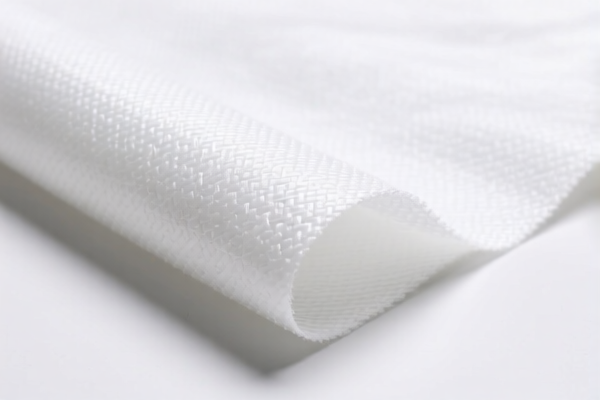
Product Images


AI Analysis
🏗️ Composite Non-Woven Fabric for Construction (Agricultural/Industrial Grade)
🌐 HS Code Reference & Customs Clearance Guide | 2026 Latest Tariff Breakdown | Strategic Compliance Strategy
📌 I. Product Definition & Classification: What is "Composite Non-Woven Fabric"?
Composite Non-Woven Fabric is a specialized textile material widely used in construction, agriculture, geotechnical engineering, and environmental protection. It typically consists of multiple layers (often including spunbond, meltblown, or needle-punched non-woven fabrics) combined with plastic films or other synthetic fibers to enhance durability, permeability, and reinforcement.
In international trade, the classification of this product depends heavily on its material composition (e.g., plastic vs. textile fibers) and its functional form (composite/layered structure). Misclassification can lead to severe tariff penalties, as seen in the data below where tax rates range from 10% to 35% depending on the HS Code selected.
⚠️ Key Differentiators:
- If classified as textile/non-woven (natural/synthetic fibers): Higher base tariffs often apply due to trade restrictions.
- If classified as plastic/plastic-fiber composite: May face lower base tariffs but significant "Section 301" or "122 Clause" add-ons.
- Agricultural vs. Construction Use: While often used in both, customs may scrutinize the primary intended use, though the HS Code is driven by material properties.
📦 II. HS Code Classification Details (2026 Latest Tariff Data)
Based on the provided data, Composite Non-Woven Fabric for Construction (often overlapping with agricultural grades) can be classified into five distinct categories with varying tax implications.
| HS Code | Summary Description | Material/Structure Basis | Total Tax Rate |
|---|---|---|---|
| 6307.90.68.00 | Other made-up articles; Synthetic fiber focus | Artificial/Synthetic fibers; "Other finished products" category | 10.0% |
| 6307.90.98.91 | Other textile articles; Textile category | Textile materials; "Other textile products" category | 24.5% |
| 5603.94.30.00 | Non-wovens; Composite/Laminated state | Non-woven material + Composite/Laminated form | 35.0% |
| 3926.90.99.89 | Other plastic articles; Plastic/Synthetic mix | Plastic or synthetic fiber products; "Other material products" | 22.8% |
| 5603.14.30.00 | Non-wovens; Non-woven material category | Non-woven material; Specifically for Agricultural/Construction use | 35.0% |
🔍 Critical Observation:
- The highest tax burden (35%) applies to 5603.94.30.00 and 5603.14.30.00, often triggered by the "composite/laminated" nature or specific agricultural construction usage rules. - The lowest tax burden (10%) applies to 6307.90.68.00, likely due to a favorable "finished product" classification with specific synthetic fiber attributes. - All listed rates include a mandatory "122 Clause Tariff" of 10%, which significantly impacts the total cost.
💰 III. 2026 Tariff Rate Breakdown (Detailed Policy Analysis)
✅ Applicable Region: Importing from China (CN)
✅ Product: Composite Non-Woven Fabric
✅ Effective Period: 2025-2026 (Current Trade War/Section 301 Context)
🎯 1. 6307.90.68.00 — The Low-Cost Path (Optimized)
Best for synthetic fiber "finished articles" with specific compliance.
| Item | Content |
|---|---|
| Base Tariff | 0.0% (Ad Valorem) |
| Additional (Section 301) | +0.0% |
| "122 Clause" Tariff | +10.0% (Mandatory China-specific surcharge) |
| Total Effective Rate | 10.0% |
| Legal Basis | General Made-up Article rules + Section 122 Add-on |
📌 Explanation:
This classification is the most cost-effective option if the fabric is deemed a "finished article" made of synthetic fibers rather than a raw "textile sheet." It avoids the higher Section 301 "Additional Tariff" (25%) applied to other categories.
🎯 2. 6307.90.98.91 — The Standard Textile Route
Common for standard textile non-wovens.
| Item | Content |
|---|---|
| Base Tariff | 7.0% |
| Additional (Section 301) | +7.5% |
| "122 Clause" Tariff | +10.0% |
| Total Effective Rate | 24.5% |
| Legal Basis | Textile category + Section 301 + Section 122 |
📌 Explanation:
This category treats the fabric as a standard textile product. The 14.5% in combined additional taxes (7.0% base + 7.5% add-on) makes this more expensive than option 1.
🎯 3. 5603.94.30.00 — The "Composite" Pitfall (High Risk)
Triggered by specific "Composite/Laminated" definitions.
| Item | Content |
|---|---|
| Base Tariff | 0.0% |
| Additional (Section 301) | +25.0% (Heavy Penalty) |
| "122 Clause" Tariff | +10.0% |
| Total Effective Rate | 35.0% |
| Legal Basis | Non-woven (Laminated) + Max Section 301 |
📌 Explanation:
⚠️ WARNING: This classification attracts the highest possible tariff (35%). The +25.0% "Additional Tariff" is a standard penalty for non-woven composites under Section 301. Avoid this unless the product cannot be classified otherwise.
🎯 4. 3926.90.99.89 — The Plastic-Based Route
For plastic-heavy or synthetic fiber composites.
| Item | Content |
|---|---|
| Base Tariff | 5.3% |
| Additional (Section 301) | +7.5% |
| "122 Clause" Tariff | +10.0% |
| Total Effective Rate | 22.8% |
| Legal Basis | Plastic Articles + Section 301 + Section 122 |
📌 Explanation:
A middle-ground option. If the fabric is treated more as a "plastic product" (due to coating or high plastic content) rather than a "textile," this rate applies. It is cheaper than the textile route but still carries the 122 Clause burden.
🎯 5. 5603.14.30.00 — The Agricultural/Construction Specific
For non-wovens specifically categorized by use.
| Item | Content |
|---|---|
| Base Tariff | 0.0% |
| Additional (Section 301) | +25.0% |
| "122 Clause" Tariff | +10.0% |
| Total Effective Rate | 35.0% |
| Legal Basis | Non-woven (Agricultural/Construction) + Max Section 301 |
📌 Explanation:
Similar to5603.94.30.00, this category incurs the 25% Additional Tariff. Even though the product is for "Construction," if customs categorizes it strictly under "Non-wovens" with a specific agricultural/construction subheading, the heavy penalty applies.
🛠️ IV. Customs Clearance Practical Advice (Avoiding the "35% Trap")
✅ 1. Material & Composition Documentation (Crucial)
To qualify for the 10% or 22.8% rates, you must prove the material composition: - Lab Reports: Must explicitly state the fiber ratio (e.g., 100% Synthetic vs. 60% Plastic + 40% Fibers). - Structure Analysis: Prove if the product is a "finished article" (6307) or a "laminated composite" (5603/3926). - Use Case Statement: If possible, emphasize "Construction Reinforcement" without explicitly triggering "Agricultural" tags that might force the 5603.14.30.00 classification.
✅ 2. Declaration Strategy (Keyword Selection)
🔥 "Classify by Material, Not Just Use!"
| Scenario | Recommended HS Code | Strategy |
|---|---|---|
| Synthetic Fiber "Finished" Item | 6307.90.68.00 |
Declare as "Composite Non-Woven Made-up Article" to avoid "Textile" or "Laminated" penalties. |
| Plastic-Coated Fabric | 3926.90.99.89 |
Highlight plastic content >50% to move to Plastic category (22.8%). |
| Standard Non-Woven | 6307.90.98.91 |
Only use if synthetic ratio is high and no plastic lamination exists (24.5%). |
| Avoid | 5603.94.30.00 / 5603.14.30.00 |
DO NOT declare as "Laminated" or "Agricultural" unless absolutely necessary to avoid 35% tax. |
✅ 3. Pre-Arbitration & Ruling
- Apply for a Binding Tariff Ruling (BTR): Before shipping, request a pre-classification ruling from the customs authority. Present the structure diagram showing the layers.
- Evidence of "Finished" State: If the fabric is already cut, printed, or treated for a specific construction application, argue it falls under 6307 (Finished Articles) rather than 5603 (Raw Non-Wovens).
✅ 4. 122 Clause Mitigation
- Note: The 10% "122 Clause" is mandatory for all these HS codes under current data. No exemption exists in the provided data.
- Strategy: Focus entirely on minimizing the Base + Additional Tariff portion to reach the 10% or 22.8% total, as the 10% fixed surcharge cannot be avoided.
🌍 V. Global Market Comparison (2026 Context)
| Market | Recommended HS Code (Target Rate) | Total Tax | Key Risk |
|---|---|---|---|
| 🇺🇸 USA | 6307.90.68.00 |
10% | High risk of reclassification to 35% if "Composite" is emphasized. |
| 🇪🇺 EU | 6307.90.68.00 |
Variable | EU may have different "Composite" definitions; check "Textile vs Plastic" rules. |
| 🇨🇳 China (Import) | Varies | Variable | Domestic policies may differ; check local customs bulletin. |
📌 Conclusion:
In the current trade environment,6307.90.68.00is the golden ticket for Composite Non-Woven Fabric for construction. It offers the lowest total tax rate (10%) by avoiding the heavy "Additional Tariff" (25%) applied to textile and composite non-wovens.
📌 VI. Common Mistakes & Avoidance Guide (Lessons Learned)
❌ Mistake 1: Declaring the product as "Laminated Non-Woven" without proving it's a "Finished Article."
👉 Result: Reclassified to 5603.94.30.00 → 35% Tax (Loss of 25% margin!).
❌ Mistake 2: Using "Agricultural" keywords in the description for construction products.
👉 Result: Triggered 5603.14.30.00 → 35% Tax. Keep descriptions focused on "Construction/Engineering."
❌ Mistake 3: Ignoring the "122 Clause."
👉 Result: Underestimating costs by 10% on top of base taxes.
✅ Correct Approach:
"Composite Non-Woven Fabric for Geotextile Construction, 100% Synthetic Fiber, Finished State, No Lamination (or Plastic Content < Threshold), Model XYZ."
🎯 VII. Final Verdict: Strategic Classification
🎯 The Golden Rule:
Maximize "Finished Article" status (6307), Minimize "Composite/Laminated" tags (5603), and Avoid "Agricultural" labels for Construction goods.
📌 Final Tip:
Always prepare a Material Composition Certificate and Technical Data Sheet proving the product is a "Synthetic Fiber Made-up Article" to secure the 10.0% tariff rate (6307.90.68.00).
📣 Immediate Action Required:
📞 Consult your Customs Broker to review the layer structure of your fabric.
🚀 Adjust your HS Code Declaration from5603to6307if possible to save 25% in taxes!
✨ Smart Classification = Lower Costs + Faster Clearance
💼 Your profit margin depends on this 10% vs 35% difference!
Customer Reviews
About HS Code Classification
The Harmonized System (HS) is an internationally standardized nomenclature developed by the World Customs Organization (WCO) to classify traded products. Over 200 countries use the HS system as the basis for customs tariffs, trade statistics, and import/export regulations.
Each HS code follows a hierarchical structure:
- Chapter (2 digits) — Broad category of goods (e.g., Chapter 84: Machinery and Mechanical Appliances)
- Heading (4 digits) — More specific grouping within the chapter
- Subheading (6 digits) — Internationally standardized breakdown, used by all WCO member countries
- National subdivisions (8-10 digits) — Country-specific extensions for further classification, such as US HTSUS 10-digit codes
Correct HS code classification is essential for smooth customs clearance, accurate duty payment, and compliance with trade regulations. Misclassification can lead to customs delays, overpayment of duties, or penalties.
When importing from CN to US, the applicable tariff rates may include:
- Most-Favored-Nation (MFN) rate — The standard duty rate applied to WTO members
- General rate — Applied to countries without trade agreements
- Trade remedy duties — Additional tariffs such as Section 301 (anti-dumping), Section 232 (national security), or countervailing duties
The information provided on this page is for reference purposes only. For official classification, please consult with your local customs authority or a licensed customs broker.