Composite Non woven Filter Cloth
CN → US| HS Code | Tariff Rate | Origin | Destination | Doc |
|---|---|---|---|---|
| 8421290065 | 35.0% | CN | US | Official Doc |
| 8421390115 | 35.0% | CN | US | Official Doc |
| 5603110070 | 35.0% | CN | US | Official Doc |
| 6307909891 | 24.5% | CN | US | Official Doc |
| 5603120070 | 35.0% | CN | US | Official Doc |
Product Images
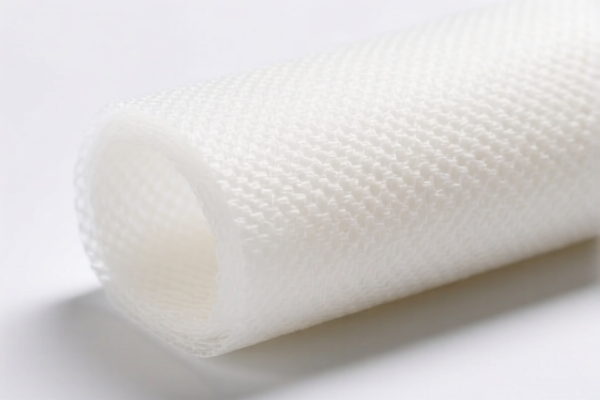
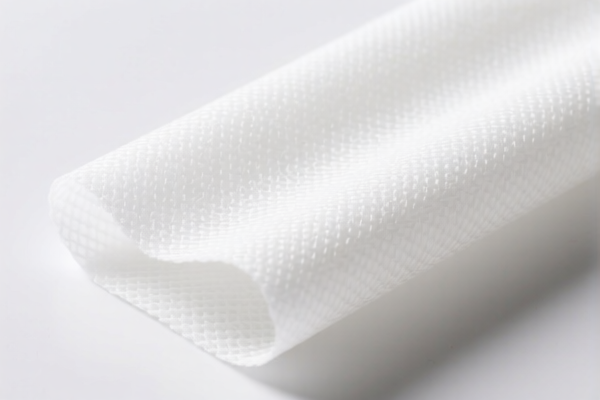
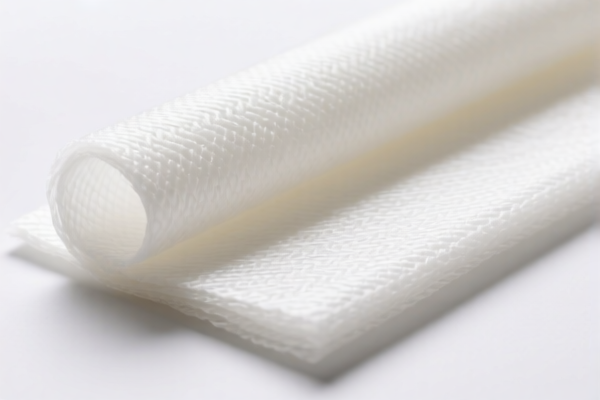
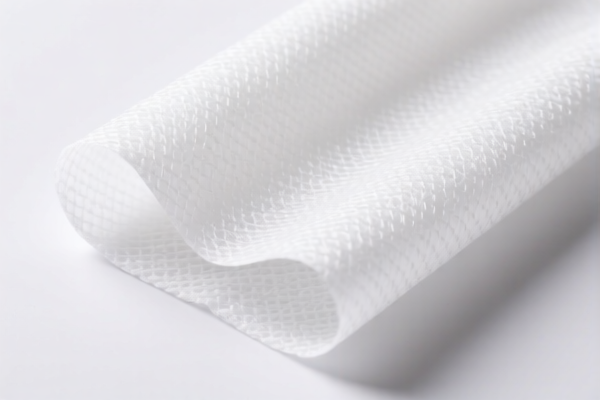
AI Analysis
🧵 Composite Non-Woven Filter Cloth
🌐 HS Code Reference & Customs Clearance Guide | 2026 Latest Tariff Analysis | Professional Clearance Strategy
📌 I. Product Definition & Classification: Do You Really Understand "Composite Non-Woven Filter Cloth"?
Composite Non-Woven Filter Cloth refers to filtration media made from non-woven fabrics, often layered or bonded with other materials (such as mesh, paper, or chemical fibers) to enhance strength, filtration precision, or chemical resistance. In international trade, its classification depends heavily on its state (finished vs. raw material), application (industrial machinery vs. packaging), and material composition.
The key distinction lies in whether it is: 1. An integral component of a machine/device (e.g., a filter cartridge for liquid purification) → Classified under Machinery/Parts chapters. 2. A finished filtration bag or product ready for sale/use → Classified under Textiles or Other Manufactured Goods. 3. A raw non-woven fabric material → Classified under Textile Materials.
⚠️ Key Distinction Point:
- If it is a filter element/component designed for use in liquid/gas filtration machines → Chapter 84 (Machinery)
- If it is a finished bag made of non-woven fabric for dust collection → Chapter 56 or 63 (Textiles/Other Articles)
- If it is a generic non-woven fabric not specifically designed for filtration alone → Chapter 56 (Non-wovens)
📦 II. HS Code Classification Details (2026 Latest Tariff Authority Reference)
Based on the provided data, here are the precise classifications for Composite Non-Woven Filter Cloth depending on its form and intended use:
| HS Code | Product Description | Application Scenario | Material/Form Characteristic |
|---|---|---|---|
8421.29.00.65 |
Filter components for liquid filtration/purification machines | Industrial liquid filters, water treatment systems | Non-woven material; component of a machine |
8421.39.01.15 |
Filtration elements for dust removal equipment | HVAC dust collectors, industrial baghouses | Bag-shaped form; part of air filtration systems |
5603.11.00.70 |
Finished non-woven filter bags | Sold as finished packaging or standalone filter bags | Finished product form; non-woven fabric |
6307.90.98.91 |
Other made-up articles (inferred non-woven) | General purpose non-woven articles, miscellaneous filters | No material conflict; general made-up article |
5603.12.00.70 |
Made-up non-woven articles | General non-woven products with filtration traits | Consistent with non-woven article classification |
🔍 Important Note:
- Machinery Components (8421.xx): Must be specifically identifiable as parts of filtration machines (liquid or air). The non-woven material is integrated into a specific filter assembly. - Textile/Other Articles (5603.xx,6307.xx): Applies when the product is sold as a bag, sheet, or general non-woven item, not necessarily as a dedicated machine part. - Material Conflict Check: All codes assume the material is non-woven. If composite materials include significant metal or plastic mesh layers that change the essential character, classification may shift.
💰 III. 2026 Latest Tariff Rate Breakdown (Including Surcharges & Policy Add-ons)
✅ Applicable Country: United States (US)
✅ Country of Origin: China (CN)
✅ Effective Date: November 10, 2025 (and subsequent imports)
🎯 1. Machinery-Related Filter Components (8421.29.00.65 & 8421.39.01.15)
| Item | Detail |
|---|---|
| Base Duty Rate | 0% (ad valorem) |
| USITC Surcharge (Section 301) | +25% |
| IEEPA Surcharge (China-specific) | +10% |
| Total Effective Rate | 35% |
| Tax Calculation | CIF Value × 35% |
| De Minimis Exemption Eligibility | ❌ Not Eligible (deny_de_minimis) |
| Legal Basis Path | IEEPA:9903.01.25 → IEEPA:9903.01.24 → USITC:8421.x → FOOTNOTE:301 |
📌 Explanation:
- The 25% USITC surcharge applies to most Chinese-origin machinery parts under Section 301. - The 10% IEEPA surcharge applies specifically to goods from China under the International Emergency Economic Powers Act. - Total 35% is a high burden. Proper documentation proving the item is a "machine part" is crucial to avoid misclassification.
🎯 2. Finished Non-Woven Filter Bags (5603.11.00.70 & 5603.12.00.70)
| Item | Detail |
|---|---|
| Base Duty Rate | 0% |
| USITC Surcharge (Section 301) | +25% |
| IEEPA Surcharge (China-specific) | +10% |
| Total Effective Rate | 35% |
| Tax Calculation | CIF Value × 35% |
| De Minimis Exemption Eligibility | ❌ Not Eligible |
| Legal Basis Path | IEEPA:9901.25 → IEEPA:9903.01.24 → USITC:5603.x → FOOTNOTE:301 |
📌 Note:
- Even though these are textile-related items, if they are considered "made-up articles" subject to trade restrictions, the same 35% total rate applies. - Classification as5603(non-wovens) vs.8421(machinery parts) can sometimes impact duty, but for China-origin goods, the surcharges dominate, leading to the same 35% rate.
🎯 3. Other Made-Up Articles (6307.90.98.91)
| Item | Detail |
|---|---|
| Base Duty Rate | 7% |
| USITC Surcharge (Section 301) | +7.5% |
| IEEPA Surcharge (China-specific) | +10% |
| Total Effective Rate | 24.5% |
| Tax Calculation | CIF Value × 24.5% |
| De Minimis Exemption Eligibility | ❌ Not Eligible |
| Legal Basis Path | IEEPA:9903.01.25 → IEEPA:9903.01.24 → USITC:6307.90 → FOOTNOTE:301 |
📌 Key Advantage:
- If the product can be classified as a "general made-up article" rather than a specific machinery part or textile filter bag, the base duty is higher (7% vs. 0%), but the USITC surcharge is lower (7.5% vs. 25%). - Total 24.5% is significantly cheaper than 35%. - Strategy: If the filter cloth is not exclusively designed for a specific machine and can be argued as a general non-woven product, this classification offers tax savings.
🛠️ IV. Customs Clearance Practical Advice (Real-World Pitfall Avoidance)
✅ 1. Required Documentation Checklist (All Must Be Provided)
| Document | Required? | Description |
|---|---|---|
| ✅ Product Specification Sheet | ✔️ | Must detail material composition (non-woven), layering, pore size, and intended use. |
| ✅ Product Photos (Including Labels) | ✔️ | Clear images showing if it's a bag, sheet, or component. |
| ✅ Commercial Invoice | ✔️ | Must accurately describe the product. Avoid vague terms like "cloth"; use "non-woven filter element" or "filter bag." |
| ✅ Packing List | ✔️ | Details quantity, weight, and packaging type. |
| ✅ Certificate of Origin (CO) | ✔️ | To confirm China origin and apply correct surcharges. |
| ✅ Third-Party Test Report | ✔️ | Optional but helpful for filtration efficiency claims. |
✅ 2. Declaration Tips (Key Mnemonics)
🔥 “Form Dictates Code, Code Dictates Tax!”
| Scenario | Correct Declaration | Incorrect Action | Consequence |
|---|---|---|---|
| Filter Element inside a Machine | 8421.29.00.65 or 8421.39.01.15 |
Declare as "Fabric" → Risk of penalty for misclassification | 35% Duty |
| Standalone Filter Bag | 5603.11.00.70 |
Declare as "Machine Part" → Unlikely, but possible if bundled | 35% Duty |
| General Non-Woven Sheet/Article | 6307.90.98.91 |
Over-specifying as "Filter" → May trigger higher scrutiny | 24.5% Duty (Savings!) |
| Composite Material with Metal Mesh | Review Chapter 84 or 73 | Ignore non-woven content → Misclassification | Potential Fine |
📌 Strategy Tip:
- If the product is not exclusively designed for a specific machine and can be used in multiple applications, consider declaring under6307.90.98.91to benefit from the lower total tax rate (24.5% vs. 35%). - Ensure the product description does not explicitly state "for use in [Specific Machine Model]" if aiming for the lower-tax classification.
✅ 3. Special Case Handling
| Scenario | Handling Advice |
|---|---|
| OEM Custom Filter Cloth | Provide customer order + design drawings. If it has a unique shape for a specific machine, lean toward 8421. |
| Mixed Packaging (Bag + Machine) | Declare separately. Bags under 5603/6307, machine parts under 8421. Do not bundle unless instructed. |
| Non-Woven with Chemical Treatment | Highlight chemical resistance in specs. May support "technical textile" argument for 5603. |
| Import for Testing | If used for R&D, consider if "sample" status applies, but surcharges often still apply. |
🌍 V. Global Market Comparison (2026 Latest)
| Country/Region | Recommended HS Code | Tariff Rate (China Origin) | Certification Requirements | Notes |
|---|---|---|---|---|
| 🇺🇸 USA | 6307.90.98.91 (if applicable) |
24.5% | None specific for non-wovens | Lowest rate among options. 8421/5603 at 35%. |
| 🇨🇳 China | 6307.90.98.91 |
7% | CCC (if applicable) | No additional surcharges. |
| 🇪🇺 EU | 6307.90 |
0-4% (varies) | CE (if applicable) | No major surcharges. |
| 🇬🇧 UK | 6307.90 |
0-5% | UKCA | Post-Brexit rules apply. |
| 🇯🇵 Japan | 6307.90 |
0-3% | PSE (if electrical) | Generally low tariffs. |
📌 Conclusion:
- USA is the most challenging market due to high surcharges.
- Optimization Opportunity: If the product allows, classify under6307.90.98.91to reduce the effective duty from 35% to 24.5%.
- Non-US Markets: Tariffs are significantly lower, and surcharges do not apply.
📌 VI. Common Errors & Pitfall Avoidance (Lessons Learned)
❌ Error 1: Declaring a machinery part (8421) as a general textile (6307) without justification
👉 Consequence: Customs may reject the declaration, demand re-classification, and impose fines.
Correct Action: Provide clear documentation showing if it's a standalone article or a machine component.
❌ Error 2: Ignoring IEEPA Surcharges in cost calculation
👉 Consequence: Budgeting fails because the 10% IEEPA tax is forgotten, leading to unexpected costs.
Correct Action: Always calculate Base + USITC + IEEPA for total landed cost.
❌ Error 3: Using vague descriptions like "Filter Cloth" without specifying form
👉 Consequence: Customs hesitation, delays, and potential random inspections.
Correct Action: Use precise terms: "Non-woven Filter Element for Liquid Purification" or "Finished Non-woven Dust Collection Bag."
❌ Error 4: Assuming De Minimis applies
👉 Consequence: Package held at customs, duties assessed retroactively.
Correct Action: No de minimis exemption for these HS codes from China. Prepare for full duty payment.
🎯 VII. Conclusion: Precision in Classification Saves Money
🎯 Remember the Golden Rules:
🔹 "Machine Parts = 35% | General Articles = 24.5% | Textile Bags = 35%"
🔹 "HS Code Determines Tax Rate, Tax Rate Determines Profit Margin!"
🔹 "Always Account for IEEPA + USITC Surcharges for China-Origin Goods!"
📌 Pro Tip:
- If your Composite Non-Woven Filter Cloth is not exclusively tied to a specific machine and can be used generically, strive for
6307.90.98.91classification to save 10.5% in total tariffs.- For specific industrial filters, prepare for 35% total duty.
- Always consult a customs broker for pre-classification rulings if the product's intended use is ambiguous.
📣 Immediate Action:
📞 Contact a Licensed Customs Broker + Provide Product Specifications + Request HS Code Advance Ruling
🚀 Ensure Smooth Clearance, Predictable Costs, and Competitive Pricing!
✨ Professional Clearance, Starting with Accurate Classification!
💼 Every Cent of Duty Saved is Pure Profit!
Customer Reviews
About HS Code Classification
The Harmonized System (HS) is an internationally standardized nomenclature developed by the World Customs Organization (WCO) to classify traded products. Over 200 countries use the HS system as the basis for customs tariffs, trade statistics, and import/export regulations.
Each HS code follows a hierarchical structure:
- Chapter (2 digits) — Broad category of goods (e.g., Chapter 84: Machinery and Mechanical Appliances)
- Heading (4 digits) — More specific grouping within the chapter
- Subheading (6 digits) — Internationally standardized breakdown, used by all WCO member countries
- National subdivisions (8-10 digits) — Country-specific extensions for further classification, such as US HTSUS 10-digit codes
Correct HS code classification is essential for smooth customs clearance, accurate duty payment, and compliance with trade regulations. Misclassification can lead to customs delays, overpayment of duties, or penalties.
When importing from CN to US, the applicable tariff rates may include:
- Most-Favored-Nation (MFN) rate — The standard duty rate applied to WTO members
- General rate — Applied to countries without trade agreements
- Trade remedy duties — Additional tariffs such as Section 301 (anti-dumping), Section 232 (national security), or countervailing duties
The information provided on this page is for reference purposes only. For official classification, please consult with your local customs authority or a licensed customs broker.