Composite Textile Plastic Sheet
CN → USProduct Images

AI Analysis
🧵 Composite Textile Plastic Sheets (Industrial Grade)
🌐 HS Code Reference & Customs Clearance Guide | 2026 Latest Tariff Analysis | Professional Clearance Strategy
📌 1. Product Definition & Classification: What Exactly Are These Sheets?
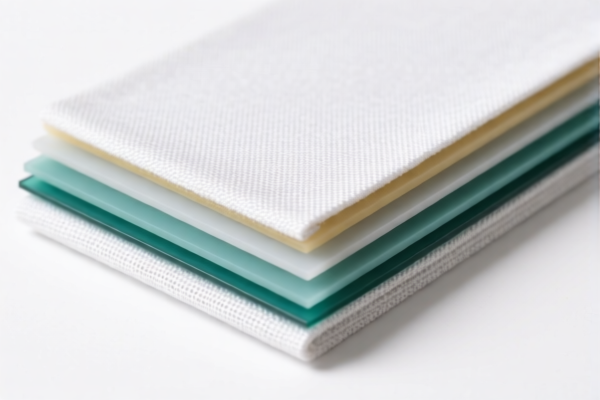
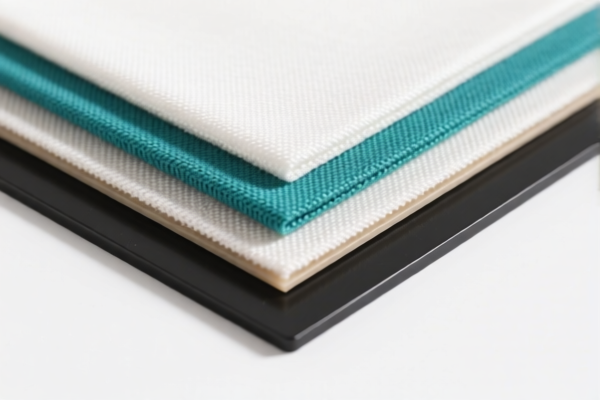
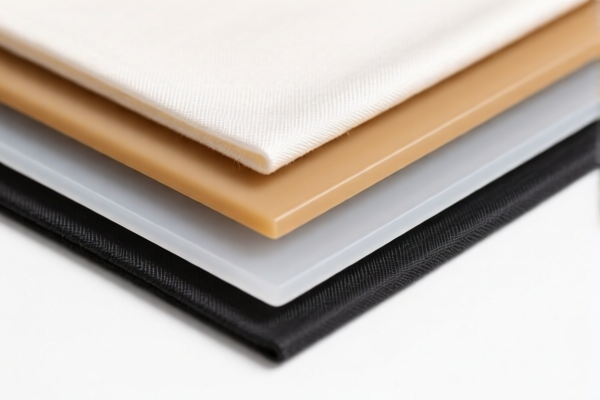
"Composite Textile Plastic Sheets" generally refer to industrial materials formed by combining plastic polymers with textile fabrics (woven, non-woven, or knitted). These are critical components in industries such as geotextiles, filtration, packaging, construction, and automotive interiors.
In international trade, they are categorized based on manufacturing process and primary function:
A. Non-woven Fabric Composites (HS 5603 Series)
- Description: Plastic impregnated, coated, covered, or laminated on non-woven textile materials.
- Key Feature: The base material is non-woven (fibers bonded by chemical, mechanical, or thermal means).
- Typical Use: Filter bags, medical drapes, protective clothing, geotextiles.
B. Impregnated/Laminated Fabric Sheets (HS 5903 Series)
- Description: Textile fabrics impregnated, coated, or covered with plastic (e.g., PVC, PE, PU).
- Key Feature: The base is usually a woven or knitted fabric that is then saturated with plastic.
- Typical Use: Tarpaulins, inflatable boats, conveyor belts, upholstery.
C. Composite Plastic Plates/Sheets (HS 3921 Series)
- Description: Plates, sheets, film, foil, and strip of plastics combined with textile materials.
- Key Feature: The product is primarily identified as a plastic composite rather than a textile product.
- Typical Use: Hard packaging substrates, rigid industrial liners.
⚠️ Critical Distinction:
- If the base is non-woven and thin/light → Likely HS 5603.
- If the base is woven/knitted and coated/laminated → Likely HS 5903.
- If the final product is a rigid plate/sheet dominated by plastic content → Likely HS 3921.
📦 2. HS Code Classification Details (Based on Provided Data)
| HS Code | Product Description (Summary) | Key Characteristics | Primary Application |
|---|---|---|---|
5603.12.00.70 |
Industrial plastic-composite textile material, matching non-woven fabric attributes | Non-woven base; plastic composite | Geotextiles, filtration, protective materials |
5903.10.20.90 |
Industrial plastic-composite textile material; textiles impregnated, coated, or laminated with plastic | Woven/Knitted base; surface treatment with plastic | Tarpaulins, coated fabrics, industrial covers |
3921.90.11.00 |
Industrial plastic-composite textile material; plate/sheet/film structure of plastic + textile composite | Plastic-dominant structure; rigid or semi-rigid plates | Rigid packaging substrates, industrial liners |
5603.11.00.70 |
Industrial plastic-composite textile material; chemical fiber composite in non-woven/composite field | Non-woven base; specific chemical fiber composition | Specialized industrial non-wovens |
5603.12.00.70 |
Duplicate entry for industrial plastic-composite textile material, matching non-woven attributes | Non-woven base; same as first entry | Redundant classification (same as above) |
🔍 Key Note:
-5603codes are for non-wovens.
-5903code is for coated/laminated fabrics.
-3921code is for composite plastic sheets/plates.
- Ensure the base material (non-woven vs. woven) and form (flexible fabric vs. rigid sheet) dictate the correct code.
💰 3. 2026 Tariff Rate Breakdown (Including Additional Duties)
✅ Applicable Country: United States (US)
✅ Origin: China (CN)
✅ Effective Date: Post-2025 (includes Section 301 & Section 122 tariffs)
🎯 1. 5603.12.00.70 & 5603.11.00.70 — Non-Woven Plastic Composites
| Item | Details |
|---|---|
| Base Tariff | 0.0% |
| Section 301 Tariff | 25.0% |
| Section 122 Tariff | 10.0% |
| Total Tax Rate | 35.0% |
| Calculation Basis | CIF Value × 35% |
| De Minimis Exemption | ❌ Not Eligible (High tariff category) |
| Legal Basis | USITC Footnotes + IEEPA Section 122 (if applicable) |
📌 Explanation:
- The 0% base rate reflects that non-wovens often have low MFN tariffs.
- However, Section 301 (25%) applies due to US-China trade tensions.
- Section 122 (10%) may apply depending on specific industrial classifications and emergency powers.
- Total 35% is significant; accurate classification is crucial to avoid over/under-payment.
🎯 2. 5903.10.20.90 — Impregnated/Coated Textile Fabrics
| Item | Details |
|---|---|
| Base Tariff | 0.0% |
| Section 301 Tariff | 25.0% |
| Section 122 Tariff | 10.0% |
| Total Tax Rate | 35.0% |
| Calculation Basis | CIF Value × 35% |
| De Minimis Exemption | ❌ Not Eligible |
| Legal Basis | USITC Footnotes + IEEPA Section 122 |
📌 Note:
- Identical tax structure to5603codes.
- Applies to PVC/PU-coated fabrics, tarpaulins, etc.
🎯 3. 3921.90.11.00 — Composite Plastic Plates/Sheets
| Item | Details |
|---|---|
| Base Tariff | 4.2% |
| Section 301 Tariff | 25.0% |
| Section 122 Tariff | 10.0% |
| Total Tax Rate | 39.2% |
| Calculation Basis | CIF Value × 39.2% |
| De Minimis Exemption | ❌ Not Eligible |
| Legal Basis | USITC Footnotes + IEEPA Section 122 |
📌 Important:
- This code has a higher base tariff (4.2%) compared to non-wovens/coated fabrics.
- Total 39.2% is the highest among the listed codes.
- Use only if the product is structurally a plastic plate/sheet with textile reinforcement, not a flexible fabric.
🛠️ 4. Customs Clearance Practical Advice (Avoid Pitfalls)
✅ 1. Required Documentation Checklist
| Document | Required? | Purpose |
|---|---|---|
| ✅ Product Specification Sheet | ✔️ | Defines layers, materials, weight, and dimensions |
| ✅ Material Composition Statement | ✔️ | Crucial for distinguishing between 5603 (non-woven) vs. 5903 (woven) |
| ✅ Photos of Product & Cross-Section | ✔️ | Visual proof of lamination/impregnation |
| ✅ Commercial Invoice | ✔️ | Must clearly state "Plastic-Composite Textile" and HS Code |
| ✅ Packing List | ✔️ | Volume and weight details for duty calculation |
| ✅ Certificate of Origin (CO) | ✔️ | For origin verification and potential preferential treatment (if applicable) |
| ✅ Third-Party Test Report | ✔️ | Confirms material composition (e.g., % plastic, % textile) |
✅ 2. Declaration Tips (Key Mantras)
🔥 "Non-woven is 5603, Coated is 5903, Rigid Sheet is 3921!"
| Scenario | Correct HS Code | Common Mistake |
|---|---|---|
| Soft, flexible, non-woven base with plastic coating | 5603.12.00.70 or 5603.11.00.70 |
Misclassifying as 3921 → Higher base tariff |
| Woven fabric (e.g., polyester) coated with PVC/PU | 5903.10.20.90 |
Misclassifying as 5603 → Incorrect base material |
| Rigid plastic sheet with embedded textile mesh | 3921.90.11.00 |
Misclassifying as 5603 → Higher tax rate |
✅ 3. Special Case Handling
| Situation | Recommendation |
|---|---|
| OEM Custom Orders | Provide design specs showing layer structure to justify HS Code |
| Mixed Shipments | Declare each HS Code separately; do not consolidate under one incorrect code |
| Sample Imports | Still subject to duties; declare accurately even for samples |
| Origin Ambiguity | If textile is from Country A and plastic from Country B, rule of origin applies; likely CN if final processing is in China |
🌍 5. Global Market Comparison (2026)
| Country/Region | Recommended HS Code | Tariff (China Origin) | Certification Requirements | Notes |
|---|---|---|---|---|
| 🇺🇸 USA | 5603/5903/3921 |
35% – 39.2% | None specific, but accurate HS is critical | High tariffs due to Section 301 & 122 |
| 🇨🇳 China | Same HS Codes | 5% – 10% | CCC (if applicable) | No Section 301 tariffs |
| 🇪🇺 EU | Similar HS Codes | 0% – 4% | REACH, RoHS | No Section 301/122 equivalents |
| 🇬🇧 UK | Similar HS Codes | 0% – 4% | UKCA, REACH | Post-Brexit tariffs |
📌 Conclusion:
- USA is the most expensive market for these goods due to叠加 tariffs.
- Duty cost ranges from 35% to 39.2%; precise classification can save up to 4.2% (base tariff difference).
- EU/UK are more favorable with no additional punitive tariffs.
📌 6. Common Errors & Pitfalls (Lessons Learned)
❌ Mistake 1: Classifying a woven coated fabric as 5603 (non-woven)
👉 Result: Customs may reject or reclassify, leading to penalties and delays.
❌ Mistake 2: Classifying a rigid composite sheet as 5603
👉 Result: Underpayment of base tariff (4.2% vs. 0%), leading to back taxes + fines.
❌ Mistake 3: Ignoring Section 122 Tariff (10%)
👉 Result: Unexpected 35%+ total duty instead of 25%, impacting profit margins.
❌ Mistake 4: Vague product description ("Plastic Sheet")
👉 Result: Customs inspection delays, potential seizure if composition is unclear.
✅ Correct Approach:
"Industrial Plastic-Composite Textile, Non-Woven Base, PVC Coated, Filter Grade, Model XYZ, CIF $10,000"
🎯 7. Conclusion: Precision in Classification Saves Money
🎯 Remember the Mantras:
🔹 "Non-woven = 5603 (35%)", "Coated Woven = 5903 (35%)", "Rigid Sheet = 3921 (39.2%)"
🔹 "Section 301 + 122 = High Duty, Classify Right, Avoid Pitfalls!"
📌 Pro Tip:
If your product is exported to the USA, consider applying for an Advance Ruling from CBP (Customs and Border Protection) to confirm the correct HS Code and tariff rate. This provides legal certainty and prevents surprise duties.
📣 Take Action Now:
📞 Consult a licensed customs broker + Provide product samples + Apply for CBP Ruling
🚀 Ensure smooth clearance, accurate duties, and optimized profit margins!
✨ Professional Classification, Efficient Clearance!
💼 Your Cost, Precisely Calculated!
Customer Reviews
About HS Code Classification
The Harmonized System (HS) is an internationally standardized nomenclature developed by the World Customs Organization (WCO) to classify traded products. Over 200 countries use the HS system as the basis for customs tariffs, trade statistics, and import/export regulations.
Each HS code follows a hierarchical structure:
- Chapter (2 digits) — Broad category of goods (e.g., Chapter 84: Machinery and Mechanical Appliances)
- Heading (4 digits) — More specific grouping within the chapter
- Subheading (6 digits) — Internationally standardized breakdown, used by all WCO member countries
- National subdivisions (8-10 digits) — Country-specific extensions for further classification, such as US HTSUS 10-digit codes
Correct HS code classification is essential for smooth customs clearance, accurate duty payment, and compliance with trade regulations. Misclassification can lead to customs delays, overpayment of duties, or penalties.
When importing from CN to US, the applicable tariff rates may include:
- Most-Favored-Nation (MFN) rate — The standard duty rate applied to WTO members
- General rate — Applied to countries without trade agreements
- Trade remedy duties — Additional tariffs such as Section 301 (anti-dumping), Section 232 (national security), or countervailing duties
The information provided on this page is for reference purposes only. For official classification, please consult with your local customs authority or a licensed customs broker.