Composition Leather Handbags
CN → US| HS Code | Tariff Rate | Origin | Destination | Doc |
|---|---|---|---|---|
| 4202929336 | 52.6% | CN | US | Official Doc |
| 3926901000 | 20.9% | CN | US | Official Doc |
| 4202929100 | 52.6% | CN | US | Official Doc |
| 3926909989 | 22.8% | CN | US | Official Doc |
| 4202929336 | 52.6% | CN | US | Official Doc |
Product Images
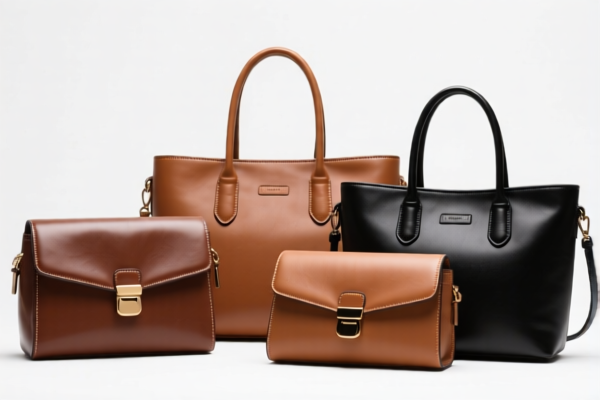
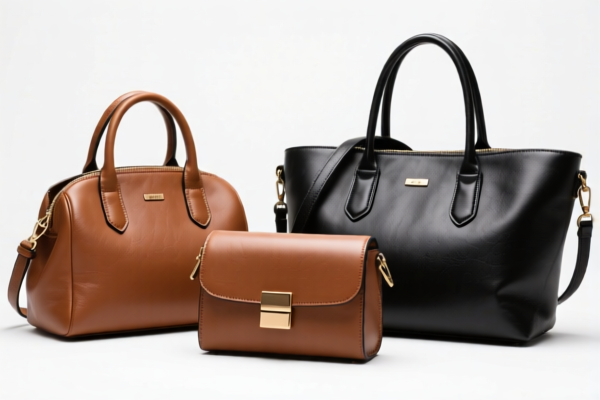
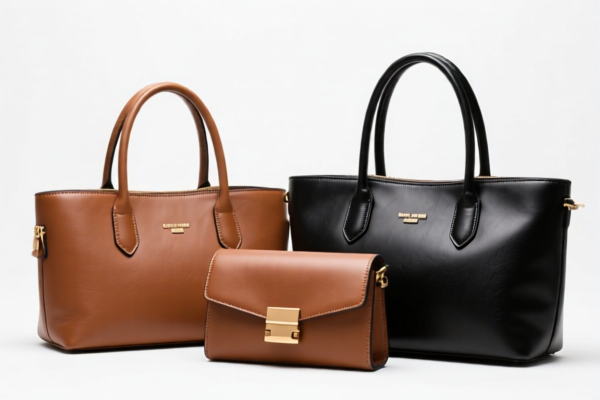
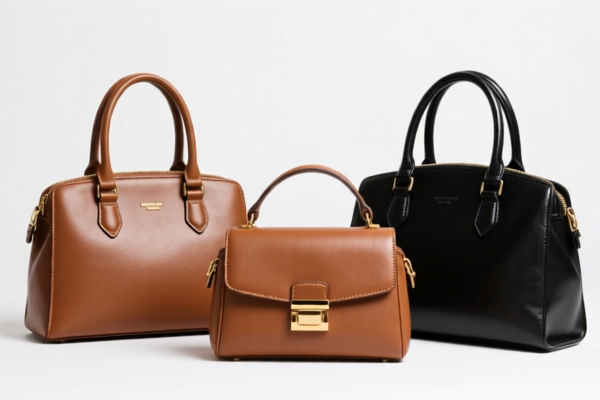
AI Analysis
👜 Synthetic Leather Handbags (Composition Leather Bags)
🌐 HS Code Reference & Customs Clearance Guide | 2026 Updated Tariff Analysis | Professional Entry Strategy
📌 I. Product Definition: What is "Synthetic Leather"?
Synthetic leather handbags (often referred to as "Composition Leather" or "Artificial Leather") are bags made from non-animal materials designed to mimic the texture and appearance of genuine leather. In international trade, the classification depends heavily on the specific material composition of the surface and the structural composition of the bag.
Key Distinctions: * Textile-Based: If the outer surface is a textile fabric coated with plastic/polymer → Often classified under Heading 4202 (Articles of leather of any material). * Plastic/Resin-Based: If the bag is made primarily of molded plastic or sheets of plastic without textile backing → Often classified under Heading 3926 (Other articles of plastics).
⚠️ Critical Classification Point:
- If the bag has a textile backing (even if covered in synthetic material) → It is generally treated as an article of Leather/Leather-like materials (4202).
- If the bag is purely plastic/synthetic resin without textile backing → It falls under Plastics Articles (3926).
📦 II. HS Code Classification Details (2026 Latest Tariff Concordance)
Based on the specific material composition provided in the dataset, here are the four possible classifications for Synthetic Leather Handbags:
| HS Code | Product Description | Material Specifics | Tariff Impact |
|---|---|---|---|
| 4202.92.93.36 | Synthetic Leather Tool Bag / Case | Material: Synthetic Leather (Leather-like material) | 52.6% |
| 3926.90.10.00 | Synthetic Leather Tool Bag / Case | Material: Plastic Products & Articles | 20.9% |
| 4202.92.91.00 | Synthetic Leather Tool Bag / Case | Surface: Textile material made of Artificial Fibers | 52.6% |
| 3926.90.99.89 | Synthetic Leather Tool Bag / Case | Material: Plastic/Synthetic Resin (Other) | 22.8% |
🔍 Key Takeaway:
- High Tariff Path (52.6%): If classified under 4202 (Leather-like), the bag is subject to high duties due to its classification as "Articles of leather." - Low Tariff Path (20.9% - 22.8%): If classified under 3926 (Plastics), the bag is treated as a plastic product, resulting in significantly lower duties.
💰 III. 2026 Latest Tariff Rate Breakdown (Detailed Tax Clauses)
✅ Applicable Country: United States (US)
✅ Origin: China (CN)
✅ Effective Date: 2025/2026 (Current Trade Policy)
🎯 1. 4202.92.93.36 & 4202.92.91.00 — Classified as "Leather-Like" Articles
These two codes share the same total tax rate but differ in specific material descriptions.
| Item | Detail |
|---|---|
| Base Tariff | 17.6% |
| Section 301 Tariff (Retaliation) | +25.0% |
| Section 122 Tariff (China Specific) | +10.0% |
| Total Tax Rate | 52.6% |
| Tax Calculation | CIF Value × 52.6% |
| De Minimis Exemption | ❌ Not Eligible |
| Legal Basis | Standard HTUS Code + Section 301 Footnotes + Section 122 Provisions |
📌 Explanation:
- The 17.6% is the standard MFN (Most Favored Nation) duty for articles of leather/plastic sheets. - The 25% is the additional duty under Section 301 for Chinese goods. - The 10% is the additional duty under Section 122, specifically targeting certain Chinese imports. - Total: 52.6% is a very high cost. This applies if the bag is considered "Leather-like" (4202).
🎯 2. 3926.90.10.00 — Classified as "Plastic Products"
| Item | Detail |
|---|---|
| Base Tariff | 3.4% |
| Section 301 Tariff | +7.5% |
| Section 122 Tariff | +10.0% |
| Total Tax Rate | 20.9% |
| Tax Calculation | CIF Value × 20.9% |
| De Minimis Exemption | ❌ Not Eligible |
| Legal Basis | HTUS 3926 + Section 301 + Section 122 |
📌 Explanation:
- The 3.4% is the base duty for other plastic articles. - The 7.5% is the Section 301 duty for this specific plastic sub-category (lower than the 25% for leather-like goods). - The 10% is the Section 122 duty. - Total: 20.9% is significantly lower than the 52.6% rate. This is the preferred classification if the bag is purely plastic.
🎯 3. 3926.90.99.89 — Other Plastic/Synthetic Resin Articles
| Item | Detail |
|---|---|
| Base Tariff | 5.3% |
| Section 301 Tariff | +7.5% |
| Section 122 Tariff | +10.0% |
| Total Tax Rate | 22.8% |
| Tax Calculation | CIF Value × 22.8% |
| De Minimis Exemption | ❌ Not Eligible |
📌 Explanation:
- Used for plastic bags that don't fit the specific "tool bag" description of 3926.90.10.00. - Total: 22.8% is still much lower than the 52.6% leather classification.
🛠️ IV. Customs Clearance Practical Advice (Risk Avoidance Guide)
✅ 1. Documentation Checklist (Must-Have)
| Document | Required? | Notes |
|---|---|---|
| Product Specifications | ✔️ | Must explicitly state material composition (e.g., "PVC-coated polyester" vs. "Pure PVC sheet"). |
| Material Composition Sheet | ✔️ | Breakdown of layers: Outer fabric, lining, plastic coating, zipper material. |
| Photos (Labeled) | ✔️ | Show texture, flexibility, and any textile backing. |
| Commercial Invoice | ✔️ | Describe accurately: "Synthetic Leather Bag (Textile-Backed)" or "Plastic Bag (No Textile)." |
| Origin Certificate (CO) | ✔️ | Proves Chinese origin (triggers Section 301/122). |
✅ 2. Declaration Strategy (Key Tips)
🔥 "Material Matters: Textile = 52%, Pure Plastic = 21%!"
| Scenario | Correct HS Code | Incorrect Classification | Consequence |
|---|---|---|---|
| Bag has textile backing (even if covered in synthetic material) | 4202.92.93.36 or 4202.92.91.00 |
Misdeclare as 3926.90.10.00 |
Risk of Audit, Seizure, & Penalties (Underpayment of 30%+) |
| Bag is pure plastic (no textile) | 3926.90.10.00 |
Misdeclare as 4202 |
Overpayment of Tax (Lost profit margin) |
| Bag is plastic/resin but not a "tool bag" | 3926.90.99.89 |
Misdeclare as 4202 |
Overpayment |
📌 Important Note on Section 122:
The 10% Section 122 tariff applies regardless of whether the bag is classified as 4202 or 3926, as long as it is of Chinese origin. Therefore, the main savings come from avoiding the 25% Section 301 tariff that applies to 4202 goods, by instead qualifying for the lower 7.5% Section 301 rate under 3926 (if eligible) or simply being classified as plastic.
✅ 3. Special Cases
| Case | Recommendation |
|---|---|
| Mixed Materials | If the bag has both textile and plastic components, consult a customs broker. Textile backing usually pushes it to 4202. |
| OEM/White Label | Ensure the supplier’s material certificate matches your declaration. Discrepancies lead to delays. |
| "Composition Leather" Labeling | If marketing as "Leather," customs may scrutinize it more. Use "Synthetic" or "PU" in descriptions to align with 3926 if truly plastic-based. |
🌍 V. Global Market Comparison (2026)
| Market | Recommended HS Code | Total Duty (China Origin) | Key Requirement |
|---|---|---|---|
| 🇺🇸 USA | 4202.92.93.36 or 3926.90.10.00 |
52.6% or 20.9% | High scrutiny on material. |
| 🇨🇳 China | 4202.92.93.36 |
10% (Import) | No Section 301/122. |
| 🇪🇺 EU | 4202.22 or 3926.90 |
4% (Leather) / 4% (Plastic) | CE marking if applicable. |
| 🇬🇧 UK | 4202.92 |
12% | Post-Brexit rules apply. |
📌 Conclusion:
The USA is the most complex market due to Section 301 and Section 122 tariffs. Classifying a synthetic bag as Plastic (3926) instead of Leather-like (4202) can save ~30% in duties.
📌 VI. Common Mistakes & Pitfalls
❌ Mistake 1: Assuming all "Synthetic Leather" is the same.
👉 Reality: Textile-backed synthetic leather = 4202 (High Tax). Pure plastic synthetic leather = 3926 (Low Tax).
❌ Mistake 2: Ignoring Section 122.
👉 Reality: Even if you qualify for lower Section 301, the 10% Section 122 still applies.
❌ Mistake 3: Mislabeling as "Leather" without proof.
👉 Reality: Customs may reclassify and impose penalties for misdeclaration.
✅ Best Practice:
"Know Your Layers! If it’s got fabric backing, it’s 4202. If it’s all plastic, it’s 3926. Choose wisely to save 30%!"
🎯 VII. Conclusion: Strategic Classification for Cost Savings
🎯 Key Takeaway:
- Do NOT assume "Synthetic Leather" automatically means high tax.
- Analyze the structure: Does it have a textile backing?
- If YES: Prepare for 52.6% duty (4202).
- If NO (Pure Plastic): Aim for 20.9% duty (3926).
💡 Pro Tip:
If you are designing new products, consider pure plastic molds without textile backing to qualify for the lower 3926 classification and reduce your landed cost in the US market by over 30 percentage points.
📣 Immediate Action:
📞 Consult a customs broker with material samples.
📄 Request a Material Composition Certificate from your supplier.
🚀 Apply for an Advance Ruling if the material structure is complex.
✨ Precision Classification = Significant Savings!
💼 Your Bottom Line Depends on the First 8 Digits of Your HS Code!
Customer Reviews
About HS Code Classification
The Harmonized System (HS) is an internationally standardized nomenclature developed by the World Customs Organization (WCO) to classify traded products. Over 200 countries use the HS system as the basis for customs tariffs, trade statistics, and import/export regulations.
Each HS code follows a hierarchical structure:
- Chapter (2 digits) — Broad category of goods (e.g., Chapter 84: Machinery and Mechanical Appliances)
- Heading (4 digits) — More specific grouping within the chapter
- Subheading (6 digits) — Internationally standardized breakdown, used by all WCO member countries
- National subdivisions (8-10 digits) — Country-specific extensions for further classification, such as US HTSUS 10-digit codes
Correct HS code classification is essential for smooth customs clearance, accurate duty payment, and compliance with trade regulations. Misclassification can lead to customs delays, overpayment of duties, or penalties.
When importing from CN to US, the applicable tariff rates may include:
- Most-Favored-Nation (MFN) rate — The standard duty rate applied to WTO members
- General rate — Applied to countries without trade agreements
- Trade remedy duties — Additional tariffs such as Section 301 (anti-dumping), Section 232 (national security), or countervailing duties
The information provided on this page is for reference purposes only. For official classification, please consult with your local customs authority or a licensed customs broker.