Composition Leather Multifunctional Card Holder
CN → US| HS Code | Tariff Rate | Origin | Destination | Doc |
|---|---|---|---|---|
| 4202313000 | 38.7% | CN | US | Official Doc |
| 4205008000 | 35.0% | CN | US | Official Doc |
| 4205006000 | 39.9% | CN | US | Official Doc |
| 4202316000 | 43.0% | CN | US | Official Doc |
| 4202313000 | 38.7% | CN | US | Official Doc |
Product Images
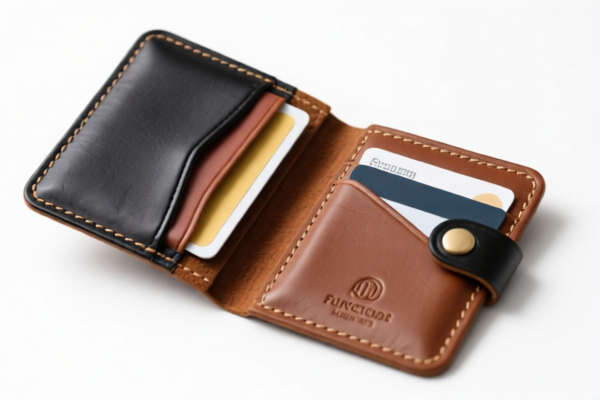
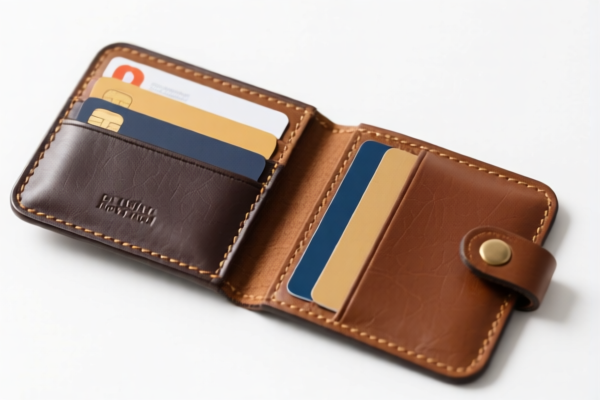
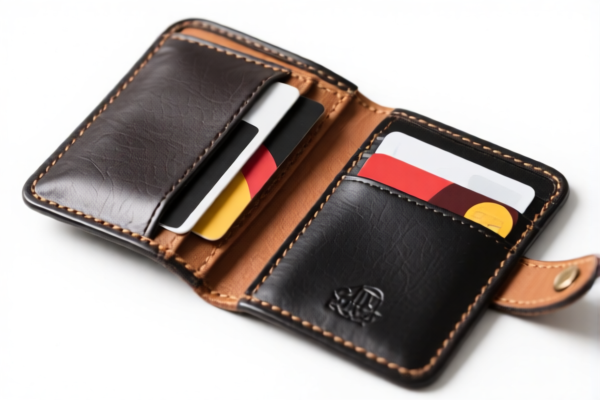
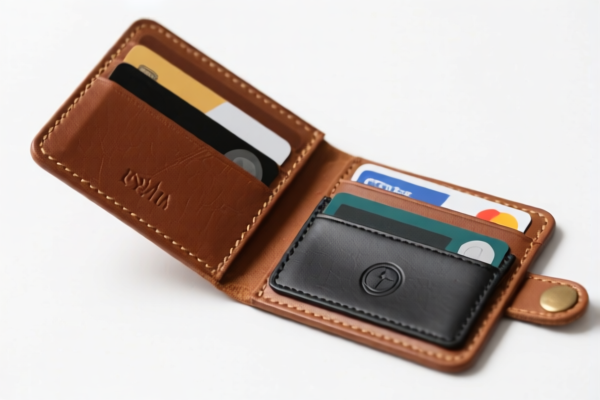
AI Analysis
🎴 Composition Leather Multifunctional Card Holder (PU Leather Card Case)
🌐 HS Code Reference & Customs Clearance Guide | 2026 Latest Tariff Analysis | Strategic Entry for US Market
📌 Part I: Product Definition & Classification – What is a "Composition Leather Card Holder"?
A Composition Leather Card Holder is an accessory used for organizing credit cards, IDs, and cash. In international trade, "Composition Leather" (often referred to as Artificial Leather or PU Leather) falls under Chapter 42 of the Harmonized System. The critical classification distinction lies in whether the item is viewed as a specific container (bag/pocket) or as a general leather article.
⚠️ Key Classification Pivot:
- If viewed as a specific container designed to hold cards/money (similar to a wallet or pocket), it falls under Heading 4202.
- If viewed as a general accessory or component not specifically described elsewhere, it falls under Heading 4205 (Other leather articles).
- Note: "Composition Leather" is treated as leather in Chapter 42. Therefore, these codes apply, not Chapter 39 (Plastics) or 59 (Textiles).
📦 Part II: HS Code Classification Details (2026 Latest Tariff Data)
Based on the provided data, there are four potential HS Codes depending on the specific physical attributes (lining, structure) and customs interpretation.
| HS Code | Product Description | Summary/Logic | Total Tax Rate |
|---|---|---|---|
| 4202.31.30.00 | Leather material card holder, classified as bags/pockets | Specific sub-category for articles of leather falling within 4202.31 | 38.7% |
| 4205.00.80.00 | Leather goods; card holder shape fits "Other leather articles" | General category for leather articles not elsewhere specified | 35.0% |
| 4205.00.60.00 | Leather goods; card holder belongs to other categories under leather | Another "Other leather articles" classification variant | 39.9% |
| 4202.31.60.00 | Leather material card holder, fits handbag/pocket container attribute | Specific sub-category for articles of leather falling within 4202.31 | 43.0% |
🔍 Critical Analysis:
- The most competitive rate is 35.0% (HS Code4205.00.80.00).
- The highest risk rate is 43.0% (HS Code4202.31.60.00).
- All codes include Section 301 Tariffs and IEEPA Tariffs, leading to high total duties.
💰 Part III: 2026 Latest Tariff Rate Breakdown (Including Surcharges)
✅ Applicable Country: United States (US)
✅ Origin: China (CN)
✅ Effective Date: 2025/2026 (Current Enforcement)
🎯 1. 4202.31.30.00 – Leather Articles (Bag/Pocket Type)
| Item | Details |
|---|---|
| Base Duty | 3.7% |
| Section 301 Surcharge | +25.0% |
| Section 122 Tariff (IEEPA) | +10.0% |
| Total Tax Rate | 38.7% |
| Calculation | CIF Value × 38.7% |
| De Minimis Exemption | ❌ Not Eligible (High tariff threshold prevents $800 de minimis entry) |
📌 Explanation:
- Base 3.7%: Standard MFN duty for leather articles in this sub-heading.
- 25% Surcharge: Imposed under US Trade Act Section 301 against Chinese goods.
- 10% IEEPA: Additional tariff under the International Emergency Economic Powers Act targeting specific Chinese imports.
🎯 2. 4205.00.80.00 – Other Leather Articles (Most Competitive)
| Item | Details |
|---|---|
| Base Duty | 0.0% |
| Section 301 Surcharge | +25.0% |
| Section 122 Tariff (IEEPA) | +10.0% |
| Total Tax Rate | 35.0% |
| Calculation | CIF Value × 35.0% |
| De Minimis Exemption | ❌ Not Eligible |
📌 Explanation:
- Base 0.0%: Under Heading 4205, certain leather articles have zero base duty.
- Total 35.0%: Despite 0% base, the 35% combined surcharge makes it expensive but cheaper than the 4202 options.
🎯 3. 4205.00.60.00 – Other Leather Articles (Variant)
| Item | Details |
|---|---|
| Base Duty | 4.9% |
| Section 301 Surcharge | +25.0% |
| Section 122 Tariff (IEEPA) | +10.0% |
| Total Tax Rate | 39.9% |
| Calculation | CIF Value × 39.9% |
📌 Note: This is a higher-cost option under the "Other Leather Articles" category. Customs may prefer 4205.00.80.00 if the item is simpler, but 4205.00.60.00 might be applied if specific structural features trigger a different sub-heading.
🎯 4. 4202.31.60.00 – Leather Articles (Bag/Pocket Type)
| Item | Details |
|---|---|
| Base Duty | 8.0% |
| Section 301 Surcharge | +25.0% |
| Section 122 Tariff (IEEPA) | +10.0% |
| Total Tax Rate | 43.0% |
| Calculation | CIF Value × 43.0% |
📌 Warning: This is the highest tax burden. It classifies the card holder strictly as a "pocket/bag" item with a higher base rate. Avoid this classification if possible unless the product structure (e.g., zippered closure, specific fabric lining) strictly mandates it.
🛠️ Part IV: Customs Clearance Practical Advice (Avoid Pitfalls)
✅ 1. Documentation Checklist (Essential for US Entry)
| Document | Required? | Purpose |
|---|---|---|
| ✅ Commercial Invoice | ✔️ | Must explicitly state "Composition Leather" or "PU Leather," not "Genuine Leather." |
| ✅ Product Photos | ✔️ | Clear images showing the material texture (synthetic grain) to justify "Composition" and not "Genuine." |
| ✅ Material Composition Statement | ✔️ | Confirm percentage of PVC/PU and backing material. |
| ✅ Packaging List | ✔️ | To verify quantity and weight. |
| ❌ De Minimis Claim ($800) | ❌ | Do NOT use for these HS Codes. With rates of 35-43%, these items are subject to full duty assessment and likely flagged for review. |
✅ 2. Classification Strategy & Tips
🔥 Golden Rule: "Leather Type Matters, Structure Dictates Code!"
| Scenario | Recommended HS Code | Why? |
|---|---|---|
| Simple Card Sleeve/Holder | 4205.00.80.00 |
Best rate (35%). Classified as a general leather article. |
| Complex Card Holder (Zipper, Wallet-style) | 4202.31.30.00 or 4202.31.60.00 |
If it functions exactly like a wallet/pocket, US Customs may insist on 4202. Choose 4202.31.30.00 for lower tax (38.7% vs 43.0%). |
| Mislabeling as "Plastic" or "Textile" | HIGH RISK | If declared as PVC plastic or fabric, it may be misclassified. If audited and found to be "Leather" (Chapter 42), penalties apply. Always declare as Leather. |
✅ 3. Special Handling for "Composition Leather"
- Do Not Say "Genuine Leather": If the invoice says "Genuine Leather" but the product is PU/Composition, this is customs fraud. It leads to re-classification and penalties.
- Do Not Say "Fabric": If the backing is fabric, but the exterior is PU, it is still a leather article under Chapter 42.
- Pre-emption Strategy: If you are importing small quantities for sample testing, be aware that even samples are subject to duty if the HS Code is 4202/4205 with high surcharges. However, if the shipment value is under $800, you can still enter under de minimis, but you must pay the taxes if the CBP officer selects it for examination. Given the high rates, do not rely on de minimis to avoid taxes; be prepared to pay.
🌍 Part V: Global Market Comparison (2026)
| Country/Region | Recommended HS Code | Est. Duty (China Origin) | Remarks |
|---|---|---|---|
| 🇺🇸 USA | 4205.00.80.00 |
35.0% | Highest effective duty due to 301 + IEEPA tariffs. |
| 🇨🇳 China | 4205.00.80.00 |
~5-10% | Lower import duty, no Section 301. |
| 🇪🇺 EU | 4205.00.00 |
~4-6% | No punitive tariffs for PU leather. CE/RoHS may apply if combined with electronics. |
| 🇬🇧 UK | 4205.00.00 |
~12-15% | Post-Brexit tariffs apply. |
| 🇦🇺 Australia | 4205.00.00 |
~5% | Low duty, no major surcharges for leather accessories. |
📌 Conclusion for US Exporters:
The US market is high-cost for leather accessories from China.
- Optimal Strategy: Use4205.00.80.00to minimize duty to 35%.
- Supply Chain: Consider sourcing from Vietnam, Thailand, or India if possible, to avoid Section 301/IEEPA tariffs (though origin rules must be strictly met).
📌 Part VI: Common Mistakes & Pitfalls (Lessons Learned)
❌ Mistake 1: Declaring as "Handbag" (4202.21)
👉 Consequence: Handbags often have different sub-codes. If the item is a small card holder, it should be 4202.31. Misclassification can lead to delays.
❌ Mistake 2: Ignoring the "Composition" aspect
👉 Consequence: If you declare as "Genuine Leather" to sound premium but it is PU, CBP will test it. If it fails, you face penalties and potential seizure.
❌ Mistake 3: Assuming De Minimis ($800) applies for Tax-Free
👉 Consequence: FALSE. Even under Section 321 (De Minimis), duties are still owed on goods subject to Section 301/IEEPA tariffs if they are flagged. While often processed automatically, the risk of seizure and audit is high for high-duty items. It is safer to pay duty proactively via standard entry.
✅ Correct Declaration Example:
"Card Holder, Composition Leather (PU), No Lining, 100% Synthetic Leather, Model CH-2026, Origin: China"
🎯 Part VII: Final Recommendation
🎯 Strategic Takeaway:
🔹 "Minimize Base Duty, Maximize Classification Accuracy."
🔹 "35% is the floor for PU Leather from China to the US."
🔹 "Avoid 4202.31.60.00 (43%) unless physically necessary."
📌 Pro Tip:
For large volume imports, consider applying for an Exclusion under Section 301 if available for specific leather goods, or utilize Foreign Trade Zones (FTZ) to defer duty payments until the goods are sold in the US.
📣 Immediate Action:
📞 Contact your freight forwarder: Confirm if they can handle HS Code
4205.00.80.00efficiently.
📄 Prepare your Invoice: Ensure "Composition Leather" is clearly stated.
💰 Budget for 35% Duty: Do not underestimate the landed cost.
✨ Smart Customs, Smart Profits!
💼 Your margin depends on your HS Code precision!
Customer Reviews
About HS Code Classification
The Harmonized System (HS) is an internationally standardized nomenclature developed by the World Customs Organization (WCO) to classify traded products. Over 200 countries use the HS system as the basis for customs tariffs, trade statistics, and import/export regulations.
Each HS code follows a hierarchical structure:
- Chapter (2 digits) — Broad category of goods (e.g., Chapter 84: Machinery and Mechanical Appliances)
- Heading (4 digits) — More specific grouping within the chapter
- Subheading (6 digits) — Internationally standardized breakdown, used by all WCO member countries
- National subdivisions (8-10 digits) — Country-specific extensions for further classification, such as US HTSUS 10-digit codes
Correct HS code classification is essential for smooth customs clearance, accurate duty payment, and compliance with trade regulations. Misclassification can lead to customs delays, overpayment of duties, or penalties.
When importing from CN to US, the applicable tariff rates may include:
- Most-Favored-Nation (MFN) rate — The standard duty rate applied to WTO members
- General rate — Applied to countries without trade agreements
- Trade remedy duties — Additional tariffs such as Section 301 (anti-dumping), Section 232 (national security), or countervailing duties
The information provided on this page is for reference purposes only. For official classification, please consult with your local customs authority or a licensed customs broker.