Composition Leather Tobacco Pouches
CN → US| HS Code | Tariff Rate | Origin | Destination | Doc |
|---|---|---|---|---|
| 4205008000 | 35.0% | CN | US | Official Doc |
| 4202316000 | 43.0% | CN | US | Official Doc |
| 4202399000 | 55.0% | CN | US | Official Doc |
| 4205006000 | 39.9% | CN | US | Official Doc |
Product Images
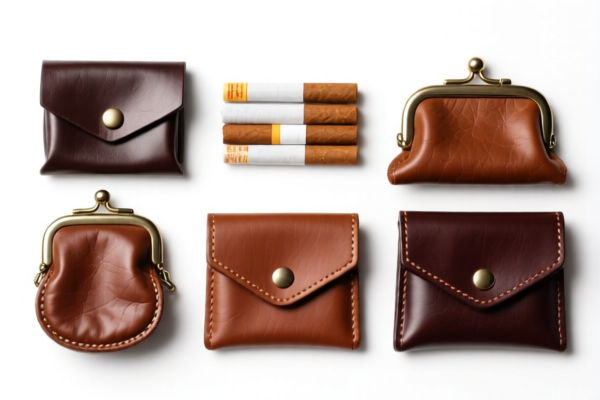
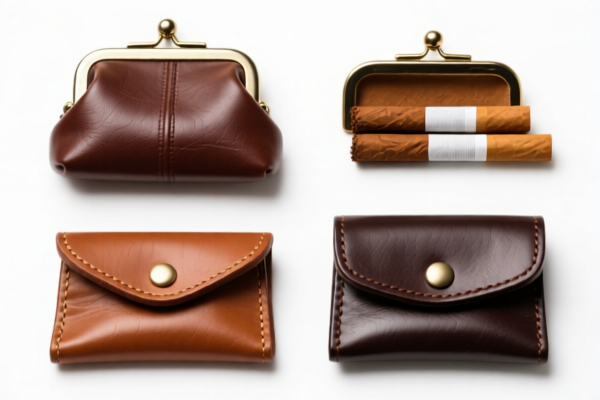
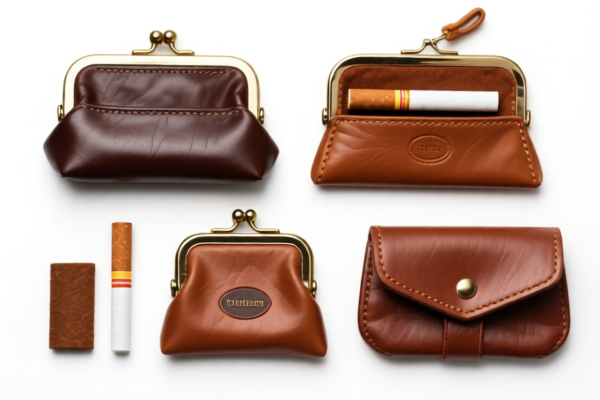
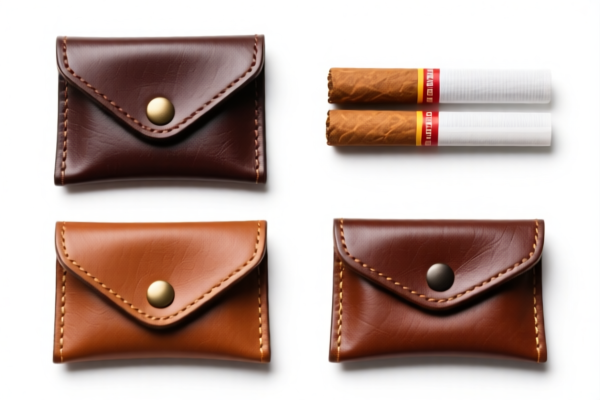
AI Analysis
🍂 Composition Leather Tobacco Pouches (Leather Tobacco Cases)
🌐 HS Code Reference & Customs Clearance Guide | 2026 Latest Tariff Analysis | Professional通关 Strategy
📌 I. Product Definition: What Exactly is a "Composition Leather Tobacco Pouch"?
Leather Tobacco Pouches are portable containers designed to store tobacco products. In international trade, the classification hinges on the material composition and the structural definition of the pouch.
- Composition Leather (人造革/合成革): Often refers to synthetic materials engineered to resemble leather (e.g., PVC, PU, bonded leather) or leather-based composites. However, in many tariff schedules, if the surface is treated to look like leather or contains a significant leather component, it may still fall under Chapter 42 (Articles of Leather).
- Key Distinction:
- If the pouch is primarily a container for carrying personal effects (like a handbag), it falls under Heading 4202.
- If it is considered an article of leather that is not a standard bag (e.g., a specialized case, strap, or accessory), it may fall under Heading 4205 ("Other articles of leather and articles of fur skin").
⚠️ Critical Classification Point:
- 4202 vs. 4205: Customs authorities often scrutinize whether the item is a "bag" (4202) or an "other article" (4205). The presence of handles, straps, and a primary function of "carrying" pushes it toward 4202. If it is a simple pouch without rigid structure or specific bag-like features, 4205 is a common competitor classification.
📦 II. HS Code Classification Details (2026 Latest Tariff Authority Comparison)
Based on the provided data for Composition Leather Tobacco Pouches, here are the four possible HS Codes and their tax implications. All codes are subject to US Import Regulations (China Origin).
| HS Code | Product Description | Classification Logic | Key Characteristics |
|--------|--------------------------|--------------------------|
| 4205.00.80.00 | Other Articles of Leather | General "Other Leather Articles" | Simple pouch, no bag structure, or treated as an accessory. |
| 4202.31.60.00 | Satchels & Similar Containers (Leather Surface) | Surface is leather; categorized as a satchel/container | Has bag-like features (handle/strap), surface is leather. |
| 4202.39.90.00 | Other Carrying Cases/Bags (Non-Leather Surface) | Material is leather, but categorized under "Other" | Often used if the material is not strictly "leather" per customs definition but falls under "other materials" in subheading 4202.39, OR if the leather quality doesn't meet 4202.31 standards. Note: The provided data says "Made of leather" but assigns a higher tax, suggesting it might be classified under "Other" materials in subhead if not meeting 4202.31 specs. |
| 4205.00.60.00 | Other Leather Articles (Specific Subcategory) | Specific type of other leather制品 | A specific sub-variant of 4205, potentially for higher quality or specific use. |
🔍 重点提醒 (Key Reminders):
- 4202 vs. 4205 is the biggest risk: Misclassification here can lead to additional 8% or 20% base tariffs. - "Composition Leather" Ambiguity: If the material is fully synthetic (PVC/PU) but marketed as "leather," it might not qualify for Chapter 42 at all. However, the provided data assumes Chapter 42 applicability. Ensure your material certificate matches the HS Code claimed. - Tax Disparity: The difference between the lowest tax (35%) and highest (55%) is 20%, which significantly impacts profitability.
💰 III. 2026 Latest Tariff Rate Breakdown (Including Additional Duties & Policies)
✅ Applicable Country: United States (US)
✅ Country of Origin: China (CN)
✅ Effective Date: November 10, 2025 (and subsequent imports)
🎯 1. 4205.00.80.00 —— Other Articles of Leather (Lowest Tax Option)
| Item | Detail |
|---|---|
| Base Tariff | 0.0% |
| USITC Additional Duty (Section 301) | +25.0% |
| IEEPA Additional Duty (122 Clause) | +10.0% |
| Total Tax Rate | 35.0% |
| Tax Calculation | CIF Value × 35% |
| De Minimis Exemption | ❌ Not Applicable (deny_de_minimis) |
| Legal Basis | USITC:4205.00.80.00 → FOOTNOTE:9903.88.01 → IEEPA:9903.01.24 |
📌 Explanation:
- This is the most tax-efficient classification among the options provided. - "Other articles of leather" (4205) often has a lower base tariff than bag-like containers (4202). - Recommendation: If your pouch is simple, flat, or lacks complex bag structures, aim for this code.
🎯 2. 4205.00.60.00 —— Other Leather Articles (Specific Subtype)
| Item | Detail |
|---|---|
| Base Tariff | 4.9% |
| USITC Additional Duty (Section 301) | +25.0% |
| IEEPA Additional Duty (122 Clause) | +10.0% |
| Total Tax Rate | 39.9% |
| Tax Calculation | CIF Value × 39.9% |
| De Minimis Exemption | ❌ Not Applicable |
| Legal Basis | USITC:4205.00.60.00 → FOOTNOTE:9903.88.01 → IEEPA:9903.01.24 |
📌 Note:
- Slightly higher than 4205.00.80 due to a 4.9% base tariff. - Use this if the specific product features match the "制品类" (manufactured article) description for 4205.00.60.
🎯 3. 4202.31.60.00 —— Satchels with Leather Surface
| Item | Detail |
|---|---|
| Base Tariff | 8.0% |
| USITC Additional Duty (Section 301) | +25.0% |
| IEEPA Additional Duty (122 Clause) | +10.0% |
| Total Tax Rate | 43.0% |
| Tax Calculation | CIF Value × 43.0% |
| De Minimis Exemption | ❌ Not Applicable |
| Legal Basis | USITC:4202.31.60.00 → FOOTNOTE:9903.88.01 → IEEPA:9903.01.24 |
📌 Note:
- This applies if the pouch is clearly a "bag" with a handle/strap and a leather surface. - The 8% base tariff makes it more expensive than the 4205 options.
🎯 4. 4202.39.90.00 —— Other Carrying Cases (Highest Tax Option)
| Item | Detail |
|---|---|
| Base Tariff | 20.0% |
| USITC Additional Duty (Section 301) | +25.0% |
| IEEPA Additional Duty (122 Clause) | +10.0% |
| Total Tax Rate | 55.0% |
| Tax Calculation | CIF Value × 55.0% |
| De Minimis Exemption | ❌ Not Applicable |
| Legal Basis | USITC:4202.39.90.00 → FOOTNOTE:9903.88.01 → IEEPA:9903.01.24 |
📌 Warning:
- This is the most expensive classification. - Likely applies if the material is considered "other" (not high-grade leather) under subheading 4202.39, or if the customs officer determines the product does not fit the specific criteria of 4202.31. - Avoid this code unless your product explicitly fits the "Other" description and cannot be classified under 4202.31 or 4205.
🛠️ IV. Customs Clearance Practical Advice (Real-World Pitfall Avoidance)
✅ 1. Document Checklist (Mandatory)
| Document | Required? | Notes |
|---|---|---|
| Product Specification Sheet | ✅ Yes | Must detail material composition (e.g., "Composition Leather," "PU," "Bonded Leather"). |
| Material Certificate | ✅ Yes | Proves whether it is "Leather" (Chapter 41/42) or "Textile/Plastic." Mislabeling can lead to severe penalties. |
| Product Photos | ✅ Yes | Show handles, straps, interior, and exterior clearly. |
| Commercial Invoice | ✅ Yes | Description should be precise: e.g., "Leather Tobacco Pouch, Model XYZ." |
| Packing List | ✅ Yes | Include dimensions and weight. |
| Third-Party Test Report | ✅ Optional | If challenged on material, a lab report proving leather content is crucial. |
✅ 2. Declaration Strategy (Key Rules)
🔥 "Material First, Structure Second, Name Accurate, Tax Minimized!"
| Scenario | Recommended HS Code | Strategy |
|---|---|---|
| Simple Pouch, No Handle/Strap | 4205.00.80.00 |
Best Option. Argue it is an "Article" not a "Bag." |
| Pouch with Strap/Handle, Leather Surface | 4202.31.60.00 |
If it looks like a bag, use 4202.31. Do not force 4205. |
| Pouch with Strap, But Material is "Other" | 4202.39.90.00 |
Last Resort. High tax. Avoid if possible by proving leather content for 4202.31. |
| Synthetic/PVC "Leather" | Check Chapter 39 or 42 | If it is NOT leather, it may not be Chapter 42. Consult a specialist. |
✅ 3. Special Situations & Handling
| Situation | Handling Advice |
|---|---|
| OEM Custom Pouches | Provide design drawings. If the design is unique, emphasize its function as an "accessory" (4205) rather than a general bag. |
| "Composition Leather" Ambiguity | If the material is a mix of leather scraps and glue (bonded leather), it IS Chapter 42. If it is purely synthetic, it is NOT. Be honest about material. |
| Multiple Pouches in One Shipment | Declare each type separately if they have different materials or structures. Do not lump them into one "miscellaneous" line. |
| Pre-Ruling Request | Highly Recommended. File an Advance Ruling with US Customs to get a binding decision on your specific product design. This avoids post-clearance audits. |
🌍 V. Global Market Comparison (2026 Latest)
| Country/Region | Recommended HS Code | Tariff (China Origin) | Certification | Notes |
|---|---|---|---|---|
| 🇺🇸 USA | 4205.00.80.00 |
35% | None specific | High additional tariffs. 4202 codes are more expensive. |
| 🇨🇳 China | 4205.00.80.00 |
5% - 10% | None | Lower base tariffs. No Section 301. |
| 🇪🇺 EU | 4205.00.80.00 |
6% - 12% | CE (if applicable) | No Section 301. |
| 🇬🇧 UK | 4205.00.80.00 |
6% - 12% | UKCA | Post-Brexit rules apply. |
| 🇯🇵 Japan | 4205.00.80.00 |
6% - 10% | PSE (if electronic) | No Section 301. |
📌 Conclusion:
- The US market is the most challenging due to the 35% total tariff. - EU, UK, and Japan do not have Section 301 or IEEPA additional tariffs, making them more profitable for leather goods. - Consider supply chain diversification (e.g., producing in Vietnam or India) to mitigate US tariffs if volume is high.
📌 VI. Common Mistakes & Pitfalls (Lessons Learned)
❌ Mistake 1: Declaring a Bag-like Pouch as 4205 (Other Articles)
👉 Consequence: Customs reclassifies to 4202, adding 8-20% base tariff → Back Taxes + Penalties.
❌ Mistake 2: Using "Synthetic Leather" description for a True Leather product
👉 Consequence: If declared as synthetic (Chapter 39/40) but found to be leather, it may be subject to different duties or fraud accusations. Always match material to HS Code.
❌ Mistake 3: Ignoring the IEEPA 10% Additional Duty
👉 Consequence: Even if you find the lowest HS Code, the 10% IEEPA duty is mandatory for Chinese-origin goods. Factor this into your pricing.
❌ Mistake 4: Claiming De Minimis for B2B Shipments
👉 Consequence: Leather goods are excluded from de minimis ($800) exemption for China-origin goods under recent policies. Always declare properly.
✅ Correct Practice:
"Tobacco Pouch, Composition Leather, with Zipper Closure, No Handle, Model XYZ, Origin: China"
(Emphasize "No Handle" to support 4205 classification)
🎯 VII. Conclusion: Professional Declaration, Cost Control, Risk Mitigation
🎯 Remember the Rules:
🔹 "4205 is cheaper, but only if it's not a bag."
🔹 "4202.31 is safer for bags, but costs 43% tax."
🔹 "4202.39 is the trap – 55% tax. Avoid."
🔹 "Get an Advance Ruling before shipping large volumes."
📌 Pro Tip:
If you are importing large volumes (>1000 units), apply for an Advance Ruling from US Customs and Border Protection (CBP). This will give you a legally binding decision on the HS Code, protecting you from audits and back taxes.
📣 Immediate Action:
📞 Contact a Licensed Customs Broker
📦 Prepare Product Samples & Material Certificates
📝 Request an HS Code Advance Ruling
🚀 Optimize Your Supply Chain to Maximize Profit!
✨ Professional Clearance Starts with Accurate Classification!
💼 Every Percentage Point of Tariff Matters!
Customer Reviews
About HS Code Classification
The Harmonized System (HS) is an internationally standardized nomenclature developed by the World Customs Organization (WCO) to classify traded products. Over 200 countries use the HS system as the basis for customs tariffs, trade statistics, and import/export regulations.
Each HS code follows a hierarchical structure:
- Chapter (2 digits) — Broad category of goods (e.g., Chapter 84: Machinery and Mechanical Appliances)
- Heading (4 digits) — More specific grouping within the chapter
- Subheading (6 digits) — Internationally standardized breakdown, used by all WCO member countries
- National subdivisions (8-10 digits) — Country-specific extensions for further classification, such as US HTSUS 10-digit codes
Correct HS code classification is essential for smooth customs clearance, accurate duty payment, and compliance with trade regulations. Misclassification can lead to customs delays, overpayment of duties, or penalties.
When importing from CN to US, the applicable tariff rates may include:
- Most-Favored-Nation (MFN) rate — The standard duty rate applied to WTO members
- General rate — Applied to countries without trade agreements
- Trade remedy duties — Additional tariffs such as Section 301 (anti-dumping), Section 232 (national security), or countervailing duties
The information provided on this page is for reference purposes only. For official classification, please consult with your local customs authority or a licensed customs broker.