Composition Leather Wallets
CN → US| HS Code | Tariff Rate | Origin | Destination | Doc |
|---|---|---|---|---|
| 4205008000 | 35.0% | CN | US | Official Doc |
| 4202316000 | 43.0% | CN | US | Official Doc |
| 4202321000 | 0.0% | CN | US | Official Doc |
Product Images
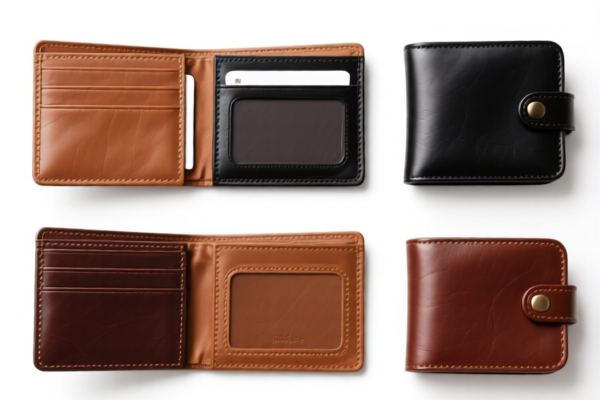
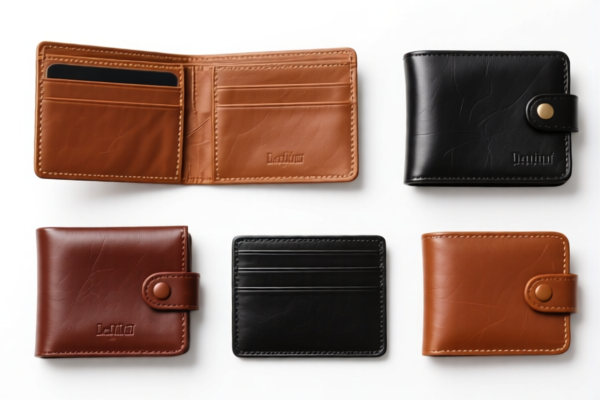
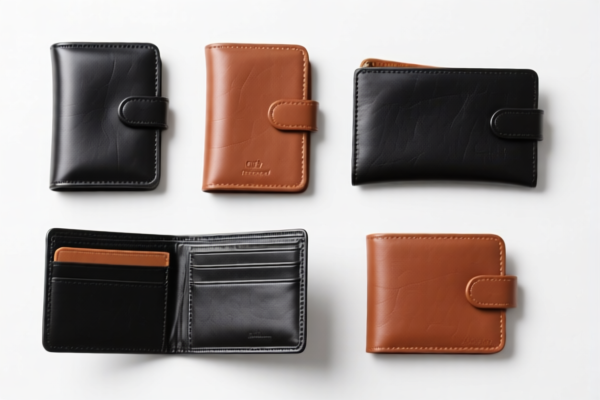
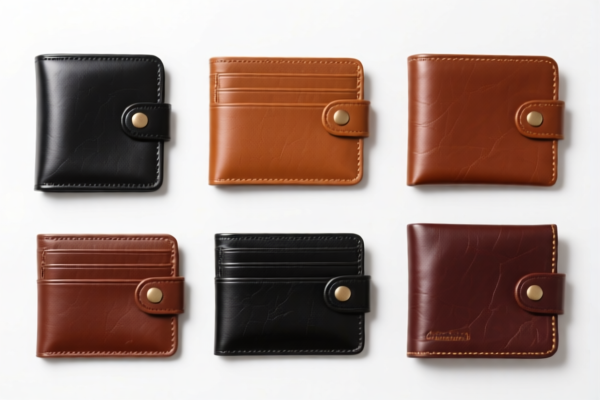
AI Analysis
👛 Composition Leather Wallets (Artificial & Recycled Leather Purses)
🌐 HS Code Reference & Customs Clearance Guide | 2026 Tariff Analysis | Professional Entry Strategy
📌 1. Product Definition & Classification: What Exactly is a "Composition Leather Wallet"?
Composition leather wallets (often labeled as "Man-Made," "Artificial," or "Reconstituted" leather) are non-textile containers used for carrying small personal items. In international trade, their classification depends heavily on the material structure and intended use. They are not treated as simple leather goods but rather as composite or plastic-based articles, leading to varying tariff treatments based on US trade policies.
⚠️ Key Distinction Points:
- Surface Material: Does it use synthetic leather (PVC/PU) over a base, or reconstituted leather fibers?
- Construction: Is it a simple pouch, or does it have reinforced layers/plastic coating?
- Usage: Is it designed for pockets, or for handbags?
📦 2. HS Code Classification Details (2026 Authoritative对照)
Based on the provided data, there are three distinct classification paths for composition leather wallets, each with drastically different tax implications.
| HS Code | Product Description & Matching Characteristics | Application Scenario | Tax Implication |
|---|---|---|---|
4205.00.80.00 |
Composition Leather Wallet: Matches characteristics of synthetic leather materials and other leather/synthetic leather products. | Standard synthetic wallets; generic artificial leather goods. | 35.0% Total Tax |
4202.31.60.00 |
Composition Leather Wallet: Matches regenerated leather material and is typically carried in pockets or like containers for handbags. | Regenerated/reconstituted leather wallets; pocket-sized accessories. | 43.0% Total Tax |
4202.32.10.00 |
Composition Leather Wallet: Matches laminated or reinforced plastic/textile material attributes and is for carrying personal items. | Reinforced wallets; plastic-coated or textile-backed synthetic wallets. | 12.1¢/kg + 4.6% + 35.0% Total Tax |
🔍 Critical Insight:
-4205vs4202: The key difference lies in the specific material definition.4205is a broader category for "other articles of leather," while4202specifically covers "suitcases, handbags, and similar containers." If the wallet is considered a "container" (which most are),4202is often more accurate, but customs may differentiate based on exact material makeup (Regenerated vs. Synthetic vs. Laminated).
- Tax Variance: The total tax burden ranges from 35% to 43% (plus weight-based fees for4202.32.10.00). Misclassification can lead to significant underpayment penalties.
💰 3. 2026 Latest Tariff Rate Breakdown (Detailed Policy Analysis)
✅ Applicable Country: USA
✅ Origin: China (CN)
✅ Effective Date: 2025/2026 Period
🎯 1. HS Code 4205.00.80.00 – Synthetic/Composite Leather Articles
| Item | Detail |
|---|---|
| Base Tariff | 0.0% |
| Section 301 Tariff (Retaliatory) | 25.0% |
| Section 122 Tariff (Emergency/Supply Chain) | 10.0% |
| Total Tax Rate | 35.0% |
| Tax Calculation | CIF Value × 35% |
| De Minimis Exemption | ❌ Not Eligible (Section 301 and 122 tariffs usually apply regardless of value) |
| Legal Basis | USITC: 4205.00.80.00 → Footnote 9903.88.01 (Section 301) + IEEPA (Section 122) |
📌 Explanation:
- This code is used for general synthetic leather goods that don't fit neatly into "handbag" categories.
- Warning: Even with 0% base duty, the 25% + 10% surcharges make this a high-cost entry.
🎯 2. HS Code 4202.31.60.00 – Regenerated Leather Wallets
| Item | Detail |
|---|---|
| Base Tariff | 8.0% |
| Section 301 Tariff | 25.0% |
| Section 122 Tariff | 10.0% |
| Total Tax Rate | 43.0% |
| Tax Calculation | CIF Value × 43% |
| De Minimis Exemption | ❌ Not Eligible |
| Legal Basis | USITC: 4202.31.60.00 → Footnote 9903.88.01 + IEEPA |
📌 Explanation:
- Regenerated Leather (often made from leather scraps bonded together) is treated strictly.
- This is the highest ad-valorem rate (43%) due to the higher base tariff (8%) compared to the other synthetic options.
- Ensure your product label clearly states "Regenerated Leather" if claiming this code, but beware of the higher cost.
🎯 3. HS Code 4202.32.10.00 – Laminated/Reinforced Plastic/Textile Wallets
| Item | Detail |
|---|---|
| Base Tariff | 12.1¢/kg + 4.6% |
| Section 301 Tariff | 25.0% |
| Section 122 Tariff | 10.0% |
| Total Tax Rate | 12.1¢/kg + 4.6% + 35.0% |
| Tax Calculation | (Weight × 12.1¢) + (CIF × 4.6%) + (CIF × 35% for surcharges) |
| De Minimis Exemption | ❌ Not Eligible |
| Legal Basis | USITC: 4202.32.10.00 → Footnote 9903.88.01 + IEEPA |
📌 Explanation:
- This code applies if the wallet has laminated or reinforced plastic/textile characteristics (e.g., PVC-coated canvas).
- Complex Calculation: It includes a weight-based duty (12.1 cents per kg) AND an ad-valorem rate.
- For heavy, dense wallets, the weight-based component could make this more expensive than4202.31.60.00. For light wallets, the 4.6% base + 35% surcharge might be competitive.
- Strategy: Calculate exact weight vs. value to determine which of the three codes is cheapest.
🛠️ 4. Customs Clearance Practical Advice
✅ 1. Documentation Checklist (Mandatory)
| Document | Required? | Notes |
|---|---|---|
| ✅ Product Specification Sheet | ✔️ | Must detail: Material composition (e.g., 100% PU, Regenerated Leather, PVC Laminated), Lining, Dimensions. |
| ✅ Material Test Report | ✔️ | Prove if it is "Regenerated" or "Synthetic" to justify 4202.31 vs 4202.32 or 4205. |
| ✅ Commercial Invoice | ✔️ | Clearly describe: "Composition Leather Wallet, [Material Type], for Carrying Money/Cards." |
| ✅ Packing List | ✔️ | Include Gross Weight (critical for 4202.32.10.00 weight-based tax). |
| ✅ Photo of Product | ✔️ | Show surface texture (smooth PU vs. fibrous regenerated leather). |
✅ 2. Classification Strategy & Pitfalls
| Scenario | Recommended HS Code | Risk |
|---|---|---|
| Generic PU/PVC Wallet | 4205.00.80.00 |
Low risk, standard 35% rate. |
| Wallet made from bonded leather scraps | 4202.31.60.00 |
High tax (43%). Ensure "Regenerated" label matches customs definition. |
| Wallet with plastic coating/reinforcement | 4202.32.10.00 |
Complex calculation. Verify weight-based impact. |
🔥 Critical Tip:
Do NOT declare all composition leather wallets under4205.00.80.00to save paperwork. If the product is structurally a "container" (has compartments, zipper, flap), US Customs (CBP) may force reclassification to4202, resulting in higher taxes (43% vs 35%) or additional weight duties.
✅ 3. Special Considerations
- Section 122 Tariff (10%): This is a recent/emergency tariff. It applies to many Chinese-origin goods. Ensure your supplier confirms the origin is not being re-routed illegally to avoid severe penalties.
- Weight vs. Value: For
4202.32.10.00, if your wallet is heavy (e.g., thick PVC), the 12.1¢/kg can add up. Calculate:Total Tax = (Weight_kg * 0.121) + (Value * 0.046) + (Value * 0.35). Compare this total to 43% of Value to see which is cheaper.
🌍 5. Global Market Comparison (2026)
| Market | Recommended HS Code | Est. Total Duty | Notes |
|---|---|---|---|
| 🇺🇸 USA | 4205.00.80.00 or 4202.31.60.00 |
35% - 43% | High Section 301 + 122 tariffs. |
| 🇨🇳 China | 4202.32.00.00 |
~5-10% | Lower base duty, no retaliatory tariffs. |
| 🇪🇺 EU | 4202.32.00.00 |
~3-6% | No Section 301, but VAT applies. |
| 🇬🇧 UK | 4202.32.00.00 |
~4-12% | Post-Brexit tariffs apply. |
📌 Conclusion:
The USA is the most expensive market for composition leather wallets due to the combination of Base Tariffs + Section 301 (25%) + Section 122 (10%).
- Best Case:4205.00.80.00at 35%.
- Worst Case:4202.31.60.00at 43%.
📌 6. Common Errors & Avoidance Guide
❌ Error 1: Declaring "Leather Wallet" when it is Synthetic.
👉 Consequence: Misclassification, potential fraud penalties, and back-tariffs.
✅ Fix: Use "Composition Leather," "Synthetic Leather," or "Man-Made Material."
❌ Error 2: Ignoring the Weight for 4202.32.10.00.
👉 Consequence: Underpayment of duties if the wallet is heavy.
✅ Fix: Always provide accurate Gross Weight for declarations under this code.
❌ Error 3: Assuming "Regenerated Leather" is cheaper.
👉 Consequence: 4202.31.60.00 has a higher base tariff (8%) than 4205 (0%), leading to a 43% total rate vs 35%.
✅ Fix: Compare material costs and tax outcomes. Sometimes generic synthetic (4205) is cheaper despite lower quality perception.
🎯 7. Final Recommendations
🎯 Action Plan:
1. Identify Material: Is it Synthetic (PU/ PVC), Regenerated (bonded scraps), or Laminated/Reinforced?
2. Calculate Cost:
- If Synthetic/General → Target 4205.00.80.00 (35%).
- If Regenerated → Accept 4202.31.60.00 (43%).
- If Laminated/Heavy → Calculate 4202.32.10.00 (Weight + %).
3. Documentation: Ensure commercial invoices clearly state "Composition Leather" and "Chinese Origin" to avoid delays.
📢 Pro Tip:
If you are shipping under De Minimis (Section 321, < $800), be aware that Section 301 and Section 122 tariffs currently apply to many Chinese goods, potentially nullifying the duty-free benefit. Confirm current CBP enforcement on de minimis for HS Code 4202/4205 items.
✨ Precision Classification Saves Money!
💼 Don't let a 25% Surprise Tariff Wipe Out Your Margin.
Customer Reviews
About HS Code Classification
The Harmonized System (HS) is an internationally standardized nomenclature developed by the World Customs Organization (WCO) to classify traded products. Over 200 countries use the HS system as the basis for customs tariffs, trade statistics, and import/export regulations.
Each HS code follows a hierarchical structure:
- Chapter (2 digits) — Broad category of goods (e.g., Chapter 84: Machinery and Mechanical Appliances)
- Heading (4 digits) — More specific grouping within the chapter
- Subheading (6 digits) — Internationally standardized breakdown, used by all WCO member countries
- National subdivisions (8-10 digits) — Country-specific extensions for further classification, such as US HTSUS 10-digit codes
Correct HS code classification is essential for smooth customs clearance, accurate duty payment, and compliance with trade regulations. Misclassification can lead to customs delays, overpayment of duties, or penalties.
When importing from CN to US, the applicable tariff rates may include:
- Most-Favored-Nation (MFN) rate — The standard duty rate applied to WTO members
- General rate — Applied to countries without trade agreements
- Trade remedy duties — Additional tariffs such as Section 301 (anti-dumping), Section 232 (national security), or countervailing duties
The information provided on this page is for reference purposes only. For official classification, please consult with your local customs authority or a licensed customs broker.