Composition leather wallet
CN → US| HS Code | Tariff Rate | Origin | Destination | Doc |
|---|---|---|---|---|
| 4205008000 | 35.0% | CN | US | Official Doc |
| 4202316000 | 43.0% | CN | US | Official Doc |
| 4202321000 | 0.0% | CN | US | Official Doc |
Product Images
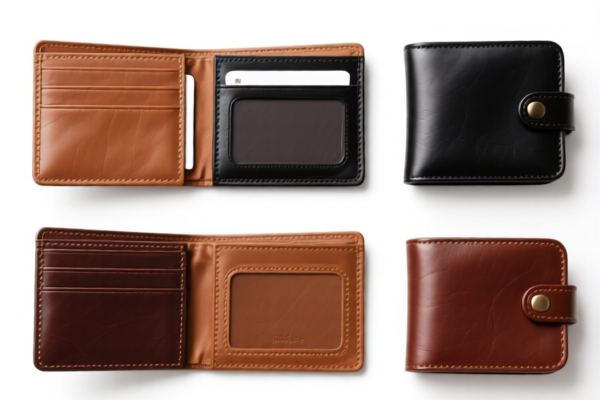
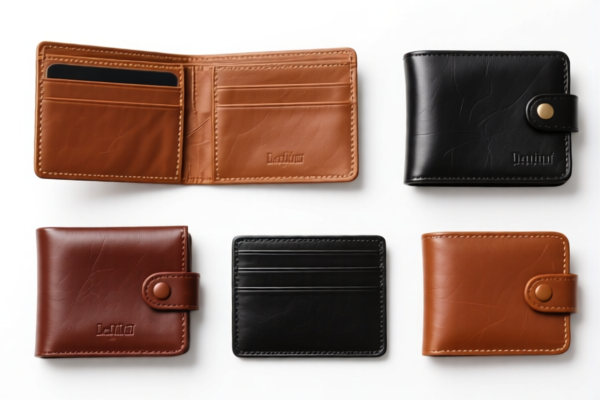
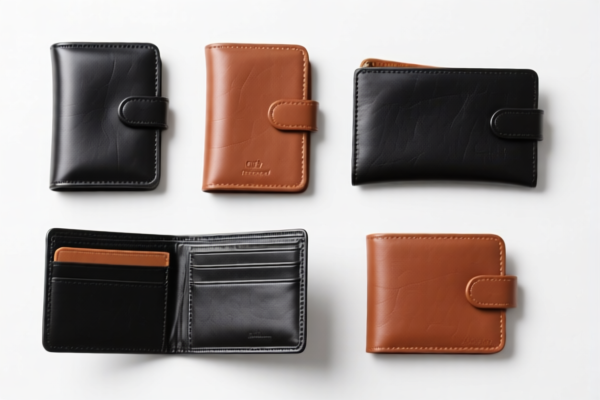
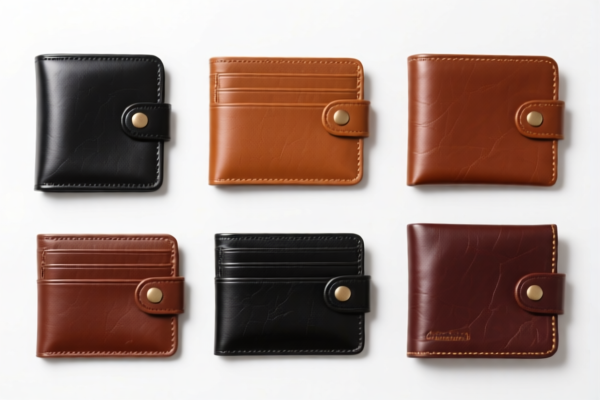
AI Analysis
👜 Composition Leather Wallet (Synthetic/Vegan Leather Pouch)
🌐 HS Code Reference & Customs Clearance Guide | 2026 Latest Tariff Analysis | Professional Entry Strategy
📌 I. Product Definition & Classification: What is "Composition Leather"?
"Composition leather" (often referred to as Artificial Leather, Synthetic Leather, or Faux Leather) is not genuine animal hide. It is typically a fabric base (polyester, cotton, or non-woven) coated or laminated with plastics (PVC, PU, etc.).
In international trade, the classification depends heavily on: 1. Structure: Is it a simple sheet (for manufacturing) or a finished article (like a wallet)? 2. Material Composition: Is the surface primarily plastic (PVC/PU) or regenerated leather fibers? 3. Function: Is it a specific type of container (e.g., for coins/cards) or a general accessory?
⚠️ Key Distinction Point:
- If classified as a finished article with specific plastic coating properties → Likely 4202.32 (Plastic/Textile based).
- If classified under Leather Goods chapters due to "leather-like" appearance but lacking genuine leather → 4205.00 (Other leather articles) or 4202.31 (Regenerated leather/reconstituted).
📦 II. HS Code Classification Details (2026 Latest Tariff Authority Comparison)
Based on the provided data, here are the three possible classifications for a "Composition Leather Wallet" and their logical matching:
| HS Code | Product Description | Matching Logic & Summary | Tax Category Type |
|---|---|---|---|
| 4205.00.80.00 | Other Articles of Artificial Leather | Logic: Matches "Artificial Leather" in the name with "Synthetic Leather" material. "Wallet" falls under the broad category of leather/synthetic leather goods. Feature: General synthetic leather goods, no specific sub-category for wallets in this 4205 heading. |
General Tariff |
| 4202.31.60.00 | Purses, Wallets... of Regenerated Leather | Logic: "Composition leather" is interpreted as "Regenerated Leather" (reconstituted leather fibers). "Wallet" fits the definition of "small containers carried in pockets." Feature: Specific heading for wallets/purses made from non-genuine leather materials. |
High Specific Tariff |
| 4202.32.10.00 | Purses, Wallets... of Plastics or Textile Materials | Logic: "Composition leather" is inferred as laminated plastic/textile (e.g., PVC on fabric). Fits the material definition of plastic-coated textiles. Feature: Classified by material composition (Plastic/Textile) rather than just "leather goods." |
Mixed/Weighted Tariff |
🔍 Critical Note:
- 4205.00 is often a "catch-all" for leather-like goods that don't fit specific sub-headings.
- 4202.31 and 4202.32 are more precise for wallets specifically, distinguishing between "Regenerated Leather" and "Plastic/Textile" bases.
- Misclassification Risk: Declaring as "Leather Goods" (4205) when it is actually "Plastic/Textile" (4202) can lead to duty discrepancies and customs delays.
💰 III. 2026 Latest Tariff Rate Breakdown (Including Additional Duties)
✅ Applicable Country: United States (US)
✅ Origin: China (CN)
✅ Effective Date: Post-2025 (Includes Section 301 & IEEPA tariffs)
🎯 1. 4205.00.80.00 —— Other Articles of Artificial Leather
| Item | Content |
|---|---|
| Base Duty | 0.0% (ad valorem) |
| Section 301 Surcharge | +25.0% |
| IEEPA (122 Clause) | +10.0% |
| Total Duty Rate | 35.0% |
| Calculation | CIF Value × 35% |
| De Minimis Exemption | ❌ Not Eligible (Due to high duty rate > 0%) |
📌 Explanation:
- Although the base duty is 0%, the 35% total rate is driven entirely by US trade policy tariffs (Section 301 + IEEPA).
- This classification is favorable if no more specific wallet heading applies, but still carries a significant tax burden.
🎯 2. 4202.31.60.00 —— Purses/Wallets of Regenerated Leather
| Item | Content |
|---|---|
| Base Duty | 8.0% |
| Section 301 Surcharge | +25.0% |
| IEEPA (122 Clause) | +10.0% |
| Total Duty Rate | 43.0% |
| Calculation | CIF Value × 43% |
| De Minimis Exemption | ❌ Not Eligible |
📌 Explanation:
- This is the most expensive classification among the three.
- The 8% base duty adds to the 35% surcharges, totaling 43%.
- Use this only if the product is definitively classified as "Regenerated Leather" under HTSUS 4202.31.
🎯 3. 4202.32.10.00 —— Purses/Wallets of Plastic/Textile
| Item | Content |
|---|---|
| Base Duty | 12.1¢/kg + 4.6% (Mixed Rate) |
| Section 301 Surcharge | +25.0% |
| IEEPA (122 Clause) | +10.0% |
| Total Duty Structure | 12.1¢/kg + 4.6% + 35% Surcharge |
| Calculation | (Weight-based duty) + (Value-based 4.6%) + 35% of CIF |
| De Minimis Exemption | ❌ Not Eligible |
📌 Explanation:
- This is a complex mixed duty.
- 12.1 cents per kg is a specific duty based on weight.
- 4.6% is an ad valorem duty on value.
- Plus the 35% surcharge (25% + 10%) applied to the total CIF value.
- For heavy wallets, the weight-based duty may be significant; for light ones, the percentage dominates.
🛠️ IV. Customs Clearance Operational Advice (Practical Pitfall Avoidance)
✅ 1. Documentation Checklist (Mandatory)
| Document | Required? | Description |
|---|---|---|
| ✅ Product Specification Sheet | ✔️ | Must detail: Material composition (e.g., 100% PVC on Polyester backing), dimensions, weight. |
| ✅ Composition Declaration | ✔️ | Explicitly state: "Not Genuine Leather. Made of [Material X] coated with [Plastic Y]." |
| ✅ Product Photos (Clear) | ✔️ | Show texture, stitching, and interior lining to prove it is not animal hide. |
| ✅ Commercial Invoice | ✔️ | Must include HTS Code, Country of Origin (China), and accurate CIF value. |
| ✅ Packing List | ✔️ | Include gross weight and net weight per piece (critical for 4202.32.10.00). |
✅ 2. Classification Strategy (Key Tips)
🔥 "Material Truth, Specificity Wins!"
| Scenario | Recommended HS Code | Reasoning |
|---|---|---|
| Generic "Artificial Leather" Wallet | 4205.00.80.00 |
If it doesn't clearly fit "Regenerated" or "Plastic/Textile" sub-categories. Safest, but requires justification. |
| Made from Reconstituted Leather Fibers | 4202.31.60.00 |
Only if the core material is literally compressed leather scraps/fibers. Highest Tax. |
| PVC/PU Coated Fabric Wallet | 4202.32.10.00 |
Most common for "Faux/Vegan" leather. Complex Tax, but often correct for plastic-coated textiles. |
📌 Warning:
- Do NOT simply declare as "Leather Wallet" without specifying "Artificial" or "Synthetic." This leads to high penalties for misdeclaration.
- For4202.32.10.00, ensure your weight declarations are accurate, as the per-kg duty applies.
✅ 3. Special Cases & Solutions
| Case | Handling Suggestion |
|---|---|
| Mixed Material Wallet (e.g., Leather trim + Synthetic body) | Declare the principal material. If >50% synthetic, use synthetic code. |
| OEM Custom Wallets | Provide design sheets showing the substrate (fabric/plastic) to justify 4202.32. |
| High-Value Luxury Faux Leather | Even if expensive, it is not genuine leather. Ensure docs reflect "Synthetic" to avoid "Fraud" flags. |
🌍 V. Global Market Comparison (2026 Outlook)
| Country/Region | Recommended HS Code | Estimated Duty (China Origin) | Certification | Notes |
|---|---|---|---|---|
| 🇺🇸 USA | 4202.32.10.00 or 4205.00.80.00 |
35% - 43% (incl. 301/IEEPA) | None specific | High Tariff Risk. Avoid 4202.31 if possible due to 43%. |
| 🇨🇳 China | 4202.32.10.00 |
~8-15% | CCC (if applicable) | Lower base duty. |
| 🇪🇺 EU | 4202.32.10.00 |
4% | CE (if electrical parts) | No surcharges. Much cheaper than US. |
| 🇬🇧 UK | 4202.32.10.00 |
4% | UKCA | Post-Brexit trade terms apply. |
| 🇯🇵 Japan | 4202.32.10.00 |
10% | PSE (if electronic) | Stable market. |
📌 Conclusion:
- The US market is significantly more expensive due to Section 301 and IEEPA tariffs.
- Cost Optimization: If shipping to the US, ensure the HS code is as accurate as possible.4205.00.80.00(35%) is often cheaper than4202.31.60.00(43%).
- Export to EU/UK: Tariffs are far more competitive (~4%), making these regions more attractive for high-volume synthetic leather goods.
📌 VI. Common Mistakes & Pitfalls (Lessons Learned)
❌ Mistake 1: Declaring "Composition Leather" as "Genuine Leather"
👉 Consequence: Customs seizure, fraud penalties, and forced reclassification.
✅ Fix: Always label as "Artificial," "Synthetic," "PU," or "PVC."
❌ Mistake 2: Ignoring the Weight for 4202.32.10.00
👉 Consequence: Incorrect duty calculation (missing the 12.1¢/kg).
✅ Fix: Provide precise net weight per unit on the packing list.
❌ Mistake 3: Using 4202.31.60.00 for Plastic-Coated Fabric
👉 Consequence: Overpaying duty (43% vs 35% or mixed rate).
✅ Fix: Verify material. If it's plastic-coated fabric, use 4202.32.
❌ Mistake 4: Assuming De Minimis Exemption ($800) Applies
👉 Consequence: Shipment held at border because duties > 0%.
✅ Fix: All these codes have non-zero duties, so de minimis does not apply for duty-free entry.
🎯 VII. Conclusion: Strategic Classification for Profit
🎯 Key Takeaway:
🔹 "35% vs 43%: A 8% Difference Matters!"
🔹 Base 0% + 35% Surcharge (4205) is often better than Base 8% + 35% (4202.31).
🔹 Mixed Duty (4202.32) requires accurate weight data.
📌 Action Plan:
1. Confirm Material: Is it "Regenerated Leather" or "Plastic/Textile"?
2. Choose Wisely: Prefer 4205.00.80.00 or 4202.32.10.00 over 4202.31.60.00 to save 8%.
3. Declare Accurately: Use terms like "Polyurethane (PU) Wallet" or "PVC Coated Fabric Wallet."
4. Prepare Docs: Include weight and material composition details.
📣 Immediate Action:
📞 Consult with a customs broker to determine if your specific "Composition Leather" fits
4205.00.80.00(35%) or4202.32.10.00(Mixed) to minimize costs.
🚀 Accurate HS Code = Lower Duty = Higher Profit!
✨ Professional Clearance Starts with Precise Classification!
💼 Your Cost Efficiency Depends on It!
Customer Reviews
About HS Code Classification
The Harmonized System (HS) is an internationally standardized nomenclature developed by the World Customs Organization (WCO) to classify traded products. Over 200 countries use the HS system as the basis for customs tariffs, trade statistics, and import/export regulations.
Each HS code follows a hierarchical structure:
- Chapter (2 digits) — Broad category of goods (e.g., Chapter 84: Machinery and Mechanical Appliances)
- Heading (4 digits) — More specific grouping within the chapter
- Subheading (6 digits) — Internationally standardized breakdown, used by all WCO member countries
- National subdivisions (8-10 digits) — Country-specific extensions for further classification, such as US HTSUS 10-digit codes
Correct HS code classification is essential for smooth customs clearance, accurate duty payment, and compliance with trade regulations. Misclassification can lead to customs delays, overpayment of duties, or penalties.
When importing from CN to US, the applicable tariff rates may include:
- Most-Favored-Nation (MFN) rate — The standard duty rate applied to WTO members
- General rate — Applied to countries without trade agreements
- Trade remedy duties — Additional tariffs such as Section 301 (anti-dumping), Section 232 (national security), or countervailing duties
The information provided on this page is for reference purposes only. For official classification, please consult with your local customs authority or a licensed customs broker.