Composition leather wristbands
CN → US| HS Code | Tariff Rate | Origin | Destination | Doc |
|---|---|---|---|---|
| 4205002000 | 35.0% | CN | US | Official Doc |
| 4205004000 | 36.8% | CN | US | Official Doc |
Product Images
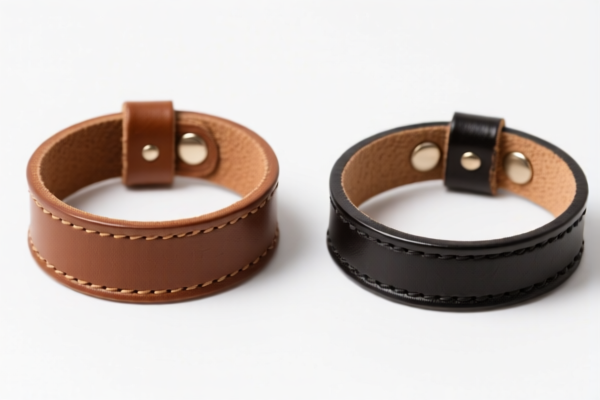
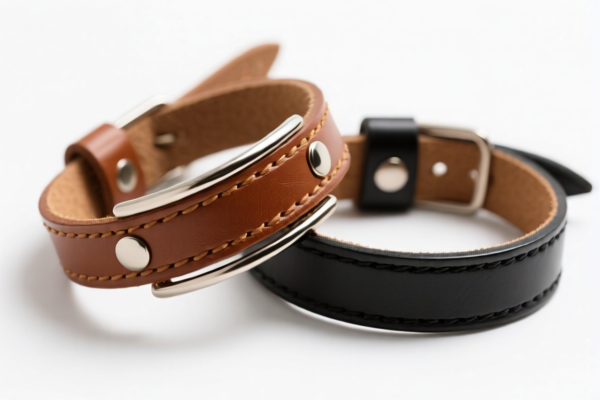
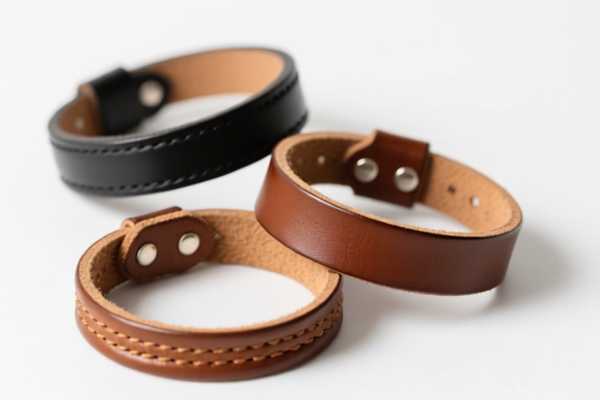
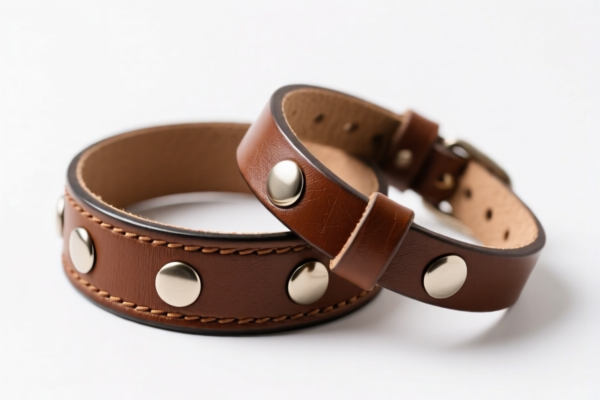
AI Analysis
⌚️ Composition Leather Wristbands (Leather Articles)
🌐 HS Code Reference & Customs Clearance Guide | 2026 Latest Tariff Analysis | Professional Compliance Strategy
📌 I. Product Definition & Classification: What Exactly Are "Composition Leather Wristbands"?
Composition leather (also known as reconstituted leather or bonded leather) is an artificial material made from leather fibers or waste mixed with a binder (such as polyurethane or latex) and then coated or laminated onto a backing.
In international trade, wristbands made from this material are classified under Chapter 42: Articles of Leather; Saddlery and Harness; Travel Goods, Handbags and Similar Containers. They are NOT classified as textiles (Chapter 63) or clothing accessories if they are purely leather-like articles.
⚠️ Key Distinction:
- If the wristband is made of woven fabric or knitted material → It may fall under Textiles (e.g., 6307.90.98.99).
- If it is made of Composition Leather (leather dust + binder) → It falls under Chapter 42 as "Other Articles of Leather or Composition Leather."
📦 II. HS Code Classification Details (2026 Latest Tariff Authority Match)
Based on the provided <DATA>, composition leather wristbands generally fall into one of the following two HS Codes depending on their specific form (e.g., if they are flat straps vs. finished lace-like items).
| HS Code | Product Description | Applicable Scenario | Material Key Feature |
|---|---|---|---|
4205.00.20.00 |
Other articles of leather or of composition leather: Shoelaces | Wristbands that are structured, laced, or function similarly to shoelaces (flat, woven-style leather strips) | ✅ Composition Leather |
4205.00.40.00 |
Other articles of leather or of composition leather: Straps and strops | Wristbands that are flat, belt-like, or used as fastening straps/braces | ✅ Composition Leather |
🔍 Classification Logic:
- Wristbands are typically considered "Other articles" (heading 4205).
- The distinction between4205.00.20.00and4205.00.40.00often depends on the physical form:
- If the wristband is a flat, woven, or lace-like strip (even if not used for shoes), customs may lean towardShoelacesanalogy orOther.
- If the wristband is a solid strap (like a watch strap or fitness band outer layer), it is often classified as a Strap (4205.00.40.00).
- Note: Since the<DATA>only provides these two codes, you must choose the one that best describes the physical structure. Most simple flat leather wristbands are classified as Straps (4205.00.40.00).
💰 III. 2026 Latest Tariff Rate Breakdown (Including Additional Duties)
✅ Applicable Country: United States (US)
✅ Origin: China (CN) (Assumed based on typical 25%/26.8% structure in data)
✅ Effective Date: Current Trade Policies (Section 301 + IEEPA)
🎯 1. 4205.00.20.00 — Other Articles: Shoelaces (and lace-like wristbands)
| Item | Content |
|---|---|
| Base Tariff | 0.0% (ad valorem) |
| Section 301 Additional Tariff | +25.0% |
| Total Tariff Rate | 25.0% |
| Tax Calculation | CIF Value × 25.0% |
| De Minimis Eligibility | ❌ No (Deny De Minimis for China-origin goods > $800 in many cases, or specifically excluded by HTS note) |
| Legal Authority Path | HTS:4205.00.20.00 → Section 301: Footnote 9903.88.01 |
📌 Explanation:
- The 0% base rate reflects that "Shoelaces" and similar simple leather articles have low base protection.
- The 25% additional tariff is imposed under Section 301 of the Trade Act of 1974, targeting Chinese goods.
- Total Cost Impact: High. Even with 0% base, the 25% surcharge significantly increases landed cost.
🎯 2. 4205.00.40.00 — Other Articles: Straps and Strops (Most common for Wristbands)
| Item | Content |
|---|---|
| Base Tariff | 1.8% (ad valorem) |
| Section 301 Additional Tariff | +25.0% |
| Total Tariff Rate | 26.8% |
| Tax Calculation | CIF Value × 26.8% |
| De Minimis Eligibility | ❌ No |
| Legal Authority Path | HTS:4205.00.40.00 → Section 301: Footnote 9903.88.01 |
📌 Explanation:
- The 1.8% base rate applies to "Straps and Strops."
- The 25% additional tariff is again applied under Section 301.
- Total Cost Impact: 26.8% is the standard burden for Chinese-origin composition leather straps entering the US.
- Note: This is the most likely code for standard fitness bands, fashion wristbands, or watch straps made of composition leather.
🛠️ IV. Customs Clearance Operational Advice (Practical Pitfall Avoidance)
✅ 1. Documentation Checklist (Essential)
| Document | Required? | Description |
|---|---|---|
| ✅ Commercial Invoice | ✔️ | Must clearly state "Composition Leather Wristband," not just "Leather Band." |
| ✅ Material Composition Statement | ✔️ | Explicitly declare: "100% Composition Leather (Leather fibers + Polyurethane Binder)." Avoid vague terms like "Synthetic Leather" without clarification. |
| ✅ Product Photos | ✔️ | Show cross-section or texture to prove it is composition leather (often shows fibers/binder mix) vs. genuine hide. |
| ✅ Country of Origin Certificate | ✔️ | Critical for determining Section 301 applicability. If not China, different rates may apply. |
| ✅ HTS Code Declaration | ✔️ | Specify 4205.00.40.00 or 4205.00.20.00 based on strap vs. lace structure. |
✅ 2. Classification Strategy (Key Mnemonic)
🔥 "Strap is Flat, Lace is Woven; Check the Binder, Check the Form!"
| Scenario | Recommended HS Code | Why? |
|---|---|---|
| Flat, solid strap (like a watch band) | 4205.00.40.00 |
Fits "Strap" definition best. |
| Woven, flat, lace-like strip | 4205.00.20.00 |
Fits "Shoelace" analogy (interlaced/laced structure). |
| Genuine Leather Wristband | Different Code (e.g., 4205.00.90) | Not in DATA, but note: Genuine leather may have different base rates (often 5.7% base + 25% add'l = 30.7%). |
| Textile/Fabric Wristband | Different Code (e.g., 6307.90) | Not in DATA. Do not misclassify fabric as leather. |
⚠️ Critical Warning:
- Do NOT classify as "Textile Accessory" (e.g., 6307.90) if the primary material is composition leather. Customs will reclassify and penalize.
- Do NOT claim "De Minimis" ($800 exemption) if the shipment is large-scale or if the broker flags it as a Section 301 item. Many carriers block De Minimis for Chinese leather goods due to high audit rates.
✅ 3. Special Circumstances
| Situation | Handling Advice |
|---|---|
| Mixed Materials (e.g., Leather + Silicone Core) | If the leather covers >50% of the surface area or is the essential character, it stays in Chapter 42. |
| Packaged as Gift Sets | Declared as "Gift Sets," but the HS code is still based on the principal component (leather wristband). |
| Origin: Not China | If from Vietnam, Mexico, etc., the 25% Section 301 tariff may be eliminated. Confirm Country of Origin! |
🌍 V. Global Market Comparison (2026 Context)
| Country/Region | Recommended HS Code | Est. Total Tariff (China Origin) | Notes |
|---|---|---|---|
| 🇺🇸 USA | 4205.00.40.00 |
26.8% (1.8% base + 25% add'l) | High barrier due to Section 301. |
| 🇪🇺 EU | 4205.00.40 | ~0% - 5% | No Section 301; standard EU duties apply (often lower for leather articles). |
| 🇨🇳 China (Import) | 4205.00.40 | ~6.5% | Standard import duty for China domestic market. |
| 🇨🇦 Canada | 4205.00.40 | ~0% - 5% | CUSMA may offer duty-free if Canadian/Mexican origin. |
📌 Conclusion:
- The US is the highest-tariff market for these goods due to the 25% punitive tariff.
- Strategy: Consider origin shifting (e.g., final assembly in Vietnam/Mexico) to avoid the 25% surcharge, if feasible.
📌 VI. Common Errors & Pitfalls (Lessons Learned)
❌ Error 1: Classifying as "Textile Wristband" (6307.90.98.99)
👉 Consequence: Customs rejects because material is composition leather. Retroactive tariff assessment + penalties.
❌ Error 2: Ignoring the "Base Tariff" difference
👉 Consequence: Misclassifying 4205.00.40.00 (1.8%) as 4205.00.20.00 (0%) or vice versa is a minor error, but both are subject to 25% add'l. Focus on correct description to avoid delays.
❌ Error 3: Failing to Declare "Composition Leather"
👉 Consequence: If declared as "Leather" (general), customs may apply a higher base rate (e.g., 5.7%) for genuine leather, leading to underpayment if genuine leather rules don't apply, or overpayment if composition leather has lower base. Be precise.
✅ Correct Declaration Example:
"Fashion Wristband, Made of Composition Leather (Leather Dust + Polyurethane), Black, Size M, HS 4205.00.40.00, Origin: China"
🎯 VII. Conclusion: Professional Declaration Saves Money
🎯 Key Takeaways:
🔹 HS Code:
4205.00.40.00(Strap) is most common for wristbands.
🔹 Total Tariff: 26.8% for China-origin goods (1.8% Base + 25% Add'l).
🔹 Origin Matters: Non-China origin can eliminate the 25% penalty.
🔹 Documentation: Clearly state "Composition Leather" to avoid Chapter 63 (Textile) misclassification.
📌 Pro Tip:
If your volume is high, apply for an Advance Ruling from US CBP to confirm the classification of 4205.00.40.00 vs 4205.00.20.00 for your specific product design. This prevents post-entry audits and fines.
📣 Immediate Action:
📞 Verify Origin: Is it truly China?
📝 Document Material: Composition Leather = Leather Fibers + Binder.
🚀 Calculate Landed Cost: Include 26.8% in your pricing model for US shipments.
✨ Professional Clearance Starts with Accurate Classification!
💼 Every Percent Matters in the Age of Trade Wars!
Customer Reviews
About HS Code Classification
The Harmonized System (HS) is an internationally standardized nomenclature developed by the World Customs Organization (WCO) to classify traded products. Over 200 countries use the HS system as the basis for customs tariffs, trade statistics, and import/export regulations.
Each HS code follows a hierarchical structure:
- Chapter (2 digits) — Broad category of goods (e.g., Chapter 84: Machinery and Mechanical Appliances)
- Heading (4 digits) — More specific grouping within the chapter
- Subheading (6 digits) — Internationally standardized breakdown, used by all WCO member countries
- National subdivisions (8-10 digits) — Country-specific extensions for further classification, such as US HTSUS 10-digit codes
Correct HS code classification is essential for smooth customs clearance, accurate duty payment, and compliance with trade regulations. Misclassification can lead to customs delays, overpayment of duties, or penalties.
When importing from CN to US, the applicable tariff rates may include:
- Most-Favored-Nation (MFN) rate — The standard duty rate applied to WTO members
- General rate — Applied to countries without trade agreements
- Trade remedy duties — Additional tariffs such as Section 301 (anti-dumping), Section 232 (national security), or countervailing duties
The information provided on this page is for reference purposes only. For official classification, please consult with your local customs authority or a licensed customs broker.