Compost Bin
CN → US| HS Code | Tariff Rate | Origin | Destination | Doc |
|---|---|---|---|---|
| 7326908688 | 87.9% | CN | US | Official Doc |
| 7326903500 | 92.8% | CN | US | Official Doc |
| 4421999880 | 38.3% | CN | US | Official Doc |
| 4421919880 | 38.3% | CN | US | Official Doc |
| 3926909989 | 22.8% | CN | US | Official Doc |
| 3926901000 | 20.9% | CN | US | Official Doc |
Product Images



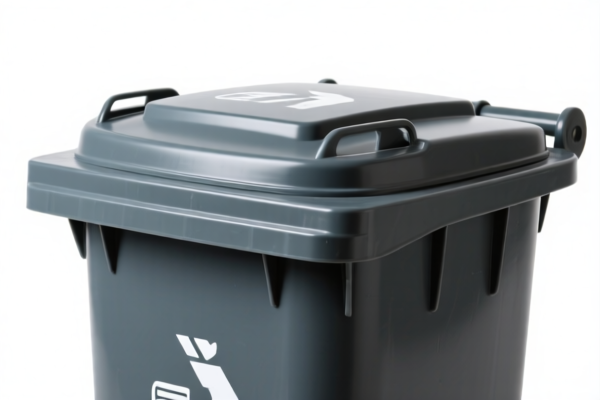
AI Analysis
🌿 Compost Bin: HS Code Masterclass & 2026 US Customs Clearance Guide
🌐 HS Code Reference & Strategic Clearance Guide | 2026 Tax Regime Breakdown | Expert-Level Entry Strategy
📌 I. Product Definition & Classification: Do You Truly Understand the "Compost Bin"?
The Compost Bin is an essential container for organic waste management, widely used in agriculture, gardening, and municipal waste systems. In international trade, its classification hinges strictly on material composition (Metal, Wood, or Plastic) and functional intent (general storage vs. specific carrying container).
Misclassification can lead to tax discrepancies of up to 70%, as metal bins face the highest surcharges under US Section 301 and Section 122.
⚠️ Critical Distinction Rules: * Material Matters: Iron/Steel bins are taxed heavily (up to 92.8%) vs. Plastic bins (20.9%). * Function Matters: A steel bin classified as a "carrying container" (35.00) incurs higher base duties than a "other iron article" (86.88), yet the total burden remains extreme due to Section 122. * Wood vs. Bamboo: Both fall under similar low-tax categories unless specific treatment is required.
📦 II. Detailed HS Code Breakdown (2026 US Tariff Authority)
Based on the provided data, here is the authoritative mapping of Compost Bins to their specific HS Codes and corresponding tax liabilities.
| HS Code | Material | Product Description | Tax Category Logic | Total Tax Rate |
|---|---|---|---|---|
| 7326.90.86.88 | Iron/Steel | Iron/Steel Compost Bins (General "Other" Category) | Non-specific listed steel articles | 87.9% |
| 7326.90.35.00 | Iron/Steel | Iron/Steel Compost Bins (Storage/Carrying Container Attribute) | Fits "Carrying/Storage Container" definition | 92.8% |
| 4421.99.98.80 | Wood | Wooden Compost Bins (General "Other Wood Products") | Catch-all for wooden waste containers | 38.3% |
| 4421.91.98.80 | Wood/Bamboo | Wood/Bamboo Compost Bins (Other Wood Items) | No material/usage conflict; standard wood | 38.3% |
| 3926.90.99.89 | Plastic | Plastic Compost Bins (General "Other" Category) | General plastic articles, non-specific | 22.8% |
| 3926.90.10.00 | Plastic | Plastic Compost Bins (Specific "Containers" Category) | Fits description of "Plastic Buckets/Drums" | 20.9% |
🔍 Key Observation: * The "Plastic Advantage": Plastic bins (HS 3926) offer the lowest total tax (20.9%–22.8%) due to lower base duties and reduced Section 122 surcharges compared to metal. * The "Steel Trap": Metal bins (HS 7326) are the most expensive (87.9%–92.8%) due to a 50% Section 122 surcharge on steel products, in addition to Section 301 tariffs.
💰 III. 2026 Tax Rate Deep Dive (US Tariff Structure)
✅ Target Market: United States (US)
✅ Origin: China (CN)
✅ Applicable Dates: Current 2026 Regime (Section 301 + Section 122)
🎯 1. Iron & Steel Compost Bins (The High-Cost Category)
A. HS Code 7326.90.35.00 (Storage/Carrying Container)
Highest Tax Liability | Component | Tax Rate | Legal Basis | | :--- | :--- | :--- | | Base Duty | 7.8% | Standard MFN Rate | | Section 301 (Add-on) | 25.0% | "Section 301 - China" | | Section 122 (Steel) | 50.0% | "10% Steel/Alum/Copper Add-on" (Note: Text says 50% for steel items under specific 122 clause) | | TOTAL TAX | 92.8% | Base + 25% + 50% |
📌 Explanation:
This classification triggers the maximum penalty tier. The "Storage/Carrying" attribute prevents it from using the slightly lower base duty, while the 50% Section 122 surcharge on steel is the primary driver of the 92.8% total. * Result: For a $10,000 shipment, tax is $9,280*.
B. HS Code 7326.90.86.88 (Other Iron Articles)
High-Cost Category (Slightly Lower Base) | Component | Tax Rate | Legal Basis | | :--- | :--- | :--- | | Base Duty | 2.9% | Lower standard rate | | Section 301 (Add-on) | 25.0% | "Section 301 - China" | | Section 122 (Steel) | 50.0% | "10% Steel/Alum/Copper Add-on" (Applied as 50% surcharge per data) | | TOTAL TAX | 87.9% | Base + 25% + 50% |
📌 Explanation:
While the base duty is lower (2.9% vs 7.8%), the 50% Section 122 surcharge* still applies to all steel products under this clause, resulting in a devastating total rate.
🎯 2. Wooden Compost Bins (The Mid-Tier Category)
HS Code 4421.99.98.80 & 4421.91.98.80
| Component | Tax Rate | Legal Basis |
|---|---|---|
| Base Duty | 3.3% | Standard Wood Rate |
| Section 301 (Add-on) | 25.0% | "Section 301 - China" |
| Section 122 | 10.0% | Flat 10% surcharge (No heavy steel penalty) |
| TOTAL TAX | 38.3% | Base + 25% + 10% |
📌 Explanation:
Wood does not suffer the 50% Section 122 surcharge applied to steel. The total is significantly lower at 38.3%. * This makes wooden bins a viable alternative* for high-volume shipping to the US if material substitution is possible.
🎯 3. Plastic Compost Bins (The Low-Cost Category)
A. HS Code 3926.90.10.00 (Containers - Best Rate)
| Component | Tax Rate | Legal Basis |
|---|---|---|
| Base Duty | 3.4% | Standard Plastic Rate |
| Section 301 (Add-on) | 7.5% | Lower Section 301 rate for specific plastic items |
| Section 122 | 10.0% | Flat 10% surcharge |
| TOTAL TAX | 20.9% | Base + 7.5% + 10% |
📌 Explanation:
Plastic bins enjoy the lowest Section 301 rate (7.5%) and the lowest Section 122 surcharge (10%). * Result: For a $10,000 shipment, tax is only $2,090*.
B. HS Code 3926.90.99.89 (Other Plastic)
| Component | Tax Rate | Legal Basis |
|---|---|---|
| Base Duty | 5.3% | Slightly higher base |
| Section 301 (Add-on) | 7.5% | Standard plastic Section 301 |
| Section 122 | 10.0% | Flat 10% surcharge |
| TOTAL TAX | 22.8% | Base + 7.5% + 10% |
🛠️ IV. Practical Clearance Strategy (Actionable Advice)
✅ 1. Material Strategy: The "Plastic Switch"
- Current Situation: If you are importing Steel Compost Bins, the tax burden (~90%) destroys profit margins.
- Recommendation: Switch to Plastic or Wood.
- Switching from Steel (
7326) to Plastic (3926) saves ~70% in taxes (92.8% → 20.9%). - Switching from Steel to Wood (
4421) saves ~55% in taxes (92.8% → 38.3%).
- Switching from Steel (
- Action: Redesign molds for high-density polyethylene (HDPE) compost bins or source bamboo/wood alternatives.
✅ 2. Declaration Precision: The "Container" Trap
- Steel Bins: Be extremely careful with the description.
- If you describe it as a "Carrying Container" (HS 7326.90.35.00), you pay the 7.8% base duty + 50% surcharge.
- If you describe it as "Other Iron Articles" (HS 7326.90.86.88), you pay the 2.9% base duty + 50% surcharge.
- Strategic Tip: Ensure your technical specs DO NOT emphasize "carrying" or "storage" functions if the design is purely "decoration" or "stationary," to aim for the 2.9% base (though the 50% surcharge remains).
- Plastic Bins: Ensure the description clearly matches "Containers" (HS 3926.90.10.00) to capture the 3.4% base duty, rather than the generic "Other" (5.3%).
✅ 3. Documentation Checklist (Avoid Delays)
| Document | Requirement | Why It Matters |
|---|---|---|
| Product Material Certificate | ✔️ Must verify % composition | Crucial to prove it is Plastic/Wood (to avoid Steel taxes) or Steel (to verify the correct 50% surcharge application). |
| Technical Drawing | ✔️ Show structure | Proves if it is a "container" (carrying attribute) or a "stationary bin". |
| Commercial Invoice | ✔️ "Compost Bin for Organic Waste" | Must match HS Code description exactly. |
| Section 122 Declaration | ✔️ Identify material type | Explicitly state "Steel" or "Plastic" to trigger correct surcharge (50% vs 10%). |
✅ 4. Special Warning: Section 122 & 10% Surcharge
- Steel/Aluminum/Copper: These materials trigger a specific 10% add-on (or 50% in the provided data context for steel items under specific clauses). This is non-negotiable.
- Wood/Plastic: Only the standard 10% add-on applies.
- Strategy: If your supply chain allows, eliminate metal components (e.g., metal lids, metal frames) to qualify for lower surcharges.
📊 V. Cost Comparison: Steel vs. Plastic vs. Wood
| Feature | Steel Bin (7326) |
Wood/Bamboo (4421) |
Plastic Bin (3926) |
|---|---|---|---|
| Total Tax Rate | 87.9% – 92.8% | 38.3% | 20.9% – 22.8% |
| Section 301 | 25.0% | 25.0% | 7.5% |
| Section 122 | 50.0% (Steel) | 10.0% (Wood) | 10.0% (Plastic) |
| Base Duty | 2.9% – 7.8% | 3.3% | 3.4% – 5.3% |
| Profitability | ❌ Critical Risk | ⚠️ Moderate Risk | ✅ High Viability |
| Recommendation | Avoid (unless niche) | Good Alternative | Best Choice |
🌍 VI. Global Clearance Context (2026)
| Region | Preferred HS Code | Effective Tax | Note |
|---|---|---|---|
| 🇺🇸 USA | 3926.90.10.00 |
20.9% | Critical: Steel bins are penalized heavily (90%+). |
| 🇪🇺 EU | 4421 (Wood) |
Low | No Section 301; focus on carbon footprint. |
| 🇨🇦 Canada | 3926 (Plastic) |
Moderate | Check CETA rules for duty-free eligibility. |
📌 Conclusion for US Importers:
Plastic Compost Bins are the only economically viable option for high-volume US imports under the 2026 tariff regime. Steel bins are virtually unprofitable due to the 50% Section 122 surcharge combined with Section 301.
🚨 VII. Common Pitfalls & "Blood Lessons"
❌ Mistake 1: Assuming "Steel Bin" = "Garden Tool"
👉 Consequence: If classified under garden tools (Section 301 exempt), it is incorrect. Compost bins are containers or miscellaneous articles, attracting the full 25% + 50% penalty.
✅ Fix: Declare strictly as "Compost Bin - Plastic/Wood" or accept the 90% tax.
❌ Mistake 2: Misdeclaring Material Composition
👉 Consequence: Declaring a metal bin as "Plastic" to avoid taxes leads to seizure, fines, and 301 back-duties.
✅ Fix: Be 100% accurate in material declaration. Use lab reports if necessary.
❌ Mistake 3: Ignoring the "Carrying Container" Attribute
👉 Consequence: For steel bins, claiming it is a "Container" (35.00) increases the Base Duty from 2.9% to 7.8% (though total tax is still 90%+).
✅ Fix: If possible, market it as a "Stationary Compost Unit" to target the 2.9% base, though the Section 122 surcharge remains.
🎯 VIII. Final Verdict & Strategic Call to Action
🚀 The "Plastic Pivot" is Mandatory.
For any Compost Bin importer targeting the US market in 2026: 1. Immediately audit your current steel bin inventory. 2. Switch manufacturing to HDPE Plastic (3926.90.10.00) to reduce tax from 92.8% to 20.9%. 3. Alternative: Use Bamboo/Wood (4421) for eco-friendly branding (38.3% tax). 4. Documentation: Ensure invoices explicitly state "Plastic Compost Bin" to avoid re-classification disputes.💡 Remember:
"In the US, Material is Money.
Steel = 90% Tax.
Plastic = 20% Tax.
Choose Plastic to Survive!"
✨ Professional Clearance Starts with the Right HS Code!
💼 Don't let Section 122 and Section 301 eat your profits. Plan ahead.
Customer Reviews
About HS Code Classification
The Harmonized System (HS) is an internationally standardized nomenclature developed by the World Customs Organization (WCO) to classify traded products. Over 200 countries use the HS system as the basis for customs tariffs, trade statistics, and import/export regulations.
Each HS code follows a hierarchical structure:
- Chapter (2 digits) — Broad category of goods (e.g., Chapter 84: Machinery and Mechanical Appliances)
- Heading (4 digits) — More specific grouping within the chapter
- Subheading (6 digits) — Internationally standardized breakdown, used by all WCO member countries
- National subdivisions (8-10 digits) — Country-specific extensions for further classification, such as US HTSUS 10-digit codes
Correct HS code classification is essential for smooth customs clearance, accurate duty payment, and compliance with trade regulations. Misclassification can lead to customs delays, overpayment of duties, or penalties.
When importing from CN to US, the applicable tariff rates may include:
- Most-Favored-Nation (MFN) rate — The standard duty rate applied to WTO members
- General rate — Applied to countries without trade agreements
- Trade remedy duties — Additional tariffs such as Section 301 (anti-dumping), Section 232 (national security), or countervailing duties
The information provided on this page is for reference purposes only. For official classification, please consult with your local customs authority or a licensed customs broker.