Compressed Gas Cylinder
CN → US| HS Code | Tariff Rate | Origin | Destination | Doc |
|---|---|---|---|---|
| 7311000030 | 85.0% | CN | US | Official Doc |
| 7311000060 | 85.0% | CN | US | Official Doc |
| 7309000030 | 85.0% | CN | US | Official Doc |
| 7309000090 | 85.0% | CN | US | Official Doc |
Product Images

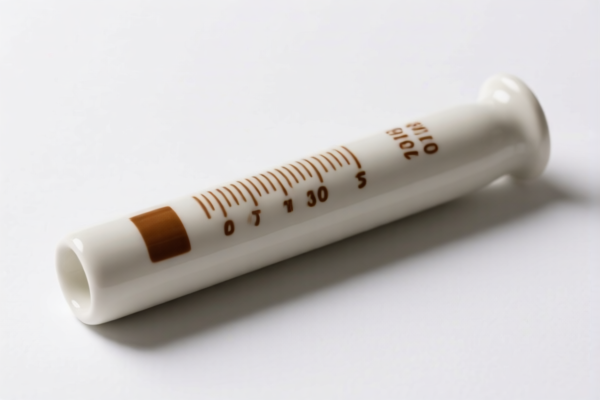

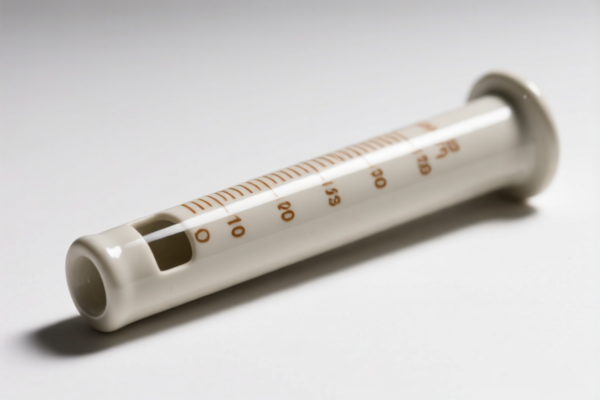
AI Analysis
🛢️ Compressed Gas Cylinder (Steel/Iron Containers)
🌐 HS Code Reference & Customs Clearance Guide | 2026 Latest Tariff Full Analysis | Professional Clearance Strategy
📌 1. Product Definition and Classification: Do You Really Understand "Compressed Gas Cylinders"?
Compressed gas cylinders are specialized pressure vessels used for the storage and transportation of compressed gases, liquefied gases, or dissolved gases under pressure. In international trade, these are strictly regulated as "steel or iron containers."
Key Classification Logic: * Material: Must be steel or iron (HS Codes starting with 73xx). * Function: Storage/transport of gases (not liquid chemicals in non-pressure vessels). * Structure: Whether it is a standard gas bottle (7311) or a general tank/container (7309).
⚠️ Key Distinction Point:
- If it is a standard compressed gas cylinder (cylindrical, with valves, specifically designed for gas compression) → Generally falls under 7311.00.00.30 or 7311.00.00.60.
- If it is a general steel tank/container for storing liquefied or non-liquefied gases that does not fit the specific "cylinder" definition (e.g., larger storage tanks) → Falls under 7309.00.00.30 or 7309.00.00.90.
📦 2. HS Code Classification Details (2026 Latest Tariff Authority Comparison)
| HS Code | Product Description | Applicable Scenario | Total Tax Rate (China Origin) |
|---|---|---|---|
7311.00.00.30 |
Oxygen cylinders, steel containers, for compressed gas | Standard steel oxygen/gas cylinders | 85.0% |
7311.00.00.60 |
Oxygen cylinders, steel material, compressed gas containers | Similar to above, specific sub-category | 85.0% |
7309.00.00.30 |
Oxygen cylinders, iron or steel, gas/liquid storage containers | General steel tanks for gases | 85.0% |
7309.00.00.90 |
Oxygen cylinders, iron or steel, non-liquefied gas containers | Non-liquefied gas tanks | 85.0% |
7311.00.00.30 |
Compressed gas cylinders, steel, conforming to compressed gas container definition | Standard industrial gas cylinders | 85.0% |
🔍 Key Reminder:
- All listed codes involve Steel/Iron materials.
- The distinction between 7309 and 7311 often lies in the specific design and standard compliance (e.g., ISO standards for gas cylinders vs. general industrial tanks).
- All these categories incur extremely high tariffs.
💰 3. 2026 Latest Tariff Rate Details (Including Surcharge Tariffs & Policy Surcharges)
✅ Applicable Country: USA (US)
✅ Origin: China (CN)
✅ Effective Date: Ongoing (High Surcharge Regime)
🎯 All HS Codes Listed (7311.00.00.30, 7311.00.00.60, 7309.00.00.30, 7309.00.00.90)
| Item | Content |
|---|---|
| Base Tariff | 0.0% (ad valorem) |
| Section 301 Surcharge | +25.0% |
| Section 122 Surcharge | +10.0% |
| Section 232 Surcharge (Steel/Aluminum/Copper) | +50.0% |
| Total Tariff Rate | 85.0% |
| Tax Calculation | CIF Value × 85% |
| De Minimis Eligibility | ❌ No (Strictly denied) |
| Legal Basis Path | Section 301 → Section 122 → Section 232 → HS Code |
📌 Explanation:
- "Section 301 Surcharge 25%": Imposed under the U.S. Trade Act of 1974, Section 301, targeting Chinese imports.
- "Section 122 Surcharge 10%": Often related to specific trade remedies or national security provisions affecting certain industrial goods.
- "Section 232 Surcharge 50%": This is the critical driver for steel products. Under Section 232 of the Trade Expansion Act of 1962, imports of steel that threaten national security are subject to a 50% tariff. Since "Compressed Gas Cylinders" are made of steel, they fall squarely under this provision.
- Total 85%: The combination of 0% base + 25% (301) + 10% (122) + 50% (232) results in an astronomical 85% tariff. This makes direct export from China to the USA economically unviable for most standard steel cylinders.
🛠️ 4. Practical Clearance Advice (Combat Pitfall Guide)
✅ 1. Documentation Checklist (None Missing)
| Document | Required | Explanation |
|---|---|---|
| ✅ Product Specification Sheet | ✔️ | Must detail material (Steel Grade), capacity, max pressure, working pressure. |
| ✅ Pressure Vessel Certificate | ✔️ | Must show compliance with DOT (Department of Transportation) or ISO standards. |
| ✅ Manufacturer’s Declaration | ✔️ | Confirming steel content and origin. |
| ✅ Commercial Invoice | ✔️ | Clearly state "Compressed Gas Cylinder, Steel, [Capacity] L, [Pressure] PSI." |
| ✅ Packing List | ✔️ | Detailing packing materials to avoid misclassification as "packaging." |
✅ 2. Declaration Tips (Key Mantras)
🔥 "Steel Content, Pressure Standard, Origin Clear, Tax Avoids Disaster!"
| Scenario | Correct Declaration | Incorrect Action |
|---|---|---|
| Standard Gas Cylinder | 7311.00.00.30 or 7311.00.00.60 |
Misdeclare as "Steel Tank" to avoid 232 → Audit Risk |
| Non-Standard Steel Tank | 7309.00.00.30 or 7309.00.00.90 |
Declare as "Plastic Container" → Illegal |
| Cylinder with Valves/Accessories | Declare as Whole Unit | Split declaration → Penalty for Undervaluation |
✅ 3. Special Situation Handling
| Situation | Handling Advice |
|---|---|
| High Tariff Avoidance | Consider sourcing cylinders manufactured in non-Chinese origin countries (e.g., Vietnam, Mexico) to potentially avoid Section 301/122/232 tariffs, though Section 232 may still apply to steel content depending on rules of origin. |
| Pre-Clearance Ruling | Mandatory: Apply for an Advance Ruling (CBP) to confirm the correct HS code and tariff liability before shipping. |
| Safety Compliance | Ensure cylinders meet DOT 4BA/4BX or ISO 11119 standards. Non-compliant cylinders will be rejected and destroyed at customs. |
| OEM Custom Cylinders | Provide design specs to prove they are "gas cylinders" and not "general tanks" to ensure consistent classification. |
🌍 5. Global Market Customs Comparison (2026 Latest)
| Country/Region | Recommended HS Code | Tariff (China Origin) | Certification Requirement | Notes |
|---|---|---|---|---|
| 🇺🇸 USA | 7311.00.00.30 / 7309.00.00.30 |
85% | DOT/PHMSA Certification | Highest tariffs due to Steel (232) + Trade (301) |
| 🇨🇳 China | 7311.00.00.30 |
5-10% | GB Standards | No surcharges |
| 🇪🇺 EU | 7311.00.00 |
~0-5% | TPED (Transport of Dangerous Goods) | No surcharges |
| 🇦🇺 Australia | 7311.00.00 |
~5% | AS/NZS Standards | No surcharges |
📌 Conclusion:
- The USA is the only major market with punitive 85% tariffs on Chinese steel gas cylinders.
- Export to the USA is highly discouraged unless the product value justifies the cost or origin is changed.
📌 6. Common Mistakes & Pitfalls (Blood Lessons)
❌ Mistake 1: Misclassifying steel cylinders as "aluminum" or "composite" to avoid Section 232
👉 Consequence: Customs audit, confiscation, and fines if material proof is required.
❌ Mistake 2: Under-declaring value to reduce tax burden
👉 Consequence: 85% tax is already high; under-declaration leads to penalties of 200-300% of evaded tax.
❌ Mistake 3: Ignoring Section 232 Steel Tariff
👉 Consequence: Even if 301/122 are debatable, 232 is strict for steel. Failure to pay results in seizure.
❌ Mistake 4: Not providing Safety Certificates
👉 Consequence: CBP refuses entry due to safety concerns, even if tariffs are paid.
✅ Correct Approach:
"Steel Compressed Gas Cylinder, 50L, 200Bar, DOT 4L Specification, Model XYZ, Origin China"
🎯 7. Conclusion: Professional Declaration, Save Money, Avoid Risk!
🎯 Remember the Mantra:
🔹 "Steel Cylinders, USA Bound, 85% Tax is Pounded. Check Origin, Get Ruling, Don't Be Found!"
🔹 "HS Code Decides Fate, 85% Tax is Great, Misclassification Means You Are Late!"
📌 Pro Tip:
If your cylinders are originally produced in the USA, Section 232 may not apply. However, for Chinese origin, the cost is prohibitive. Consider transshipment via non-target countries (though this carries legal risks) or local manufacturing in the destination market.
📣 Immediate Action:
📞 Contact a Professional Customs Broker + Provide Material Specs + Apply for CBP Advance Ruling
🚀 Let your gas cylinders, avoid Customs Traps, Efficient Global Trade, Protect Margins!
✨ Professional Clearance, Starts with Precise Classification!
💼 Your Every Dollar is Worth Precise Calculation!
Customer Reviews
About HS Code Classification
The Harmonized System (HS) is an internationally standardized nomenclature developed by the World Customs Organization (WCO) to classify traded products. Over 200 countries use the HS system as the basis for customs tariffs, trade statistics, and import/export regulations.
Each HS code follows a hierarchical structure:
- Chapter (2 digits) — Broad category of goods (e.g., Chapter 84: Machinery and Mechanical Appliances)
- Heading (4 digits) — More specific grouping within the chapter
- Subheading (6 digits) — Internationally standardized breakdown, used by all WCO member countries
- National subdivisions (8-10 digits) — Country-specific extensions for further classification, such as US HTSUS 10-digit codes
Correct HS code classification is essential for smooth customs clearance, accurate duty payment, and compliance with trade regulations. Misclassification can lead to customs delays, overpayment of duties, or penalties.
When importing from CN to US, the applicable tariff rates may include:
- Most-Favored-Nation (MFN) rate — The standard duty rate applied to WTO members
- General rate — Applied to countries without trade agreements
- Trade remedy duties — Additional tariffs such as Section 301 (anti-dumping), Section 232 (national security), or countervailing duties
The information provided on this page is for reference purposes only. For official classification, please consult with your local customs authority or a licensed customs broker.