Compressed Peat Blocks
CN → USProduct Images
AI Analysis
🌱 Compressed Peat Blocks (Horticultural Substrate)
🌐 HS Code Reference & Customs Clearance Guide | 2026 Latest Tariff Analysis | Professional Clearance Strategy
📌 I. Product Definition & Classification: What Exactly Are "Compressed Peat Blocks"?
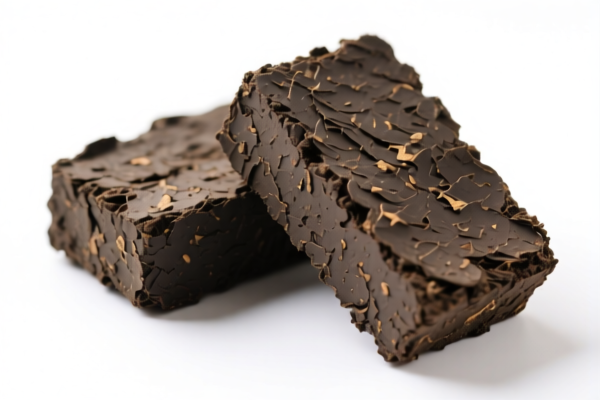
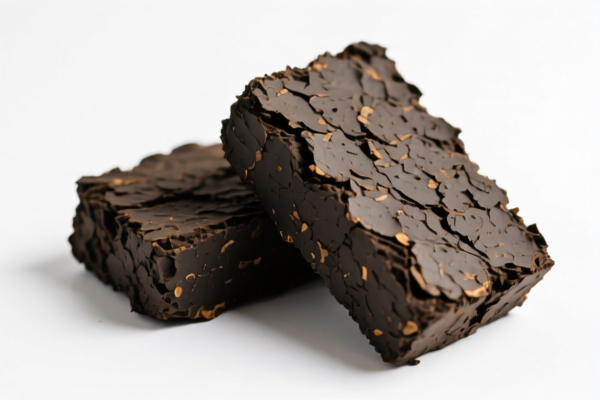
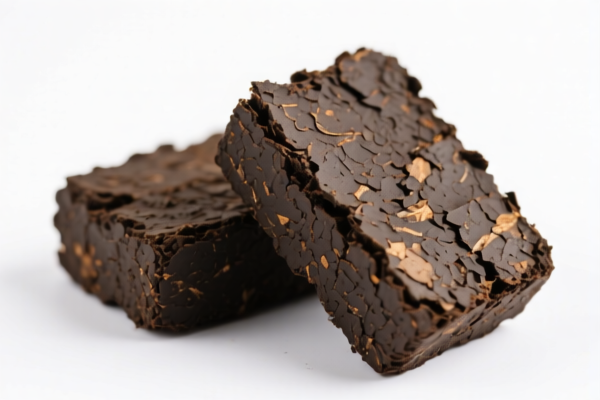
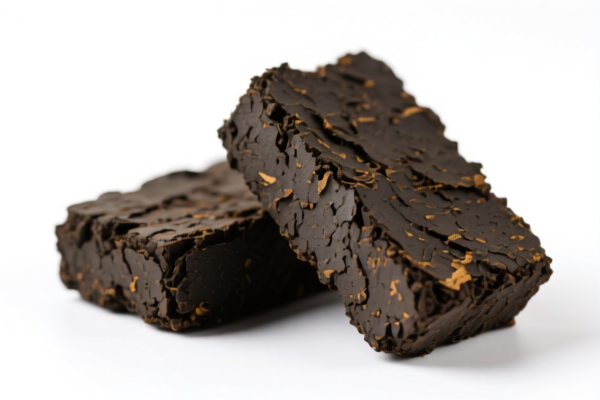
Compressed Peat Blocks (often called "Peat Bricks" or "Peat Cubes") are dense, rectangular blocks made from milled sphagnum peat moss. They are widely used in horticulture, gardening, and landscaping as a soil amendment, growing medium for seedlings, or a water-absorbing material.
In international trade, they are classified based on their processing level and primary use:
- Raw/Mined Peat: If the peat is merely mined and dried without significant processing, it may fall under Chapter 12 or 14.
- Processed Peat Moss (Horticultural Grade): Most "compressed blocks" involve sieving, drying, and compressing. These are considered prepared vegetable materials or horticultural substrates.
- Key Distinction:
- If used strictly for growing plants (soil substitute) → HS 1214 or 1404.
- If used for filtering/absorbing (e.g., oil spills) → HS 1404.
- Most common commercial use: Horticulture/Gardening → HS 1214.90 or 1404.90.
⚠️ Critical Classification Point:
- HS 1404.90: Generally covers "Vegetable products not elsewhere specified or included." This is the most common code for raw or slightly processed peat moss intended for horticulture.
- HS 1214.90: Covers "Fodder" or prepared feeds. If the peat is mixed with nutrients or specifically formulated as animal feed/bedding, it might go here, but less common for pure horticultural peat blocks.
- HS 3824.99: If the peat is chemically treated or mixed with binders/adhesives for non-horticultural industrial uses.
📦 II. HS Code Classification Details (2026 Authoritative对照)
| HS Code | Product Description | Application | Processing Level |
|---|---|---|---|
1404.90.80.00 |
Other vegetable products not elsewhere specified (e.g., Sphagnum Peat Moss) | Horticulture, Gardening, Soil Amendment | ✅ Processed (Milled, Compressed) |
1404.90.60.00 |
Other vegetable products (for oil absorption) | Industrial Oil Spill Cleanup | ✅ Processed |
1214.90.90.00 |
Other fodder (if mixed with nutrients) | Animal Bedding or Feed Supplement | ✅ Mixed/Prepared |
3824.99.99.00 |
Prepared binders for foundry molds / Other chemical products | Industrial/Non-Horticultural Use | ✅ Chemically Treated |
🔍 Key Reminder:
- Most Compressed Peat Blocks for Gardening are classified under1404.90.
- Ensure the product is free of seeds (to avoid phytosanitary restrictions under HS 1211 or 1404.10).
- If the blocks contain added fertilizers, they may be reclassified under HS 3101 (Fertilizers), which has different tax rates.
💰 III. 2026 Latest Tariff Rate Breakdown (Including Additional Duties)
✅ Applicable Country: United States (US)
✅ Country of Origin: Canada / EU (Typical major exporters of Sphagnum Peat)
✅ Effective Date: 2026 (General Trade)
🎯 1. 1404.90.80.00 —— Compressed Peat Moss (Horticultural Use)
| Item | Content |
|---|---|
| Base Duty Rate | Free (0%) under USHTS General Provision |
| USITC Additional Duty | 0% (No Section 301 tariff for Peat Moss from Canada/EU) |
| IEEPA Additional Duty | 0% (Not applicable to vegetable products of this nature) |
| Total Duty Rate | 0% |
| Tax Calculation | CIF Value × 0% |
| De Minimis Eligibility | ✅ Yes (Under $800, no duty, simple entry) |
| Legal Basis Path | USHTS:1404.90.80.00 → USITC:General → Free |
📌 Explanation:
- Peat moss is generally considered a natural mineral/vegetable product not subject to high protective tariffs.
- Crucial: If the peat is not from a FTA country (e.g., Canada, Mexico, EU), the rate is still 0% in the US.
- However, if the peat is mixed with chemical fertilizers (HS 3101), the duty may rise to 0-5% depending on the mix.
🎯 2. 1214.90.90.00 —— If Classified as Fodder/Bedding
| Item | Content |
|---|---|
| Base Duty Rate | 0% |
| Additional Duty | 0% |
| Total Duty Rate | 0% |
| De Minimis Eligibility | ✅ Yes |
📌 Note: Even if misclassified as fodder, the duty remains low. The real risk is regulatory (USDA/APHIS), not tariff.
🛠️ IV. Customs Clearance Practical Advice (Real-World Pitfall Guide)
✅ 1. Required Documentation (Mandatory)
| Document | Mandatory? | Details |
|---|---|---|
| ✅ Product Specification Sheet | ✔️ | Must specify: "Compressed Sphagnum Peat Moss," "No Seeds," "No Soil" |
| ✅ Phytosanitary Certificate | ✔️ High Risk | Required by USDA-APHIS to prove seed-free and pest-free |
| ✅ Commercial Invoice | ✔️ | Must clearly state "Horticultural Peat Blocks" (Not "Soil" or "Dirt") |
| ✅ Packing List | ✔️ | Include weight, volume (compressed vs. expanded) |
| ✅ FDA Registration | ❌ Not Required | Peat moss is not a food additive |
| ✅ EPA Registration | ❌ Not Required | Unless mixed with pesticides/fungicides |
✅ 2. Declaration Tips (Key Mnemonics)
🔥 "No Seeds, No Soil, Pure Peat!"
| Scenario | Correct Declaration | Incorrect Practice |
|---|---|---|
| Pure Peat Blocks | 1404.90.80.00 – "Compressed Peat Moss, Horticultural Grade" |
"Soil" or "Garden Dirt" → Phytosanitary Hold |
| Peat + Fertilizer Mix | 3101.00.00.00 – "Organic Fertilizer" |
Declare as "Peat" → FDA/EPA Violation |
| Peat + Pesticide Mix | 3808.94.00.00 – "Pesticide" |
Declare as "Peat" → Seizure & Fine |
| Raw Mined Peat (Uncompressed) | 2530.90.50.00 – "Mineral Substances" |
Less common, but possible if not processed |
✅ 3. Special Considerations
| Situation | Handling Advice |
|---|---|
| Seed Contamination | If seeds are detected, shipment will be quarantined or destroyed by USDA. Ensure certified seed-free processing. |
| Chemical Treatments | If peat is treated with fungicides, declare as pesticide-treated and provide EPA registration. |
| Wood/Debris Contamination | If peat contains wood chips or bark, it may be classified as wood product (HS 4401) and require ISPM 15 phytosanitary marks. |
| Volume Calculation | Customs may assess duty on expanded volume or compressed weight. Always declare compressed weight and note "expands to X times volume." |
🌍 V. Global Market Comparison (2026 Latest)
| Country/Region | Recommended HS Code | Tariff | Certification | Notes |
|---|---|---|---|---|
| 🇺🇸 USA | 1404.90.80.00 |
0% | USDA-APHIS Phytosanitary | Strict on seeds |
| 🇨🇳 China | 1404.90.90.00 |
2% | N/A | Standard import duty |
| 🇪🇺 EU | 1404.90.90 |
0% | CE (if treated) | No tariff for natural peat |
| 🇬🇧 UK | 1404.90.90 |
0% | N/A | Post-Brexit rules apply |
| 🇦🇺 Australia | 1404.90.90 |
5% | DAFF Biosecurity | Very Strict Quarantine |
| 🇯🇵 Japan | 1404.90.90 |
0% | IPPC | Phytosanitary required |
📌 Conclusion:
- USA and EU have 0% duty for pure peat moss.
- Australia and China have low but non-zero duties.
- Biosecurity is the biggest hurdle globally, not tariff.
📌 VI. Common Mistakes & Pitfalls (Lessons Learned)
❌ Mistake 1: Declaring as "Soil" or "Garden Mix"
👉 Consequence: Shipment held by USDA/APHIS for inspection, possible destruction.
❌ Mistake 2: Ignoring Seed Certification
👉 Consequence: Rejection at border, return to sender, or incineration.
❌ Mistake 3: Misdeclaring Treated Peat as "Pure"
👉 Consequence: EPA violation, fines up to $10,000+ per day.
❌ Mistake 4: Not Notifying Customs of Expansion Ratio
👉 Consequence: Confusion in volume calculations, delays in storage.
✅ Correct Approach:
"Compressed Sphagnum Peat Moss, Horticultural Grade, Seed-Free, Pest-Free, No Chemical Treatments. Expands 5:1 when hydrated."
🎯 VII. Conclusion: Professional Declaration for Smooth Clearance
🎯 Remember the Rules:
🔹 "Pure Peat, 0% Duty. Seeds? Not a Chance!"
🔹 "Phytosanitary Cert is King, Biosecurity is the Ring!"
🔹 "If Treated, Declare EPA, Don't Risk the Hype!"
📌 Pro Tip:
If you are exporting to the USA, ensure your supplier provides a Phytosanitary Certificate from the country of origin stating "Free from Soil and Seeds." This is the single most important document for clearance.
📣 Immediate Action:
📞 Contact your customs broker + Provide Product Spec + Secure Phytosanitary Certificate
🚀 Ensure your peat blocks pass biosecurity and save on duties!
✨ Professional Clearance Starts with Accurate Classification!
💼 Your Peat Blocks, Your Profit – Don't Let Biosecurity Ruin It!
Customer Reviews
About HS Code Classification
The Harmonized System (HS) is an internationally standardized nomenclature developed by the World Customs Organization (WCO) to classify traded products. Over 200 countries use the HS system as the basis for customs tariffs, trade statistics, and import/export regulations.
Each HS code follows a hierarchical structure:
- Chapter (2 digits) — Broad category of goods (e.g., Chapter 84: Machinery and Mechanical Appliances)
- Heading (4 digits) — More specific grouping within the chapter
- Subheading (6 digits) — Internationally standardized breakdown, used by all WCO member countries
- National subdivisions (8-10 digits) — Country-specific extensions for further classification, such as US HTSUS 10-digit codes
Correct HS code classification is essential for smooth customs clearance, accurate duty payment, and compliance with trade regulations. Misclassification can lead to customs delays, overpayment of duties, or penalties.
When importing from CN to US, the applicable tariff rates may include:
- Most-Favored-Nation (MFN) rate — The standard duty rate applied to WTO members
- General rate — Applied to countries without trade agreements
- Trade remedy duties — Additional tariffs such as Section 301 (anti-dumping), Section 232 (national security), or countervailing duties
The information provided on this page is for reference purposes only. For official classification, please consult with your local customs authority or a licensed customs broker.