Compressed Peat Fuel Block
CN → US| HS Code | Tariff Rate | Origin | Destination | Doc |
|---|---|---|---|---|
| 2704000050 | 10.0% | CN | US | Official Doc |
| 2704000025 | 10.0% | CN | US | Official Doc |
Product Images
AI Analysis
🔥 Compressed Peat Fuel Block (Briquettes)
🌐 HS Code Reference & Clearance Guide | 2026 Latest Tariff Analysis | Professional Clearance Strategy
📌 I. Product Definition & Classification: What Exactly is "Compressed Peat"?
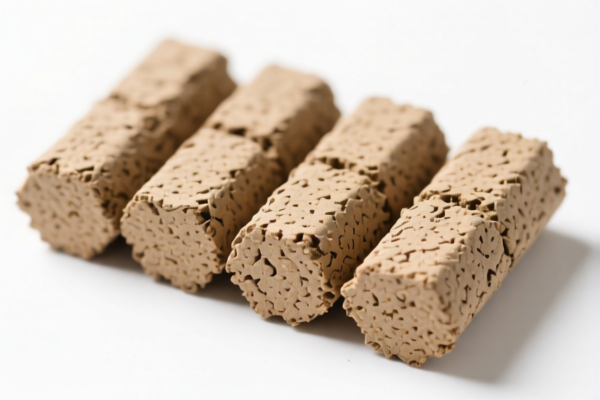
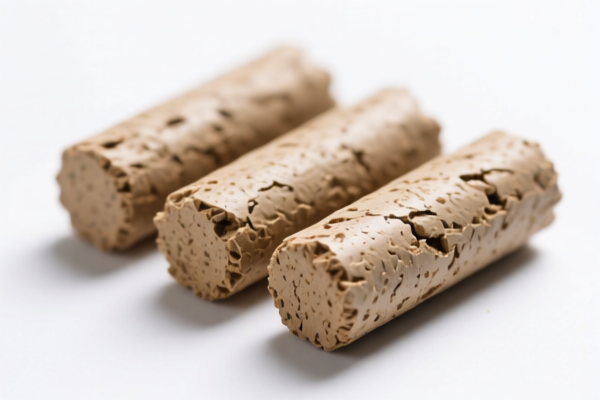
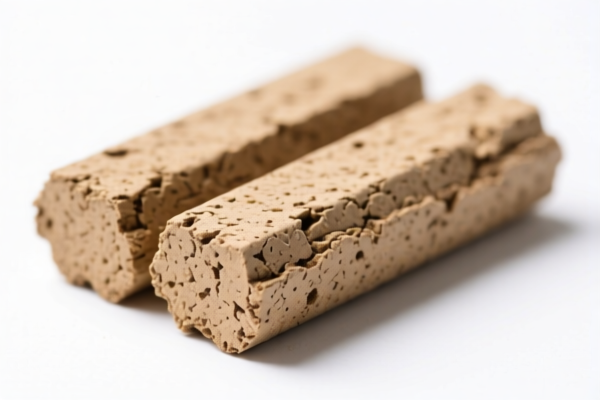
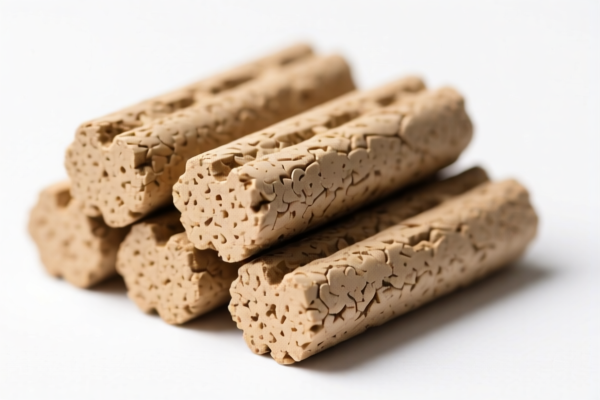
Compressed Peat Fuel Blocks, often referred to as peat briquettes or "turban peat," are solid fuel products derived from partially decomposed organic matter (peat) that has been dried, pulverized, and compressed into specific shapes (cylindrical, rectangular, etc.) to improve combustion efficiency and handling.
In international trade, the classification hinges entirely on the raw material source and the manufacturing process. It is crucial to distinguish these from coal-based cokes or charcoal.
⚠️ Key Distinction Point:
- If the raw material is Peat (organic bog material) → It falls under Chapter 27 (Mineral Fuels, including Peat).
- If the raw material is Wood → It falls under Chapter 44 (Wood Charcoal) or Chapter 47 (Pulp/Charcoal).
- Do NOT confuse with "Briquettes of Coal" (2704) or "Charcoal" (4402). Peat is chemically and botanically distinct from both.
📦 II. HS Code Classification Details (2026 Latest Tariff Authority Match)
Based on the provided , there are two specific HS Codes for this product depending on the exact technical specification ("Retort Carbon" vs. "Other").
| HS Code | Product Description | Application Scenario | Key Feature |
|---|---|---|---|
2704.00.00.50 |
Coke and semicoke of coal, of lignite or of peat...; Retort carbon Other | Peat processed via retorting (heating in the absence of air) to produce carbonaceous material. | 🌡️ Retorted: Produced by thermal decomposition in a closed vessel (retort), resulting in a specific carbon structure. |
2704.00.00.25 |
Coke and semicoke of coal: Coke and semicoke of coal: Other | Standard compressed peat fuel blocks/briquettes that are not classified as "retort carbon." | 🔥 Standard: Directly compressed dried peat, often used for domestic heating or industrial fuel. |
🔍 Critical Analysis for Clearance:
- Most Common Case: The vast majority of "Compressed Peat Fuel Blocks" sold for heating or industrial fuel are classified under2704.00.00.25(Other Coke/Semicoke).
- Exception: If the peat has undergone a specific retorting process to create a high-carbon, low-volatile material specifically called "retort carbon," it may fall under2704.00.00.50.
- Recommendation: Unless you have a technical certificate proving "retort carbon" production, use2704.00.00.25.
💰 III. 2026 Latest Tariff Rate Details (Detailed Breakdown)
✅ Applicable Country: USA (US)
✅ Origin: Generally China (CN), Russia, Ukraine, etc. (Note: Peat is also majorly produced in EU/Baltics).
✅ Effective Time: 2025/2026 Import Cycle
🎯 1. 2704.00.00.25 —— Other Coke and Semicoke of Coal (Including Peat)
| Item | Content |
|---|---|
| Basic Tariff Rate | 0.0% (ad valorem) |
| Additional Tariffs (Section 301 / IEEPA) | 0.0% |
| Total Tariff Rate | 0.0% |
| Tax Calculation | CIF Value × 0% = $0 |
| De Minimis Eligibility | ❓ Check: While the tariff is 0%, Section 301 lists for 2704.00 often have specific footnotes. For 2704.00.00.25, the data indicates 0.0% total tax. |
| Legal Authority Path | HTSUS:2704.00.00.25 |
🎯 2. 2704.00.00.50 —— Retort Carbon (Other)
| Item | Content |
|---|---|
| Basic Tariff Rate | 0.0% (ad valorem) |
| Additional Tariffs (Section 301 / IEEPA) | 0.0% |
| Total Tariff Rate | 0.0% |
| Tax Calculation | CIF Value × 0% = $0 |
| De Minimis Eligibility | ❓ Check: Similar to above, current data shows 0.0% total tax. |
| Legal Authority Path | HTSUS:2704.00.00.50 |
📌 Explanation:
- Good News: Unlike many other Chinese-origin goods subject to 25% or 10% additional tariffs, Coke/Semicoke of Peat (2704) currently shows a 0% total tax rate in the provided dataset.
- However: Tariff structures change frequently. Always verify if recent "Section 301" updates have added footnotes (e.g., Footnote 9903.xxxx) that might impose temporary duties. As per the provided data, the rate is 0%.
🛠️ IV. Clearance Operational Advice (Practical Pitfall Avoidance)
✅ 1. Document Checklist (Mandatory)
| Document | Must Provide | Explanation |
|---|---|---|
| ✅ Certificate of Origin | ✔️ | Crucial to prove the peat is NOT from sanctioned regions (if any). |
| ✅ Product Specification Sheet | ✔️ | Must state: Raw Material: Peat, Processing: Compressed/Dried, NOT Coal. |
| ✅ HS Code Declaration | ✔️ | Clearly state 2704.00.00.25 (unless retort carbon). |
| ✅ Commercial Invoice | ✔️ | Description should match HS Code: "Compressed Peat Fuel Blocks" (NOT "Wood Charcoal"). |
| ✅ MSDS (Material Safety Data Sheet) | ✔️ | Peat dust can be combustible; customs may request safety data. |
| ✅ Phytosanitary Certificate | ❗ Sometimes | If peat is considered soil-related, some ports may require phytosanitary clearance to prevent invasive species, even if processed. |
✅ 2. Declaration Tips (Key Mantras)
🔥 "Peat is Mineral, Not Wood; Carbon Content Matters!"
| Scenario | Correct Declaration | Error to Avoid |
|---|---|---|
| Standard Peat Briquettes | 2704.00.00.25 |
Misclassifying as 4402 (Wood Charcoal) → Wrong Chapter! |
| Peat with high ash content | Still 2704 |
Do not classify as 2701 (Coal) unless it is actually coal. |
| "Retort Carbon" Peat | 2704.00.00.50 |
If not retorted, do not use this code; keep as .25. |
| Mixed with Coal | 2701 or 2704? |
If >50% peat by weight/energy, argue for 2704. If coal, 2701. |
✅ 3. Special Circumstances Handling
| Situation | Handling Advice |
|---|---|
| Packaging | Peat blocks are dusty. Ensure packaging is sealed to prevent dust leakage during transit, which can trigger environmental inspections. |
| Origin: EU/Russia vs. China | Tariffs are 0% for all, but Sanctions Risk: If peat is from Russia, ensure no dual-use or sanctioned entity involvement. US sanctions may block Russian peat regardless of HS code. |
| Dust Control | Customs may inspect for dust. Use vacuum-sealed bags or sturdy pallets with shrink wrap. |
🌍 V. Global Market Clearance Comparison (2026)
| Country/Region | Recommended HS Code | Tariff Rate | Certification/Notes |
|---|---|---|---|
| 🇺🇸 USA | 2704.00.00.25 |
0% | Check for Section 301 updates. |
| 🇪🇺 EU | 2704 00 00 |
0% (Most Favored Nation) | High environmental standards; check REACH. |
| 🇨🇳 China | 2704.00.00 |
Varies (Import Tariff) | Peat is often exported FROM China, not imported. |
| 🇯🇵 Japan | 2704.00.00 |
5-10% | Varies by origin; check FTA. |
| 🇬🇧 UK | 2704.00.00 |
0% (UK Global Tariff) | Post-Brexit rules apply. |
📌 Conclusion:
- USA offers a 0% tariff for these goods currently, making them cost-competitive.
- Key Risk: Not tariff-related, but logistical (dust, moisture, origin sanctions).
📌 VI. Common Mistakes & Pitfall Guide (Lessons Learned)
❌ Mistake 1: Classifying Peat as Wood Charcoal (4402)
👉 Consequence: Wrong Chapter. Wood charcoal is under Chapter 44; Peat is under Chapter 27 (Mineral Fuels). This can lead to incorrect duty assessment and audits.
❌ Mistake 2: Ignoring Sanctions on Origin
👉 Consequence: If the peat is from a sanctioned region (e.g., certain parts of Russia/Belarus), the 0% tariff is irrelevant because the goods are banned from import.
❌ Mistake 3: Vague Description "Fuel Blocks"
👉 Consequence: Customs may hold the shipment for inspection. Always specify "Peat" in the commercial invoice.
❌ Mistake 4: Confusing "Semicoke" with "Charcoal"
👉 Consequence: Semicoke of peat is a manufactured fuel product under 2704. Charcoal is under 4402. The processing method (retorting vs. burning) determines the code.
✅ Correct Practice:
"Peat Fuel Blocks, Compressed, 100% Natural Peat Origin, No Additives, For Heating, HS Code 2704.00.00.25"
🎯 VII. Conclusion: Professional Declaration, Zero Duty, Smooth Passage!
🎯 Remember the Mantra:
🔹 "Peat is Mineral, Not Wood; 2704 is the Key!"
🔹 "Zero Tariff in USA, But Watch the Origin!"
🔹 "Dust Control is Key, Avoid the Customs Delay!"
📌 Pro Tip:
If you are exporting from a non-US country, always verify if your specific peat variety is subject to environmental export restrictions in the country of origin. Peat extraction is heavily regulated in many European countries.
📣 Immediate Action:
📞 Contact Logistics Provider: Confirm dust-proof packaging requirements.
📄 Verify Origin: Ensure the peat is NOT from a sanctioned entity or region.
🚀 Declare Accurately: Use2704.00.00.25for standard peat blocks to ensure smooth clearance at 0% duty.
✨ Professional Clearance Starts with Accurate Classification!
💼 Your Cost Savings, Calculated to the Cent!
Customer Reviews
About HS Code Classification
The Harmonized System (HS) is an internationally standardized nomenclature developed by the World Customs Organization (WCO) to classify traded products. Over 200 countries use the HS system as the basis for customs tariffs, trade statistics, and import/export regulations.
Each HS code follows a hierarchical structure:
- Chapter (2 digits) — Broad category of goods (e.g., Chapter 84: Machinery and Mechanical Appliances)
- Heading (4 digits) — More specific grouping within the chapter
- Subheading (6 digits) — Internationally standardized breakdown, used by all WCO member countries
- National subdivisions (8-10 digits) — Country-specific extensions for further classification, such as US HTSUS 10-digit codes
Correct HS code classification is essential for smooth customs clearance, accurate duty payment, and compliance with trade regulations. Misclassification can lead to customs delays, overpayment of duties, or penalties.
When importing from CN to US, the applicable tariff rates may include:
- Most-Favored-Nation (MFN) rate — The standard duty rate applied to WTO members
- General rate — Applied to countries without trade agreements
- Trade remedy duties — Additional tariffs such as Section 301 (anti-dumping), Section 232 (national security), or countervailing duties
The information provided on this page is for reference purposes only. For official classification, please consult with your local customs authority or a licensed customs broker.