Compressed Wood Pellets
CN → US| HS Code | Tariff Rate | Origin | Destination | Doc |
|---|---|---|---|---|
| 4401394210 | 35.0% | CN | US | Official Doc |
| 4401310000 | 35.0% | CN | US | Official Doc |
| 4401394210 | 35.0% | CN | US | Official Doc |
| 4401310000 | 35.0% | CN | US | Official Doc |
| 4401394210 | 35.0% | CN | US | Official Doc |
| 4401310000 | 35.0% | CN | US | Official Doc |
Product Images
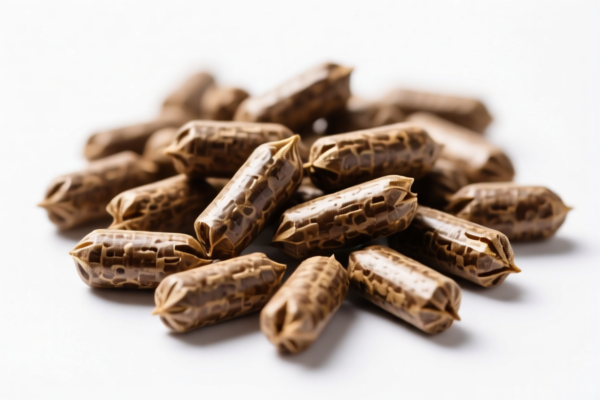
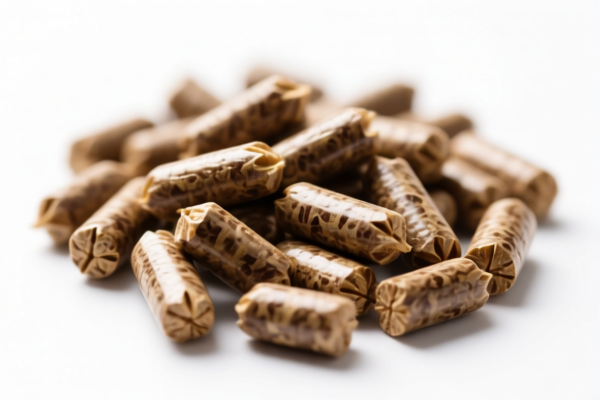
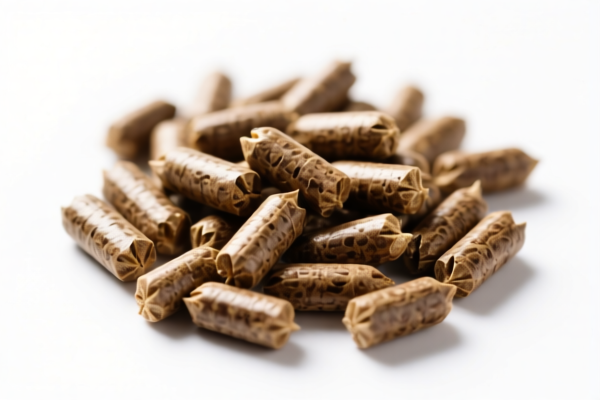
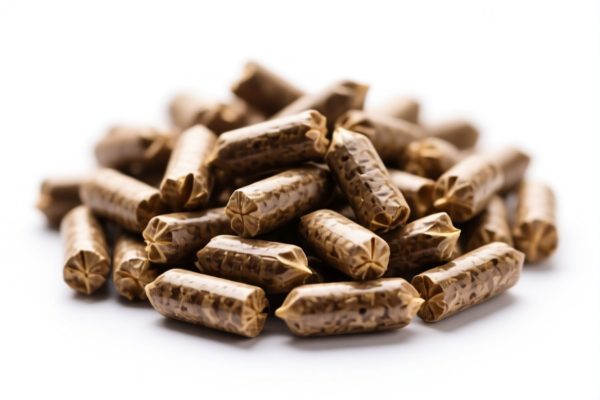
AI Analysis
🪵 Compressed Wood Pellets (Biomass Fuel)
🌐 HS Code Reference & Customs Clearance Guide | 2026 Latest Tariff Analysis | Professional Clearance Strategy 📌 I. Product Definition & Classification: What Exactly Are "Compressed Wood Pellets"?
Compressed wood pellets are solid biofuels derived from wood waste, sawdust, or biomass, processed under high pressure and often with heat. In international trade, their classification under Chapter 44 (Wood and Articles of Wood) depends strictly on their physical state and raw material composition.
The key distinction lies between: * Wood Waste/Sawdust (4401.31): Pellets or briquettes made primarily from sawdust or wood scraps. * Other Wood Fuel (4401.39): Includes compressed wood briquettes (logs/cylinders), other pellets not classified as sawdust, or general fuel wood forms.
⚠️ Critical Distinction Point: - If the raw material is explicitly sawdust or wood waste and the form is pellets/briquettes →归入 4401.31.00.00 - If the form is briquettes (logs/cylinders) or general fuel wood not specified as sawdust pellets →归入 4401.39.42.10
📦 II. HS Code Classification Details (2026 Latest Tariff Authority Comparison)
| HS Code | Product Description | Applicable Scenario | Raw Material/Form |
|---|---|---|---|
4401.31.00.00 |
Wood in the form of pellets or briquettes, of wood waste or sawdust | Sawdust pellets, wood waste briquettes | ✅ Sawdust/Waste + Pellet/Briquette |
4401.39.42.10 |
Compressed wood briquettes, fuel wood, wood chips, or particles | Compressed wood briquettes (logs), fuel wood logs, general wood pellets | ✅ Wood Briquette/Log/Fuel Wood |
🔍 Key Reminder: - "Wood Pellets" (Pelletized Sawdust): Typically fall under 4401.31.00.00. This is the most common code for standard biomass heating pellets. - "Compressed Wood Briquettes" (Briquetted Logs): Typically fall under 4401.39.42.10. These are denser, often cylindrical logs made from compressed wood chips or small branches, not just fine sawdust. - Do NOT mix: If you ship fine sawdust pellets but declare them as "briquettes," or vice versa, customs may reclassify them, leading to penalties or delays.
💰 III. 2026 Latest Tariff Rate Breakdown (Including Additional Taxes & Policy Surcharges)
✅ Applicable Country: United States (US) ✅ Origin: China (CN) ✅ Effective Date: November 10, 2025 (and subsequent imports)
🎯 1. 4401.39.42.10 —— Compressed Wood Briquettes / Fuel Wood
| Item | Content |
|---|---|
| Base Tariff Rate | 0.0% (ad valorem) |
| Section 301 Additional Duty | +25.0% |
| Section 122 Duty (IEEPA) | +10.0% |
| Total Tariff Rate | 35.0% |
| Tax Calculation | CIF Value × 35% |
| De Minimis Exemption Applicable? | ❌ No (deny_de_minimis) |
| Legal Basis Path | USITC:4401.39.42.10 → Section 301 Footnote → IEEPA Section 122 |
📌 Explanation: - Base Rate (0%): Wood fuel generally has a low base tariff. - Section 301 (+25%): Applied to many Chinese wood products under the Trump-era tariffs, continued under current policy. - Section 122 (+10%): A specific surcharge under the International Emergency Economic Powers Act (IEEPA) targeting certain Chinese imports. - Total 35%: This is a significant cost factor. Importers must account for this in pricing.
🎯 2. 4401.31.00.00 —— Wood Pellets/Briquettes of Sawdust or Wood Waste
| Item | Content |
|---|---|
| Base Tariff Rate | 0.0% (ad valorem) |
| Section 301 Additional Duty | +25.0% |
| Section 122 Duty (IEEPA) | +10.0% |
| Total Tariff Rate | 35.0% |
| Tax Calculation | CIF Value × 35% |
| De Minimis Exemption Applicable? | ❌ No (deny_de_minimis) |
| Legal Basis Path | USITC:4401.31.00.00 → Section 301 Footnote → IEEPA Section 122 |
📌 Note: - Same tariff structure as briquettes. - Whether it's sawdust pellets or wood waste briquettes, the total tax burden is 35%. - Crucial: Both codes are subject to both the 25% Section 301 tariff AND the 10% Section 122 tariff.
🛠️ IV. Customs Clearance Practical Advice (Real-World Pitfall Avoidance)
✅ 1. Required Documentation Checklist (All Mandatory)
| Document | Required? | Description |
|---|---|---|
| ✅ Product Specification Sheet | ✔️ | Must specify: Raw material (sawdust vs. wood chips), moisture content, density, dimensions. |
| ✅ Certificate of Origin | ✔️ | To confirm CN origin (triggering tariffs). |
| ✅ Commercial Invoice | ✔️ | Clearly state: "Compressed Wood Pellets" or "Wood Briquettes". Do NOT use vague terms like "Biomass". |
| ✅ Packing List | ✔️ | Detail net/gross weight. Ensure weight matches declaration. |
| ✅ Material Declaration | ✔️ | Explicitly state if it is "100% Wood Waste/Sawdust" or "Compressed Wood Briquettes". |
| ✅ ** fumigation Certificate (ISPM 15)** | ⚠️ Check | If wood is not processed to high heat (e.g., >56°C), phytosanitary cert may be needed. Pellets usually exempt due to processing, but verify. |
✅ 2. Declaration Tips (Key Mnemonic)
🔥 "Material Matters: Sawdust=31, Briquette=39. Name it right!"
| Scenario | Correct HS Code | Incorrect Practice | Consequence |
|---|---|---|---|
| Fine sawdust compressed into small pellets | 4401.31.00.00 |
Declare as "Briquettes" → 4401.39.42.10 |
Possible reclassification, but same tax rate. However, mismatched description causes delay. |
| Densified wood logs/briquettes (larger cylinders) | 4401.39.42.10 |
Declare as "Sawdust Pellets" → 4401.31.00.00 |
Same tax rate, but incorrect description flags customs inspection. |
| Mixed packaging (pellets + briquettes) | Split Declaration | Combine into one line item | Customs will separate and assess both codes. Better to declare separately to avoid disputes. |
✅ 3. Special Case Handling
| Situation | Handling Advice |
|---|---|
| Mixed Shipments | If a container has both sawdust pellets and wood briquettes, declare separately. Do not mix HS codes. |
| Wood Waste Containing Glues/Resins | If >3% resin/glue by weight, it may no longer be considered "wood" but "chemical wood products" → Different HS Code. Ensure material is natural wood only. |
| Moisture Content | High moisture (>20%) may affect duty-free status in some jurisdictions, but for US, tariffs are ad valorem on CIF. However, high moisture increases weight, increasing duty base. |
| Origin Marking | Ensure packages are marked "Made in China". Mislabeling as "Made in Vietnam" or "EU" when produced in China is fraud. |
🌍 V. Global Market Comparison (2026 Latest)
| Country/Region | Recommended HS Code | Tariff Rate | Certification Requirements | Notes |
|---|---|---|---|---|
| 🇺🇸 USA | 4401.31.00.00 or 4401.39.42.10 |
35% (25% Sec 301 + 10% Sec 122) | No specific import permit, but phytosanitary check possible. | High tariff barrier. |
| 🇨🇳 China | 4401.31.00.00 |
0-5% | CCC (if applicable for equipment), but for raw pellets, minimal. | No additional duties for export to China. |
| 🇪🇺 EU | 4401.31.00 / 4401.39 |
0% (with EUDR Compliance) | EUDR (EU Deforestation Regulation) Due Diligence Statement | Critical: Must prove no deforestation post-2020. |
| 🇬🇧 UK | 4401.31.00 / 4401.39 |
0% | UKCA marking (if packaged), EUTR compliance. | Post-Brexit rules apply. |
| 🇦🇺 Australia | 4401.31.00 / 4401.39 |
0-5% | Biosecurity import permit (strict!). | Quarantine checks are rigorous. |
📌 Conclusion: - USA is the most tariff-intensive market due to Section 301 + 122 duties (35%). - EU/UK are tariff-free but have strict environmental compliance (EUDR) which is harder to meet than tariffs. - Australia requires biosecurity permits, not just tariffs.
📌 VI. Common Errors & Pitfall Guide (Lessons Learned)
❌ Error 1: Declaring "Wood Pellets" without specifying "Sawdust" vs. "Briquette" 👉 Consequence: Customs may hold shipment for classification review, causing 7-14 day delays.
❌ Error 2: Failing to disclose "Made in China" on packaging 👉 Consequence: Accused of origin fraud. Fines up to 100% of value + seizure.
❌ Error 3: Ignoring Section 122 Tariff 👉 Consequence: Underpayment of 10%. IRS/Customs will assess back taxes + interest + penalties.
❌ Error 4: Mixing "Wood Chips" with "Pellets" in one declaration line 👉 Consequence: Incorrect weight-based valuation. Chips are cheaper per ton than pellets. Misdeclaration leads to under-valuation penalties.
✅ Correct Practice:
"Wood Pellets, 100% Natural Sawdust, Compressed, 6mm Diameter, Moisture <10%, Model WP-6, Made in China"
🎯 VII. Conclusion: Precise Classification Saves Money!
🎯 Remember the Mantra:
🔹 "Sawdust Pellets = 4401.31, Briquettes = 4401.39. Both pay 35% in the US." 🔹 "Declare Material True, Avoid Delays, Keep Paperwork Clear."
📌 Pro Tip:
If your wood pellets are sourced from non-Chinese origins (e.g., Canada, Russia, EU), you may avoid the 25% Section 301 tariff. However, the 10% Section 122 may still apply depending on specific exemptions. Always verify origin-based tariff eligibility. Consider applying for a Section 301 Exclusion if your product qualifies (though exclusions are rare for basic biomass).
📣 Immediate Action:
📞 Consult a Licensed Customs Broker + Provide Material Specs + Confirm Origin 🚀 Ensure your Commercial Invoice matches the HS Code Description exactly. 🌍 For EU/UK shipments, initiate EUDR Due Diligence process NOW.
✨ Professional Clearance Starts with Accurate Classification! 💼 Every 1% of tariff saved is pure profit!
Customer Reviews
About HS Code Classification
The Harmonized System (HS) is an internationally standardized nomenclature developed by the World Customs Organization (WCO) to classify traded products. Over 200 countries use the HS system as the basis for customs tariffs, trade statistics, and import/export regulations.
Each HS code follows a hierarchical structure:
- Chapter (2 digits) — Broad category of goods (e.g., Chapter 84: Machinery and Mechanical Appliances)
- Heading (4 digits) — More specific grouping within the chapter
- Subheading (6 digits) — Internationally standardized breakdown, used by all WCO member countries
- National subdivisions (8-10 digits) — Country-specific extensions for further classification, such as US HTSUS 10-digit codes
Correct HS code classification is essential for smooth customs clearance, accurate duty payment, and compliance with trade regulations. Misclassification can lead to customs delays, overpayment of duties, or penalties.
When importing from CN to US, the applicable tariff rates may include:
- Most-Favored-Nation (MFN) rate — The standard duty rate applied to WTO members
- General rate — Applied to countries without trade agreements
- Trade remedy duties — Additional tariffs such as Section 301 (anti-dumping), Section 232 (national security), or countervailing duties
The information provided on this page is for reference purposes only. For official classification, please consult with your local customs authority or a licensed customs broker.