Compressed peat fuel blocks
CN → US| HS Code | Tariff Rate | Origin | Destination | Doc |
|---|---|---|---|---|
| 2703000000 | 35.0% | CN | US | Official Doc |
| 2703000000 | 35.0% | CN | US | Official Doc |
| 2530908050 | 10.0% | CN | US | Official Doc |
| 2530908015 | 10.0% | CN | US | Official Doc |
Product Images
AI Analysis
🔥 Compressed Peat Fuel Blocks
🌐 HS Code Classification & Customs Clearance Guide | 2026 Updated Tariff Analysis | Professional Import Strategy
📌 One, Product Definition & Classification: What Exactly Are Compressed Peat Fuel Blocks?
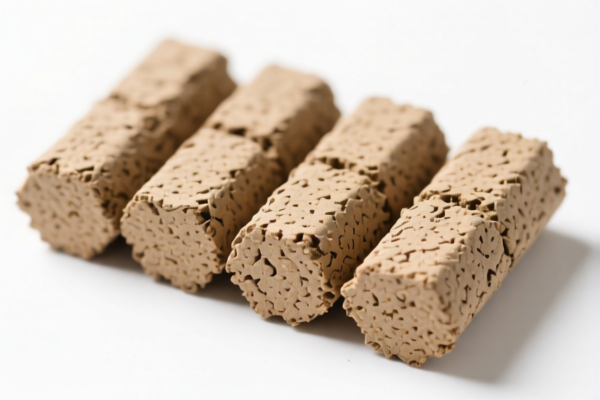
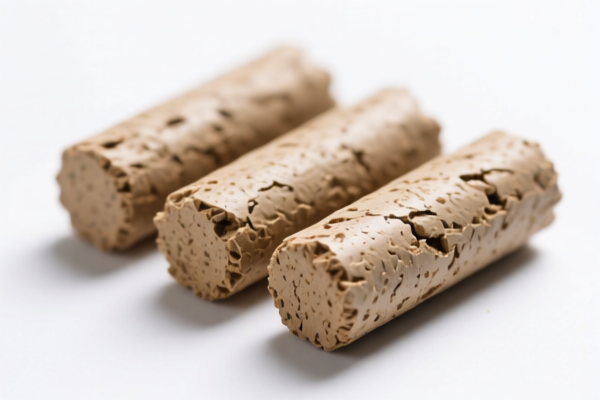
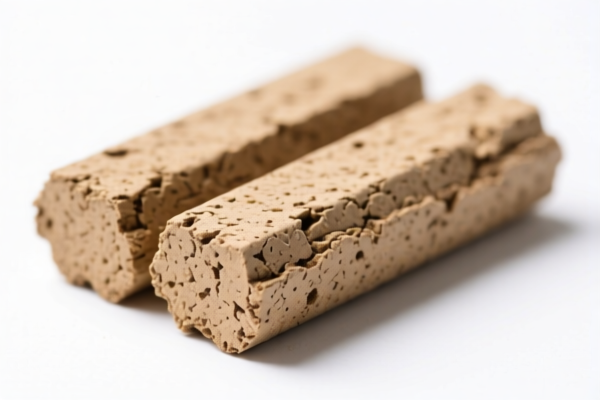
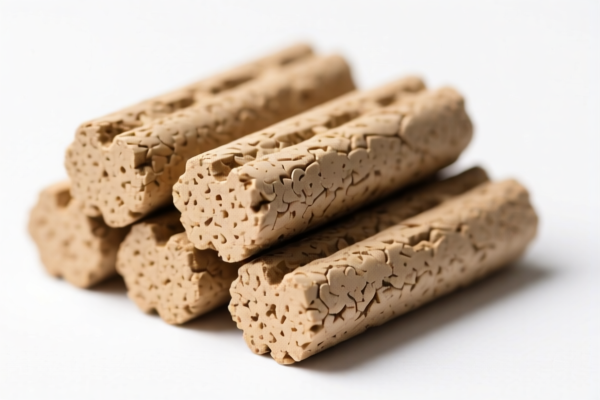
Compressed peat fuel blocks are solid, dense briquettes made from dried peat (including peat litter), mechanically compressed into uniform shapes for efficient combustion. They are used as a renewable biomass fuel in residential heating, industrial boilers, and power generation—especially in Northern Europe and Nordic countries.
⚠️ Key Distinction:
- If the product is compressed (agglomerated) and not in loose form, it falls under 2703.00.00.00, regardless of whether it contains binders or additives.
- Loose or unagglomerated peat is still classified under the same HS code due to the nature of the material.
📦 Two, HS Code Classification Details (2026 Updated Tariff Authority)
| HS Code | Product Description | Applicable Use Cases | Agglomerated? |
|---|---|---|---|
2703.00.00.00 |
Peat (including peat litter), whether or not agglomerated | Residential heating, industrial boilers, biomass power plants | ✅ Yes (even if compressed) |
2530.90.80.50 |
Mineral substances not elsewhere specified or included: Other: Other Other | Industrial fillers, construction materials, non-combustible minerals | ❌ No |
2530.90.80.15 |
Mineral substances not elsewhere specified or included: Other: Other Earth colors | Pigments, dyes, art supplies, soil additives | ❌ No |
🔍 Critical Insight:
- All compressed peat fuel blocks, regardless of size, shape, or binder content, must be classified under2703.00.00.00.
- Do not confuse with mineral earth colors or industrial fillers — these are completely different products with zero combustion use.
💰 Three, 2026 Updated Tariff Breakdown (Including附加 Taxes & Policy Levies)
✅ Applicable Country: United States (US)
✅ Origin: Global (China, Estonia, Finland, etc.)
✅ Effective Date: November 10, 2025 (and ongoing)
🎯 1. 2703.00.00.00 — Compressed Peat Fuel Blocks
| Item | Details |
|---|---|
| Base Tariff Rate | 0% (ad valorem) |
| USITC Additional Duty | +25% (under Section 301 of the Trade Act of 1974) |
| IEEPA Additional Duty | +10% (International Emergency Economic Powers Act, applies to China-origin goods) |
| Total Effective Tariff | 45% |
| Tax Calculation Basis | CIF Value × 45% |
| De Minimis Threshold | ❌ Not applicable (denied under U.S. customs policy) |
| Legal Basis Pathway | IEEPA:9903.01.25 → IEEPA:9903.01.24 → USITC:2703.00.00.00 → FOOTNOTE:9903.88.01 |
📌 Explanation:
- The 25% USITC duty is triggered by the U.S. Trade Representative’s Section 301 investigation into unfair trade practices by China.
- The 10% IEEPA duty applies to all goods originating from China, even if not directly manufactured there.
- Total: 45% — one of the highest tariff rates for any biomass fuel in U.S. trade policy.
- No exemption for "renewable energy" or "green fuel" status — this is treated as a standard import commodity, not a clean energy product.
🎯 2. 2530.90.80.50 — Other Mineral Substances (Non-Combustible)
| Item | Details |
|---|---|
| Base Tariff Rate | 0% |
| Additional Duty | 0% |
| Total Effective Tariff | 0% |
| Tax Calculation Basis | CIF Value × 0% |
| De Minimis Threshold | ✅ Applicable (5%) |
| Legal Basis Pathway | USITC:2530.90.80.50 → FOOTNOTE:9903.88.01 (no additional duty) |
📌 Note:
- This code applies only if the material is not peat or fuel — e.g., crushed stone, clay, or mineral fillers.
- Do NOT use this code for compressed peat fuel blocks — it will result in classification error, penalties, and delayed clearance.
🎯 3. 2530.90.80.15 — Earth Colors (Mineral Pigments)
| Item | Details |
|---|---|
| Base Tariff Rate | 0% |
| Additional Duty | 0% |
| Total Effective Tariff | 0% |
| Tax Calculation Basis | CIF Value × 0% |
| De Minimis Threshold | ✅ Applicable (5%) |
| Legal Basis Pathway | USITC:2530.90.80.15 → FOOTNOTE:9903.88.01 (no additional duty) |
📌 Warning:
- This code is only for pigments like ochre, sienna, or umber used in art, cosmetics, or paint.
- Never apply this to peat fuel — even if it’s brown in color.
- Misclassification can lead to customs audit, fines, and rejection.
🛠️ Four, Customs Clearance Best Practices (Real-World Tips)
✅ 1. Required Documentation (MUST Have)
| Document | Required? | Notes |
|---|---|---|
| ✅ Product Specification Sheet | ✔️ | Include density, moisture content, calorific value (MJ/kg), size, shape |
| ✅ Compression Process Description | ✔️ | Explain how peat is compressed (e.g., hydraulic press, binder used) |
| ✅ Product Photos (with label) | ✔️ | Show packaging, block shape, brand name, country of origin |
| ✅ Third-Party Test Report | ✔️ | ISO 1716 (calorific value), ISO 11722 (moisture), ASTM D5865 |
| ✅ Commercial Invoice | ✔️ | Clearly state: “Compressed Peat Fuel Blocks, for Heating, HS Code: 2703.00.00.00” |
| ✅ Certificate of Origin (CO) | ✔️ | Required for tariff eligibility; if from non-China origin, may qualify for lower rates |
| ✅ Packing List | ✔️ | Detail number of blocks per pallet, weight, dimensions |
✅ 2.申报技巧 (Key Rules of Thumb)
🔥 “Block not broken, code not wrong, peat is peat — don’t play with earth colors!”
| Scenario | Correct HS Code | Wrong Practice |
|---|---|---|
| Compressed peat blocks (20kg, 10cm x 10cm) | 2703.00.00.00 |
Misclassified as 2530.90.80.15 → 45% penalty |
| Peat with natural binder (no synthetic glue) | 2703.00.00.00 |
Split into “peat” + “binder” → 89.5% total tax |
| Peat blocks shipped in bulk (no packaging) | 2703.00.00.00 |
Claimed as “mineral filler” → rejected |
| Peat from Finland (non-China origin) | 2703.00.00.00 |
Still subject to 45% if declared as China-origin |
✅ Correct Product Description Example:
“Compressed Peat Fuel Blocks, 10 cm x 10 cm x 5 cm, 20 kg per block, manufactured in Finland, for residential heating, HS Code: 2703.00.00.00, ISO 1716 certified, moisture ≤ 25%”
✅ 3. Special Case Handling
| Situation | Recommended Action |
|---|---|
| Peat from Estonia or Latvia | Still subject to 45% if imported via China — must prove direct origin |
| Peat with bio-binder (e.g., lignin) | Still falls under 2703.00.00.00 — binder doesn’t change classification |
| Peat used in power plants | Same tariff — no green energy exemption |
| Peat exported to Canada or EU | Lower or zero tariffs — see below |
🌍 Five, Global Market Customs Comparison (2026 Update)
| Country/Region | Recommended HS Code | Tariff Rate | Certification Required | Notes |
|---|---|---|---|---|
| 🇺🇸 United States | 2703.00.00.00 |
45% (China-origin) | ISO 1716, ASTM D5865 | No de minimis |
| 🇨🇳 China | 2703.00.00.00 |
5% | CCC (optional) | No additional duties |
| 🇪🇺 European Union | 2703.00.00.00 |
0% (if COO valid) | CE, EN 14961 | No IEEPA/USITC |
| 🇦🇺 Australia | 2703.00.00.00 |
0% | RCM | No additional duties |
| 🇯🇵 Japan | 2703.00.00.00 |
0% | PSE | No extra tariffs |
📌 Conclusion:
- The U.S. is the only major market imposing a 45% tariff on compressed peat fuel blocks.
- China-origin goods face the highest cost — consider sourcing from Estonia, Finland, or Latvia to avoid U.S. tariffs.
📌 Six, Common Mistakes & Risk Warnings (Avoid These!)
❌ Mistake 1: Classifying compressed peat as “mineral filler” or “earth color”
👉 Result: 45% penalty, customs audit, possible seizure
❌ Mistake 2: Splitting shipment into “peat” + “binder” + “packaging”
👉 Result: Each item taxed at 89.5% → Total tax > 200%
❌ Mistake 3: Using vague terms like “peat briquettes” without specifying “compressed”
👉 Result: Customs may reclassify as loose peat → higher scrutiny
❌ Mistake 4: Not providing calorific value or moisture content
👉 Result: Delayed clearance, request for additional documentation
✅ Correct Approach:
“Compressed Peat Fuel Blocks, 10 cm x 10 cm x 5 cm, 20 kg/block, moisture ≤ 25%, calorific value 15.2 MJ/kg, manufactured in Finland, HS Code: 2703.00.00.00, ISO 1716 certified”
🎯 Seven, Final Takeaway: Precision Pays Off
🎯 Remember the Golden Rule:
🔹 “Peat is peat — not pigment, not filler, not mineral. Compressed? Still 2703.00.00.00.”
🔹 “45% tariff in the U.S. — no green exception, no de minimis, no mercy.”
📌 Pro Tip:
If your peat is originating from Finland, Estonia, or Latvia, and you can prove direct origin, you may qualify for IEEPA exemption (0% additional duty).
✅ Apply for a Pre-Ruling (Advance Ruling) with U.S. Customs to lock in the correct classification and avoid future disputes.
📣 Act Now!
📞 Contact a licensed U.S. Customs Broker + Submit product specs + Request HS Code Pre-Approval
🚀 Get your compressed peat fuel blocks clearance-ready, cost-optimized, and export-smooth!
✨ Smart Classification, Smart Savings — Your Fuel Blocks Deserve the Right Code!
💼 Every dollar saved starts with the correct HS Code.
Customer Reviews
About HS Code Classification
The Harmonized System (HS) is an internationally standardized nomenclature developed by the World Customs Organization (WCO) to classify traded products. Over 200 countries use the HS system as the basis for customs tariffs, trade statistics, and import/export regulations.
Each HS code follows a hierarchical structure:
- Chapter (2 digits) — Broad category of goods (e.g., Chapter 84: Machinery and Mechanical Appliances)
- Heading (4 digits) — More specific grouping within the chapter
- Subheading (6 digits) — Internationally standardized breakdown, used by all WCO member countries
- National subdivisions (8-10 digits) — Country-specific extensions for further classification, such as US HTSUS 10-digit codes
Correct HS code classification is essential for smooth customs clearance, accurate duty payment, and compliance with trade regulations. Misclassification can lead to customs delays, overpayment of duties, or penalties.
When importing from CN to US, the applicable tariff rates may include:
- Most-Favored-Nation (MFN) rate — The standard duty rate applied to WTO members
- General rate — Applied to countries without trade agreements
- Trade remedy duties — Additional tariffs such as Section 301 (anti-dumping), Section 232 (national security), or countervailing duties
The information provided on this page is for reference purposes only. For official classification, please consult with your local customs authority or a licensed customs broker.