Computer Docking Station
CN → US| HS Code | Tariff Rate | Origin | Destination | Doc |
|---|---|---|---|---|
| 8471804000 | 35.0% | CN | US | Official Doc |
| 8537109170 | 37.7% | CN | US | Official Doc |
| 8471801000 | 35.0% | CN | US | Official Doc |
| 8537108000 | 35.0% | CN | US | Official Doc |
Product Images
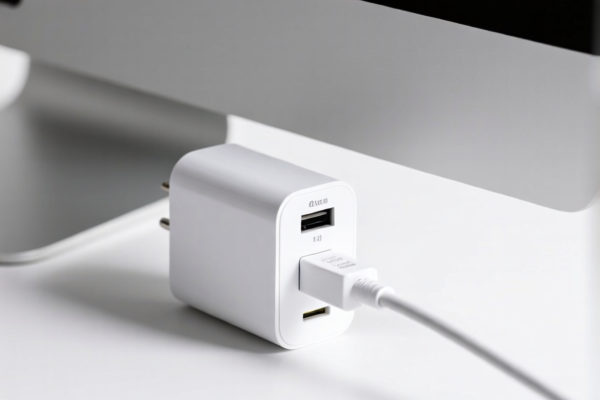
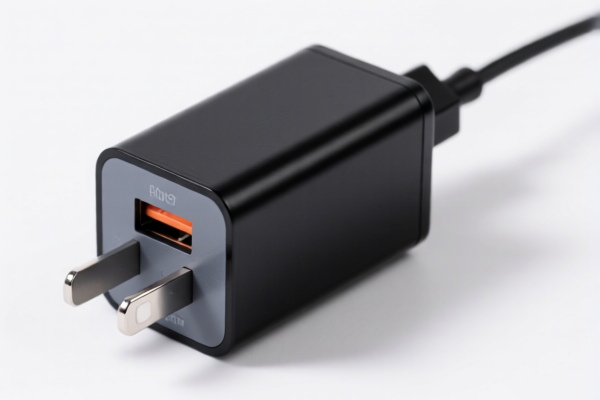
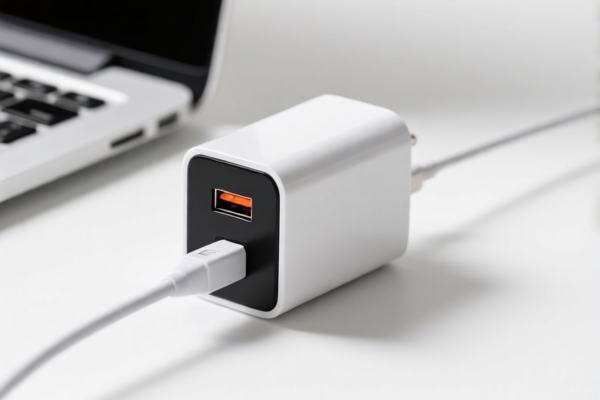
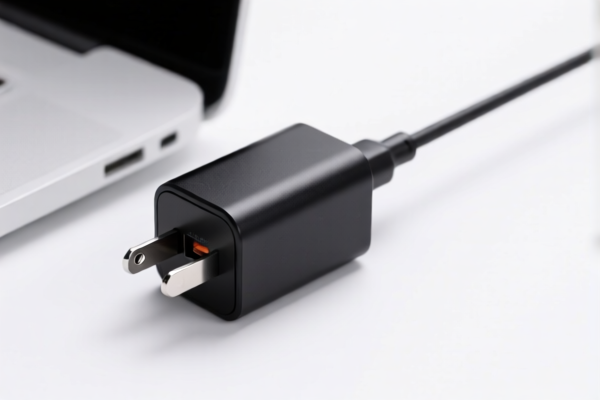
AI Analysis
🚀 Computer Docking Station (Expansible Unit for Automatic Data Processing Machines)
🌐 HS Code Reference & Customs Clearance Guide | 2026 Latest Tariff Analysis | Professional Clearance Strategy
📌 I. Product Definition & Classification: Do You Really Understand "Docking Stations"?
A Computer Docking Station is an external peripheral device that connects to a laptop or portable computer to provide additional ports, connectivity, and power. In international trade, its classification hinges on its primary function:
- As an Expansion Unit for Data Processing Machines: If it primarily serves to expand the capabilities of a computer (USB, HDMI, Ethernet, etc.), it is often classified under Chapter 84.
- As a Control/Conduction Device: If it functions as a switchboard, panel, or control panel for electric circuits (handling voltage distribution), it may fall under Chapter 85.
⚠️ Key Distinction:
- If the device is primarily an interface adapter for data processing equipment → Chapter 84
- If the device is primarily a circuit control/distribution panel → Chapter 85
📦 II. HS Code Classification Details (2026 Latest Tariff Authority Comparison)
Based on the provided data, there are four potential classifications. Here is the detailed breakdown:
| HS Code | Product Description | Rationale for Classification | Total Tax Rate |
|---|---|---|---|
8471.80.40.00 |
Other units of automatic data processing machines | Functionally matches "other units" or "units suitable for physical insertion/connection." No material conflict. | 35.0% |
8537.10.91.70 |
Other boards, panels, consoles, desks, cabinets, and other bases | Fits voltage ≤ 1,000 V electrical control/distribution devices. Includes circuit boards and distribution functions. Classified under "Other" (catch-all). | 37.7% |
8471.80.10.00 |
Control or adapting units of automatic data processing machines | Infers use as connection/adaptation equipment. Fits the definition of "control or adaptation units." No material conflict. | 35.0% |
8537.10.80.00 |
Touch-sensitive data input devices (without display) | Infers data input/interface conversion functions. Fits logic as a console/base accessory for input devices. Classified under "Other." | 35.0% |
🔍 Critical Analysis:
- Chapter 84 Codes (8471.80.x0.00): Focus on the device's role as a component/extension of a computer. This is the most common classification for standard USB/Thunderbolt docks.
- Chapter 85 Codes (8537.10.x0.00): Focus on the device's electrical control/distribution or input interface nature. These are considered "alternative" classifications based on different functional interpretations (electrical base vs. computer unit).
💰 III. 2026 Latest Tariff Rate Breakdown (Including Surtaxes & Policy Add-ons)
✅ Applicable Country: United States (US)
✅ Origin: China (CN)
✅ Effective Date: From November 10, 2025 (and subsequent imports)
🎯 1. 8471.80.40.00 & 8471.80.10.00 —— Automatic Data Processing Machine Units
These two codes share the same tariff structure. They classify the dock as an expansion unit for a computer.
| Item | Content |
|---|---|
| Base Duty | 0% |
| Section 301 Surtax (USITC) | +25% |
| Section 122 Tariff (IEEPA) | +10% |
| Total Tax Rate | 35.0% |
| Tax Calculation | CIF Value × 35% |
| De Minimis Exemption | ❌ Not Available (deny_de_minimis) |
| Legal Basis Path | IEEPA:9903.01.25 → USITC:8471.80.40.00 / 8471.80.10.00 |
📌 Explanation:
- Base 0%: Standard MFN duty for these specific subheadings is zero.
- 25% Surcharge: Under US Trade Law Section 301 (often referred to as "25% tariff" in common parlance).
- 10% Additional Tariff: Under the International Emergency Economic Powers Act (IEEPA), specifically targeting certain Chinese imports.
- Total 35%: This is a significant cost factor. While not as high as the 45-100% rates on some electronics, it is substantial for high-volume shipping.
🎯 2. 8537.10.91.70 —— Other Electrical Control/Distribution Devices
This code classifies the dock as an electrical control panel/base. It carries a higher base duty.
| Item | Content |
|---|---|
| Base Duty | 2.7% |
| Section 301 Surtax (USITC) | +25% |
| Section 122 Tariff (IEEPA) | +10% |
| Total Tax Rate | 37.7% |
| Tax Calculation | CIF Value × 37.7% |
| De Minimis Exemption | ❌ Not Available |
| Legal Basis Path | IEEPA:9903.01.25 → USITC:8537.10.91.70 |
📌 Note:
- The 2.7% base duty makes this rate higher than the Chapter 84 options (35%).
- However, if the base duty were lower elsewhere, the total would change. Here, it is the most expensive option among the four.
🎯 3. 8537.10.80.00 —— Other Input/Base Devices
| Item | Content |
|---|---|
| Base Duty | 0% |
| Section 301 Surtax (USITC) | +25% |
| Section 122 Tariff (IEEPA) | +10% |
| Total Tax Rate | 35.0% |
| Tax Calculation | CIF Value × 35% |
| De Minimis Exemption | ❌ Not Available |
| Legal Basis Path | IEEPA:9903.01.25 → USITC:8537.10.80.00 |
📌 Note:
- Matches the 35% rate of the Chapter 84 classifications.
- Functionally viewed as a "base" for touch-sensitive input devices (less common for standard docks but possible).
🛠️ IV. Customs Clearance Practical Advice (Real-World Pitfall Avoidance)
✅ 1. Document Checklist (Non-Negotiable)
| Document | Required | Description |
|---|---|---|
| ✅ Product Specification Sheet | ✔️ | Must detail ports (USB, HDMI, Ethernet), power input, and max output voltage. |
| ✅ Circuit Diagram / Block Diagram | ✔️ | Crucial for proving whether it is a "data unit" (Ch 84) or "control panel" (Ch 85). |
| ✅ Product Photos (with Label) | ✔️ | Clear view of model number, brand, and input/output specs. |
| ✅ Commercial Invoice | ✔️ | Must accurately describe the item. Avoid vague terms like "Adapter." Use "Docking Station for Laptops." |
| ✅ Packing List | ✔️ | Detail contents to avoid "missing parts" inquiries. |
| ✅ Certifications (FCC, UL, etc.) | ✔️ | Required for electronic imports. |
✅ 2. Declaration Strategy (Key Rules)
🔥 “Function Dictates Code, Base Determines Cost!”
| Scenario | Recommended HS Code | Reason | Tax Rate |
|---|---|---|---|
| Standard USB/Thunderbolt Dock | 8471.80.40.00 or 8471.80.10.00 |
Primarily extends computer functionality. | 35.0% |
| Dock with Built-in Power Distribution/Control | 8537.10.91.70 |
If classified as an electrical control base. | 37.7% |
| Touch-Screen Dock/Console | 8537.10.80.00 |
If it has input interface features. | 35.0% |
| Simple Cable/Hub (No Hub Function) | N/A (Data Limited) | Not in provided data, but often lower tax. | Check |
⚠️ Risk Warning:
- Do not under-declare value. The 301 Surcharge (25%) and IEEPA (10%) are applied to the CIF value.
- De Minimis (Section 321) Exemption: NOT AVAILABLE for these codes under the current data. All shipments must pay duties.
✅ 3. Special Case Handling
| Situation | Handling Advice |
|---|---|
| OEM Private Label | Provide original manufacturer docs to prove origin and specifications. |
| Multi-Function Dock (Charging + Data) | Still typically classified under 8471 if the primary function is data connection. If it’s primarily a power distribution hub, consider 8537. |
| Dispute on Classification | Request an Advance Ruling from CBP (Customs and Border Protection) before shipping. This binds the US government to a classification, reducing audit risk. |
| Origin Marking | Ensure "Made in China" is clearly marked on the product/packaging to avoid penalties. |
🌍 V. Global Market Comparison (2026 Update)
| Country/Region | Recommended HS Code | Base Duty | Key Surtaxes | Total Est. Cost | Notes |
|---|---|---|---|---|---|
| 🇺🇸 USA | 8471.80.40.00 |
0% | 25% (301) + 10% (IEEPA) | 35% | High compliance cost. |
| 🇨🇳 China | 8471.80.40.00 |
~7-10% | None | ~10% | No additional surtaxes. |
| 🇪🇺 EU | 8471.80.00 |
0% | No Section 301 | 0% | No US-style surtaxes. |
| 🇬🇧 UK | 8471.80.00 |
0% | No Section 301 | 0% | Post-Brexit tariff applies, usually low. |
📌 Conclusion:
- The USA is the most expensive market due to Section 301 and IEEPA tariffs.
- EU/UK tariffs are significantly lower (often 0-2%).
- China exports benefit from lower base duties but face high US tariffs.
📌 VI. Common Mistakes & Pitfalls (Lessons Learned)
❌ Mistake 1: Classifying a Dock as a "Cable" or "Accessory" to avoid duty.
👉 Consequence: Customs may reclassify it as a "unit" and impose 35-37.7% plus penalties.
❌ Mistake 2: Ignoring the IEEPA 10% tariff.
👉 Consequence: Underpayment by 10%. CBP will issue a demand for payment + interest.
❌ Mistake 3: Using "USB Hub" as the only description.
👉 Consequence: Ambiguity leads to audit. Use "Docking Station" or "Expansion Unit" to match 8471.
❌ Mistake 4: Assuming De Minimis applies.
👉 Consequence: No de minimis for these HS codes. Small shipments still pay full duty.
✅ Correct Practice:
Declare as: "Docking Station for Laptop, Model XYZ, USB-C/Thunderbolt, with Ethernet and HDMI ports, Made in China."
Use HS Code: 8471.80.40.00 (or 8471.80.10.00 after ruling).
🎯 VII. Conclusion: Professional Classification Saves Money!
🎯 Key Takeaways:
🔹 Standard Docks: Likely 8471.80.40.00 → 35% Total Tax.
🔹 Electrical Base Docks: Likely 8537.10.91.70 → 37.7% Total Tax.
🔹 No De Minimis: Every shipment pays duty.
🔹 Get an Advance Ruling: The best way to lock in the 35% rate and avoid 37.7%.
📌 Pro Tip:
If your product has advanced power distribution features (e.g., PD 100W with multiple isolated circuits), argue for 8537.10.80.00 if it simplifies documentation, but be aware of the functional interpretation.
📣 Immediate Action Required:
📞 Contact a Customs Broker to file for an Advance Ruling.
📄 Prepare Technical Specs showing data transfer as the primary function.
🚀 Budget for 35-37.7% in landed costs for US shipments.
✨ Precision in Classification = Precision in Profit!
💼 Don’t let a 2.7% base duty difference turn into a 37.7% burden.
Customer Reviews
About HS Code Classification
The Harmonized System (HS) is an internationally standardized nomenclature developed by the World Customs Organization (WCO) to classify traded products. Over 200 countries use the HS system as the basis for customs tariffs, trade statistics, and import/export regulations.
Each HS code follows a hierarchical structure:
- Chapter (2 digits) — Broad category of goods (e.g., Chapter 84: Machinery and Mechanical Appliances)
- Heading (4 digits) — More specific grouping within the chapter
- Subheading (6 digits) — Internationally standardized breakdown, used by all WCO member countries
- National subdivisions (8-10 digits) — Country-specific extensions for further classification, such as US HTSUS 10-digit codes
Correct HS code classification is essential for smooth customs clearance, accurate duty payment, and compliance with trade regulations. Misclassification can lead to customs delays, overpayment of duties, or penalties.
When importing from CN to US, the applicable tariff rates may include:
- Most-Favored-Nation (MFN) rate — The standard duty rate applied to WTO members
- General rate — Applied to countries without trade agreements
- Trade remedy duties — Additional tariffs such as Section 301 (anti-dumping), Section 232 (national security), or countervailing duties
The information provided on this page is for reference purposes only. For official classification, please consult with your local customs authority or a licensed customs broker.