Computer Extension Dock
CN → US| HS Code | Tariff Rate | Origin | Destination | Doc |
|---|---|---|---|---|
| 8471804000 | 35.0% | CN | US | Official Doc |
| 8537109170 | 37.7% | CN | US | Official Doc |
| 8471801000 | 35.0% | CN | US | Official Doc |
| 8537108000 | 35.0% | CN | US | Official Doc |
Product Images
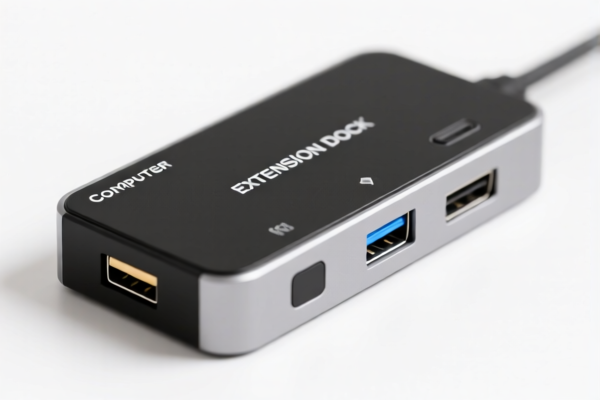
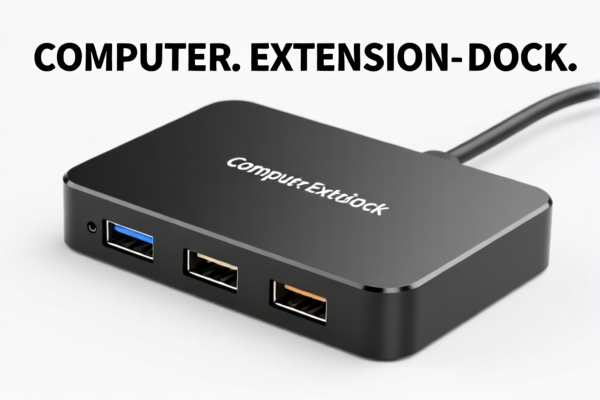
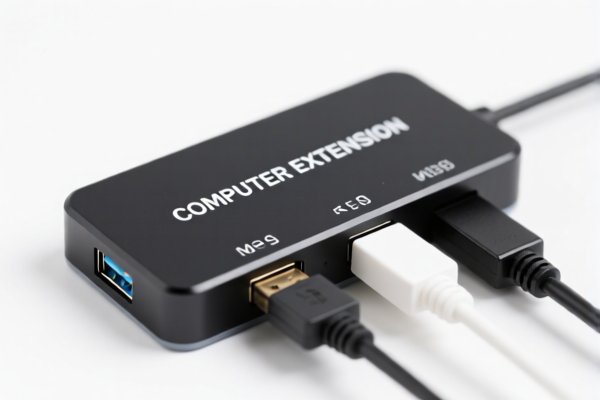
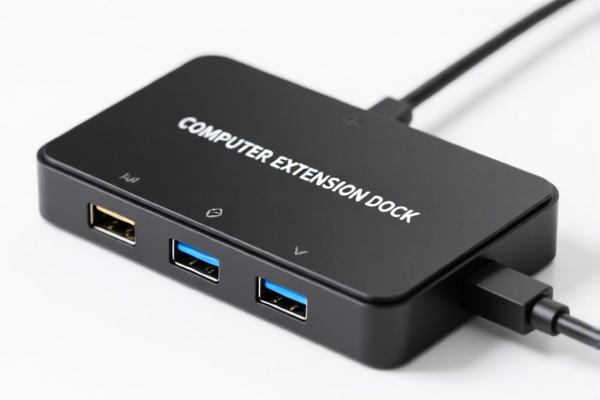
AI Analysis
🖥️ Computer Extension Dock (Hubs/Docks)
🌐 HS Code Reference & Customs Clearance Guide | 2026 Latest Tariff Analysis | Professional Clearance Strategy
📌 I. Product Definition: What is an "Extension Dock"?
In international trade, "Extension Dock" (or Docking Station/Hub) is a generic term that generally refers to peripheral devices used to expand the connectivity of Automatic Data Processing (ADP) machines. Its core function is data transmission, interface conversion, or power distribution.
However, due to differences in internal circuitry and primary functions, Customs Classifications (HS Codes) vary significantly, leading to massive differences in tax rates. The key lies in whether it is classified as an "ADP Machine Unit" or "Electrical Control/Distribution Equipment."
📦 II. HS Code Classification Details (Based on Provided Data)
| HS Code | Product Description | Key Functional Logic | Classification Basis |
|---|---|---|---|
| 8471.80.40.00 | Expansion Unit for ADP Machines | Functions as an extension unit for ADP machines; matches the purpose of other ADP units; no material conflict. | Classified as an ADP Extension Unit. |
| 8537.10.91.70 | Electrical Control/Distribution Equipment (<1000V) | Data transmission & distribution device; contains circuits and distribution functions; falls under the residual clause for power control/distribution. | Classified as Residual Power Control Equipment. |
| 8471.80.10.00 | Control/Adaptation Unit for ADP | Used for connecting and adapting devices; fits the definition of control or adaptation units for ADP machines; no material conflict. | Classified as an ADP Control/Adaptation Unit. |
| 8537.10.80.00 | Console/Base Accessory for Data Input | Contains data input/interface conversion functions; logic aligns with touch-sensitive data input devices lacking displays; residual clause applies. | Classified as Other Accessory/Base Console. |
🔍 Critical Distinction:
- If the dock primarily acts as a connector/adapter for computer peripherals (mouse, keyboard, monitor, storage), it leans towards 8471.80.xx (ADP Category).
- If the dock emphasizes power distribution, complex signal routing, or lacks specific ADP unit definition, Customs may classify it under 8537.10.xx (Electrical Control/Distribution).
💰 III. 2026 Latest Tariff Rate Breakdown (Including Surcharges)
✅ Applicable Country: USA (US)
✅ Origin: China (CN)
✅ Effective Date: Post-November 2025 (Subject to specific policy implementation dates)
🎯 1. 8471.80.40.00 & 8471.80.10.00
(ADP Extension/Control Units)
| Item | Detail |
|---|---|
| Base Tariff | 0.0% |
| Section 301 Surcharge | +25.0% |
| Section 122 Tariff | +10.0% |
| Total Effective Tax Rate | 35.0% |
| Tax Calculation | CIF Value × 35% |
| Legal Basis Path | USITC:8471.80.40.00 → Section 301: 25% → Section 122: 10% |
📌 Explanation:
- This classification benefits from a 0% base duty, but the 35% total rate is still high due to US-China trade policies. - Key Advantage: Compared to the 8537 classification, it avoids the 2.7% base duty, resulting in a 2.7% lower total rate.
🎯 2. 8537.10.91.70 & 8537.10.80.00
(Electrical Control/Distribution & Residual Accessories)
| Item | Detail |
|---|---|
| Base Tariff | 0.0% - 2.7% |
| Section 301 Surcharge | +25.0% |
| Section 122 Tariff | +10.0% |
| Total Effective Tax Rate | 35.0% - 37.7% |
| Tax Calculation | CIF Value × (35.0% ~ 37.7%) |
| Legal Basis Path | USITC:8537.10.xx → Section 301: 25% → Section 122: 10% → Base Rate Variance |
📌 Explanation:
- 8537.10.91.70: Base tariff 2.7% + 25% + 10% = 37.7% (Highest Rate). - 8537.10.80.00: Base tariff 0.0% + 25% + 10% = 35.0%. - Risk: If Customs misclassifies an 8471 product into 8537.10.91.70, you pay 2.7% more in base duty.
🛠️ IV. Customs Clearance Practical Advice (Avoid Pitfalls)
✅ 1. Documentation Checklist (Mandatory)
| Document | Requirement | Purpose |
|---|---|---|
| Product Spec Sheet | ✅ Must Include | Interface types (USB-C, HDMI, etc.), Power Input (V/A), Supported OS, Data Transfer Speed. |
| Circuit Diagram/Block Diagram | ✅ Highly Recommended | Proves if it’s a simple signal splitter (ADP) or contains complex power distribution/control logic (Electrical). |
| Commercial Invoice | ✅ Accurate Description | Use terms like "USB-C Docking Station for Laptop" or "Multi-Port Adapter for ADP" rather than generic "Extension Cable." |
| Product Photos | ✅ Clear Labels | Show ports, model number, and any internal labeling indicating voltage/current ratings. |
| Third-Party Certifications | ✅ If Available | FCC ID, CE, RoHS. These prove compliance and help define the product type. |
✅ 2. Classification Strategy (Key Takeaways)
🔥 "Focus on Function, Not Just Name"
| Scenario | Recommended HS Code | Why? |
|---|---|---|
| Simple Hub (4-7 ports) | 8471.80.40.00 or 8471.80.10.00 | Primarily extends data connectivity for computers. Lower base duty (0%). |
| Complex Dock with Power Delivery | 8537.10.80.00 (if no base duty) or 8471.80.40.00 | If it acts as a power strip and data hub, argue for ADP category first. If rejected, fallback to 8537.10.80.00 (35%). |
| Dock with Complex Control Logic | 8537.10.91.70 | Contains sophisticated electrical control/distribution not typical of standard ADP units. Highest risk (37.7%). |
⚠️ Warning:
- Do NOT declare as "Electronic Accessory" or "Cable Assembly" (HS 8544/8545) if it contains a circuit board. This is false declaration and leads to penalties. - The difference between 35.0% and 37.7% is significant for high-volume shipments. Aim for 8471.80 or 8537.10.80 if possible.
✅ 3. Special Cases
| Case | Advice |
|---|---|
| MagSafe/Magnetic Connection | Still an ADP extension if primarily for data/charging. Stick to 8471.80. |
| Thunderbolt 4/5 Docks | High-speed data transfer clearly aligns with ADP Extension Units (8471.80). Strong case for 0% base duty. |
| Dock with Built-in Battery | May shift classification to Power Bank (8507) or remain ADP if battery is only for backup. Consult specialist. |
🌍 V. Global Market Comparison (2026 Overview)
| Market | Recommended HS Code | Est. Total Tax Rate (China Origin) | Notes |
|---|---|---|---|
| 🇺🇸 USA | 8471.80.40.00 | 35.0% | Best balance of low base duty + surcharges. |
| 🇪🇺 EU | 8517.62.00 | 0% - 4% | No Section 301/122. Standard EU duties apply. |
| 🇬🇧 UK | 8517.62.00 | 0% - 4% | Post-Brexit rules; generally low tariffs for tech accessories. |
| 🇨🇦 Canada | 8471.80.40.00 | 0% | Most tech accessories enter duty-free under CUSMA. |
| 🇯🇵 Japan | 8471.80.40.00 | 0% | Generally low tariffs for IT accessories. |
📌 Conclusion:
- USA is the most expensive market due to Section 301 (25%) and Section 122 (10%).
- Accurate Classification is critical in the US to avoid the 37.7% trap.
- For non-US markets, the total tax is significantly lower, emphasizing the importance of correct HS coding for global pricing strategies.
📌 VI. Common Mistakes & Pitfalls (Lessons Learned)
❌ Mistake 1: Declaring as "USB Cable" (8544)
👉 Consequence: Customs rejects as misclassification; requires re-filing + penalties. Docks have circuit boards.
❌ Mistake 2: Ignoring Section 122 Tariff
👉 Consequence: Underpaying taxes by 10%. US CBP actively audits IT accessories.
❌ Mistake 3: Using Vague Descriptions ("Extension Port")
👉 Consequence: Customs assigns residual code 8537.10.91.70 (37.7%) because they cannot verify ADP functionality.
✅ Correct Approach:
"USB-C Docking Station, Model XYZ, for Laptop Use, Supports HDMI/USB/Power Delivery, Includes Internal Circuitry for Data Signal Extension"
🎯 VII. Conclusion: Precise Classification Saves Money!
🎯 Key Takeaway:
🔹 Aim for 8471.80.40.00: It offers the best combination of 0% base duty and 35% total duty.
🔹 Avoid 8537.10.91.70: The 37.7% rate is avoidable with proper documentation.
🔹 Document Everything: Circuit diagrams and clear functional descriptions are your best defense against misclassification.
📌 Pro Tip:
If you are unsure, apply for a US CBP Binding Ruling or Pre-Classification Service. It provides legal certainty and protects you from retroactive penalties.
📣 Action Item:
📞 Contact Your Customs Broker today with your product specs.
📄 Prepare Technical Datasheets highlighting data transmission functions.
🚀 Optimize Your Supply Chain Cost by choosing the right HS Code!
✨ Professional Clearance Starts with Precise Classification!
💼 Every Percentage Point Matters in Global Trade!
Customer Reviews
About HS Code Classification
The Harmonized System (HS) is an internationally standardized nomenclature developed by the World Customs Organization (WCO) to classify traded products. Over 200 countries use the HS system as the basis for customs tariffs, trade statistics, and import/export regulations.
Each HS code follows a hierarchical structure:
- Chapter (2 digits) — Broad category of goods (e.g., Chapter 84: Machinery and Mechanical Appliances)
- Heading (4 digits) — More specific grouping within the chapter
- Subheading (6 digits) — Internationally standardized breakdown, used by all WCO member countries
- National subdivisions (8-10 digits) — Country-specific extensions for further classification, such as US HTSUS 10-digit codes
Correct HS code classification is essential for smooth customs clearance, accurate duty payment, and compliance with trade regulations. Misclassification can lead to customs delays, overpayment of duties, or penalties.
When importing from CN to US, the applicable tariff rates may include:
- Most-Favored-Nation (MFN) rate — The standard duty rate applied to WTO members
- General rate — Applied to countries without trade agreements
- Trade remedy duties — Additional tariffs such as Section 301 (anti-dumping), Section 232 (national security), or countervailing duties
The information provided on this page is for reference purposes only. For official classification, please consult with your local customs authority or a licensed customs broker.