Computer Motherboard
CN → US| HS Code | Tariff Rate | Origin | Destination | Doc |
|---|---|---|---|---|
| 8534000020 | 35.0% | CN | US | Official Doc |
| 8534000040 | 10.0% | CN | US | Official Doc |
| 8473302000 | 85.0% | CN | US | Official Doc |
| 8473301180 | 35.0% | CN | US | Official Doc |
Product Images
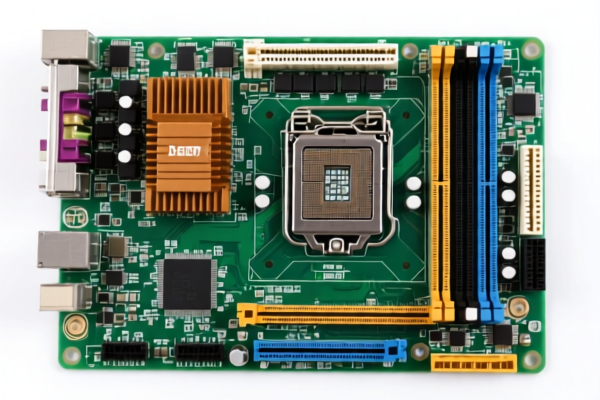
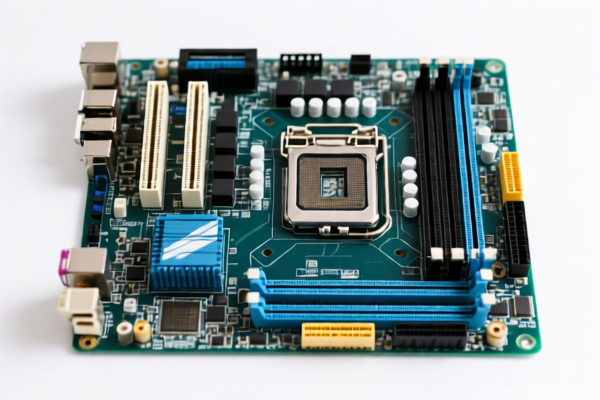
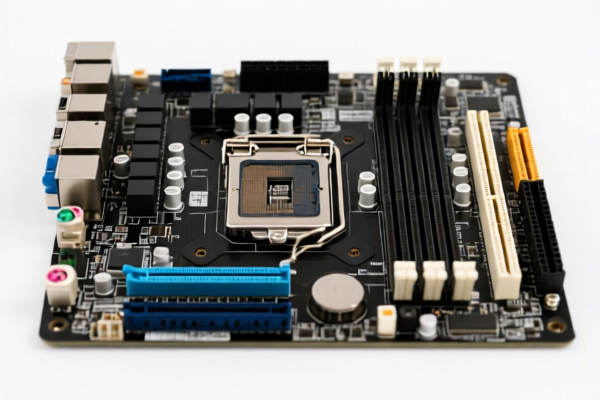
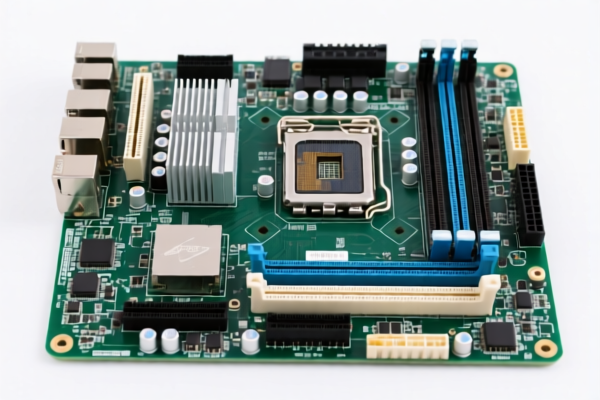
AI Analysis
🖥️ Computer Motherboards & PCB Assemblies: The "Brain" of Your Data Processing Machine
🌐 HS Code Reference & Customs Clearance Guide | 2026 Latest Tariff Analysis | Professional Compliance Strategy
📌 I. Product Definition & Classification: Is it a "Part" or a "Circuit Board"?
A computer motherboard is often misunderstood as a simple printed circuit board (PCB). However, in international trade, the distinction between a "Printed Circuit Assembly" (PCA) destined for a specific machine and a generic "Printed Circuit" is critical.
1. Printed Circuit Assemblies (PCAs) - The "Complete" Brain:
These are complex boards with electronic components (chips, capacitors, resistors) mounted on them, designed specifically to function as part of an Automatic Data Processing (ADP) machine (Heading 8471). They include the CPU socket, RAM slots, and I/O controllers.
2. Generic Printed Circuits (PCBs) - The "Blank" Canvas:
These are flat boards with conductive pathways but no mounted components, or simple impregnated glass/fiber boards. They are raw materials, not functional machine parts.
⚠️ Key Distinction Point:
- If the board has active components (ICs, CPUs, Chips) and is principally designed for use with Heading 8470–8472 machines (like desktop/laptop computers) → It is a Part of ADP Machine.
- If the board is unpopulated, impregnated glass, or generic without specific ADP machine designation → It is a Printed Circuit.
📦 II. HS Code Classification Matrix (2026 Latest Tariff对照)
| HS Code | Product Description | Applicable Scenario | Component Status | Key Logic |
|---|---|---|---|---|
8473.30.20.00 |
Parts & accessories of machines of heading 8471: Parts & accessories, including face plates and lock latches, of printed circuit assemblies | High-end server boards, specialized ADP machine PCBAs with integrated faces/locks | ✅ With Components | Specifically captures PCAs including structural elements (face plates/locks) for ADP machines. |
8473.30.11.80 |
Parts & accessories of machines of heading 8471: Printed circuit assemblies Other | Standard computer motherboards for desktops/laptops (general PCA) | ✅ With Components | The catch-all for computer motherboards that are PCAs but don't fit the specific "face plate/lock" description of .20. |
8534.00.00.20 |
Printed circuits, plastics impregnated, not flexible: Having a base wholly of impregnated glass: With 3 or more layers of conducting materials | Multi-layer raw PCBs, interconnect boards, generic electronics | ❌ No Active Components | Raw PCBs, often used in manufacturing before component mounting. |
8534.00.00.40 |
Printed circuits, plastics impregnated, not flexible: Having a base wholly of impregnated glass: Other | Simple double-layer PCBs, generic circuit boards | ❌ No Active Components | Basic impregnated glass PCBs. |
🔍 Critical Note:
- Most commercial computer motherboards (with CPU, RAM, Chipset) fall under 8473.30.
- Do not classify a fully assembled motherboard as8534.00(PCB) unless it is explicitly unpopulated and sold as a raw material. Doing so is a common customs error that leads to penalties.
💰 III. 2026 Latest Tariff Rate Breakdown (Detailed Tax Clauses)
✅ Applicable Country: United States (US)
✅ Country of Origin: China (CN)
✅ Effective Date: Current trade war tariffs apply (Section 301)
🎯 1. 8473.30.20.00 – PCAs with Face Plates/Locks for ADP Machines
| Item | Content |
|---|---|
| Base Duty Rate | 0.0% (ad valorem) |
| Section 301 Additional Duty | +25.0% |
| Steel/Aluminum/Copper Additional Duty | +50.0% (If the PCA contains significant structural metal components subject to this specific provision) |
| Total Tax Rate | 75.0% (if steel/aluminum clause applies) 25.0% (standard Section 301) |
| Tax Calculation | CIF Value × Total Rate |
| De Minimis Exemption | ❌ Not Applicable |
| Legal Basis Path | USITC:8473.30.20.00 → Section 301 Footnote → Tariff Schedule |
📌 Explanation:
- This code captures high-complexity PCAs. The 25% Section 301 tariff is mandatory for Chinese origin.
- The 50% steel/aluminum tariff is a specific additional levy if the product contains covered metal products. Check if your motherboard has significant heat sinks or chassis-integrated metal parts that might trigger this. Total burden can reach 75%.
🎯 2. 8473.30.11.80 – Other Printed Circuit Assemblies for ADP Machines
| Item | Content |
|---|---|
| Base Duty Rate | 0.0% (ad valorem) |
| Section 301 Additional Duty | +25.0% |
| Total Tax Rate | 25.0% |
| Tax Calculation | CIF Value × 25% |
| De Minimis Exemption | ❌ Not Applicable |
| Legal Basis Path | USITC:8473.30.11.80 → Section 301 Footnote |
📌 Explanation:
- This is the most common classification for standard consumer computer motherboards (ASUS, MSI, Gigabyte, etc.).
- Despite being 0% base duty, the 25% Section 301 tariff makes the total entry cost 25%.
- This is significantly cheaper than8473.30.20.00if the 50% metal tariff applies.
🎯 3. 8534.00.00.20 & 8534.00.00.40 – Generic Printed Circuits (PCBs)
| Item | Content |
|---|---|
| Base Duty Rate | 0.0% (ad valorem) |
| Section 301 Additional Duty | +25.0% |
| Total Tax Rate | 25.0% |
| Tax Calculation | CIF Value × 25% |
| De Minimis Exemption | ❌ Not Applicable |
| Legal Basis Path | USITC:8534.00.00.xx → Section 301 Footnote |
📌 Explanation:
- These rates apply only to unpopulated PCBs or raw materials.
- Warning: If you classify a populated motherboard as a8534PCB to avoid higher scrutiny, customs may reject this, leading to misclassification penalties. The rate is the same (25%), so there is no tax benefit to misclassification, only legal risk.
🛠️ IV. Customs Clearance Practical Advice (Actionable Strategies)
✅ 1. Preparation Checklist (Mandatory)
| Document | Required? | Purpose |
|---|---|---|
| ✅ Product Technical Sheet | ✔️ | Must specify: "Printed Circuit Assembly," "For Use in Automatic Data Processing Machine (Heading 8471)," "Includes CPU/RAM Slots." |
| ✅ Bill of Materials (BOM) | ✔️ | To prove it is an "Assembly" (8473) vs. a "Board" (8534). |
| ✅ Product Photos | ✔️ | Show components (chips, capacitors) to confirm it is not a blank PCB. |
| ✅ Commercial Invoice | ✔️ | Clearly state "Motherboard" or "Printed Circuit Assembly for ADP Machine." Avoid vague terms like "Electronic Board." |
| ✅ Certificate of Origin | ✔️ | To confirm Chinese origin for Section 301 application. |
✅ 2. Declaration Best Practices
🔥 "Populated = 8473, Blank = 8534. Be Specific!"
| Scenario | Correct HS Code | Risk of Misclassification |
|---|---|---|
| Populated Motherboard (Standard) | 8473.30.11.80 |
Low risk. Standard industry practice. |
| Motherboard with Locks/Face Plates | 8473.30.20.00 |
High risk if misclassified as .11.80. Check for structural locks. |
| Unpopulated PCB | 8534.00.00.20 or .40 |
Risk if customs finds components. Rate is same, but description must match. |
| Mixed Shipment (PCBs + PCs) | Split Declaration | Do not mix. PCBs must be declared separately from finished PCs or assemblies. |
✅ 3. Special Case Handling
| Situation | Recommendation |
|---|---|
| OEM Custom Motherboards | Provide design drawings showing it is solely for a specific ADP machine. |
| Server Motherboards | Typically 8473.30.11.80. Ensure description highlights "Server" or "Data Processing" use. |
| Motherboards with Metal Heat Sinks | Check if the heat sink triggers the 50% Steel/Aluminum tariff under 8473.30.20.00. If so, consider if 8473.30.11.80 is more appropriate if the structure isn't a "face plate/lock." |
| De Minimis (Section 321) | ❌ Do NOT use de minimis for these HS codes. Section 301 tariffs apply regardless of value. |
🌍 V. Global Market Comparison (2026 Outlook)
| Market | Recommended HS Code | Effective Tariff (China Origin) | Key Requirement |
|---|---|---|---|
| 🇺🇸 USA | 8473.30.11.80 |
25% (Section 301) | FCC/CE Documentation, Detailed Description |
| 🇨🇳 China | 8473.30.11.80 |
0% (MFN) | Standard Import Procedures |
| 🇪🇺 EU | 8537.10.90 or 8473.30 |
0% - 2.5% | CE Marking, RoHS Compliance |
| 🇬🇧 UK | 8473.30 |
0% - 2.5% | UKCA Marking |
📌 Conclusion:
- USA is the most expensive market due to Section 301.
- EU/UK have lower tariffs but stricter compliance requirements (CE/UKCA).
- China (Import): No tariff barrier, but strict customs declaration requirements for electronic components.
📌 VI. Common Pitfalls & Avoidance Guide
❌ Pitfall 1: Classifying a populated motherboard as 8534.00 (Generic PCB)
👉 Consequence: Customs may reject the declaration, demand retroactive duty, or impose fines for misdeclaration. The rate is similar (25%), but the legal risk is high.
❌ Pitfall 2: Ignoring the 50% Steel/Aluminum Tariff under 8473.30.20.00
👉 Consequence: If your motherboard has significant metal structural parts (like heavy heat sinks or locks) and is classified under .20.00, you may owe an additional 25% (total 75%).
👉 Fix: Verify if .20.00 is truly applicable. If not, use .11.80 (25% total).
❌ Pitfall 3: Using "Electronic Board" as a Description
👉 Consequence: Ambiguity leads to delays. Customs officers may hold the shipment for classification review.
👉 Fix: Use "Printed Circuit Assembly for Automatic Data Processing Machine" or "Computer Motherboard."
✅ Correct Practice:
"Printed Circuit Assembly, Motherboard, Model XYZ, for Use in Desktop Computer (Heading 8471), Populated with Electronic Components, No Cathode Ray Tube."
🎯 VII. Conclusion: Precision Saves Money!
🎯 Remember the Golden Rules:
🔹 "Populated = ADP Part (8473), Blank = PCB (8534)"
🔹 "USA Tariff = 25% Base, Check for 50% Metal Surcharge"
🔹 "De Minimis Does NOT Apply to Section 301 Goods"
📌 Pro Tip:
If your motherboards contain significant steel or aluminum structures (e.g., heavy industrial server chassis-integrated boards), consult a customs broker to verify if 8473.30.20.00 (with 50% surcharge) is truly the best fit, or if 8473.30.11.80 (25%) is more appropriate for standard designs.
📣 Immediate Action:
📞 Engage a licensed customs broker to pre-classify your specific motherboard model.
📄 Prepare detailed technical descriptions highlighting "ADP Machine Component."
🚀 Ensure accurate HS Code declaration to avoid 25% surprise duties and potential audits.
✨ Accurate Classification is the First Step to Profitable Trade!
💼 Every percentage point of tariff matters—get it right from the start!
Customer Reviews
About HS Code Classification
The Harmonized System (HS) is an internationally standardized nomenclature developed by the World Customs Organization (WCO) to classify traded products. Over 200 countries use the HS system as the basis for customs tariffs, trade statistics, and import/export regulations.
Each HS code follows a hierarchical structure:
- Chapter (2 digits) — Broad category of goods (e.g., Chapter 84: Machinery and Mechanical Appliances)
- Heading (4 digits) — More specific grouping within the chapter
- Subheading (6 digits) — Internationally standardized breakdown, used by all WCO member countries
- National subdivisions (8-10 digits) — Country-specific extensions for further classification, such as US HTSUS 10-digit codes
Correct HS code classification is essential for smooth customs clearance, accurate duty payment, and compliance with trade regulations. Misclassification can lead to customs delays, overpayment of duties, or penalties.
When importing from CN to US, the applicable tariff rates may include:
- Most-Favored-Nation (MFN) rate — The standard duty rate applied to WTO members
- General rate — Applied to countries without trade agreements
- Trade remedy duties — Additional tariffs such as Section 301 (anti-dumping), Section 232 (national security), or countervailing duties
The information provided on this page is for reference purposes only. For official classification, please consult with your local customs authority or a licensed customs broker.