Computer Parts
CN → US| HS Code | Tariff Rate | Origin | Destination | Doc |
|---|---|---|---|---|
| 8471602000 | 10.0% | CN | US | Official Doc |
| 8471609050 | 35.0% | CN | US | Official Doc |
| 8538903000 | 38.5% | CN | US | Official Doc |
| 8543906800 | 35.0% | CN | US | Official Doc |
| 8543908885 | 85.0% | CN | US | Official Doc |
Product Images
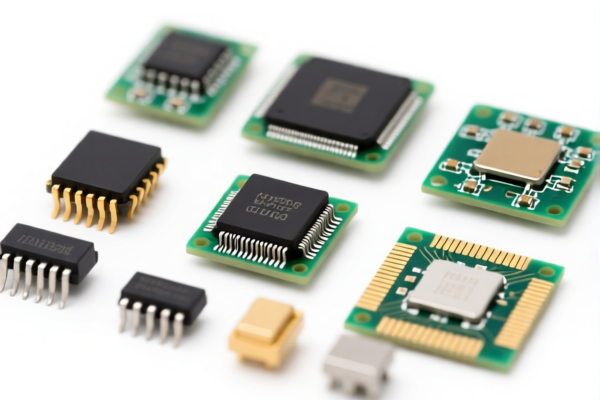
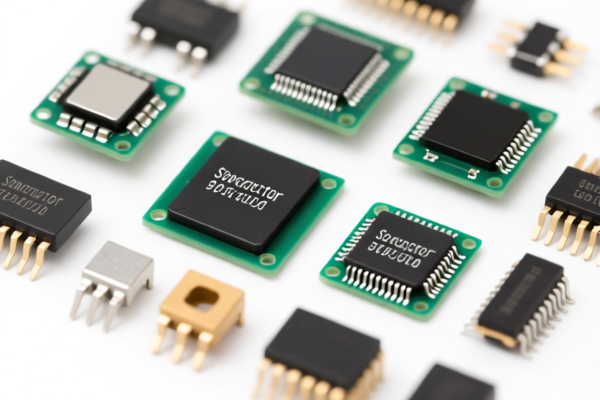
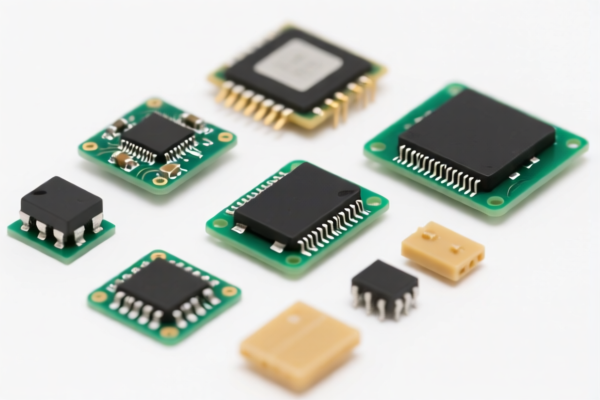
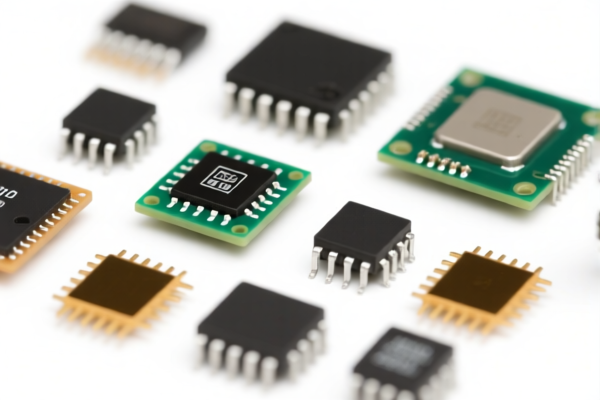
AI Analysis
🖥️ Computer Parts (General Classification Analysis)
🌐 HS Code Reference & Customs Clearance Guide | 2026 Latest Tariff Resolution | Strategic Compliance Strategy
📌 1. Product Definition & Classification: Do You Truly Understand "Computer Parts"?
Computer parts are the backbone of Automatic Data Processing (ADP) equipment. In international trade, they are strictly categorized based on their specific function, circuitry integration, and physical form. Unlike finished goods, parts are often subject to varying degrees of punitive tariffs depending on whether they are classified as primary input devices, internal circuit components, or generic mechanical accessories.
⚠️ Critical Distinction:
- If the part is a primary input unit (like a keyboard or mouse interface) → It falls under 8471.60.
- If the part is a circuit board/component → It falls under 8538 or 8543.
- If the part is a generic mechanical/electronic accessory with no specific function → It falls under 8543.90.88 (Highest Risk).
📦 2. HS Code Classification Details (Based on Provided Data)
| HS Code | Product Description | Applicable Scenario | Tax Risk Level |
|---|---|---|---|
8471.60.20.00 |
Parts/Accessories of ADP Machines: Input Units (e.g., Keyboards, Mice) | Specific input devices matching ADP logic | 🟢 LOW (10%) |
8471.60.90.50 |
Parts/Accessories of ADP Machines: Other Input/Output Units | General input/output peripherals not specified elsewhere | 🟡 HIGH (35%) |
8538.90.30.00 |
Parts Suitable for Use Solely or Principally with Boards, Panels, etc. | Circuit components, PCB assemblies, internal electronic modules | 🔴 CRITICAL (38.5%) |
8543.90.68.00 |
Machines/Devices: Parts/Accessories (Other) | Generic electronic parts, printed circuit assemblies without specific classification | 🟡 HIGH (35%) |
8543.90.88.85 |
Machines/Devices: Other Parts/Accessories | Generic accessories, metal/plastic casings, non-specific components | 🔴 CRITICAL (85%) |
🔍 Key Insight:
- The difference between 10% and 85% tariff depends entirely on functional specificity.
-8471.60is for parts clearly associated with data processing input/output.
-8538/8543are for circuitry or generic components, heavily penalized under US trade policies.
💰 3. 2026 Latest Tariff Rate Breakdown (Including Surcharges)
✅ Applicable Country: United States (US)
✅ Origin: China (CN)
✅ Effective Time: Ongoing under current trade restrictions (Section 301 & IEEPA)
🎯 1. 8471.60.20.00 — ADP Parts: Input Units (Lowest Risk)
| Item | Content |
|---|---|
| Base Duty Rate | 0.0% |
| USITC Supplementary Duty | 0.0% |
| IEEPA Supplementary Duty (Section 122) | +10.0% |
| Total Tax Rate | 10.0% |
| Tax Calculation | CIF Value × 10% |
| De Minimis Exemption | ❌ Not Applicable for this HS in most high-value shipments |
| Legal Basis | IEEPA: Section 122 Tariff |
📌 Explanation:
- This is the most favorable classification for computer peripherals like keyboards or specialized input modules.
- The 10% rate comes solely from the Section 122 IEEPA tariff.
- No additional 301 tariffs apply if correctly classified here.
🎯 2. 8471.60.90.50 — Other ADP Parts/Accessories (High Risk)
| Item | Content |
|---|---|
| Base Duty Rate | 0.0% |
| USITC Supplementary Duty | +25.0% |
| IEEPA Supplementary Duty (Section 122) | +10.0% |
| Total Tax Rate | 35.0% |
| Tax Calculation | CIF Value × 35% |
| Legal Basis | USITC: Footnote 301 (25%) + IEEPA: Section 122 (10%) |
📌 Warning:
- If your product is an input/output device but doesn't fit the specific "keyboard/mouse" definition, it falls here.
- The 25% USITC tariff is triggered because these items are not exempted from Section 301.
🎯 3. 8538.90.30.00 — Parts of Printed Circuit Assemblies (Critical Risk)
| Item | Content |
|---|---|
| Base Duty Rate | 3.5% |
| USITC Supplementary Duty | +25.0% |
| IEEPA Supplementary Duty (Section 122) | +10.0% |
| Total Tax Rate | 38.5% |
| Tax Calculation | CIF Value × 38.5% |
| Legal Basis | USITC: Footnote 301 (25%) + IEEPA: Section 122 (10%) + Base Duty |
📌 Explanation:
- Applies if the part is a circuit board, PCB, or electronic component.
- The 3.5% base duty is additional to the surcharges.
- Common for internal computer parts like RAM slots, CPU sockets, or expansion cards.
🎯 4. 8543.90.68.00 — Other Electrical Machines/Devices: Parts (High Risk)
| Item | Content |
|---|---|
| Base Duty Rate | 0.0% |
| USITC Supplementary Duty | +25.0% |
| IEEPA Supplementary Duty (Section 122) | +10.0% |
| Total Tax Rate | 35.0% |
| Legal Basis | USITC: Footnote 301 (25%) + IEEPA: Section 122 (10%) |
📌 Note:
- A "catch-all" for electronic parts that don't fit into 8538.
- Often used for generic electronic controllers or modules.
🎯 5. 8543.90.88.85 — Other Parts/Accessories (Extreme Risk)
| Item | Content |
|---|---|
| Base Duty Rate | 0.0% |
| USITC Supplementary Duty | +25.0% |
| IEEPA Supplementary Duty (Section 122) | +10.0% |
| Steel/Aluminum/Copper Supplementary Duty | +50.0% (If material is ferrous/non-ferrous metal) |
| Total Tax Rate | 85.0% |
| Tax Calculation | CIF Value × 85% |
| Legal Basis | USITC: Footnote 301 (25%) + IEEPA: Section 122 (10%) + Steel/Aluminum Tariff (50%) |
🚨 CRITICAL ALERT:
- This is the highest risk classification.
- If the part is made of steel, aluminum, or copper (e.g., casings, heat sinks, frames), it attracts an additional 50% tariff on top of the 35%.
- Resulting in 85% total tax.
- Only use if no other specific classification applies.
🛠️ 4. Customs Clearance Practical Advice (Avoid Pitfalls)
✅ 1. Preparation Checklist (Non-Negotiable)
| Document | Mandatory? | Purpose |
|---|---|---|
| ✅ Product Specification Sheet | ✔️ | Must clearly state function (Input vs. Circuit vs. Mechanical) |
| ✅ Circuit Diagram / Schematic | ✔️ | To prove if it's a "Part of a PCB" (8538) or "ADP Part" (8471) |
| ✅ Product Photos (Internal/External) | ✔️ | To verify materials (Metal vs. Plastic) |
| ✅ Material Composition Report | ✔️ | Critical to avoid the 50% Metal Surcharge under 8543.90.88.85 |
| ✅ Commercial Invoice | ✔️ | Must match the declared HS Code exactly |
| ✅ Packing List | ✔️ | Ensure no "mixed" shipments that confuse customs |
✅ 2. Declaration Strategy (Key Rules)
🔥 “Function First, Material Second, Name Precise!”
| Scenario | Correct HS Code | Incorrect Action |
|---|---|---|
| Keyboard, Mouse, Trackpad | 8471.60.20.00 |
Declaring as "Electronic Part" → 85% |
| Motherboard, PCB Assembly | 8538.90.30.00 |
Declaring as "Computer Accessory" → 85% |
| Plastic Case for Server | 8543.90.68.00 |
Declaring as "Metal Part" → 85% |
| Aluminum Heat Sink | 8543.90.88.85 |
Failing to declare material → 85% + Penalties |
✅ 3. Special Considerations
| Situation | Advice |
|---|---|
| Mixed Material Parts | If a part is 51% steel, the 50% metal surcharge may apply. Separate metal/plastic parts if possible. |
| OEM Parts | Provide original manufacturer invoices to prove value and origin. |
| Pre-Certification | Apply for an Advance Ruling with US CBP if the classification is ambiguous. |
🌍 5. Global Market Comparison (2026)
| Country/Region | Recommended HS | Total Tax (China Origin) | Notes |
|---|---|---|---|
| 🇺🇸 USA | 8471.60.20.00 |
10% | Lowest risk if classified correctly |
| 🇺🇸 USA | 8543.90.88.85 |
85% | Highest risk; avoid if possible |
| 🇨🇳 China | 8471.60.20.00 |
0% | No additional tariffs |
| 🇪🇺 EU | 8471.60.20.00 |
0% | CE certification required |
📌 Conclusion:
- The US market is highly sensitive to HS Code classification for computer parts.
- A 1% difference in classification can lead to a 75% difference in tax.
- Always prioritize8471.60classifications for input devices.
📌 6. Common Mistakes & Pitfalls (Blood Lessons)
❌ Mistake 1: Declaring a metal case as a "Plastic Accessory"
👉 Consequence: 50% metal tariff applied + fraud penalty.
✅ Fix: Declare material accurately.
❌ Mistake 2: Calling a Circuit Board an "Input Device"
👉 Consequence: Misclassification → 85% tax vs. 10% tax.
✅ Fix: Provide schematic proof it is NOT an input unit.
❌ Mistake 3: Ignoring Section 122 Tariffs
👉 Consequence: Unexpected 10% charge on all shipments.
✅ Fix: Budget for 10% IEEPA tariff on ALL Chinese-origin computer parts.
🎯 7. Conclusion: Precision Saves Millions!
🎯 Remember the Golden Rule:
🔹 "Input Device = 10% | Circuit Board = 38.5% | Metal Generic = 85%"
🔹 "One wrong digit = 75% extra cost!"
📌 Pro Tip:
If your product is ambiguous, do not guess.
📞 Contact a US Customs Broker for a Pre-Classification Ruling.
🚀 Cost of ruling: ~$500–$2,000.
💰 Cost of misclassification: Up to 75% of CIF value.
📣 Immediate Action:
📂 Audit your current HS Codes for all computer parts.
🔍 Verify material composition for metal surcharges.
📝 Update your commercial invoices with precise technical descriptions.
✨ Professional clearance starts with precise classification!
💼 Your profit margin depends on this 10-digit code!
Customer Reviews
About HS Code Classification
The Harmonized System (HS) is an internationally standardized nomenclature developed by the World Customs Organization (WCO) to classify traded products. Over 200 countries use the HS system as the basis for customs tariffs, trade statistics, and import/export regulations.
Each HS code follows a hierarchical structure:
- Chapter (2 digits) — Broad category of goods (e.g., Chapter 84: Machinery and Mechanical Appliances)
- Heading (4 digits) — More specific grouping within the chapter
- Subheading (6 digits) — Internationally standardized breakdown, used by all WCO member countries
- National subdivisions (8-10 digits) — Country-specific extensions for further classification, such as US HTSUS 10-digit codes
Correct HS code classification is essential for smooth customs clearance, accurate duty payment, and compliance with trade regulations. Misclassification can lead to customs delays, overpayment of duties, or penalties.
When importing from CN to US, the applicable tariff rates may include:
- Most-Favored-Nation (MFN) rate — The standard duty rate applied to WTO members
- General rate — Applied to countries without trade agreements
- Trade remedy duties — Additional tariffs such as Section 301 (anti-dumping), Section 232 (national security), or countervailing duties
The information provided on this page is for reference purposes only. For official classification, please consult with your local customs authority or a licensed customs broker.