Concrete Anti seepage Agent
CN → US| HS Code | Tariff Rate | Origin | Destination | Doc |
|---|---|---|---|---|
| 3403191000 | 35.2% | CN | US | Official Doc |
| 3824405000 | 40.0% | CN | US | Official Doc |
| 3403195000 | 40.8% | CN | US | Official Doc |
| 3824402000 | 35.0% | CN | US | Official Doc |
| 2522300000 | 35.0% | CN | US | Official Doc |
Product Images
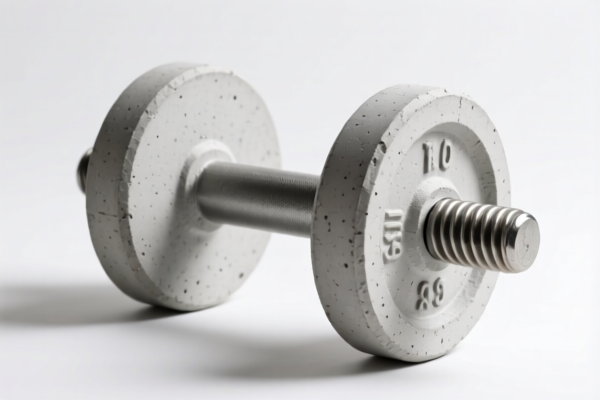
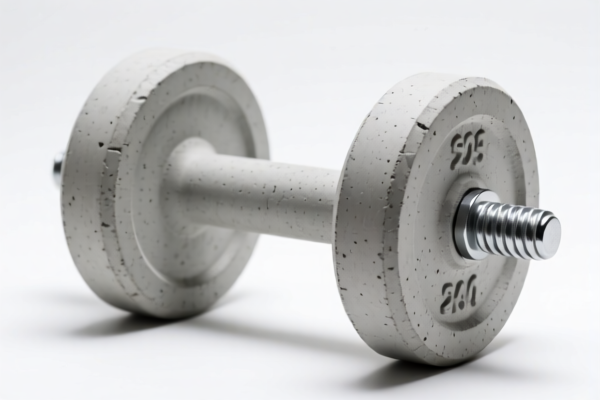
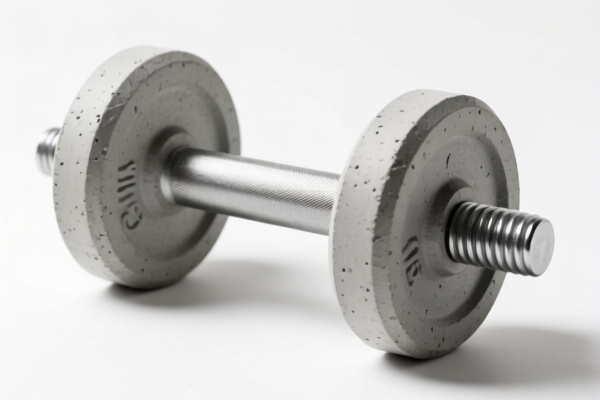

AI Analysis
🛡️ Concrete Anti-Seepage Agent (Concrete Waterproofing & Preservation Additive)
🌐 HS Code Reference & Customs Clearance Guide | 2026 Latest Tariff Analysis | Professional Entry Strategy
📌 I. Product Definition & Classification: Do You Truly Understand "Concrete Anti-Seepage Agents"?
Concrete Anti-Seepage Agents are specialized chemical additives used in construction to enhance the durability, water resistance, and corrosion resistance of concrete, mortar, and cement-based materials. In international trade, their classification is highly sensitive because they can fall into different chapters depending on their chemical composition and primary function:
- Chemical Preparation for Concrete (Chapter 38): If the agent is primarily defined as a "prepared additive" for concrete/mortar/cement, regardless of whether it is organic or inorganic.
- Preservative/Corrosion Inhibitor (Chapter 34): If the agent is specifically marketed and functionally defined as a "preservative" or "anti-corrosion agent" for materials.
- Hydraulic Lime (Chapter 25): If the agent is primarily composed of hydrated calcium oxide or has similar hydraulic properties.
⚠️ Key Distinction Point:
- If it is a general chemical additive mixed into concrete to prevent water penetration → Likely 3824.
- If it is a specialized corrosion/preservation chemical applied to surfaces → Likely 3403.
- If it is chemically similar to hydraulic lime (e.g., calcium-based curing agents) → Likely 2522.
📦 II. HS Code Classification Details (2026 Latest Tariff Authority Comparison)
| HS Code | Product Description | Application Scenario | Chemical Nature |
|---|---|---|---|
3824.40.50.00 |
Prepared additives for cement, mortar, or concrete | General waterproofing agents, organic/inorganic chemical additives for mixtures | ✅ Chemical Preparation |
3824.40.20.00 |
Prepared additives for cement, mortar, or concrete | Specific concrete preservation additives, inorganic or organic chemical preparations | ✅ Chemical Preparation |
3403.19.10.00 |
Preparations for preserving or treating leather, furskins, or other materials (incl. concrete preservation) | Anti-corrosion agents specifically classified as preservatives for construction materials | ✅ Preservative Agent |
3403.19.50.00 |
Preparations for preserving or treating materials (containing petroleum oils or bituminous substances) | Anti-seepage agents containing petroleum/mineral oil components | ✅ Oil-Based Preservative |
2522.30.00.00 |
Hydraulic Lime (incl. white hydraulic lime) | Concrete curing agents based on hydrated calcium oxide or similar hydraulic chemicals | ✅ Inorganic Hydraulic Material |
🔍 Key Reminder:
- Do not confuse "Anti-Seepage" with "Adhesives" or "Pastes." If it’s a liquid additive mixed into concrete, look at 3824.
- If the product is oil-based and marketed as a surface sealant/preservative, it may fall under 3403.
- If it is a powdered lime-based curing agent, it falls under 2522.
💰 III. 2026 Latest Tariff Rate Details (Including Surcharges & Policy Additions)
✅ Applicable Country: United States (US)
✅ Origin: China (CN)
✅ Effective Date: From November 10, 2025 (including subsequent imports)
🎯 1. 3824.40.50.00 —— Prepared Additives for Cement/Mortar/Concrete
| Item | Content |
|---|---|
| Base Tariff | 5.0% (ad valorem) |
| USITC Surcharge | +25.0% (from USITC Footnote 9903.88.01) |
| IEEPA Surcharge | +10.0% (against Chinese/HK products, effective from Nov 10, 2025) |
| Total Rate | 40.0% |
| Tax Calculation | CIF Value × 40% |
| De Minimis Eligibility | ❌ No (deny_de_minimis) |
| Legal Basis Path | IEEPA:9903.01.25 → IEEPA:9903.01.24 → USITC:3824.40.50.00 → FOOTNOTE:9903.88.01 |
📌 Explanation:
- The 5% base tariff is standard for chemical preparations.
- The 25% USITC surcharge applies to "chemical preparations" under Section 301.
- The 10% IEEPA surcharge is the additional penalty for Chinese-origin goods.
- Total: 40%. This is a high-cost category. Must be factored into pricing.
🎯 2. 3824.40.20.00 —— Prepared Additives for Cement/Mortar/Concrete (Specific)
| Item | Content |
|---|---|
| Base Tariff | 0.0% (ad valorem) |
| USITC Surcharge | +25.0% |
| IEEPA Surcharge | +10.0% |
| Total Rate | 35.0% |
| Tax Calculation | CIF Value × 35% |
| De Minimis Eligibility | ❌ No |
| Legal Basis Path | IEEPA:9903.01.25 → IEEPA:9903.01.24 → USITC:3824.40.20.00 → FOOTNOTE:9903.88.01 |
📌 Note:
- Even though the base rate is 0%, the surcharges remain the same.
- This code is often used for specific concrete preservation chemicals.
- Total: 35%. Slightly better than3824.40.50.00, but still expensive.
🎯 3. 3403.19.10.00 —— Preparations for Preserving/Corrosion Inhibition
| Item | Content |
|---|---|
| Base Tariff | 0.2% (ad valorem) |
| USITC Surcharge | +25.0% |
| IEEPA Surcharge | +10.0% (122 Clause) |
| Total Rate | 35.2% |
| Tax Calculation | CIF Value × 35.2% |
| De Minimis Eligibility | ❌ No |
| Legal Basis Path | IEEPA:9903.01.25 → IEEPA:9903.01.24 → USITC:3403.19.10.00 → FOOTNOTE:9903.88.01 |
📌 Explanation:
- This code is for anti-corrosion/preservation agents. If your product is marketed as a concrete preservative, this may apply.
- Base rate is very low (0.2%), but surcharges are identical.
- Total: 35.2%. Marginal difference from 3824.
🎯 4. 3403.19.50.00 —— Oil-Based Preservatives
| Item | Content |
|---|---|
| Base Tariff | 5.8% (ad valorem) |
| USITC Surcharge | +25.0% |
| IEEPA Surcharge | +10.0% |
| Total Rate | 40.8% |
| Tax Calculation | CIF Value × 40.8% |
| De Minimis Eligibility | ❌ No |
| Legal Basis Path | IEEPA:9903.01.25 → IEEPA:9903.01.24 → USITC:3403.19.50.00 → FOOTNOTE:9903.88.01 |
📌 Warning:
- If your anti-seepage agent contains petroleum oils or mineral oils, it falls here.
- Highest Total Rate: 40.8%.
- Avoid this code if possible; look for non-oil-based classifications.
🎯 5. 2522.30.00.00 —— Hydraulic Lime (Calcium-Based Curing Agents)
| Item | Content |
|---|---|
| Base Tariff | 0.0% (ad valorem) |
| USITC Surcharge | +25.0% |
| IEEPA Surcharge | +10.0% |
| Total Rate | 35.0% |
| Tax Calculation | CIF Value × 35.0% |
| De Minimis Eligibility | ❌ No |
| Legal Basis Path | IEEPA:9903.01.25 → IEEPA:9903.01.24 → USITC:2522.30.00.00 → FOOTNOTE:9903.88.01 |
📌 Note:
- Only applicable if the product is chemically equivalent to hydraulic lime (e.g., hydrated calcium oxide).
- Base rate 0%, Total: 35%.
- Must provide chemical composition proof to justify this classification.
🛠️ IV. Customs Clearance Practical Advice (Real-World Pitfall Guide)
✅ 1. Required Documentation Checklist (Mandatory)
| Document | Must Provide | Explanation |
|---|---|---|
| ✅ Product Specification Sheet | ✔️ | Must detail chemical composition, pH, viscosity, and primary active ingredients. |
| ✅ Technical Data Sheet (TDS) | ✔️ | Clear statement of use: "Added to concrete mixture" vs. "Applied as surface sealant." |
| ✅ Product Photos (Including Label) | ✔️ | Must show batch number, ingredients, and hazard symbols (if any). |
| ✅ Third-Party Test Report | ✔️ | ASTM C1202 (Chloride Ion Permeability), water absorption rate, compressive strength impact. |
| ✅ Commercial Invoice | ✔️ | Must clearly state: "Chemical Additive for Concrete" or "Concrete Preservation Agent." |
| ✅ Certificate of Origin (CO) | ✔️ | Critical for proving Chinese origin; may affect surcharge applicability. |
| ✅ MSDS (Material Safety Data Sheet) | ✔️ | Required for chemical clearance in the US. |
✅ 2. Declaration Tips (Key Mantra)
🔥 “Function Defines Code, Chemistry Defines Tax!”
| Situation | Correct Declaration | Wrong Practice |
|---|---|---|
| General waterproof additive mixed in concrete | 3824.40.50.00 or 3824.40.20.00 |
Misdeclare as "Paint" or "Sealant" → Higher scrutiny |
| Oil-based surface sealer/preservative | 3403.19.50.00 |
Declare as "Concrete Additive" → Risk of misclassification penalty |
| Calcium-based curing agent (powder/liquid) | 2522.30.00.00 |
Declare as "Chemical Prep" → Unjustified higher base rate |
| Anti-corrosion agent for concrete structures | 3403.19.10.00 |
Declare as "Adhesive" → Wrong chapter entirely |
📌 Key Insight:
- If you market it as a "Preservative", use 3403.
- If you market it as an "Additive for Concrete", use 3824.
- Consistency between marketing, TDS, and HS Code is critical.
✅ 3. Special Cases Handling
| Situation | Handling Advice |
|---|---|
| OEM Custom Formulas | Provide formulation ratios to justify "Prepared Additive" status under 3824. |
| Multi-Function Agent (Waterproof + Corrosion Resist) | Choose the primary function. If corrosion resistance is highlighted, 3403 may apply. |
| Liquid vs. Powder | Liquid is more likely 3824/3403. Powder may be 2522 if lime-based. |
| Small Sample Shipments | ❌ No De Minimis Exemption. Even samples are subject to 35-40% tax. |
🌍 V. Global Market Comparison for Concrete Additives (2026 Latest)
| Country/Region | Recommended HS Code | Tariff | Certification Requirements | Notes |
|---|---|---|---|---|
| 🇺🇸 USA | 3824.40.50.00 |
40.0% | TDS, MSDS, ASTM Tests | High surcharges. No de minimis. |
| 🇨🇳 China | 3824.40.50.00 |
5.0% | GB Standards | No additional surcharges. |
| 🇪🇺 EU | 3824.90.97 |
0-6.5% | REACH Registration | Different classification. Lower base rates. |
| 🇬🇧 UK | 3824.90.97 |
0-6.5% | UK REACH | Post-Brexit rules apply. |
| 🇦🇺 Australia | 3824.90.97 |
5% | Australian Standards | Lower tariffs than US. |
📌 Conclusion:
- USA is the most expensive market due to 301 and IEEPA surcharges.
- China and EU have significantly lower base rates.
- Consider supply chain diversification if exporting large volumes to the US.
📌 VI. Common Errors & Pitfall Guide (Blood & Tears Lessons)
❌ Error 1: Declaring a lime-based curing agent as a "chemical additive" (3824)
👉 Consequence: Base rate 5% vs. 0%. Unnecessary extra cost.
👉 Fix: Use 2522.30.00.00 if chemically hydraulic lime.
❌ Error 2: Declaring an oil-based sealer as a "concrete additive" (3824)
👉 Consequence: Misclassification risk, potential penalties and delays.
👉 Fix: If oil-based, use 3403.19.50.00.
❌ Error 3: Ignoring De Minimis Status
👉 Consequence: Small shipments ($800 or less) are NOT exempt. Taxes still apply.
👉 Fix: Factor taxes into even sample shipments.
❌ Error 4: Using vague descriptions like "Concrete Waterproofer"
👉 Consequence: CBP may reclassify, leading to additional duties and audits.
👉 Fix: Provide precise technical name: "Calcium Silicate-based Concrete Preservation Agent."
✅ Correct Practice:
"Concrete Preservation Chemical Agent, Based on Calcium Silicate, Used for Anti-Seepage in Concrete Mixtures, ASTM C1202 Certified, Model XYZ, Non-Hazardous"
🎯 VII. Conclusion: Precise Classification Saves Money!
🎯 Remember the Mantra:
🔹 "Additive = 3824, Preservative = 3403, Lime = 2522."
🔹 "US Surcharges Add 35-40%. Plan Pricing Accordingly!"
🔹 "Documentation is Key. TDS + MSDS = Smooth Clearance."
📌 Tips:
- If your product is original from Vietnam, Mexico, or Thailand, you may avoid IEEPA surcharges.
- Apply for an Advance Ruling from US CBP if your product is novel or borderline.
- Consult a customs broker for complex formulations to avoid costly misclassifications.
📣 Immediate Action:
📞 Contact a professional customs broker + Provide TDS/MSDS + Request HS Code Pre-Ruling
🚀 Ensure your concrete agents clear customs smoothly, reduce costs, and boost profits!
✨ Professional Clearance Starts with Accurate Classification!
💼 Every Cent of Cost Must Be Precisely Calculated!
Customer Reviews
About HS Code Classification
The Harmonized System (HS) is an internationally standardized nomenclature developed by the World Customs Organization (WCO) to classify traded products. Over 200 countries use the HS system as the basis for customs tariffs, trade statistics, and import/export regulations.
Each HS code follows a hierarchical structure:
- Chapter (2 digits) — Broad category of goods (e.g., Chapter 84: Machinery and Mechanical Appliances)
- Heading (4 digits) — More specific grouping within the chapter
- Subheading (6 digits) — Internationally standardized breakdown, used by all WCO member countries
- National subdivisions (8-10 digits) — Country-specific extensions for further classification, such as US HTSUS 10-digit codes
Correct HS code classification is essential for smooth customs clearance, accurate duty payment, and compliance with trade regulations. Misclassification can lead to customs delays, overpayment of duties, or penalties.
When importing from CN to US, the applicable tariff rates may include:
- Most-Favored-Nation (MFN) rate — The standard duty rate applied to WTO members
- General rate — Applied to countries without trade agreements
- Trade remedy duties — Additional tariffs such as Section 301 (anti-dumping), Section 232 (national security), or countervailing duties
The information provided on this page is for reference purposes only. For official classification, please consult with your local customs authority or a licensed customs broker.