Concrete Impact Resistance Additive
CN → US| HS Code | Tariff Rate | Origin | Destination | Doc |
|---|---|---|---|---|
| 3403191000 | 35.2% | CN | US | Official Doc |
| 3824405000 | 40.0% | CN | US | Official Doc |
| 3403195000 | 40.8% | CN | US | Official Doc |
| 3824402000 | 35.0% | CN | US | Official Doc |
| 2530908050 | 10.0% | CN | US | Official Doc |
Product Images
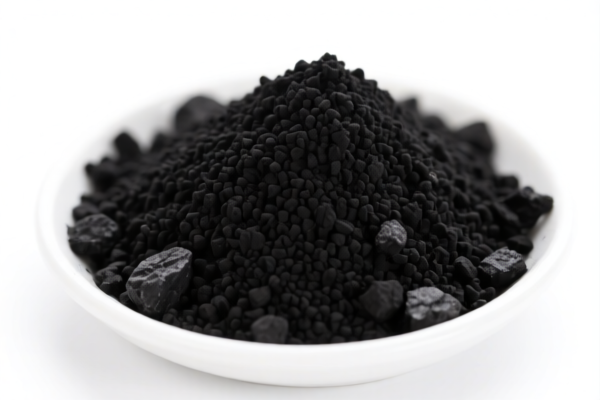
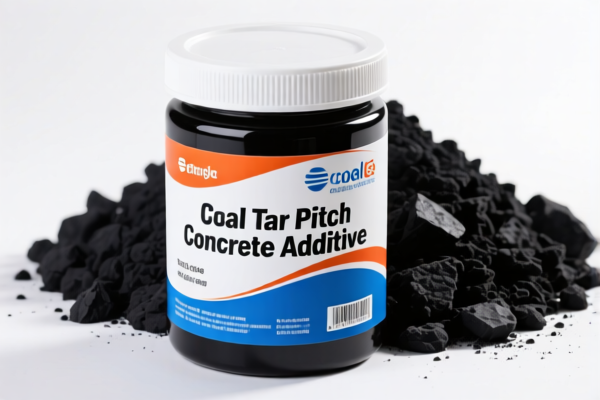

AI Analysis
🏗️ Concrete Impact Resistance Additive (Anti-Corrosion & Wear-Resistant Chemical Preparations)
🌐 HS Code Reference & Customs Clearance Guide | 2026 Latest Tariff Analysis | Professional Clearance Strategy
📌 Part 1: Product Definition & Classification – What Exactly Is This Additive?
Concrete Impact Resistance Additives (often marketed as Anti-Corrosion or Wear-Resistant Agents) are specialized chemical formulations designed to enhance the durability of concrete, mortar, and cement-based materials. In international trade, these products fall under two main chemical chapters depending on their primary function and material composition:
- Chapter 34 (Soap, Organic Surface-Active Agents, etc.): If the product functions primarily as an anti-corrosion preparation (protecting steel reinforcement within concrete from rust) or contains petroleum/mineral oils.
- Chapter 38 (Miscellaneous Chemical Products): If the product functions as a preparatory mix for concrete/cement (enhancing physical properties like impact resistance) and does not fit the specific definition of soap or surface-active agents.
- Chapter 25 (Salt; Sulfur; Earths and Stone): If the product is primarily a mineral-based anti-wear agent.
⚠️ Key Distinction Point:
- If the product is primarily an anti-corrosion agent (chemical inhibitor) → Likely Chapter 34
- If the product is primarily a concrete modifier/preparatory mix → Likely Chapter 38
- If the product is a mineral powder for wear resistance → Likely Chapter 25
📦 Part 2: HS Code Classification Details (2026 Latest Tariff Authority Comparison)
| HS Code | Product Description | Applicable Scenario | Material Type |
|---|---|---|---|
3403.19.10.00 |
Anti-corrosion preparations, other | Chemical anti-corrosion agents for concrete reinforcement | Organic/Chemical Inhibitor |
3824.40.50.00 |
Preparations for concrete or cement | General purpose concrete additives enhancing impact/wear resistance | Chemical Mix |
3403.19.50.00 |
Anti-corrosion preparations, containing petroleum oils | Oil-based corrosion inhibitors | Petroleum/Mineral Oil |
3824.40.20.00 |
Preparations for concrete or cement (other) | Specific concrete preparatory mixes with minimal base duty | Chemical/Inorganic Mix |
2530.90.80.50 |
Cement anti-wear additives, mineral nature | Mineral-based wear-resistant powders | Mineral |
🔍 Key Reminder:
- If the additive is labeled "Anti-Corrosion" and functions by chemically inhibiting rust on rebar, it leans towards 3403.
- If it is labeled "Impact/Wear Resistant Additive" and functions by modifying the concrete matrix, it leans towards 3824.
- Misclassification Risk: Declaring a mineral powder as a chemical additive (or vice versa) can lead to significant duty discrepancies.
💰 Part 3: 2026 Latest Tariff Rate Details (Including Surcharges & Policy Add-ons)
✅ Applicable Country: United States (US)
✅ Country of Origin: China (CN)
✅ Effective Date: From November 10, 2025 onwards (for imports)
🎯 1. 3403.19.10.00 —— Anti-Corrosion Preparations (Chemical)
| Item | Content |
|---|---|
| Base Tariff | 0.2% |
| Section 301 Surtax | +25.0% |
| IEEPA Surtax | +10.0% (122 Clause) |
| Total Tax Rate | 35.2% |
| Tax Calculation | CIF Value × 35.2% |
| De Minimis Exemption | ❌ Not Applicable (deny_de_minimis) |
| Legal Basis Path | Base:3403 → USITC:301 → IEEPA:122 |
📌 Explanation:
- This code applies to chemical anti-corrosion agents not specified elsewhere.
- The total effective rate is 35.2%, which is high but lower than some alternative codes.
- Suitable for liquid chemical inhibitors used to protect steel in concrete structures.
🎯 2. 3824.40.50.00 —— Preparations for Concrete or Cement (General)
| Item | Content |
|---|---|
| Base Tariff | 5.0% |
| Section 301 Surtax | +25.0% |
| IEEPA Surtax | +10.0% (122 Clause) |
| Total Tax Rate | 40.0% |
| Tax Calculation | CIF Value × 40.0% |
| De Minimis Exemption | ❌ Not Applicable (deny_de_minimis) |
| Legal Basis Path | Base:3824 → USITC:301 → IEEPA:122 |
📌 Note:
- This is a common classification for general-purpose concrete additives.
- The higher base duty (5.0%) results in a total rate of 40.0%.
- Use this if the product is a dry mix or liquid solution primarily for modifying concrete properties, not just corrosion inhibition.
🎯 3. 3403.19.50.00 —— Anti-Corrosion Preparations (Petroleum/Mineral Oil Based)
| Item | Content |
|---|---|
| Base Tariff | 5.8% |
| Section 301 Surtax | +25.0% |
| IEEPA Surtax | +10.0% (122 Clause) |
| Total Tax Rate | 40.8% |
| Tax Calculation | CIF Value × 40.8% |
| De Minimis Exemption | ❌ Not Applicable (deny_de_minimis) |
| Legal Basis Path | Base:3403 → USITC:301 → IEEPA:122 |
📌 Note:
- Applies if the anti-corrosion agent is oil-based.
- Highest total rate at 40.8% due to the higher base duty.
- Common in older formulations or specific industrial sealers.
🎯 4. 3824.40.20.00 —— Preparations for Concrete or Cement (Other/Specific)
| Item | Content |
|---|---|
| Base Tariff | 0.0% |
| Section 301 Surtax | +25.0% |
| IEEPA Surtax | +10.0% (122 Clause) |
| Total Tax Rate | 35.0% |
| Tax Calculation | CIF Value × 35.0% |
| De Minimis Exemption | ❌ Not Applicable (deny_de_minimis) |
| Legal Basis Path | Base:3824 → USITC:301 → IEEPA:122 |
📌 Note:
- Lowest Total Rate (35.0%) among the chemical additives.
- Available for specific preparatory mixes that qualify for 0% base duty.
- Critical: Must meet the specific definition of "preparations for concrete" under 3824.40.20.00 to qualify. Documentation is key.
🎯 5. 2530.90.80.50 —— Cement Anti-Wear Additives (Mineral Nature)
| Item | Content |
|---|---|
| Base Tariff | 0.0% |
| Section 301 Surtax | +0.0% |
| IEEPA Surtax | +10.0% (122 Clause) |
| Total Tax Rate | 10.0% |
| Tax Calculation | CIF Value × 10.0% |
| De Minimis Exemption | ❌ Not Applicable (deny_de_minimis) |
| Legal Basis Path | Base:2530 → USITC:No 301 → IEEPA:122 |
📌 Note:
- Lowest Total Rate (10.0%).
- Only applicable if the product is strictly mineral-based (e.g., silica fume, specific mineral powders) and classified as an "anti-wear" agent under Chapter 25.
- High Risk: If the product contains significant chemical binders or polymers, CBP may reclassify it to Chapter 38, leading to back duties and penalties.
- Must provide Material Safety Data Sheet (MSDS) proving mineral composition.
🛠️ Part 4: Customs Clearance Practical Advice (实战避坑指南)
✅ 1. Preparation Checklist (Mandatory)
| Document | Mandatory | Description |
|---|---|---|
| ✅ Product Specifications | ✔️ | Detail ingredients, usage ratio, and chemical composition. |
| ✅ Material Safety Data Sheet (MSDS) | ✔️ | Crucial for proving Mineral vs. Chemical nature. |
| ✅ Product Photos (Label & Container) | ✔️ | Clear view of warnings, usage instructions, and branding. |
| ✅ Third-Party Test Report | ✔️ | ASTM, ACI, or equivalent tests proving "Impact Resistance" or "Corrosion Protection." |
| ✅ Commercial Invoice | ✔️ | Must clearly state "Concrete Additive" and specify function (e.g., "Anti-Corrosion" vs. "Wear Resistant"). |
| ✅ Certificate of Origin (CO) | ✔️ | Required for IEEPA assessment. |
| ✅ Packing List | ✔️ | Confirm net/gross weight and packaging type. |
✅ 2. Declaration Strategies (Key Tips)
🔥 "Function Defines Chapter, Mineral Lowers Rate, Chemical High Rate!"
| Scenario | Correct Declaration | Error to Avoid |
|---|---|---|
| Mineral Powder (Silica, Fly Ash) | 2530.90.80.50 (10%) |
Declaring as Chemical (38%) → Overpaying 28% |
| Chemical Liquid Inhibitor | 3403.19.10.00 (35.2%) |
Declaring as Mineral → High Re-Classification Risk |
| General Concrete Mix | 3824.40.20.00 (35.0%) |
Declaring as Soap/Chemical (38-40%) → Overpaying 3-5% |
| Oil-Based Corrosion Agent | 3403.19.50.00 (40.8%) |
Misclassifying as non-oil → Underpayment Penalty |
✅ 3. Special Situation Handling
| Situation | Handling Advice |
|---|---|
| Hybrid Products (Mineral + Polymer) | If >50% mineral by weight, argue for 2530. If polymer is dominant, use 3824. |
| Custom Formulations | Provide detailed formulation percentages. CBP may require an Advance Ruling. |
| New "Impact" Additives | If not clearly "corrosion" or "wear," default to 3824.40. Provide test reports proving impact resistance. |
| Bulk vs. Retail | Bulk industrial shipments are more likely to be scrutinized for origin and composition. |
🌍 Part 5: Global Market Customs Comparison (2026 Latest)
| Country/Region | Recommended HS Code | Tariff Rate (China Origin) | Certification Requirements | Notes |
|---|---|---|---|---|
| 🇺🇸 USA | 3824.40.20.00 / 2530.90.80.50 |
10% - 35% | None Specific | High Surtaxes Apply. Choose 2530 if mineral. |
| 🇨🇳 China | 3824.40.50.00 |
5% - 8% | CCC (if applicable) | Lower tariffs, but export restrictions may apply. |
| 🇪🇺 EU | 3824.40 |
0% - 6.5% | REACH Registration | REACH is critical. No 301-style surtaxes. |
| 🇲🇽 Mexico | 3824.40 |
0% - 5% | NOM Certifications | USMCA benefits may apply if processed in US/Mexico. |
| 🇦🇺 Australia | 3824.40 |
5% | AICA Approval | Standard chemical import rules. |
📌 Conclusion:
- USA is the most complex market due to 301 and IEEPA surtaxes.
- Mineral-based additives (2530) offer the lowest duty (10%) in the US but are hard to prove if chemicals are present.
- EU has lower base duties but strict REACH compliance.
📌 Part 6: Common Errors & Pitfalls (Blood & Tears Lessons)
❌ Error 1: Declaring a chemical polymer additive as a mineral powder (2530)
👉 Consequence: CBP reclassifies to 3824 or 3403 → Back taxes + 10% Penalty!
❌ Error 2: Using "Concrete Additive" generically on the invoice
👉 Consequence: CBP assigns highest default rate → Higher Duty!
❌ Error 3: Ignoring the 122 Clause (IEEPA)
👉 Consequence: Missing 10% surtax → Seizure or Liquidation Delay!
❌ Error 4: Confusing "Anti-Corrosion" (Chemical) with "Wear Resistant" (Physical)
👉 Consequence: Wrong Chapter (34 vs 38 vs 25) → Audit Risk!
✅ Correct Practice:
"Concrete Impact & Corrosion Resistant Additive, Powder Form, Mineral & Polymer Blend, for Industrial Flooring, Model XYZ, MSDS Attached."
🎯 Part 7: Conclusion – Professional Declaration, Time-Saving, Cost-Effective!
🎯 Remember the Mantra:
🔹 "Mineral is Cheap, Chemical is Expensive, Function Defines the Code!"
🔹 "10% for Mineral, 35% for Chemical, Choose Wisely to Save Money!"
🔹 "IEEPA 10% Always Applies to China Origin, Don't Forget!"
📌 Pro Tip:
If your additive is 100% Mineral (e.g., silica fume, calcined clay), aggressively pursue 2530.90.80.50 for the 10% total rate.
If it contains Polymers or Chemicals, use 3824.40.20.00 for the 35.0% rate (lower than 3824.40.50).
Always secure an Advance Ruling if the product formulation is unique.
📣 Immediate Action:
📞 Contact a Professional Customs Broker + Provide MSDS + Apply for HS Code Advance Ruling
🚀 Let your additive clear smoothly, avoid penalties, and maximize profit!
✨ Professional Clearance Starts with Accurate Classification!
💼 Every Cent of Duty Matters!
Customer Reviews
About HS Code Classification
The Harmonized System (HS) is an internationally standardized nomenclature developed by the World Customs Organization (WCO) to classify traded products. Over 200 countries use the HS system as the basis for customs tariffs, trade statistics, and import/export regulations.
Each HS code follows a hierarchical structure:
- Chapter (2 digits) — Broad category of goods (e.g., Chapter 84: Machinery and Mechanical Appliances)
- Heading (4 digits) — More specific grouping within the chapter
- Subheading (6 digits) — Internationally standardized breakdown, used by all WCO member countries
- National subdivisions (8-10 digits) — Country-specific extensions for further classification, such as US HTSUS 10-digit codes
Correct HS code classification is essential for smooth customs clearance, accurate duty payment, and compliance with trade regulations. Misclassification can lead to customs delays, overpayment of duties, or penalties.
When importing from CN to US, the applicable tariff rates may include:
- Most-Favored-Nation (MFN) rate — The standard duty rate applied to WTO members
- General rate — Applied to countries without trade agreements
- Trade remedy duties — Additional tariffs such as Section 301 (anti-dumping), Section 232 (national security), or countervailing duties
The information provided on this page is for reference purposes only. For official classification, please consult with your local customs authority or a licensed customs broker.