Condensate Paper
CN → US| HS Code | Tariff Rate | Origin | Destination | Doc |
|---|---|---|---|---|
| 3921904010 | 39.2% | CN | US | Official Doc |
| 3921904090 | 39.2% | CN | US | Official Doc |
| 4823908000 | 35.0% | CN | US | Official Doc |
| 4818900080 | 17.5% | CN | US | Official Doc |
| 4823908680 | 35.0% | CN | US | Official Doc |
Product Images
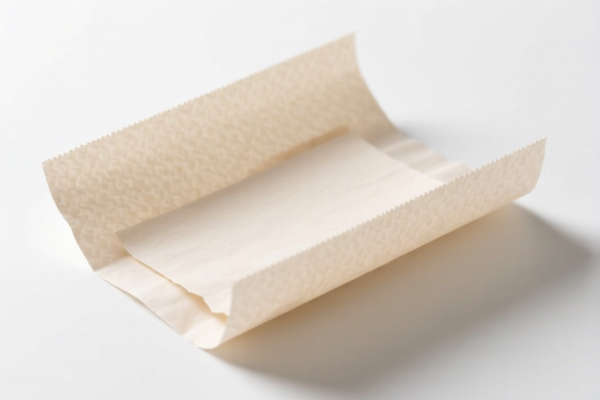
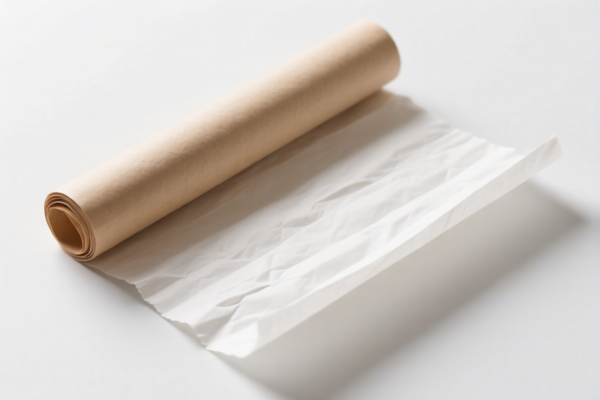
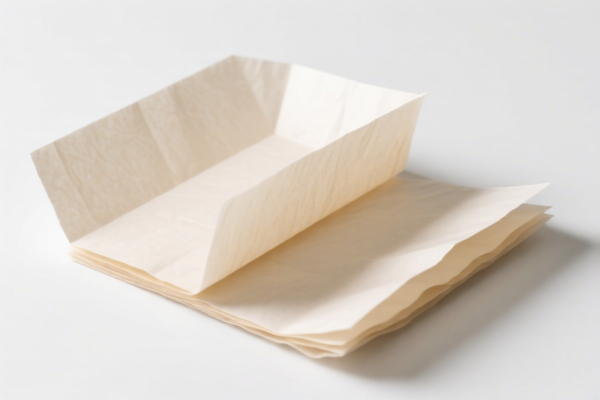
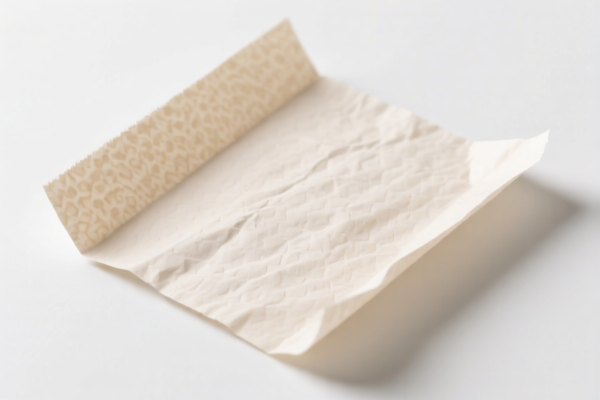
AI Analysis
🧈 Absorbent & Condensate Paper (Condensate Paper)
🌐 HS Code Reference & Customs Clearance Guide | 2026 Latest Tariff Analysis | Professional Clearance Strategy
📌 1. Product Definition & Classification: What is "Condensate Paper"?
Condensate Paper (also known as Absorbent Paper, Oil-Soaking Paper, or Grease Trap Paper) is a specialized paper product designed to absorb excess moisture, condensation, or oil from packaged goods (such as food, cosmetics, or industrial components).
In international trade, its classification depends heavily on its material composition, structure, and primary function. It is generally categorized under Chapter 48 (Paper and Paperboard) because its core substrate is paper, even if it has plastic coatings or laminates for oil resistance.
⚠️ Key Classification Point:
- If the product is primarily paper with possible functional coatings (oil-resistant, moisture-absorbing) → Chapter 48.
- If the product is primarily a plastic film or plastic-coated to the extent that paper is merely a reinforcement → Chapter 39 (Plastics).
- Misclassification Risk: Declaring plastic-coated absorbent pads as simple paper (4818) can lead to audits if the coating exceeds the threshold for "paper-based" goods.
📦 2. HS Code Classification Details (2026 Latest Tariff Alignment)
Based on the provided data, here are the five possible HS Codes for Condensate Paper, ranging from lowest to highest tax burden:
| HS Code | Product Description | Applicable Scenario | Key Characteristics |
|---|---|---|---|
4818.90.00.80 |
Paper household, sanitary or hospital goods | Hygienic condensation pads, facial tissues, or soft absorbent sheets for personal use. | ✅ Lowest Tax (17.5%). Assumes paper-based, hygiene/cleaning function. |
3921.90.40.10 |
Paper-reinforced plastics | Oil-soaking sheets used in industrial packaging or food trays where plastic film is integral. | ⚠️ High Tax (39.2%). Classified as plastic composite due to plastic dominance/coating. |
3921.90.40.90 |
Other plastic sheets/films, paper-like | Sheets that look like paper but are primarily plastic film or plastic-coated. | ⚠️ High Tax (39.2%). Inferred as plastic/film-based rather than true paper. |
4823.90.80.00 |
Other paper articles, cut to size | Industrial condensate pads, gaskets, or sealing elements made of paper, cut to specific shapes. | 🔶 Medium-High Tax (35.0%). Functional consumable, paper-based, cut to shape. |
4823.90.86.80 |
Other paper articles, cut to size | General paper products cut into dimensions/shapes, not specified elsewhere. | 🔶 Medium-High Tax (35.0%). Generic paper category for shaped paper items. |
🔍 Critical Distinction:
-4818.90.00.80is the most favorable code if the product is clearly for hygienic/cleaning/absorbent purposes and made of paper.
-4823.90.xxxxcodes apply if the paper is used for industrial sealing, gaskets, or general consumables not classified under hygiene.
-3921.90.40.xxcodes apply if customs determines the plastic component is dominant (e.g., a plastic film with paper backing) rather than paper with a light coating.
💰 3. 2026 Latest Tariff Rate Breakdown (Including Surtaxes & Policy Add-ons)
✅ Applicable Country: United States (US)
✅ Origin: China (CN)
✅ Effective Date: November 10, 2025 (and onwards)
🎯 1. 4818.90.00.80 —— Best Case Scenario (Hygiene/Cleaning Paper)
| Item | Content |
|---|---|
| Base Rate | 0.0% (Ad Valorem) |
| Section 301 Surtax | +7.5% (USITC Footnote related to 301 Tariff List) |
| IEEPA Add-on | +10% (China-specific tariff under IEEPA) |
| Total Tax Rate | 17.5% |
| Tax Calculation | CIF Value × 17.5% |
| De Minimis Eligibility | ❌ No (Deny De Minimis for China-origin goods subject to 301/IEEPA) |
| Legal Path | IEEPA:9903.01.24 → USITC:4818.90.00.80 |
📌 Explanation:
- This is the lowest possible tax rate for condensate paper.
- The 7.5% is likely the residual 301 tariff (some items have reduced rates from 25% to 7.5%).
- The 10% is the IEEPA add-on.
- Advantage: 17.5% is significantly lower than the 35-39% rates for other classifications.
🎯 2. 4823.90.80.00 & 4823.90.86.80 —— Industrial/General Paper Products
| Item | Content |
|---|---|
| Base Rate | 0.0% (Ad Valorem) |
| Section 301 Surtax | +25.0% |
| IEEPA Add-on | +10% |
| Total Tax Rate | 35.0% |
| Tax Calculation | CIF Value × 35.0% |
| De Minimis Eligibility | ❌ No |
| Legal Path | IEEPA:9903.01.25 → USITC:4823.90.80.00 |
📌 Explanation:
- These codes assume the product is a functional paper article (like a gasket or pad) but not primarily for hygiene.
- The 25% 301 tariff applies fully here.
- Difference from 4818: The product is deemed less "hygienic" and more "industrial/consumable," triggering higher 301 duties.
🎯 3. 3921.90.40.10 & 3921.90.40.90 —— Plastic-Based/Composite Products
| Item | Content |
|---|---|
| Base Rate | 4.2% (Ad Valorem) |
| Section 301 Surtax | +25.0% |
| IEEPA Add-on | +10% |
| Total Tax Rate | 39.2% |
| Tax Calculation | CIF Value × 39.2% |
| De Minimis Eligibility | ❌ No |
| Legal Path | IEEPA:9903.01.25 → USITC:3921.90.40.xx |
📌 Explanation:
- These codes apply if the product is classified as plastic (or plastic-dominated).
- The 4.2% base rate is higher than paper (0%), and it is subject to the full 25% 301 tariff.
- Risk: If you declare it as paper (4818) but customs sees plastic film, they may reclassify it here, resulting in penalties and back taxes.
🛠️ 4. Customs Clearance Practical Advice (Avoid Pitfalls)
✅ 1. Documentation Checklist (Mandatory)
| Document | Required | Explanation |
|---|---|---|
| ✅ Product Specification Sheet | ✔️ | Must clearly state: Material Composition (e.g., 90% wood pulp, 10% polymer coating). |
| ✅ Material Safety Data Sheet (MSDS) | ✔️ | Proves paper-based nature, not pure plastic. |
| ✅ Product Photos | ✔️ | Show texture, thickness, and any coatings. Highlight if it’s "white paper" vs. "plastic film." |
| ✅ Commercial Invoice | ✔️ | Use precise description: "Absorbent Paper Pad, Paper-Based, for Hygiene/Absorption" (to support 4818). Avoid vague terms like "Sheet." |
| ✅ Packing List | ✔️ | Detail dimensions and weight. |
| ✅ Origin Certificate (CO) | ✔️ | Required for US imports; confirm CN origin to apply correct IEEPA rates. |
✅ 2. Declaration Strategy (Key Tips)
🔥 "Paper First, Plastic Coating Secondary. Hygiene Function, Clear Name!"
| Scenario | Recommended HS Code | Correct Declaration Term | Wrong Declaration Term |
|---|---|---|---|
| Soft, white, absorbent sheets | 4818.90.00.80 |
"Absorbent Paper for Hygiene/Absorption" | "Plastic Sheet" or "Polymer Film" |
| Industrial oil-absorbent pads | 4823.90.80.00 |
"Paper Absorbent Pads, Cut to Size" | "Plastic Gaskets" |
| Plastic film with paper backing | 3921.90.40.xx |
"Plastic-Coated Paper Sheets" | "Paper Product" (Risky!) |
| Generic paper cut to shape | 4823.90.86.80 |
"Paper Sheets, Cut to Size" | "Miscellaneous Plastic Articles" |
✅ 3. Special Considerations
- Coating Thickness: If the plastic coating is thick or forms the primary surface, customs may lean toward Chapter 39. Keep coatings minimal if targeting 4818.
- Functionality: Emphasize absorption and hygiene/cleaning in descriptions to support 4818. If used for industrial sealing, 4823 is more appropriate.
- Pre-Ruling: Given the 25%+301 risk, consider applying for an Advance Ruling from US Customs (CBP) to confirm classification.
🌍 5. Global Market Comparison (2026 Latest)
| Country/Region | Recommended HS Code | Tariff (China Origin) | Notes |
|---|---|---|---|
| 🇺🇸 USA | 4818.90.00.80 |
17.5% (Best Case) | High risk of audit if plastic content is high. |
| 🇨🇳 China | 4818.90.00.80 |
~10-12% | Lower base rates, no 301/IEEPA. |
| 🇪🇺 EU | 4818.90.00.80 |
~6.5% | No Section 301, but verify plastic content rules. |
| 🇬🇧 UK | 4818.90.00.80 |
~6.5% | Post-Brexit tariffs similar to EU. |
📌 Conclusion:
- The USA is the most challenging market due to IEEPA and 301 tariffs.
- Target4818.90.00.80for the lowest cost (17.5%).
- Avoid3921codes unless the product is predominantly plastic.
📌 6. Common Mistakes & Pitfalls (Lessons Learned)
❌ Mistake 1: Declaring plastic-coated absorbent sheets as "Paper" (4818) without justification.
👉 Consequence: Customs reclassifies to 3921 → Tax jumps from 17.5% to 39.2% + penalties.
❌ Mistake 2: Using vague terms like "Absorbent Pad" without material details.
👉 Consequence: CBP may assume worst-case classification → 35-39% tax.
❌ Mistake 3: Ignoring the "Plastic Coating" aspect.
👉 Consequence: If the coating is >50% of weight or value, 3921 is more accurate.
✅ Correct Approach:
"Absorbent Paper Sheets, 100% Wood Pulp with Light Water-Resistant Coating, for Hygiene/Absorption, Model XYZ, 4818.90.00.80"
🎯 7. Conclusion: Precise Classification, Cost Optimization!
🎯 Remember the Mantra:
🔹 "Paper Base, Hygiene Function → 17.5%"
🔹 "Plastic Dominant → 39.2%"
🔹 "Industrial Paper Pad → 35.0%"
🔹 "Misclassification = Double Tax + Penalty!"📌 Pro Tip:
If your condensate paper is plastic-dominated, consider sourcing from non-China countries (e.g., Vietnam, India) to avoid IEEPA 10% and potentially 301 tariffs, reducing total tax to 0-5% in some cases.
📣 Immediate Action:
📞 Consult a licensed customs broker.
📄 Submit product specs for Pre-Ruling.
🚀 Optimize your supply chain, minimize duties, maximize profit!
✨ Professional Clearance Starts with Accurate Classification!
💼 Every Percent Saved is Pure Profit!
Customer Reviews
About HS Code Classification
The Harmonized System (HS) is an internationally standardized nomenclature developed by the World Customs Organization (WCO) to classify traded products. Over 200 countries use the HS system as the basis for customs tariffs, trade statistics, and import/export regulations.
Each HS code follows a hierarchical structure:
- Chapter (2 digits) — Broad category of goods (e.g., Chapter 84: Machinery and Mechanical Appliances)
- Heading (4 digits) — More specific grouping within the chapter
- Subheading (6 digits) — Internationally standardized breakdown, used by all WCO member countries
- National subdivisions (8-10 digits) — Country-specific extensions for further classification, such as US HTSUS 10-digit codes
Correct HS code classification is essential for smooth customs clearance, accurate duty payment, and compliance with trade regulations. Misclassification can lead to customs delays, overpayment of duties, or penalties.
When importing from CN to US, the applicable tariff rates may include:
- Most-Favored-Nation (MFN) rate — The standard duty rate applied to WTO members
- General rate — Applied to countries without trade agreements
- Trade remedy duties — Additional tariffs such as Section 301 (anti-dumping), Section 232 (national security), or countervailing duties
The information provided on this page is for reference purposes only. For official classification, please consult with your local customs authority or a licensed customs broker.