Condensation Paper Roll
CN → US| HS Code | Tariff Rate | Origin | Destination | Doc |
|---|---|---|---|---|
| 4823209000 | 35.0% | CN | US | Official Doc |
| 3920790500 | 38.1% | CN | US | Official Doc |
| 4811604000 | 35.0% | CN | US | Official Doc |
| 4811606000 | 35.0% | CN | US | Official Doc |
| 4823908680 | 35.0% | CN | US | Official Doc |
Product Images
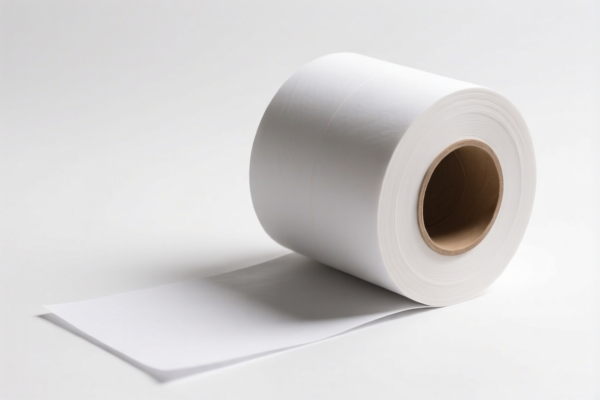
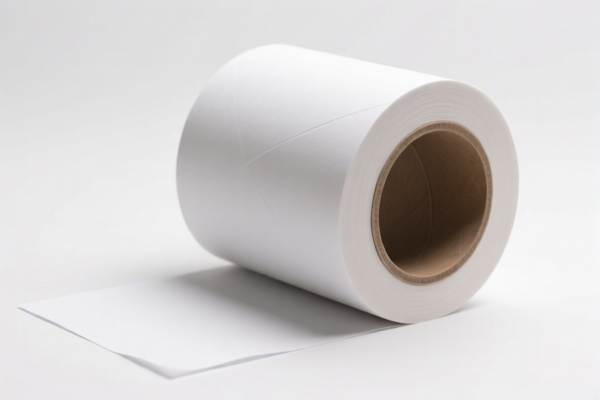
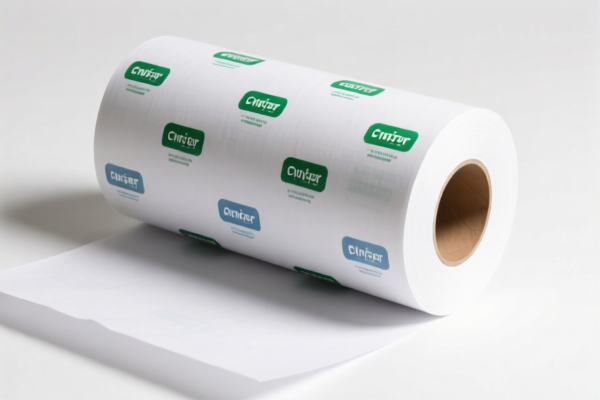
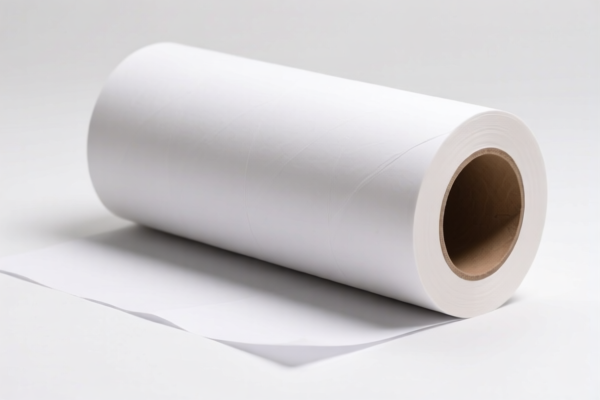
AI Analysis
🧻 Condensation Paper Roll (Condensation Paper)
🌐 HS Code Reference & Customs Clearance Guide | 2026 Latest Tariff Analysis | Professional Clearance Strategy
📌 1. Product Definition & Classification: Do You Really Understand "Condensation Paper"?
Condensation paper, often used in industrial drying, packaging, or filtration processes, is a specialized paper product designed to manage moisture. Its classification depends heavily on its physical state, material composition, and processing method.
In international trade, it is primarily categorized into two main branches:
- Paper & Paperboard Products (Chapter 48): If the primary material is cellulose-based and treated for filtration, coating, or specific paper functions.
- Plastics/Cellulose Derivative Films (Chapter 39): If the material is inferred as a cellulose derivative (e.g., sulfated cellulose) formed into a film or sheet-like structure.
⚠️ Key Distinction Point: - If it functions as a filter/absorbent or is coated/impregnated for specific paper uses → Classified under HS 4823.20.90.00, 4811.60.40.00, 4811.60.60.00, or 4823.90.86.80. - If it is structured as a film/sheet made from cellulose derivatives (like sulfated cellulose) → Classified under HS 3920.79.05.00.
📦 2. HS Code Classification Details (2026 Latest Tariff Authority Comparison)
| HS Code | Product Description | Applicable Scenario | Key Characteristics |
|---|---|---|---|
4823.20.90.00 |
Filter paper & paperboard (other than coated/impregnated) | Used for filtration/adsorption processes | ✅ Paper material, filtering function |
3920.79.05.00 |
Plates, sheets, film, foil & strip, of plastics... Other | Shape is film/sheet; material inferred as cellulose derivative (e.g., sulfated cellulose) | ✅ Film-like, cellulose derivative |
4811.60.40.00 |
Paper, paperboard... self-adhesive... or other... coated/covered with glues... | Special treatment (coating/impregnation) for paper characteristics | ✅ Coated/Impregnated paper |
4811.60.60.00 |
Paper, paperboard... self-adhesive... or other... coated/covered with resins... | Surface treatment or coating process for condensation properties | ✅ Coated/Impregnated paper |
4823.90.86.80 |
Other articles of paper pulp, paper... | Other paper products not specified elsewhere | ✅ General paper product |
🔍 Key Reminder: - Filter/Adsorption Use: If the primary purpose is filtration or adsorption, 4823.20.90.00 is the most accurate fit. - Coating/Impregnation: If the paper has undergone surface treatment (coating/impregnation) to achieve condensation properties, 4811.60.40.00 or 4811.60.60.00 applies. - Film/Sheet Form: If the form factor is distinctly a film or sheet made of cellulose derivatives, 3920.79.05.00 is applicable, but with a higher tax burden. - General Paper: If none of the above specific treatments or uses apply clearly, it may fall under the residual category 4823.90.86.80.
💰 3. 2026 Latest Tariff Rate Details (Including Additional Taxes & Policy Add-ons)
✅ Applicable Country: United States (US)
✅ Origin: China (CN)
✅ Effective Date: From November 10, 2025 (including subsequent imports)
🎯 1. 4823.20.90.00 —— Filter Paper & Paperboard
| Item | Content |
|---|---|
| Base Tariff | 0.0% (ad valorem) |
| USITC Additional Tax | +25.0% (Section 301 Tariff) |
| IEEPA Additional Tax | +10.0% (122-Section Tariff for China/HK products, effective Nov 10, 2025) |
| Total Rate | 35.0% |
| Tax Calculation | CIF Value × 35% |
| De Minimis Eligibility | ❌ Not Eligible (deny_de_minimis) |
| Legal Basis Path | USITC:4823.20.90.00 → FOOTNOTE:301 → IEEPA:122 |
📌 Explanation: - "USITC Additional Tax 25%": From the "Additional Tariff" under Section 301 of the US Trade Act. - "IEEPA 10%": Additional tariff under the International Emergency Economic Powers Act for Chinese products. - Total 35%: This is a high tariff. Pre-calculation is essential.
🎯 2. 3920.79.05.00 —— Other Plastic Plates, Sheets, Film, etc.
| Item | Content |
|---|---|
| Base Tariff | 3.1% (ad valorem) |
| USITC Additional Tax | +25.0% (Section 301 Tariff) |
| IEEPA Additional Tax | +10.0% (122-Section Tariff for China/HK products, effective Nov 10, 2025) |
| Total Rate | 38.1% |
| Tax Calculation | CIF Value × 38.1% |
| De Minimis Eligibility | ❌ Not Eligible (deny_de_minimis) |
| Legal Basis Path | USITC:3920.79.05.00 → FOOTNOTE:301 → IEEPA:122 |
📌 Note: - This code has a higher base tariff (3.1%) compared to paper products. - Even though the material is a cellulose derivative, if classified as a plastic/film product, the total tax reaches 38.1%, which is higher than the paper classifications.
🎯 3. 4811.60.40.00 & 4811.60.60.00 —— Coated/Impregnated Paper
| Item | Content |
|---|---|
| Base Tariff | 0.0% (ad valorem) |
| USITC Additional Tax | +25.0% (Section 301 Tariff) |
| IEEPA Additional Tax | +10.0% (122-Section Tariff for China/HK products, effective Nov 10, 2025) |
| Total Rate | 35.0% |
| Tax Calculation | CIF Value × 35% |
| De Minimis Eligibility | ❌ Not Eligible (deny_de_minimis) |
| Legal Basis Path | USITC:4811.60.40.00 / 4811.60.60.00 → FOOTNOTE:301 → IEEPA:122 |
📌 Explanation: - Both codes share the same tariff structure as filter paper because they are paper products with 0% base tariff. - The key difference lies in the processing description: whether it's coated with glues/resins or other substances. Ensure your product description matches the specific coating type to avoid customs disputes.
🎯 4. 4823.90.86.80 —— Other Paper Products
| Item | Content |
|---|---|
| Base Tariff | 0.0% (ad valorem) |
| USITC Additional Tax | +25.0% (Section 301 Tariff) |
| IEEPA Additional Tax | +10.0% (122-Section Tariff for China/HK products, effective Nov 10, 2025) |
| Total Rate | 35.0% |
| Tax Calculation | CIF Value × 35% |
| De Minimis Eligibility | ❌ Not Eligible (deny_de_minimis) |
| Legal Basis Path | USITC:4823.90.86.80 → FOOTNOTE:301 → IEEPA:122 |
📌 Note: - This is a residual category for paper products not specified elsewhere. - Use this only if the product does not fit the specific filtering, coating, or film descriptions.
🛠️ 4. Customs Clearance Practical Advice (Practical Pitfall Avoidance Guide)
✅ 1. Required Documentation Checklist (Must-Have)
| Document | Must Provide | Description |
|---|---|---|
| ✅ Product Specification Sheet | ✔️ | Includes material composition (cellulose/derivative), thickness, width, roll length, and specific function (filter/coat/absorb). |
| ✅ Technical Data Sheet (TDS) | ✔️ | Details surface treatment (coating type, resin used) if applicable for HS 4811 codes. |
| ✅ Product Photos (Including Labels) | ✔️ | Clear images showing the roll structure, coating surface, and any markings indicating material type. |
| ✅ Third-Party Test Report | ✔️ | If claimed as "Filter Paper," provide filtration efficiency tests. If "Coated Paper," provide coating adhesion/durability tests. |
| ✅ Commercial Invoice | ✔️ | Clearly describe as "Condensation Paper Roll, [Material] Based, [Function] Used." Avoid vague terms like "Paper." |
| ✅ Packing List | ✔️ | Specify net/gross weight and dimensions. |
✅ 2. Declaration Techniques (Key Mnemonics)
🔥 “Function Defines HS, Coating Matters, Film vs Paper is Key!”
| Scenario | Correct Declaration | Incorrect Practice |
|---|---|---|
| Filter/Adsorption Use | 4823.20.90.00 |
Misdeclare as "Film" → 38.1% |
| Coated/Impregnated Paper | 4811.60.40.00 / 4811.60.60.00 |
Misdeclare as "General Paper" → Risk of reclassification |
| Film/Sheet Form (Cellulose Deriv.) | 3920.79.05.00 |
Misdeclare as "Paper" → Incorrect HS, potential penalty |
| Unclear/Residual Use | 4823.90.86.80 |
Vague description → Customs delay |
📌 Critical Tip: - If the product is coated, ensure the coating material is specified. Resin vs. Glue can sometimes differentiate between 4811.60.40 and 4811.60.60, but both have the same tax rate. - If the product is a film/sheet, emphasize its film-like structure and cellulose derivative nature to justify HS 3920, but be aware of the higher tax.
✅ 3. Special Cases Handling
| Case | Handling Advice |
|---|---|
| OEM Custom Condensation Paper | Provide client orders and design specs to prove specific function (e.g., industrial filtration). |
| Multi-Layer Laminated Paper | If layers include plastic films, it may fall under Chapter 39 or 48 depending on the principal material. Provide lamination details. |
| Rolled vs. Cut Sheets | Ensure the declaration matches the physical form (Roll vs. Sheet). HS codes are generally similar, but description accuracy matters. |
| Intended Use Change | If the paper is sold as a raw material for further processing, clearly state "Raw Material for [Industry]" to avoid misuse classification. |
🌍 5. Global Major Market Clearance Comparison (2026 Latest)
| Country/Region | Recommended HS Code | Tariff (China Origin) | Certification Requirements | Notes |
|---|---|---|---|---|
| 🇺🇸 United States | 4823.20.90.00 (Filter) or 4811.60.40.00 (Coated) |
35% (Paper) / 38.1% (Film) | None specific, but accurate description is crucial | High additional taxes apply. |
| 🇨🇳 China | 4823.20.90.00 |
0% - 5% (Import Duty) | N/A | Lower tax burden domestically. |
| 🇪🇺 European Union | 4823.20.90.00 |
~3% - 6% (Standard MFN) | REACH Compliance | No Section 301/IEEPA equivalents. |
| 🇦🇺 Australia | 4823.20.90.00 |
5% | None specific | Moderate tax rate. |
| 🇯🇵 Japan | 4823.20.90.00 |
~0% - 3% | None specific | Low tax rate. |
📌 Conclusion: - The US market imposes significant additional tariffs (25% Section 301 + 10% IEEPA) on paper and plastic products from China. - Choosing the correct HS code between Paper (48xx) and Film (39xx) can result in a 3.1% difference in base tax, leading to a total difference of 3.1% in the final tariff burden. - Paper classifications (48xx) are generally preferred for cellulose-based products if they fit the description, as they have a 0% base rate.
📌 6. Common Errors & Pitfall Avoidance Guide (Lessons Learned)
❌ Error 1: Misclassifying "Coated Paper" as "Uncoated Paper" 👉 Consequence: Incorrect HS code, potential customs query or penalty. 👉 Fix: Clearly specify "Coated" or "Impregnated" in the description and use HS 4811 codes.
❌ Error 2: Classifying "Filter Paper" as "General Paper" 👉 Consequence: While tax rate may be similar, it may trigger additional scrutiny for import restrictions or anti-dumping duties if misdeclared. 👉 Fix: Use HS 4823.20.90.00 for filter/adsorption products.
❌ Error 3: Ignoring the "Film" characteristic 👉 Consequence: If the product is actually a cellulose derivative film, classifying it as paper may be challenged. 👉 Fix: If it has a distinct film-like structure and is made of sulfated cellulose, consider HS 3920.79.05.00, but be prepared for the 38.1% total tax.
❌ Error 4: Vague Description on Invoice 👉 Consequence: Customs may reclassify the product, leading to delays, additional taxes, and penalties. 👉 Fix: Use precise descriptions: "Condensation Paper Roll, Filter Type, Cellulose-Based, Coated with Resin."
✅ Correct Practice:
"Condensation Paper Roll, Filter Grade, Cellulose-Based, 0.5mm Thickness, 1000m Length, Coated for Moisture Adsorption, Model XYZ"
🎯 7. Conclusion: Precise Declaration, Time-Saving, Cost-Effective!
🎯 Mnemonic to Remember:
🔹 "Paper vs. Film, Tax Differs by 3.1%; Filter or Coat, HS 48 is Best; US Market, 35% is Real, Don't Guess, Declare Clear!"
🔹 "HS Code Determines Destiny, 3% Base Difference, 35% Total Tax, Misclassification Costs You Money!"
📌 Pro Tip:
If your condensation paper is originating from Vietnam, Mexico, Thailand, or Malaysia, you may apply for IEEPA Exemption, reducing the total tax to 0%~5% (plus base rate). It is highly recommended to apply for an Advance Ruling (Pre-classification) before shipment to avoid clearance risks and unexpected costs.
📣 Immediate Action:
📞 Contact a professional customs broker + Provide Product Photos + Apply for HS Code Pre-classification
🚀 Let your condensation paper rolls clear customs smoothly, export efficiently, and double your profits!
✨ Professional Clearance Starts with Accurate Classification!
💼 Every cent of your cost deserves precise calculation!
Customer Reviews
About HS Code Classification
The Harmonized System (HS) is an internationally standardized nomenclature developed by the World Customs Organization (WCO) to classify traded products. Over 200 countries use the HS system as the basis for customs tariffs, trade statistics, and import/export regulations.
Each HS code follows a hierarchical structure:
- Chapter (2 digits) — Broad category of goods (e.g., Chapter 84: Machinery and Mechanical Appliances)
- Heading (4 digits) — More specific grouping within the chapter
- Subheading (6 digits) — Internationally standardized breakdown, used by all WCO member countries
- National subdivisions (8-10 digits) — Country-specific extensions for further classification, such as US HTSUS 10-digit codes
Correct HS code classification is essential for smooth customs clearance, accurate duty payment, and compliance with trade regulations. Misclassification can lead to customs delays, overpayment of duties, or penalties.
When importing from CN to US, the applicable tariff rates may include:
- Most-Favored-Nation (MFN) rate — The standard duty rate applied to WTO members
- General rate — Applied to countries without trade agreements
- Trade remedy duties — Additional tariffs such as Section 301 (anti-dumping), Section 232 (national security), or countervailing duties
The information provided on this page is for reference purposes only. For official classification, please consult with your local customs authority or a licensed customs broker.