Conical Natural Cork Stopper
CN → US| HS Code | Tariff Rate | Origin | Destination | Doc |
|---|---|---|---|---|
| 4503102000 | 35.0% | CN | US | Official Doc |
| 4503106000 | 35.0% | CN | US | Official Doc |
| 4502000000 | 35.0% | CN | US | Official Doc |
| 4504104500 | 35.0% | CN | US | Official Doc |
| 4504104700 | 35.0% | CN | US | Official Doc |
Product Images



AI Analysis
🍷 Conical Natural Cork Stopper
🌐 HS Code Reference & Customs Clearance Guide | 2026 Latest Tariff Analysis | Professional Clearance Strategy
📌 I. Product Definition & Classification: Do You Really Understand "Conical Natural Cork Stopper"?
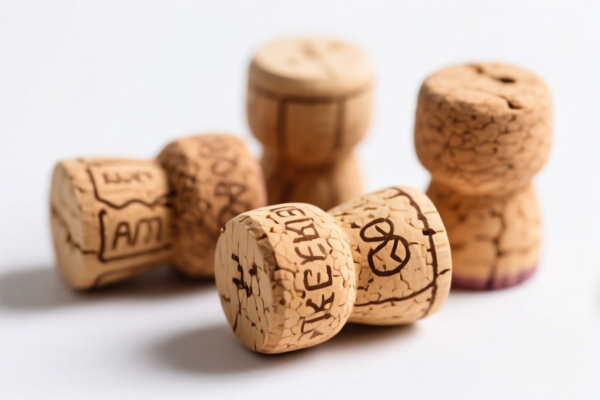
A Conical Natural Cork Stopper is a sealing device primarily used in the wine and spirits industry. It is crafted from the bark of the Quercus suber (Cork Oak) tree. The "conical" shape refers to its tapered geometry, designed to create a tight seal within glass bottles. In international trade, these are classified based on their material composition (100% natural cork) and physical form (stopper/plug).
⚠️ Key Distinction Points:
- If it is 100% Natural Cork → It falls under Chapter 45 (Natural Cork).
- If it is Agglomerated Cork (cork particles bound with binder) or Composite Cork (natural + agglomerated) → It may fall under Chapter 40 (Rubber/Cork composites) or other subheadings.
- Critical Factor: The provided data specifies "Natural Cork", so we strictly adhere to HS Code 4503 and related 4504 entries for inferred logical classification of cork stoppers.
📦 II. HS Code Classification Details (2026 Latest Tariff Authority Comparison)
The following HS codes are derived from the provided data, focusing on natural cork stoppers. All listed codes carry a Total Tax Rate of 35.0% for imports from China to the US (assuming current trade restrictions apply).
| HS Code | Product Description | Application Scenario | Classification Logic |
|---|---|---|---|
4503.10.20.00 |
Natural Cork, Material is Natural Cork, Classified as Natural Cork Products | Standard conical natural cork stoppers made entirely of harvested cork bark | ✅ Primary Fit: Focuses on the material aspect of natural cork products |
4503.10.60.00 |
Natural Cork Stopper, Form is Stopper, Classified as Cork Stoppers & Plugs | Conical shape specifically identified as a "stopper" | ✅ Functional Fit: Focuses on the form as a stopper |
4502.00.00.00 |
Natural Cork, Material is Natural Cork, Form is Stopper, Classified as Natural Cork & Uses | General classification for natural cork articles including stoppers | ✅ Broad Fit: Covers natural cork articles broadly |
4504.10.45.00 |
Natural Cork Stopper, Material is Natural Cork, Form is Plug, Inferred Logic | For stoppers that may involve slight processing but retain natural characteristics | ✅ Inferred Fit: Based on logical inference of cork plug status |
4504.10.47.00 |
Natural Cork Stopper, Material is Natural Cork, Form is Stopper, Meets Cork Stopper Requirements | Specific subcategory for cork stoppers meeting industry standards | ✅ Specific Fit: Meets specific regulatory requirements for cork stoppers |
🔍 Important Note:
- All these HS codes relate to Natural Cork. If your product contains agglomerated cork (reconstituted cork dust), it should NOT be classified under 4503. Instead, it may fall under 4504 (Agglomerated cork) or even 4016 (Rubber/cork composites).
- The conical shape is a physical characteristic but does not change the fundamental classification from Chapter 45.
- Do not mix "Natural Cork" (Chapter 45) with "Synthetic Cork" (Chapter 39 or 40).
💰 III. 2026 Latest Tariff Rate Breakdown (Including Additional Duties, Policy Add-ons)
✅ Applicable Country: United States (US)
✅ Origin: China (CN)
✅ Effective Time: 2025/2026 (Current Trade Policy)
All listed HS codes below share the same tax structure based on the provided data:
🎯 General Tax Structure for Natural Cork Stoppers
| Item | Content |
|---|---|
| Base Tariff Rate | 0.0% (ad valorem) |
| Section 301 Additional Tariff | +25.0% (from USITC Footnote 9903.88.01 or similar Section 301 list) |
| Section 122 Tariff / IEEPA Add-on | +10.0% (Additional tariff clause, often linked to national security or trade balance measures) |
| Total Tax Rate | 35.0% |
| Tax Calculation | CIF Value × 35% |
| De Minimis Exemption | ❌ Not Applicable (Deny de minimis for China-origin goods under Section 301) |
| Legal Basis Path | Section 301: 9903.88.01 → Section 122: 9903.xx.xx → HS Code: 4503.10.xxxx |
📌 Explanation:
- Base Rate 0%: Natural cork is generally exempt from base import duties in the US.
- Section 301 Tariff (25%): This is the most significant cost driver for Chinese-manufactured goods. It applies to most cork products from China.
- Section 122 / IEEPA (10%): This additional layer reflects ongoing trade tensions and specific policy measures against Chinese imports.
- Total 35%: This is a high tariff rate. Importers must factor this into their landed cost calculation.
🛠️ IV. Customs Clearance Practical Advice (Pitfall Avoidance Guide)
✅ 1. Required Documentation Checklist
| Document | Mandatory | Explanation |
|---|---|---|
| ✅ Product Specification Sheet | ✔️ | Must explicitly state: "100% Natural Cork," "Conical Shape," "No Agglomerated Materials." |
| ✅ Material Declaration | ✔️ | Proof that the cork is natural, not synthetic or agglomerated. Include supplier certificates. |
| ✅ Commercial Invoice | ✔️ | Clearly describe as "Conical Natural Cork Stoppers for Wine Bottles." Avoid vague terms like "cork pieces." |
| ✅ Packing List | ✔️ | Detail the quantity, weight, and packaging type. Ensure consistency with the invoice. |
| ✅ Certificate of Origin (CO) | ✔️ | Required to prove Chinese origin and apply (or deny) preferential treatments (none applicable here). |
| ✅ Photos of Products | ✔️ | Show the natural texture and conical shape. Helps customs officers verify material type. |
✅ 2. Declaration Tips (Key Mantras)
🔥 "Natural is Key, Shape is Secondary, Invoice Must Be Precise!"
| Scenario | Correct Declaration Method | Incorrect Practice |
|---|---|---|
| 100% Natural Cork | 4503.10.20.00 or 4503.10.60.00 |
Misdeclare as "Agglomerated Cork" → Lower tariff but high risk of penalty |
| Agglomerated Cork | 4504.10.45.00 (if inferred) |
Misdeclare as "Natural Cork" → 35% tariff vs. potentially lower for agglomerated |
| Synthetic Cork | 4016.93.00.00 or 3926.90 |
Misdeclare as "Natural Cork" → Severe penalty for fraud |
| Composite Cork (Natural top + Agglomerated body) | 4016.93.00.00 |
Misdeclare as "Natural Cork" → Classification error |
✅ 3. Special Circumstances Handling
| Situation | Handling Advice |
|---|---|
| OEM Custom Cork Stoppers | Provide client order + design specs. Emphasize "Natural Material" in all docs. |
| Cork Stoppers with Labels/Branding | Still classified under HS Code 4503. The branding doesn’t change the material classification. |
| Cork Stoppers with Plastic Caps | If the plastic cap is integral, consult customs on whether it’s "part of the stopper" or a separate item. Usually, it’s still classified under the main material if minor. |
| Samples vs. Commercial Goods | Even samples are subject to duty if over de minimis value. Declare accurately. |
🌍 V. Global Market Comparison (2026 Latest)
| Country/Region | Recommended HS Code | Tariff Rate | Certification Requirements | Notes |
|---|---|---|---|---|
| 🇺🇸 United States | 4503.10.20.00 / 4503.10.60.00 |
35% (China) | None specific, but must comply with FDA (if food contact) | High tariff due to Section 301 |
| 🇪🇺 European Union | 4503.10.00.00 |
0% (Most MFN rates) | FSC Certification recommended | No Section 301 equivalent |
| 🇨🇳 China | 4503.10.20.00 |
0% | N/A | Export from China may have VAT refund |
| 🇬🇧 United Kingdom | 4503.10.00.00 |
0% | Post-Brexit rules apply | Generally low tariff |
| 🇨🇦 Canada | 4503.10.00.00 |
0% (CUSMA) | N/A | Preferential if Canadian origin |
📌 Conclusion:
- US Market: Highest cost due to 35% total tariff.
- EU/UK/Canada: Much more favorable, often 0%.
- Strategy: If targeting the US, consider supplier diversification (e.g., sourcing from Portugal or Spain) to mitigate tariffs.
📌 VI. Common Errors & Pitfalls (Lessons Learned)
❌ Mistake 1: Declaring Agglomerated Cork as Natural Cork
👉 Consequence: If detected, customs may levy penalties, back taxes, and delay shipment. Risk of fraud charges.
❌ Mistake 2: Using vague descriptions like "Cork Accessories"
👉 Consequence: Customs may assign a higher duty rate or hold the shipment for inspection.
❌ Mistake 3: Ignoring the Section 301 impact
👉 Consequence: Unexpected 25% cost increase. Budget accordingly.
❌ Mistake 4: Mixing Natural and Agglomerated in one shipment without clear separation
👉 Consequence: Each item must be classified correctly. Misclassification leads to audit risks.
✅ Correct Practice:
"Conical Natural Cork Stoppers, 100% Natural Cork, Wine Bottle Seals, Model XYZ, FSC Certified (if applicable), Origin: Portugal/China"
🎯 VII. Conclusion: Professional Declaration, Save Time & Money!
🎯 Remember the Mantra:
🔹 "Natural vs. Agglomerated: Know the Difference!"
🔹 "US Tariff 35%: Plan Your Cost!"
🔹 "Invoice Precision: Avoid Customs Hold!"
📌 Pro Tip:
- If you are importing Natural Cork from China to the US, expect a 35% total tariff.
- Consider pre-ruling with CBP if the product’s natural content is borderline.
- For EU/UK markets, the 0% tariff makes it highly competitive.
📣 Immediate Action:
📞 Consult a licensed customs broker + Provide detailed material specs + Verify Section 301 applicability
🚀 Ensure smooth clearance, minimize costs, and maximize profit margins!
✨ Professional Clearance Starts with Accurate Classification!
💼 Every penny of tariff cost deserves precise calculation!
Customer Reviews
About HS Code Classification
The Harmonized System (HS) is an internationally standardized nomenclature developed by the World Customs Organization (WCO) to classify traded products. Over 200 countries use the HS system as the basis for customs tariffs, trade statistics, and import/export regulations.
Each HS code follows a hierarchical structure:
- Chapter (2 digits) — Broad category of goods (e.g., Chapter 84: Machinery and Mechanical Appliances)
- Heading (4 digits) — More specific grouping within the chapter
- Subheading (6 digits) — Internationally standardized breakdown, used by all WCO member countries
- National subdivisions (8-10 digits) — Country-specific extensions for further classification, such as US HTSUS 10-digit codes
Correct HS code classification is essential for smooth customs clearance, accurate duty payment, and compliance with trade regulations. Misclassification can lead to customs delays, overpayment of duties, or penalties.
When importing from CN to US, the applicable tariff rates may include:
- Most-Favored-Nation (MFN) rate — The standard duty rate applied to WTO members
- General rate — Applied to countries without trade agreements
- Trade remedy duties — Additional tariffs such as Section 301 (anti-dumping), Section 232 (national security), or countervailing duties
The information provided on this page is for reference purposes only. For official classification, please consult with your local customs authority or a licensed customs broker.