Conifer Splitting Wedge
CN → US| HS Code | Tariff Rate | Origin | Destination | Doc |
|---|---|---|---|---|
| 4403110020 | 35.0% | CN | US | Official Doc |
| 4403260115 | 35.0% | CN | US | Official Doc |
| 4403260112 | 35.0% | CN | US | Official Doc |
| 4403110020 | 35.0% | CN | US | Official Doc |
| 4403260115 | 35.0% | CN | US | Official Doc |
Product Images
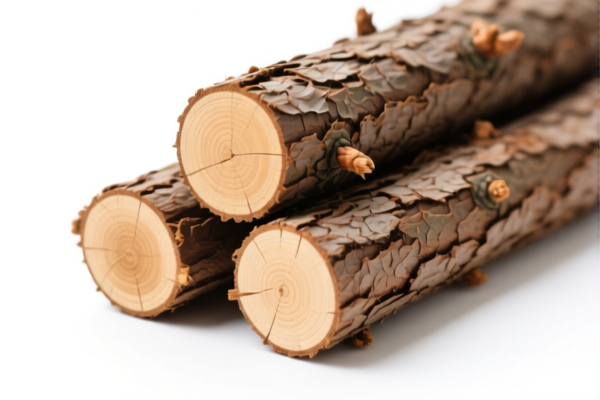
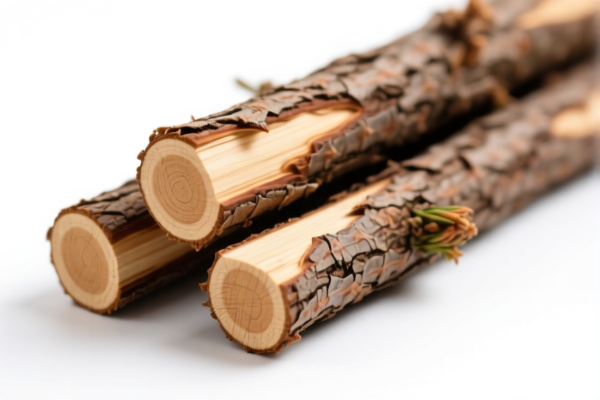
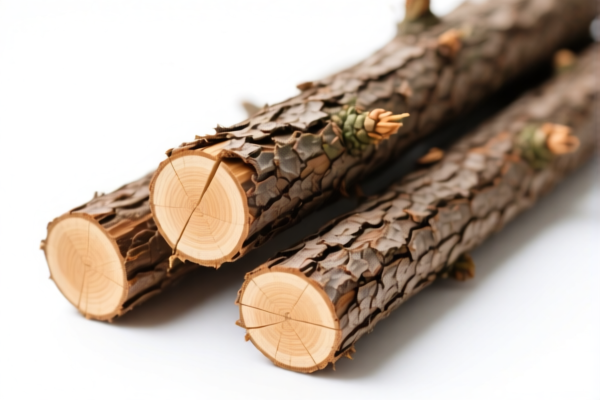
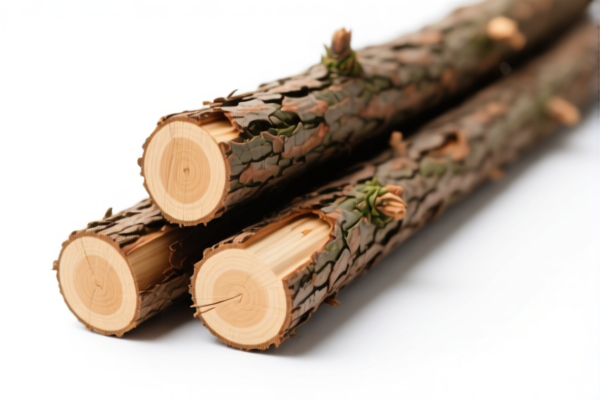
AI Analysis
🪓 Conifer Splitting Wedge (Conifer Log Splitting Stakes)
🌐 HS Code Reference & Customs Clearance Guide | 2026 Latest Tariff Analysis | Professional Clearance Strategy
📌 Part 1: Product Definition & Classification: Do You Really Understand "Conifer Splitting Wedges"?
"Conifer Splitting Wedges" (often referred to as Conifer Splitting Stakes or Wooden Stakes) are specialized wooden products used primarily in construction, landscaping, or industrial applications. Unlike raw timber, these products undergo specific processing (splitting) to achieve a particular shape and utility.
In international trade, the classification depends heavily on: 1. The Material: Coniferous wood (Softwood). 2. The Process: Splitting (mechanical separation of wood fibers). 3. The Form: Stakes, poles, or piles.
⚠️ Key Distinction:
- If the wood is merely unprocessed logs → It might fall under different subheadings (e.g., 4403.10/4403.26 raw timber).
- If the wood is split into specific shapes (wedges/stakes) → It falls under specific subheadings for splitting timber or wooden stakes/poles, which often carry specific tariff liabilities under US trade laws (Section 301 and IEEPA).
📦 Part 2: HS Code Classification Details (2026 Latest Tariff Authoritative Comparison)
Based on the product description "Conifer Splitting Wedge" (coniferous wood, split form), the following HS Codes from your data apply. These codes specifically target coniferous wood that has been split into stakes or poles.
| HS Code | Product Description | Applicable Scenario | Key Classification Feature |
|---|---|---|---|
4403.11.00.20 |
Coniferous Splitting Stakes | Wooden stakes made of coniferous wood, split shape, matching coniferous pole characteristics. | Splitting + Conifer + Pole/Stake Form |
4403.26.01.15 |
Coniferous Splitting Stakes | Matches the classification attributes of "wooden stakes/poles" (pole-like classification). | Splitting + Conifer + Stake Classification |
4403.26.01.12 |
Coniferous Splitting Wooden Stakes | Made of coniferous wood, stake form, meeting the classification requirements for coniferous timber/roundwood. | Splitting + Conifer + Stake/Form Requirement |
4403.11.00.20 |
Coniferous Splitting Wooden Stakes | Unspecified use, but clearly a coniferous wooden stake product. | Splitting + Conifer + Unspecified Use Stake |
🔍 Critical Note:
- All listed codes are for Coniferous (Softwood) wood.
- The term "Splitting" (劈裂) is the critical differentiator from raw sawn timber or planed wood.
- The term "Stakes/Poles" (杆桩/木桩) indicates the final form is not just a block of wood, but a structural element.
💰 Part 3: 2026 Latest Tariff Rate Details (Including Surcharges & Policy Add-ons)
✅ Applicable Country: United States (US)
✅ Country of Origin: China (CN)
✅ Effective Date: 2025 November 10 onwards (including subsequent imports)
🎯 1. HS Codes: 4403.11.00.20, 4403.26.01.15, 4403.26.01.12
| Item | Content |
|---|---|
| Base Tariff Rate | 0.0% (ad valorem) |
| USITC Additional Tariff | +25.0% (Under USITC Footnote for Section 301) |
| IEEPA Additional Tariff | +10.0% (Specific to Chinese/HK products, effective from Nov 10, 2025) |
| Total Tariff Rate | 35.0% |
| Tax Calculation | CIF Value × 35% |
| De Minimis Exemption Eligible? | ❌ NO (deny_de_minimis) |
| Legal Basis Path | IEEPA:9903.01.25 → IEEPA:9903.01.24 → USITC:4403.xx → FOOTNOTE:301 |
📌 Explanation:
- "Base Tariff 0%": The standard Most Favored Nation (MFN) rate for these specific split timber products is nominally 0%.
- "USITC Additional Tariff 25%": This is the Section 301 Tariff imposed on a wide range of Chinese goods, including many wood products.
- "IEEPA 10% Tariff": This is the new additional tariff under the International Emergency Economic Powers Act (IEEPA), specifically targeting Chinese-origin goods, effective from November 10, 2025.
- Total 35%: This is a high tariff burden. Importers must budget significantly for this cost.
🛠️ Part 4: Customs Clearance Practical Advice (Avoiding Pitfalls)
✅ 1. Required Documentation Checklist (Non-negotiable)
| Document | Mandatory? | Explanation |
|---|---|---|
| ✅ Product Specification Sheet | ✔️ | Must specify: Material (Coniferous), Process (Splitting), Dimensions, Usage. |
| ✅ Photos of Products | ✔️ | Clear images showing the split surface and stake/pole shape. Avoid images that look like raw logs. |
| ✅ Commercial Invoice | ✔️ | Must clearly state: "Coniferous Splitting Stakes/Wedges" and HS Code. |
| ✅ Packing List | ✔️ | Detailed list of quantities, weights, and packaging type. |
| ✅ Certificate of Origin (CO) | ✔️ | Essential for verifying Chinese origin to apply correct tariffs (and confirm lack of exemptions). |
| ✅ Supply Chain Statement | ✔️ | Confirm no transshipment from third countries to avoid origin fraud issues. |
✅ 2. Declaration Tips (Key Mantra)
🔥 "Split Shape, Coniferous Wood, HS 4403, Tariff 35%!"
| Scenario | Correct Declaration | Wrong Practice |
|---|---|---|
| Product is Split Stakes | Use 4403.11.00.20 or 4403.26.01.15 | Declare as "Raw Timber" (4403.10) → Risk of misclassification penalty. |
| Product is Planed/Sawn Wood | Different HS Code (e.g., 4407) | Declare as "Splitting Stakes" → 35% vs lower rate? Check carefully! If it's planed, 35% might not apply, but if it's split, it does. |
| Mixed Conifer/Deciduous | Split shipment or declare highest risk | Declare all as conifer → Penalty for false declaration. |
| Using "Wooden Poles" as Name | Use "Splitting Stakes" to match HS description | Vague terms like "Wooden Parts" → Customs Query/Delay. |
📌 Note on "Splitting":
- Ensure the product description explicitly mentions "Split" (劈裂) or "Splitting" (劈裂木).
- If the wood is merely sawn (锯材) but not split, the HS code and tariff might differ. Splitting is a key process for these specific codes.
✅ 3. Special Circumstances Handling
| Situation | Handling Advice |
|---|---|
| OEM Custom Sizes | Provide detailed dimensions. Ensure they fit the "Stake/Pole" definition. |
| Treated Wood | If anti-rot treatment is applied, declare material + treatment. May require ISPM 15 phytosanitary certificate. |
| Mixed Shipment | If coniferous and deciduous wood are mixed, separate them. Deciduous wood may have different tariffs. |
| Transshipment | Do not route through Vietnam/Malaysia to claim non-origin status unless legitimately processed there. This is fraud. |
🌍 Part 5: Global Market Comparison (2026 Latest)
| Country/Region | Recommended HS Code | Tariff Rate | Certification | Remarks |
|---|---|---|---|---|
| 🇺🇸 USA | 4403.11.00.20 / 4403.26.01.15 |
35% (Base 0% + 25% + 10%) | ISPM 15 (if wood) | High Tariff. No de minimis. |
| 🇨🇳 China | 4403.11.00.20 / 4403.26.01.15 |
~0% - 5% (Import) | N/A | No additional tariffs. |
| 🇪🇺 EU | 4403.94.00 / 4403.99.00 |
~0% - 5% | CE (if consumer), ISPM 15 | Generally lower tariffs than US. |
| 🇬🇧 UK | 4403.94.00 / 4403.99.00 |
~0% - 5% | ISPM 15 | Post-Brexit rules apply. |
| 🇯🇵 Japan | 4403.10.000 / 4403.29.000 |
~0% - 5% | ISPM 15 | FSC certification may help. |
📌 Conclusion:
- The US is the only major market with the 35% combined tariff for these specific coniferous splitting stakes.
- Cost Impact: A $10,000 shipment will incur $3,500 in duties.
- No Exemptions: The new IEEPA 10% tariff removes previous loopholes.
📌 Part 6: Common Errors & Pitfalls (Blood Lessons)
❌ Error 1: Declaring as "Raw Logs" (4403.10) to avoid Section 301
👉 Consequence: Customs will inspect and reclassify as "Splitting Stakes" → Back taxes + Penalties + Delay.
❌ Error 2: Ignoring the "IEEPA 10%" tariff
👉 Consequence: Pre-November 2025, the tariff was 25%. Post-November 2025, it is 35%. Under-declaring leads to seizure.
❌ Error 3: Using vague terms like "Wooden Sticks"
👉 Consequence: Customs may classify under a higher-tariff residual category or reject the entry.
❌ Error 4: Assuming "De Minimis" applies
👉 Consequence: NO de minimis for these goods from China. Even small samples are subject to 35% duty.
✅ Correct Approach:
"Coniferous Splitting Stakes, Unprocessed Wood, Split Form, for Construction Use, HS Code: 4403.11.00.20, Tariff: 35%"
🎯 Part 7: Conclusion: Precise Classification Saves Money!
🎯 Remember the Mantra:
🔹 "Splitting Stakes, Coniferous Wood, 35% Tax, No De Minimis!"
🔹 "Base 0%, Section 301 25%, IEEPA 10%, Total 35%!"
🔹 "HS Code 4403.11/4403.26, Accurate Description, Smooth Clearance!"
📌 Pro Tip:
- If you are importing large volumes, consider negotiating Cost, Insurance, and Freight (CIF) terms carefully, as the 35% duty is calculated on the CIF value.
- Apply for an Advance Ruling from US Customs (CBP) if you are unsure about the "Splitting" vs. "Sawn" distinction. This provides legal certainty.
- Check for FSC Certification: While it doesn't reduce tariffs, it may be required by specific US clients or for green building projects (LEED).
📣 Immediate Action:
📞 Consult a licensed customs broker + Provide product photos + Confirm HS Code 4403.11.00.20 or 4403.26.01.15
🚀 Ensure your invoice clearly states "Splitting Stakes" and "Coniferous Wood" to avoid classification disputes.
✨ Professional Customs Clearance Starts with Precise Classification!
💼 Every 1% of Tariff is 1% of Your Profit! Protect It!
Customer Reviews
About HS Code Classification
The Harmonized System (HS) is an internationally standardized nomenclature developed by the World Customs Organization (WCO) to classify traded products. Over 200 countries use the HS system as the basis for customs tariffs, trade statistics, and import/export regulations.
Each HS code follows a hierarchical structure:
- Chapter (2 digits) — Broad category of goods (e.g., Chapter 84: Machinery and Mechanical Appliances)
- Heading (4 digits) — More specific grouping within the chapter
- Subheading (6 digits) — Internationally standardized breakdown, used by all WCO member countries
- National subdivisions (8-10 digits) — Country-specific extensions for further classification, such as US HTSUS 10-digit codes
Correct HS code classification is essential for smooth customs clearance, accurate duty payment, and compliance with trade regulations. Misclassification can lead to customs delays, overpayment of duties, or penalties.
When importing from CN to US, the applicable tariff rates may include:
- Most-Favored-Nation (MFN) rate — The standard duty rate applied to WTO members
- General rate — Applied to countries without trade agreements
- Trade remedy duties — Additional tariffs such as Section 301 (anti-dumping), Section 232 (national security), or countervailing duties
The information provided on this page is for reference purposes only. For official classification, please consult with your local customs authority or a licensed customs broker.