Coniferous Farm Fence Palings
CN → US| HS Code | Tariff Rate | Origin | Destination | Doc |
|---|---|---|---|---|
| 4418999195 | 38.2% | CN | US | Official Doc |
| 4418890000 | 38.2% | CN | US | Official Doc |
| 4407190093 | 35.0% | CN | US | Official Doc |
| 4407190002 | 35.0% | CN | US | Official Doc |
| 4409109040 | 35.0% | CN | US | Official Doc |
| 4409109020 | 35.0% | CN | US | Official Doc |
Product Images
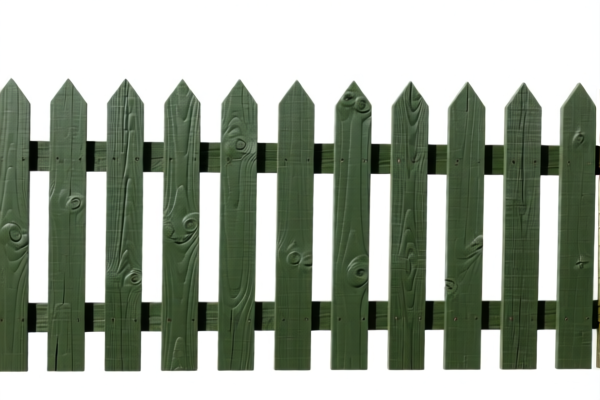
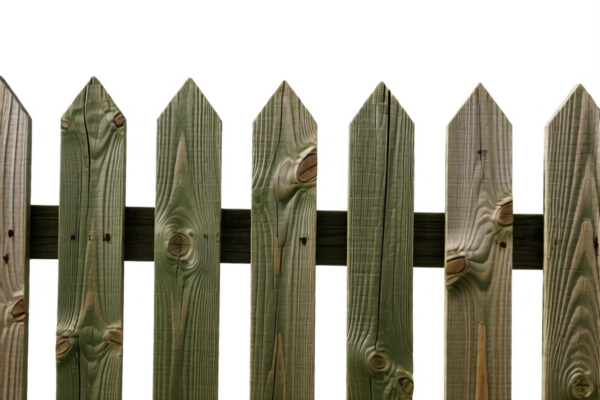
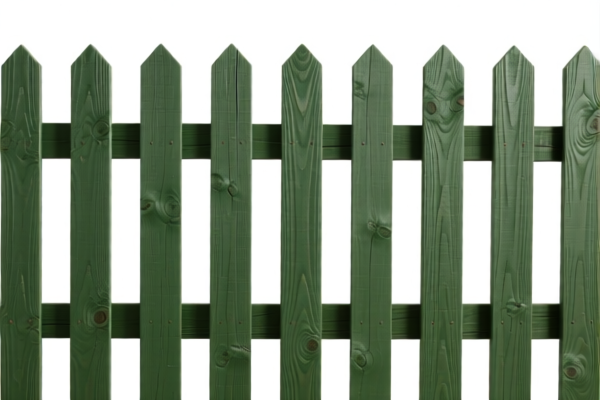
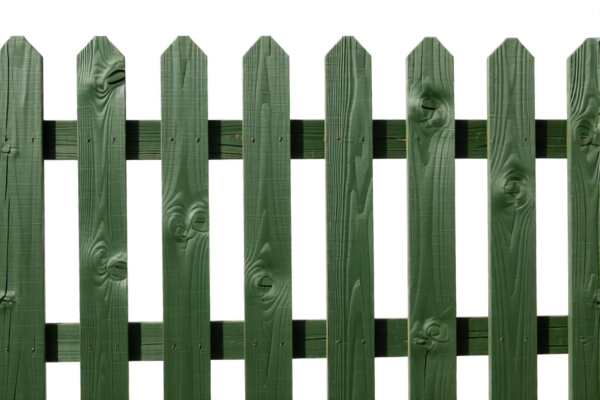
AI Analysis
🌲 Coniferous Farm Fence Palings (Wooden Fencing Posts/Pickets)
🌐 HS Code Reference & Customs Clearance Guide | 2026 Latest Tariff Analysis | Professional Clearance Strategy
📌 I. Product Definition & Classification: What Are "Farm Fence Palings"?
Coniferous Farm Fence Palings refer to wooden stakes, posts, or pickets made from coniferous wood (such as Pine, Spruce, Fir, or Western Red Cedar), specifically designed for constructing fences, boundaries, or agricultural barriers.
In international trade, the classification depends heavily on the processing level of the wood: * Roughly Shaped/Unprocessed: If the wood is merely sawn to length and cross-section, possibly debarked but not finely shaped, it falls under Sawn Wood. * Continuously Shaped: If the wood has been tongued, grooved, chamfered, molded, or specifically profiled along its edges or faces for easy assembly into fences, it falls under Continuously Shaped Wood.
⚠️ Critical Distinction:
- If the palings are plain rectangular prisms (sawn to size) → Likely 4407 (Sawn Wood).
- If the palings have special profiles (e.g., V-joints, molded edges, tongue-and-groove for interlocking) → Likely 4409 (Continuously Shaped Wood).
- If the palings are treated (painted, creosoted) → Different sub-codes apply.
📦 II. HS Code Classification Details (Based on Provided Data)
| HS Code | Product Description | Applicable Scenario | Key Characteristics |
|---|---|---|---|
4409.10.90.40 |
Continuously shaped coniferous wood: Other | Standard shaped fence posts/pickets with profiles (e.g., chamfered, molded, V-jointed) | ✅ Profiled |
4409.10.90.20 |
Continuously shaped coniferous wood: Western Red Cedar | Fence palings made specifically from Western Red Cedar with profiles | ✅ Cedar + Profiled |
4407.19.00.93 |
Sawn wood (thickness > 6mm), coniferous: Not treated: Other | Plain sawn fence posts, untreated, not finely shaped | ✅ Plain Sawn + Untreated |
4407.19.00.02 |
Sawn wood (thickness > 6mm), coniferous: Treated | Fence posts painted, stained, or creosoted | ✅ Treated |
🔍 Key Insight:
- 4409 codes require the wood to be continuously shaped (e.g., rounded, molded, tongued). If your fence palings are just straight sawn sticks, use 4407.
- 4407.19.00.02 is critical if you use preservatives; untreated wood goes to 4407.19.00.93.
- Western Red Cedar has a specific code (4409.10.90.20) only if it is continuously shaped. If plain sawn, it may fall under general coniferous sawn wood codes (not explicitly detailed in the 4407 section for cedar specifically, but usually grouped under "Other Coniferous").
💰 III. 2026 Latest Tariff Rate Breakdown (Including Surtaxes & Policy Surcharges)
✅ Applicable Country: United States (US)
✅ Origin: China (CN)
✅ Effective Date: 2025+ (Current Policy Context)
🎯 1. 4409.10.90.40 — Continuously Shaped Coniferous Wood (Other)
| Item | Details |
|---|---|
| Base Tariff | 0.0% |
| Additional Surtax (Section 301) | +25.0% |
| Total Tariff Rate | 25.0% |
| Tax Calculation | CIF Value × 25% |
| Legal Basis | USITC Footnote for Coniferous Wood Surtax |
📌 Explanation:
- "Base Tariff 0%" reflects the standard MFN rate for certain shaped woods.
- The 25% surtax is a Section 301 tariff applied to many Chinese-origin wood products.
- Total Cost Impact: 25% of the declared value. This is not negligible and must be factored into your landed cost.
🎯 2. 4409.10.90.20 — Western Red Cedar (Continuously Shaped)
| Item | Details |
|---|---|
| Base Tariff | 0.0% |
| Additional Surtax (Section 301) | +25.0% |
| Total Tariff Rate | 25.0% |
| Tax Calculation | CIF Value × 25% |
| Legal Basis | Same as above |
📌 Note:
- Even though Western Red Cedar is a premium material, it is not exempt from the 25% surtax under current US-China trade policies.
- Ensure the wood is declared as Western Red Cedar accurately; misclassification could lead to audits.
🎯 3. 4407.19.00.93 — Sawn Wood, Coniferous, Untreated, Other
| Item | Details |
|---|---|
| Base Tariff | 0.0% |
| Additional Surtax (Section 301) | +25.0% |
| Total Tariff Rate | 25.0% |
| Tax Calculation | CIF Value × 25% |
| Legal Basis | USITC Footnote for Coniferous Wood Surtax |
📌 Warning:
- Many importers assume plain sawn wood has lower duties. While the base is 0%, the 25% surtax still applies.
- Untreated is key here. If you add any preservative, the code changes.
🎯 4. 4407.19.00.02 — Sawn Wood, Coniferous, Treated (Paint/Stain/Creosote)
| Item | Details |
|---|---|
| Base Tariff | 0.0% |
| Additional Surtax (Section 301) | +25.0% |
| Total Tariff Rate | 25.0% |
| Tax Calculation | CIF Value × 25% |
| Legal Basis | USITC Footnote for Coniferous Wood Surtax |
📌 Note:
- Treated wood requires additional documentation (see Clearance Tips).
- The surtax remains 25%.
🛠️ IV. Customs Clearance Practical Advice (Avoid Pitfalls)
✅ 1. Documentation Checklist (Mandatory)
| Document | Required? | Description |
|---|---|---|
| ✅ Commercial Invoice | ✔️ | Must specify "Coniferous Wood Fence Palings," material type (e.g., Pine, Cedar), and dimensions. |
| ✅ Packing List | ✔️ | List quantity, weight, and number of bundles/pallets. |
| ✅ Bill of Lading/Air Waybill | ✔️ | Standard shipping document. |
| ✅ Phytosanitary Certificate | ✔️ | CRITICAL for all wood products from China. Proves freedom from pests/diseases. |
| ✅ Wood Treatment Certificate | ✔️ | If using 4407.19.00.02 (Treated), provide proof of treatment (e.g., creosote, paint). |
| ✅ Fumigation Certificate | ✔️ | Often required if phytosanitary certificate doesn't cover fumigation. |
| ✅ Product Photos | ✔️ | Show cross-sections, ends, and any markings/labels. |
✅ 2. Declaration Tips (Key Mnemonic)
🔥 "Profile or Plain? Treated or Raw? Phytosanitary is a MUST!"
| Scenario | Correct Declaration | Mistake to Avoid |
|---|---|---|
| Plain Sawn, Untreated | 4407.19.00.93 + "Untreated Sawn Wood" |
Declaring as "Fence" (may trigger different codes) |
| Plain Sawn, Treated | 4407.19.00.02 + "Creosoted/Painted Sawn Wood" |
Failing to mention treatment → Risk of seizure |
| Profiled, Generic Conifer | 4409.10.90.40 + "Continuously Shaped Pine Wood" |
Using "Cedar" code for Pine → Misclassification |
| Profiled, Western Red Cedar | 4409.10.90.20 + "Shaped Western Red Cedar" |
Generalizing to "Other" → Higher risk of audit |
✅ 3. Special Handling Cases
| Situation | Advice |
|---|---|
| OEM Custom Shapes | Provide technical drawings to prove "continuous shaping" (Tongue/Groove/Molded). |
| Mixed Materials | If fence includes metal brackets, declare separately or ensure wood is the principal material. |
| Heat-Treated Wood (HT) | If wood is heat-treated per ISPM 15, mark with HT stamp. This can simplify phytosanitary requirements. |
| Cedar vs. Pine | Do not declare Pine as Cedar to avoid false origin claims. Accurate botanical name is preferred. |
🌍 V. Global Market Comparison (2026 Context)
| Country/Region | Recommended HS Code | Tariff (China Origin) | Key Requirement | Note |
|---|---|---|---|---|
| 🇺🇸 USA | 4407.19.00.93 / 4409.10.90.40 |
25% (Total) | Phytosanitary + HT Mark | High scrutiny on wood pests |
| 🇨🇳 China | 4407 / 4409 |
~0-10% | Fumigation Certificate | Lower base tariffs |
| 🇪🇺 EU | 4407 / 4409 |
~0-5% | ISPM 15 Compliance | Strict pest controls |
| 🇬🇧 UK | 4407 / 4409 |
~0-5% | ISPM 15 Compliance | Post-Brexit rules apply |
| 🇦🇺 Australia | 4407 / 4409 |
~5-10% | Biosecurity Permit | Extremely strict wood imports |
📌 Conclusion:
- USA imposes a flat 25% surtax on these wood products regardless of base rate.
- Biosecurity/Phytosanitary is the biggest hurdle globally for wood products.
- Ensure ISPM 15 compliance (fumigation or heat treatment) to avoid delays in any market.
📌 VI. Common Errors & Pitfall Guide (Lessons Learned)
❌ Error 1: Missing Phytosanitary Certificate
👉 Result: Goods held at port for weeks, possible destruction or re-export.
✅ Fix: Obtain certificate from Chinese Customs before shipment.
❌ Error 2: Declaring "Untreated" when wood is actually creosoted or painted
👉 Result: Wrong HS Code (4407.19.00.93 vs 4407.19.00.02), potential fines for misdeclaration.
✅ Fix: Clearly state treatment type on invoice and provide treatment certificate.
❌ Error 3: Using "Fence Posts" as HS Code instead of Wood Classification
👉 Result: Customs may classify under "Construction Materials" or "Metal Fittings," leading to errors.
✅ Fix: Always declare as Wood Products (Chapter 44) if wood is the principal material.
❌ Error 4: Confusing Sawn (4407) with Shaped (4409)
👉 Result: If palings have molded edges, 4407 is incorrect. If plain, 4409 is incorrect.
✅ Fix: Inspect product profile. If it has any continuous shaping along edges/faces, use 4409.
✅ Correct Declaration Example:
"Coniferous Wooden Fence Palings, Sawn to Size, Untreated, Pine Species, ISPM 15 Fumigated, HS Code: 4407.19.00.93"
🎯 VII. Conclusion: Professional Clearance, Cost Control, Compliance!
🎯 Remember Mnemonic:
🔹 "Profile checks 4409, Plain sawn 4407, Treated needs paper, Untreated needs phytosanitary!"
🔹 "25% Surtax is fixed, don't guess, check the origin, avoid the mess!"
📌 Pro Tip:
If your fence palings are heat-treated (HT) and marked with the HT logo, you can often simplify the phytosanitary process.
Recommend Advance Ruling for complex shaped products to avoid classification disputes.
📣 Immediate Action:
📞 Contact your freight forwarder + Provide Product Photos + Treatment Certificate
🚀 Ensure your wood is ISPM 15 Compliant for smooth global shipping!
✨ Professional Clearance Starts with Accurate Classification!
💼 Your Landed Cost Depends on Correct HS Codes!
Customer Reviews
About HS Code Classification
The Harmonized System (HS) is an internationally standardized nomenclature developed by the World Customs Organization (WCO) to classify traded products. Over 200 countries use the HS system as the basis for customs tariffs, trade statistics, and import/export regulations.
Each HS code follows a hierarchical structure:
- Chapter (2 digits) — Broad category of goods (e.g., Chapter 84: Machinery and Mechanical Appliances)
- Heading (4 digits) — More specific grouping within the chapter
- Subheading (6 digits) — Internationally standardized breakdown, used by all WCO member countries
- National subdivisions (8-10 digits) — Country-specific extensions for further classification, such as US HTSUS 10-digit codes
Correct HS code classification is essential for smooth customs clearance, accurate duty payment, and compliance with trade regulations. Misclassification can lead to customs delays, overpayment of duties, or penalties.
When importing from CN to US, the applicable tariff rates may include:
- Most-Favored-Nation (MFN) rate — The standard duty rate applied to WTO members
- General rate — Applied to countries without trade agreements
- Trade remedy duties — Additional tariffs such as Section 301 (anti-dumping), Section 232 (national security), or countervailing duties
The information provided on this page is for reference purposes only. For official classification, please consult with your local customs authority or a licensed customs broker.