Coniferous Wood Railway Sleeper
CN → US| HS Code | Tariff Rate | Origin | Destination | Doc |
|---|---|---|---|---|
| 4407190092 | 35.0% | CN | US | Official Doc |
| 4407190093 | 35.0% | CN | US | Official Doc |
| 4407190056 | 35.0% | CN | US | Official Doc |
| 4407190055 | 35.0% | CN | US | Official Doc |
Product Images
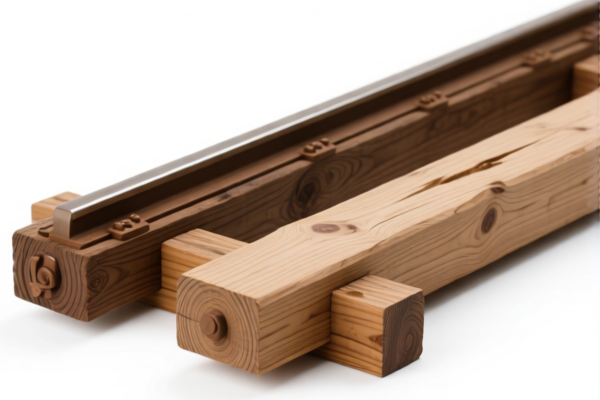
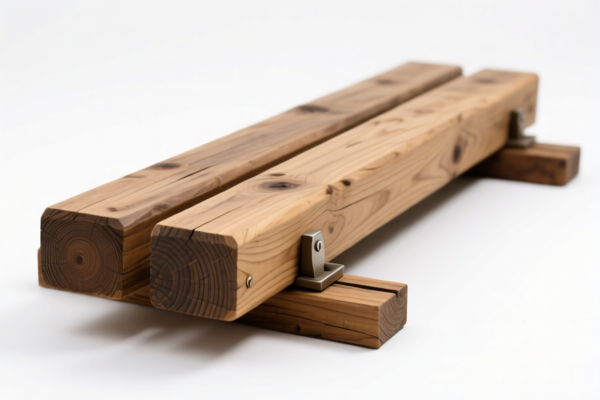
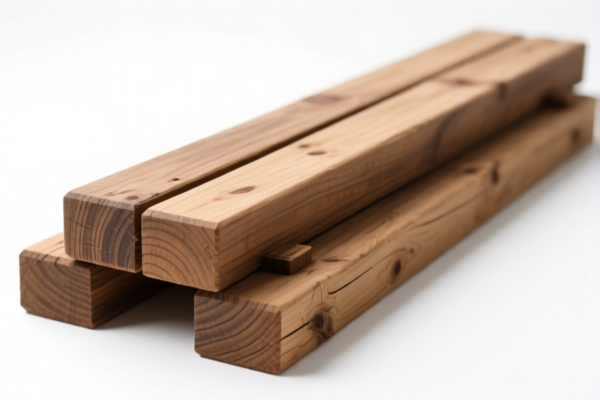
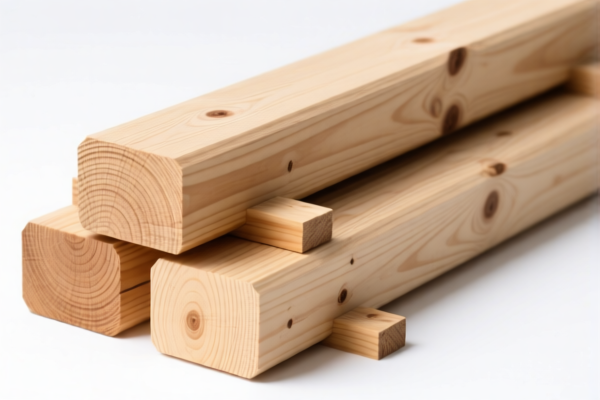
AI Analysis
🚂 Coniferous Wood Railway Sleepers (Train Ties)
🌐 HS Code Reference & Customs Clearance Guide | 2026 Latest Tariff Analysis | Professional Strategy
Railway Sleepers (also known as Train Ties) are the fundamental structural component of railway tracks. They bear the load from the rails, maintain the correct gauge, and transfer the load to the track ballast. When made from Coniferous Wood (softwood), specific HS codes and aggressive tariff structures apply, particularly for imports into the United States from China.
⚠️ Critical Distinction:
- If the wood is sawn lengthwise (longitudinally sawn) → It falls under Heading 4407.
- If the wood is merely shaped but not necessarily longitudinally sawn in the same manner, or if it's processed differently, it may still fall under 4407 but requires precise description.
- Do not confuse with concrete sleepers (Heading 6810) or steel ties (Heading 73).
📦 HS Code Classification Details (Based on Provided Data)
Based on the official data provided, Coniferous Wood Railway Sleepers are classified under HS Code 4407. The specific 8-digit codes depend on the exact material specification and processing form.
| HS Code | Product Description | Key Characteristics | Tax Rate Summary |
|---|---|---|---|
4407.19.00.92 |
Coniferous Wood Railway Sleeper | Material: Coniferous wood; Form: Longitudinally sawn timber. | 35.0% |
4407.19.00.93 |
Coniferous Wood Railway Sleeper | Material: Matches coniferous tree category; Form: Processed timber. | 35.0% |
4407.19.00.56 |
Wooden Railway Sleeper | Material: Wooden; Form: Fits within the scope of longitudinally sawn timber. | 35.0% |
4407.19.00.55 |
Wooden Railway Sleeper | Material: Woody; Form: Processed timber, matches coniferous wood characteristics. | 35.0% |
🔍 Key Insight:
All four listed codes belong to the broader 4407 category ("Wood sawn or chipped lengthwise..."). The distinction between.92,.93,.56, and.55lies in the granular details of the material declaration (e.g., "Coniferous" vs. "Wooden") and the processing state (e.g., "Longitudinally sawn" vs. "Processed").
Crucially, all four codes carry the same total tax burden of 35%.
💰 2026 Latest Tariff Rate Breakdown (Including Surcharges)
✅ Applicable Country: United States (US)
✅ Origin: China (CN) (Inferred from the "122 Clause" and specific surcharge structure)
✅ Effective Time: Current enforcement period
🎯 1. Universal Application for 4407.19.00.x
| Item | Detail |
|---|---|
| Basic Tariff (MFN) | 0.0% |
| Section 301 Surcharge | +25.0% |
| Section 122 Clause Surcharge | +10.0% |
| Total Effective Rate | 35.0% |
| Calculation Basis | CIF Value × 35% |
| De Minimis Exemption? | ❌ No (Not eligible for $800 de minimis exemption for this category due to high surcharge rates and specific exclusions) |
| Legal Basis Path | USITC:4407.19.00.x → Section 301: 25% → Section 122: 10% |
📌 Explanation:
- Basic Tariff (0%): Under normal Most Favored Nation (MFN) treatment, wood products like these often have low or zero base duties.
- Section 301 Surcharge (+25%): This is the standard retaliatory tariff imposed by the US on a wide range of Chinese goods.
- Section 122 Clause (+10%): This specific surcharge often applies to certain imports from countries deemed to have unfair trade practices or for national security reasons. It is distinct from the Section 301 tariff.
- Total 35%: This is a high-cost category. Importers must factor this into their landed cost calculations immediately.
🛠️ Customs Clearance Practical Advice (Operational Pitfall Guide)
✅ 1. Documentation Checklist (Non-Negotiable)
| Document | Required | Purpose |
|---|---|---|
| ✅ Commercial Invoice | ✔️ | Must clearly state: "Coniferous Wood Railway Sleepers", HS Code 4407.19.00.xx, and Country of Origin: China. |
| ✅ Packing List | ✔️ | Detail the quantity, gross/net weight, and dimensions. |
| ✅ Wood Treatment Certificate | ✔️ | Critical! ISPM 15 certification is mandatory to prove the wood is free of pests and insects. Without this, shipment will be rejected/destroyed. |
| ✅ Phytosanitary Certificate | ✔️ | Issued by the exporting country's plant protection agency. |
| ✅ Product Specifications | ✔️ | Include dimensions, type of conifer (e.g., Pine, Spruce), and processing method (longitudinally sawn vs. planed). |
| ✅ Bill of Lading/Air Waybill | ✔️ | Standard shipping documents. |
⚠️ Warning:
- ISPM 15 is not optional. If the wood pallets or the sleepers themselves lack proper stamping/treatment proof, CBP will halt clearance.
- Misdeclaration Risk: Do not declare "Processed Timber" if it is specifically "Longitudinally Sawn". While the tax rate is the same (35%), incorrect description can lead to customs audits, penalties, or delays.
✅ 2. Declaration Strategy (Key Mnemonics)
🔥 "Accurate Species, Clear Form, No Hiding Place!"
| Scenario | Correct Declaration | Incorrect Declaration | Consequence |
|---|---|---|---|
| Material | "Coniferous Wood" (e.g., Pinus spp.) | "Wood" or "Hardwood" | Misclassification risk; potential duty adjustment if wrong species is implied. |
| Form | "Longitudinally Sawn" | "Unprocessed Logs" | Logs have different HS codes and potentially different quotas/penalties. |
| Usage | "For Railway Track Use" | "Construction Material" | Too vague; may trigger additional scrutiny for intended use. |
✅ 3. Special Handling for Coniferous Wood
| Issue | Action |
|---|---|
| Pest Control | Ensure ISPM 15 mark is visible on every sleeper or pallet. Heat treatment or fumigation records must be available. |
| Moisture Content | Specify moisture content in specs. High moisture can lead to rejection by some ports for biosecurity reasons. |
| Origin Proof | Provide Certificate of Origin to prove Chinese origin (for accurate tariff application) or other origin (if transshipped, ensure no substantial transformation). |
🌍 Global Market Comparison (2026)
| Country/Region | Recommended HS Code | Total Tariff Rate | Key Requirement | Notes |
|---|---|---|---|---|
| 🇺🇸 USA | 4407.19.00.92/93/55/56 |
35% | ISPM 15 + COO | High tariff due to Sec 301 & 122. |
| 🇨🇳 China | 4407.19.00 |
Varies (Check Latest) | Phytosanitary Cert | Domestic trade may have different rules. |
| 🇪🇺 EU | 4407.10 or 4407.26 |
Varies (Often 0-5%) | FLEGT/EUTR Compliance | Strict due diligence on legality of timber required. |
| 🇬🇧 UK | 4407.10 |
Varies | UK-TIMS Declaration | Post-Brexit rules apply. |
📌 Conclusion:
- The USA imposes a significant 35% tariff on Chinese coniferous wood sleepers.
- No duty-free access is available under current trade policies.
- Compliance with Phytosanitary standards (ISPM 15) is just as critical as the tariff payment.
📌 Common Errors & Pitfall Guide (Lessons Learned)
❌ Error 1: Declaring as "Building Material" without specifying "Railway Sleeper" or "Coniferous Wood"
👉 Consequence: Customs may reclassify, leading to delays or higher penalties if they suspect misclassification.
❌ Error 2: Missing ISPM 15 Stamp or Treatment Certificate
👉 Consequence: Shipment rejected at port. Demurrage costs can exceed the value of the goods.
❌ Error 3: Assuming "Wooden" is sufficient for HS Code without specifying "Coniferous"
👉 Consequence: While the tax rate is the same in this dataset, incorrect sub-heading can trigger additional regulatory checks for hardwood vs. softwood trade restrictions.
❌ Error 4: Ignoring the "122 Clause" Surcharge
👉 Consequence: Budgeting only for Section 301 (25%) leads to a 10% shortfall in cost estimation, eating into profit margins.
✅ Correct Approach:
"Coniferous Wood Railway Sleepers, Longitudinally Sawn, Treated per ISPM 15, Origin: China, HS Code: 4407.19.00.92"
🎯 Conclusion: Professional Clearance, Cost Control, Compliance!
🎯 Remember the Key Points:
🔹 "35% Total Duty: 25% Sec 301 + 10% Sec 122"
🔹 "ISPM 15 is Mandatory: No Stamp, No Entry"
🔹 "HS Code 4407: Be precise about 'Coniferous' and 'Sawn'"
📌 Pro Tip:
If you are importing large volumes, consider applying for a Tariff Engineering review to see if any processing (outside China) could change the country of origin and potentially reduce tariffs. However, for simple sleeping imports, budget for the 35% cost.
Always engage a licensed customs broker to verify the exact 8-digit code based on the specific wood species and treatment certificate.
📣 Immediate Action:
📞 Contact your customs broker with the Phytosanitary Certificate and Commercial Invoice.
🚀 Ensure ISPM 15 compliance before shipment to avoid port rejection.
💰 Budget for 35% duties to protect your margin.
✨ Professional Clearance Starts with Accurate Classification!
💼 Every percent of duty counts!
Customer Reviews
About HS Code Classification
The Harmonized System (HS) is an internationally standardized nomenclature developed by the World Customs Organization (WCO) to classify traded products. Over 200 countries use the HS system as the basis for customs tariffs, trade statistics, and import/export regulations.
Each HS code follows a hierarchical structure:
- Chapter (2 digits) — Broad category of goods (e.g., Chapter 84: Machinery and Mechanical Appliances)
- Heading (4 digits) — More specific grouping within the chapter
- Subheading (6 digits) — Internationally standardized breakdown, used by all WCO member countries
- National subdivisions (8-10 digits) — Country-specific extensions for further classification, such as US HTSUS 10-digit codes
Correct HS code classification is essential for smooth customs clearance, accurate duty payment, and compliance with trade regulations. Misclassification can lead to customs delays, overpayment of duties, or penalties.
When importing from CN to US, the applicable tariff rates may include:
- Most-Favored-Nation (MFN) rate — The standard duty rate applied to WTO members
- General rate — Applied to countries without trade agreements
- Trade remedy duties — Additional tariffs such as Section 301 (anti-dumping), Section 232 (national security), or countervailing duties
The information provided on this page is for reference purposes only. For official classification, please consult with your local customs authority or a licensed customs broker.