Coniferous Wood Telegraph Poles
CN → US| HS Code | Tariff Rate | Origin | Destination | Doc |
|---|---|---|---|---|
| 4407190056 | 35.0% | CN | US | Official Doc |
| 4407190092 | 35.0% | CN | US | Official Doc |
Product Images
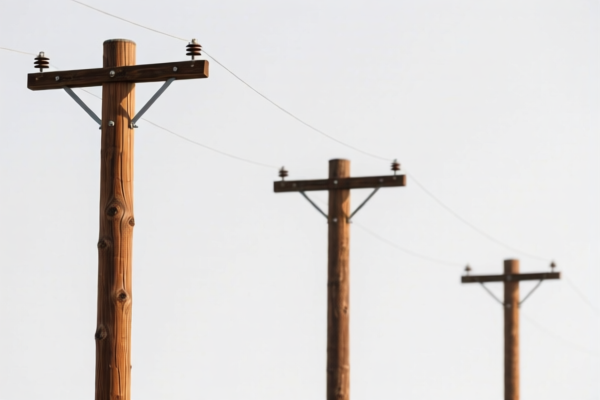
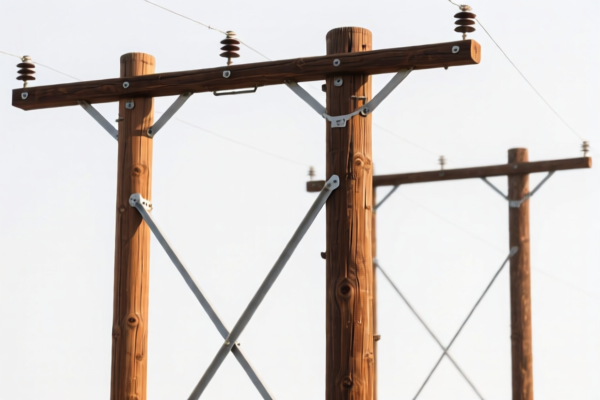
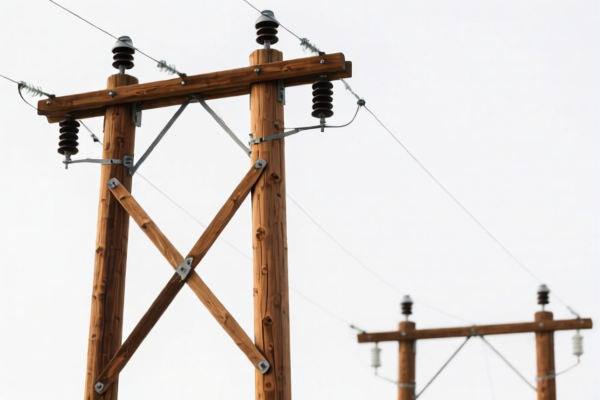
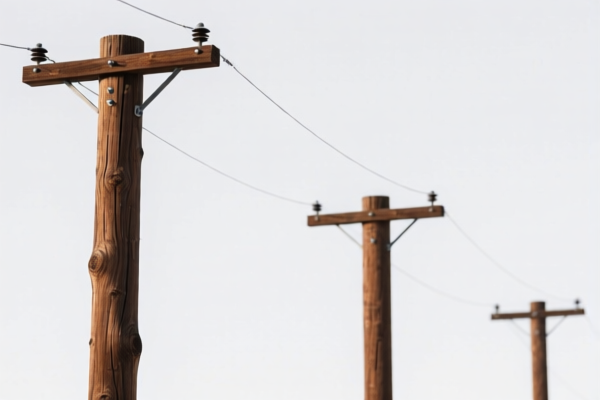
AI Analysis
🌲 Coniferous Wood Telegraph Poles (Log Posts)
🌐 HS Code Reference & Customs Clearance Guide | 2026 Latest Tariff Analysis | Professional Clearance Strategy
📌 One, Product Definition & Classification: Do You Really Understand "Wood Telegraph Poles"?
Coniferous Wood Telegraph Poles (also known as wood log posts or utility poles) are untreated timber products specifically processed for use as support structures for overhead lines, fences, or construction. In international trade, they fall under Chapter 44: Wood and articles of wood; specifically, they are classified as sawn wood because they are lengthwise cut, though they may be planed or sanded.
Key Classification Criteria: 1. Material: Coniferous wood (e.g., Douglas-fir, Pine, Spruce). 2. Processing: Sawn, chipped lengthwise, sliced, or peeled. 3. Thickness: Exceeding 6 mm (if ≤6 mm, it might be veneer; if raw logs, it’s Chapter 4401). 4. Treatment Status: Not treated (untreated timber). 5. Surface Condition: "Rough" or "Other" depending on precision. 6. Specific Species: Often Douglas-fir (Pseudotsuga menziesii) or other softwoods.
⚠️ Critical Distinction:
- If the wood is raw logs (bark still on, not sawn) → 4401.22.00.00
- If the wood is sawn (planed, sanded, or rough-sawn) and thickness > 6mm → 4407.19
- If the wood is heat-treated or chemically treated (preserved) → 4403.42 or similar (different tariff)
- Crucial: For untreated coniferous sawn wood, the HS code depends on the thickness and minimum dimension.
📦 Two, HS Code Classification Details (2026 Latest Tariff Authority Comparison)
Based on the provided , here are the relevant HS Codes for untreated coniferous sawn wood:
| HS Code | Product Description | Applicable Scenario | Key Condition |
|---|---|---|---|
4407.19.00.56 |
Coniferous Sawn Wood, Not Treated: Douglas-fir (Pseudotsuga menziesii), Rough, Min Dimension ≥ 12.7 cm | Large timber logs, heavy-duty telegraph poles, construction beams | Specific to Douglas-fir with minimum dimension ≥ 12.7 cm |
4407.19.00.92 |
Coniferous Sawn Wood, Not Treated: Other, Rough | General coniferous poles (Pine, Spruce, Fir, etc.) or Douglas-fir < 12.7 cm | "Other" coniferous species or smaller dimensions |
🔍 Key Reminder:
- "Rough" means the wood has not been finely planed or sanded to a smooth finish.
- "Minimum dimension ≥ 12.7 cm" refers to the smallest cross-sectional dimension (width or thickness).
- If the pole is treated (e.g., with creosote), it cannot use these codes. It would fall under 4403.42.00 (creosoted) or 4403.49 (other preservatives), which have different tariffs.
- Ensure the wood is not classified as "logs" (4401) if it has been sawn or shaped.
💰 Three, 2026 Latest Tariff Rate Details (Including Surtaxes & Policy Add-ons)
✅ Applicable Country: United States (US)
✅ Origin: China (CN)
✅ Effective Date: From November 10, 2025 (including subsequent imports)
🎯 1. 4407.19.00.56 —— Douglas-fir Sawn Wood (Rough, ≥12.7 cm)
| Item | Content |
|---|---|
| Basic Tariff | 0.0% (ad valorem) |
| Section 301 Surcharge | +25.0% |
| Total Tariff Rate | 25.0% |
| Tax Calculation | CIF Value × 25% |
| De Minimis Exemption | ❌ Not Applicable (Deny De Minimis) |
| Legal Basis Path | USITC:4407.19.00.56 → SECTION301:4407.19.00.56 |
📌 Explanation:
- The base tariff for many wood products is 0%, but Section 301 tariffs apply a 25% surcharge on goods from China.
- This 25% is fixed and does not vary with basic tariff.
- Total Cost Impact: For every $10,000 CIF value, you pay $2,500 in tariffs.
🎯 2. 4407.19.00.92 —— Other Coniferous Sawn Wood (Rough)
| Item | Content |
|---|---|
| Basic Tariff | 0.0% (ad valorem) |
| Section 301 Surcharge | +25.0% |
| Total Tariff Rate | 25.0% |
| Tax Calculation | CIF Value × 25% |
| De Minimis Exemption | ❌ Not Applicable (Deny De Minimis) |
| Legal Basis Path | USITC:4407.19.00.92 → SECTION301:4407.19.00.92 |
📌 Note:
- Same tax structure as4407.19.00.56.
- Applies to Pine, Spruce, Fir, Larch, etc., or Douglas-fir with dimensions < 12.7 cm.
🛠️ Four, Customs Clearance Practical Advice (Real-World Pitfall Avoidance Guide)
✅ 1. Documentation Checklist (No Exceptions)
| Document | Must Provide | Description |
|---|---|---|
| ✅ Commercial Invoice | ✔️ | Must clearly state: "Coniferous Wood Poles, Untreated, Rough Sawn, Country of Origin: China" |
| ✅ Packing List | ✔️ | Detail dimensions, weight, and quantity per package |
| ✅ Phytosanitary Certificate | ✔️ | Critical! USDA/US Customs requires proof that wood is free of pests and pathogens |
| ✅ Fumigation Certificate | ✔️ | If required by destination port; shows wood was treated for insects |
| ✅ Bill of Lading | ✔️ | Must match invoice and packing list exactly |
| ✅ Species Declaration | ✔️ | Specify if Douglas-fir or other; affects HS code selection |
📌 Warning:
- No Phytosanitary Certificate → Detention, Destruction, or Return of cargo!
- Misdeclaring Species → If declared as "Pine" but is "Douglas-fir," customs may reclassify and fine you.
✅ 2. Declaration Tips (Key Mantra)
🔥 "Untreated, Rough, Coniferous – Cite Section 301, 25% is the Price!"
| Scenario | Correct Declaration | Wrong Practice |
|---|---|---|
| Untreated Douglas-fir, ≥12.7 cm | 4407.19.00.56 |
Declare as 4403 (treated) → 30%+ tariff |
| Untreated Pine, any size | 4407.19.00.92 |
Declare as 4401 (logs) → If sawn, misclassification |
| Heat-treated poles (HT) | 4403.42.00.00 |
Declare as "untreated" → Phyto failure |
| Small diameter poles (<12.7 cm) | 4407.19.00.92 |
Declare as 4407.19.00.56 → Wrong sub-heading |
✅ 3. Special Circumstances Handling
| Situation | Handling Advice |
|---|---|
| Is the wood treated? | If creosoted or chemically preserved, it is NOT 4407. It is 4403.42.00.00 (creosoted) or 4403.49.00.00 (other). Tariff may differ. Declare correctly! |
| Are they "poles" or "lumber"? | If cut to specific lengths for utility use, they are still "sawn wood." Function doesn’t change HS code. |
| Dimension Measurement | Ensure minimum dimension is accurately measured. If <12.7 cm, use 4407.19.00.92. If ≥12.7 cm and Douglas-fir, use 4407.19.00.56. |
| Origin Marking | Clearly mark "Made in China" on each pole or bundle. Failure to mark can lead to anti-dumping or duty evasion penalties. |
🌍 Five, Global Market Customs Comparison (2026 Latest)
| Country/Region | Recommended HS Code | Tariff (China Origin) | Certification Required | Notes |
|---|---|---|---|---|
| 🇺🇸 United States | 4407.19.00.56 / 4407.19.00.92 |
25% (Section 301) | Phytosanitary Certificate | High tariff, strict phyto rules |
| 🇨🇳 China | 4407.19.00.56 / 4407.19.00.92 |
0% | N/A | Export from China, no tariff |
| 🇪🇺 European Union | 4407.19.00.90 (approx.) |
0% (if FTA eligible) | Phytosanitary + Fumigation | No Section 301, but strict phyto |
| 🇬🇧 United Kingdom | 4407.19.00.90 |
0% | Phytosanitary | Post-Brexit rules apply |
| 🇯🇵 Japan | 4407.19.00.90 |
0% | Phytosanitary | No Section 301 |
📌 Conclusion:
- The US is the only major market imposing the 25% Section 301 surcharge on untreated coniferous wood from China.
- Phytosanitary compliance is non-negotiable globally. Failure to provide valid certificates will result in cargo rejection.
📌 Six, Common Errors & Pitfall Guide (Blood & Tears Lessons)
❌ Error 1: Declaring treated poles as "untreated"
👉 Consequence: Phyto inspection fails → Cargo destroyed or returned → 100% loss + fines!
❌ Error 2: Misidentifying Douglas-fir as "Other" when dimension ≥12.7 cm
👉 Consequence: Wrong HS code → Audit risk → Penalties & back taxes.
❌ Error 3: Not providing a Phytosanitary Certificate
👉 Consequence: US Customs (CBP) and USDA APHIS will block entry → Demurrage costs accumulate daily.
❌ Error 4: Measuring dimensions incorrectly
👉 Consequence: Declaring ≥12.7 cm when actual is 12.6 cm → Wrong HS code → Misdeclaration penalty.
✅ Correct Practice:
"Coniferous Wood Telegraph Poles, Untreated, Rough Sawn, Douglas-fir, Minimum Dimension 15 cm, Fumigated, Certificate No. XYZ, Country of Origin: China"
🎯 Seven, Conclusion: Professional Declaration, Save Time, Reduce Costs!
🎯 Remember the Mantra:
🔹 "Untreated, Rough, Coniferous – 25% is the Tax!"
🔹 "Phyto Certificate is Mandatory – No Cert, No Entry!"
🔹 "Douglas-fir ≥12.7 cm = .56, Others = .92 – Know the Difference!"
📌 Pro Tip:
- If your wood is heat-treated (HT) for ISPM 15 compliance, ensure the IPPC mark is visible on each package.
- For large volume shipments, consider applying for a Binding Tariff Ruling from US Customs to confirm HS code classification in advance.
- Diversify Supply Chain: If tariffs are too high, consider sourcing from non-China origins (e.g., Canada, Russia, New Zealand) to avoid Section 301 tariffs.
📣 Immediate Action:
📞 Contact a licensed customs broker + Provide Product Photos & Dimensions + Apply for Phytosanitary Certificate
🚀 Let your wood poles clear smoothly, enter the US, and boost your profits!
✨ Professional Customs Clearance Starts with Accurate Classification!
💼 Every dollar of tax you save is pure profit!
Customer Reviews
About HS Code Classification
The Harmonized System (HS) is an internationally standardized nomenclature developed by the World Customs Organization (WCO) to classify traded products. Over 200 countries use the HS system as the basis for customs tariffs, trade statistics, and import/export regulations.
Each HS code follows a hierarchical structure:
- Chapter (2 digits) — Broad category of goods (e.g., Chapter 84: Machinery and Mechanical Appliances)
- Heading (4 digits) — More specific grouping within the chapter
- Subheading (6 digits) — Internationally standardized breakdown, used by all WCO member countries
- National subdivisions (8-10 digits) — Country-specific extensions for further classification, such as US HTSUS 10-digit codes
Correct HS code classification is essential for smooth customs clearance, accurate duty payment, and compliance with trade regulations. Misclassification can lead to customs delays, overpayment of duties, or penalties.
When importing from CN to US, the applicable tariff rates may include:
- Most-Favored-Nation (MFN) rate — The standard duty rate applied to WTO members
- General rate — Applied to countries without trade agreements
- Trade remedy duties — Additional tariffs such as Section 301 (anti-dumping), Section 232 (national security), or countervailing duties
The information provided on this page is for reference purposes only. For official classification, please consult with your local customs authority or a licensed customs broker.