Coniferous Wood Tramway Sleepers
CN → US| HS Code | Tariff Rate | Origin | Destination | Doc |
|---|---|---|---|---|
| 4418999195 | 38.2% | CN | US | Official Doc |
| 4418300100 | 38.2% | CN | US | Official Doc |
| 4403260115 | 35.0% | CN | US | Official Doc |
| 4406910000 | 35.0% | CN | US | Official Doc |
| 4406110000 | 35.0% | CN | US | Official Doc |
| 4403220112 | 35.0% | CN | US | Official Doc |
Product Images
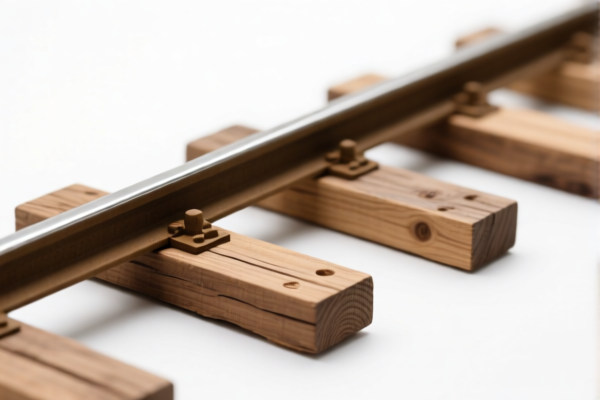
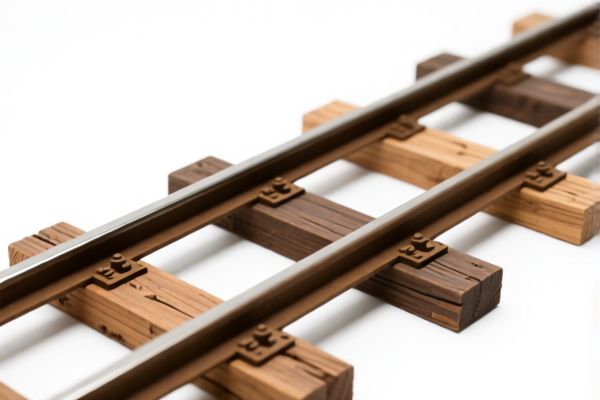
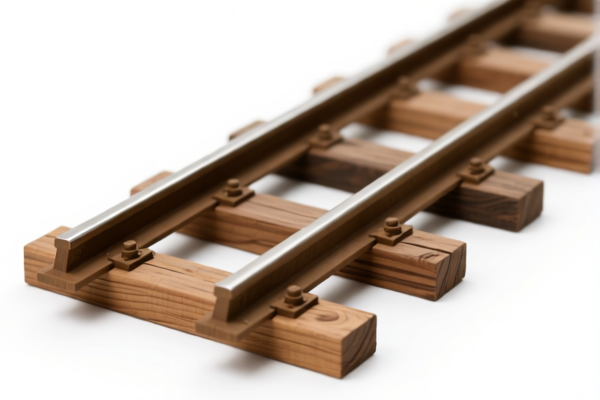
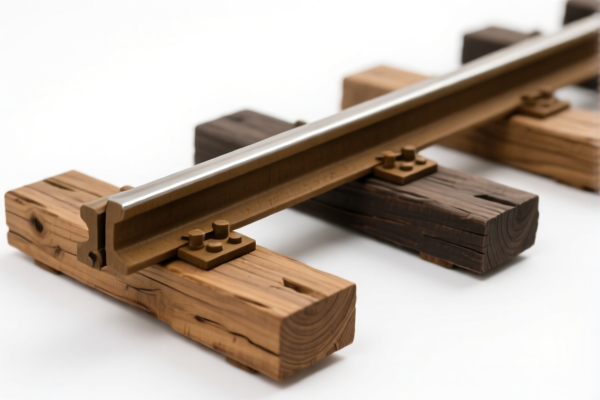
AI Analysis
🚂 Coniferous Wood Tramway Sleepers (Railroad Ties)
🌲 HS Code Reference & Customs Clearance Guide | 2026 Latest Tariff Analysis | Professional Compliance Strategy
📌 Part 1: Product Definition & Classification: What Are "Coniferous Wood Sleepers"?
Coniferous wood tramway sleepers, commonly known as railroad ties or sleepers, are essential components of railway infrastructure. They serve as the foundational support for rails, distributing loads from the track to the underlying ballast and subgrade. In international trade, these products are primarily classified under Chapter 44 (Wood and articles of wood; wood charcoal).
However, classification is highly sensitive to the level of processing: * Raw/Coarsely Prepared: Unprocessed logs, poles, or piles classified under Chapter 44 (Sections 03/06). * Finished/Engineered: Fully formed ties with specific dimensions and treatments classified under Chapter 44 (Section 18).
⚠️ Key Distinction Point:
- If the wood is raw, unpeeled, or merely cut to length without shaping for specific fit → 4403 / 4406
- If the wood is squared, drilled, and finished as a construction component → 4418
- Crucial Note on Treatment: Most sleepers are chemically treated (creosote/pentachlorophenol). If impregnated with preservatives, they generally fall under 4403 or 4406. If unimpregnated, they may fall under 4406.11 or 4418. The data provided below reflects the specific HS codes listed in the input, covering both impregnated and unimpregnated scenarios.
📦 Part 2: HS Code Classification Matrix (2026 Latest Tariff Concordance)
Based on the provided data, here are the 6 specific HS Code classifications for Coniferous Wood Tramway Sleepers, ranging from raw timber to finished construction products.
| HS Code | Product Description | Applicable Scenario | Processing Level | Impregnation Status |
|---|---|---|---|---|
4403.26.01.15 |
Coniferous timber, in the rough, for railway sleepers | Raw/Coarsely prepared poles/piles | High (Raw logs) | Likely Impregnated |
4406.91.00.00 |
Railway sleepers of coniferous wood, not impregnated | Standard finished ties | High (Finished shape) | ❌ Unimpregnated |
4406.11.00.00 |
Railway sleepers of coniferous wood, impregnated | Treated/Chemically treated ties | High (Finished shape) | ✅ Impregnated |
4403.22.01.12 |
Coniferous timber, poles, piles, for railway sleepers | Rough poles/piles | Medium (Rough shape) | Likely Impregnated |
4418.30.01.00 |
Other joinery/construction wood articles (Sleepers) | Finished construction component | Very High (Engineered) | N/A (Finished Good) |
4418.99.91.95 |
Other builders' carpentry/hjoinery (Pine Wood) | Generic pine wood construction product | Very High (Generic Finish) | N/A (Finished Good) |
🔍 Critical Observation:
- The dataset includes two distinct tariff structures:
1. 35.0% Total Tax: Applies to 4403 and 4406 codes (Raw/Intermediate Timber & Sleepers).
2. 38.2% Total Tax: Applies to 4418 codes (Finished Joinery/Carpentry).
- Why the difference? Finished products (4418) are often viewed as higher-value manufactured goods, attracting the 122-Clause and Section 301 tariffs more strictly, or base rates differ slightly.
💰 Part 3: 2026 Latest Tariff Rate Breakdown (Detailed Tax Clauses)
✅ Applicable Country: United States (US)
✅ Origin: China (CN)
✅ Effective Date: 2025/2026 (Post-Trade War Era)
🎯 Group A: 4403 & 4406 Codes (Raw/Intermediate Timber & Sleepers)
Codes: 4403.26.01.15, 4406.91.00.00, 4406.11.00.00, 4403.22.01.12
| Tax Component | Rate | Legal Basis & Explanation |
|---|---|---|
| Base MFN Duty | 0.0% | These headings (Timber/Sleepers) often have 0% Base Duty under US HTSUS. |
| Section 301 Duty | +25.0% | USTR Section 301: Retaliatory tariff on Chinese goods. Applies to virtually all Chinese wood products. |
| 122-Claused Duty | +10.0% | Customs Note 122: Specific additional duty on certain Chinese imports, often applied to raw materials or semi-finished goods. |
| TOTAL EFFECTIVE RATE | 35.0% | 0% + 25% + 10% |
📌 Interpretation:
- The 25% is the standard "Trade War" tariff.
- The 10% is an additional layer on top, making the total 35%.
- No Base Duty means the tax burden is entirely driven by the punitive tariffs.
🎯 Group B: 4418 Codes (Finished Joinery & Construction Articles)
Codes: 4418.99.91.95, 4418.30.01.00
| Tax Component | Rate | Legal Basis & Explanation |
|---|---|---|
| Base MFN Duty | 3.2% | Finished woodworking products (joinery) typically have a small base duty. |
| Section 301 Duty | +25.0% | USTR Section 301: Applies to finished goods as well. |
| 122-Claused Duty | +10.0% | Customs Note 122: Applied to these construction-related wood items. |
| TOTAL EFFECTIVE RATE | 38.2% | 3.2% + 25% + 10% |
📌 Interpretation:
- The 3.2% Base Duty pushes the total rate higher to 38.2%.
- These codes classify sleepers as "Finished Carpentry" rather than "Timber," which triggers the base duty but keeps the punitive tariffs identical.
🛠️ Part 4: Customs Clearance Practical Advice (Risk Mitigation)
✅ 1. Documentation Checklist (Mandatory)
| Document | Required? | Purpose |
|---|---|---|
| ✅ Product Specification Sheet | YES | Must detail: Species (Pine/Conifer), Dimensions, Treatment Type (Impregnated/Unimpregnated), Finish Level. |
| ✅ ISPM 15 Phytosanitary Certificate | YES | Critical. All wood packaging and solid wood goods must be fumigated or heat-treated to prevent pest introduction. Lack of this = Rejection/Quarantine. |
| ✅ Chemical Safety Data Sheet (SDS) | YES | Required if Impregnated (4406.11, 4403). Prove preservative compliance (EPA/OSHA standards). |
| ✅ Commercial Invoice | YES | Must explicitly state "Railway Sleepers" or "Tramway Ties." Avoid vague terms like "Wood Planks." |
| ✅ Packing List | YES | Clearly list weight, volume, and number of units. |
| ✅ Certificate of Origin | YES | Proves origin is China (triggers the 35-38.2% tax). If re-shipped from Vietnam/Malaysia, ensure no "transshipment fraud" flags. |
✅ 2. Strategic Classification Advice (How to Save Money?)
🔥 The "Processing Level" Trap
The difference between 35.0% and 38.2% is small (3.2%), but the risk profile differs.
Strategy A: Classify as
4406(Sleepers)
- Pros: Lower base duty (0%).
- Cons: Highly scrutinized by CBP for "Sleepers" definition. If they look like finished ties, they may force
4418.- Best For: Standard, mass-produced ties.
Strategy B: Classify as
4418(Joinery)
- Pros: Clear definition as "Construction Article." Less ambiguity on "what is a sleeper?"
- Cons: Higher total tax (38.2% vs 35.0%).
- Best For: Custom-sized, drilled, or specially treated ties where "raw timber" arguments fail.
Strategy C: Avoid
4403(Timber in the Rough)
- Risk: If you ship raw logs and claim
4403, but they are clearly cut to sleeper length, CBP may penalize you for misclassification. Only use4403for unpeeled poles/piles.
✅ 3. Special Case Handling
| Scenario | Recommendation |
|---|---|
Impregnated Sleepers (4406.11.00.00) |
Must provide SDS and proof of EPA-approved preservatives. Customs may inspect for hazardous material violations. |
Unimpregnated Sleepers (4406.91.00.00) |
Easier clearance. Focus on ISPM 15 compliance. No chemical hazards. |
Raw Poles/Piles (4403.26/22) |
Ensure wood is unpeeled. If bark is removed or wood is squared, it may be reclassified to 4418 or 4407. |
| Mixed Container | If mixing sleepers with other wood products, declare separately. Do not bundle 4418 and 4406 under one line item. |
🌍 Part 5: Global Market Comparison (2026 Outlook)
| Market | Likely HS Code | Approx. Duty (China Origin) | Key Requirement |
|---|---|---|---|
| 🇺🇸 USA | 4406.11.00.00 / 4418.30.01.00 |
35.0% - 38.2% | ISPM 15, EPA SDS, 301 Tariff Payment |
| 🇨🇳 China | 4406.11.00.00 |
~5-8% | Phytosanitary Certificate |
| 🇪🇺 EU | 4406.91.00.00 |
~0-5% (FSC Certified) | FSC/PEFC Certification is often mandatory for public projects. |
| 🇨🇦 Canada | 4406.11.00.00 |
0% (CUSMA/USMCA if Canadian origin) | Strict ISPM 15 enforcement. |
📌 Conclusion for USA Importers:
The 35-38% duty burden is non-negotiable for Chinese-origin sleepers.
Recommendation:
1. Pre-clearance Ruling: Apply for a Binding Ruling with CBP to fix the HS Code (4406 vs 4418) before shipping.
2. Cost Absorption: Factor the 35-38% into your landed cost.
3. Supply Chain Diversification: Consider sourcing from Vietnam, Laos, or Russia (if sanctions allow) to potentially avoid Section 301 tariffs, but beware of transshipment rules.
📌 Part 6: Common Mistakes & Pitfalls (Blood & Tears Lessons)
❌ Mistake 1: Shipping Impregnated sleepers without an SDS.
👉 Consequence: Cargo held at port for hazardous material investigation. Fines up to $10,000 per violation.
❌ Mistake 2: Claiming "Wood Planks" instead of "Railway Sleepers" on the Invoice.
👉 Consequence: CBP may reclassify to a different, more scrutinized code or impose penalties for false declaration.
❌ Mistake 3: Ignoring ISPM 15 Marking.
👉 Consequence: Immediate rejection of the shipment. Wood must have the official stamp. No stamp = Destroyed or Re-exported at importer's cost.
❌ Mistake 4: Underestimating the 122-Clause.
👉 Consequence: Many brokers miss the 10% additional duty. If you only budget for 25% (Section 301), you will be underpaid by 10%, leading to post-audit assessments.
✅ Correct Declaration Example:
"Railway Sleepers, Coniferous Wood (Pine), Heat-Treated & Impregnated with Preservative, ISPM 15 Compliant, HTS 4406.11.00.00"
🎯 Part 7: Final Recommendation
🎯 Remember the Golden Rule:
🔹 "Sleepers are Wood, but Wood is not just Sleepers."
🔹 "35% for Timber/Raw, 38.2% for Finished."
🔹 "ISPM 15 is Non-Negotiable."
🔹 "122-Clause is an Extra 10%—Don't Forget It."
📌 Action Plan for Importers:
1. Verify Treatment: Is it impregnated or not? (Determines 4406 vs 4403).
2. Verify Finish: Is it raw pole or shaped tie? (Determines 4406 vs 4418).
3. Calculate Landed Cost: Add 35-38% duty + Marine Insurance + Inland Freight.
4. Apply for Ruling: Submit a pre-import ruling request to CBP for certainty.
🚀 Clear the Air, Clear the Goods!
💼 Precision in Classification Saves Hundreds of Thousands.
Customer Reviews
About HS Code Classification
The Harmonized System (HS) is an internationally standardized nomenclature developed by the World Customs Organization (WCO) to classify traded products. Over 200 countries use the HS system as the basis for customs tariffs, trade statistics, and import/export regulations.
Each HS code follows a hierarchical structure:
- Chapter (2 digits) — Broad category of goods (e.g., Chapter 84: Machinery and Mechanical Appliances)
- Heading (4 digits) — More specific grouping within the chapter
- Subheading (6 digits) — Internationally standardized breakdown, used by all WCO member countries
- National subdivisions (8-10 digits) — Country-specific extensions for further classification, such as US HTSUS 10-digit codes
Correct HS code classification is essential for smooth customs clearance, accurate duty payment, and compliance with trade regulations. Misclassification can lead to customs delays, overpayment of duties, or penalties.
When importing from CN to US, the applicable tariff rates may include:
- Most-Favored-Nation (MFN) rate — The standard duty rate applied to WTO members
- General rate — Applied to countries without trade agreements
- Trade remedy duties — Additional tariffs such as Section 301 (anti-dumping), Section 232 (national security), or countervailing duties
The information provided on this page is for reference purposes only. For official classification, please consult with your local customs authority or a licensed customs broker.