Coniferous Wood with Minimum Cross Section of 15 cm
CN → US| HS Code | Tariff Rate | Origin | Destination | Doc |
|---|---|---|---|---|
| 4403210125 | 35.0% | CN | US | Official Doc |
| 4403210130 | 35.0% | CN | US | Official Doc |
| 4401110000 | 35.0% | CN | US | Official Doc |
Product Images
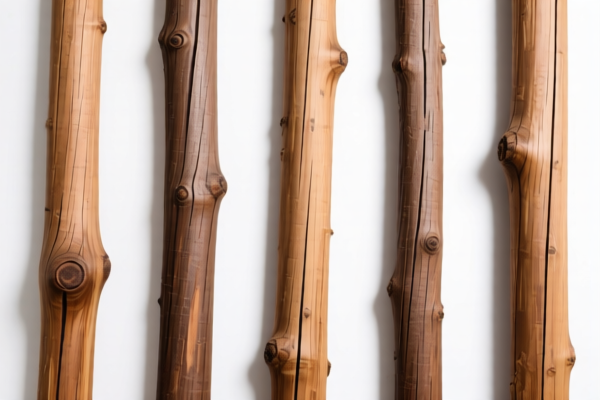

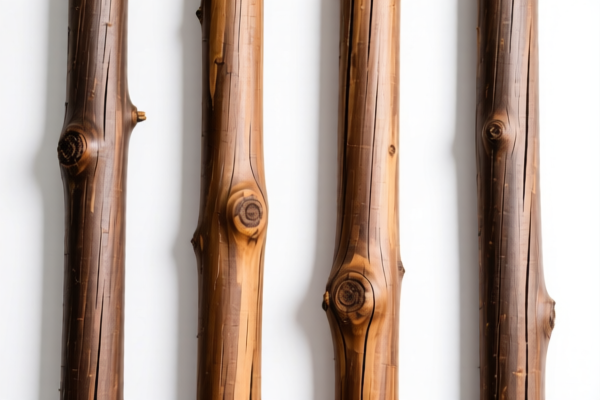
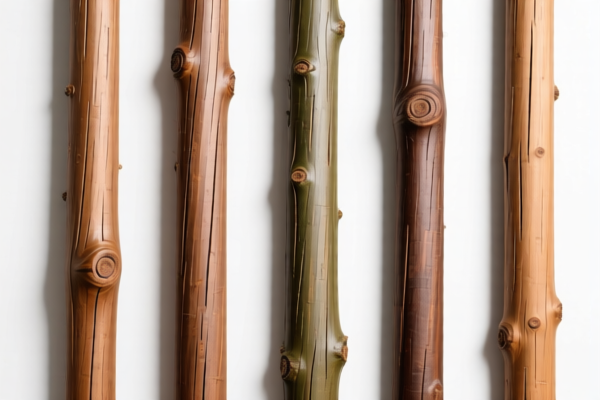
AI Analysis
🌲 Coniferous Wood: The "Pine Log" Classification & High-Tariff Reality (USA Market)
🌐 HS Code Reference & Customs Clearance Guide | 2026 Latest Tariff Analysis | Critical Compliance Strategy
📌 I. Product Definition: What Exactly Is "Coniferous Wood"?
In international trade, Coniferous Wood (specifically Pine Logs) is a critical raw material for construction, furniture, and pulp industries. However, under current US trade regulations, it is subject to extremely high punitive tariffs.
The data specifies two primary classifications based on usage and dimensions: 1. Standard Pine Logs: Minimum cross-section of 15cm or more. 2. Fuel Wood: Pine logs specifically intended for burning as fuel.
⚠️ Critical Distinction:
- If the wood has a minimum cross-section ≥ 15cm and is intended for construction/manufacturing → It falls under 4403.21.
- If the wood is smaller or specifically declared as fuel/combustion material → It falls under 4401.11.
- Regardless of the HS Code, all these pine logs from China face a cumulative tax rate of 35% due to Section 301 and Section 122 measures.
📦 II. HS Code Classification Details (2026 Latest Tariff Authority)
Based on the provided data, here is the precise breakdown for Coniferous Wood (Pine) with a minimum cross-section of 15cm:
| HS Code | Product Description | Application Scenario | Tax Rate Structure |
|---|---|---|---|
4403.21.01.25 |
Pine Logs, min. cross-section ≥ 15cm | Construction timber, structural beams, large-scale furniture | 35.0% |
4403.21.01.30 |
Pine Logs, min. cross-section ≥ 15cm | Construction timber, structural beams, large-scale furniture | 35.0% |
4401.11.00.00 |
Pine Logs (Coniferous Wood) as Fuel | Biomass energy, heating fuel, industrial combustion | 35.0% |
🔍 Key Insight:
-4403.21refers to Coniferous wood, treated or not, specifically Pine (Pinus spp.).
-4401.11refers to Wood in the rough or roughly squared, whether or not stripped of bark or sapwood, or roughly squared, as fuel.
- Both categories incur the exact same total tax rate in this dataset, but the documentation requirements for customs declaration will differ slightly.
💰 III. 2026 Latest Tariff Rate Breakdown (Including Surcharges & Policy Add-ons)
✅ Applicable Country: United States (US)
✅ Country of Origin: China (CN) (Implied by "Section 122" and "Additional Tariff")
✅ Effective Date: Current (2025-2026 Period)
🎯 1. 4403.21.01.25 & 4403.21.01.30 — Pine Logs (Construction/Industrial Use)
| Item | Content |
|---|---|
| Base Duty Rate | 0.0% (Most-favored-nation / MFN rate is zero for logs) |
| Section 301 Additional Duty | +25.0% (USITC Footnote related to Chinese imports) |
| Section 122 Duty | +10.0% (Trade Expansion Act Section 122 - for national security/economic interest) |
| Total Tax Rate | 35.0% |
| Tax Calculation | CIF Value × 35% |
| De Minimis Exemption | ❌ NOT APPLICABLE (Deny De Minimis) |
| Legal Authority Path | Section 122: 19 U.S.C. 2122 → Section 301: 19 U.S.C. 1628 → USITC:4403.21.01.xx |
📌 Explanation:
- Although the base MFN tariff for pine logs is 0%, the 25% Section 301 tariff is a long-standing trade war measure.
- The 10% Section 122 tariff is a significant additional layer, often applied to strategic raw materials like timber to protect domestic forestry industries.
- Total 35% is a heavy burden, eroding profit margins significantly.
🎯 2. 4401.11.00.00 — Pine Logs as Fuel
| Item | Content |
|---|---|
| Base Duty Rate | 0.0% |
| Section 301 Additional Duty | +25.0% |
| Section 122 Duty | +10.0% |
| Total Tax Rate | 35.0% |
| Tax Calculation | CIF Value × 35% |
| De Minimis Exemption | ❌ NOT APPLICABLE (Deny De Minimis) |
| Legal Authority Path | Section 122: 19 U.S.C. 2122 → Section 301: 19 U.S.C. 1628 → USITC:4401.11.00.00 |
📌 Note:
- Even though "fuel wood" is often considered less strategic, the 122 Section has been applied broadly to ensure no circumvention of timber import restrictions.
- Labeling as "fuel" does not reduce the tariff rate in this specific dataset.
🛠️ IV. Customs Clearance Practical Advice (Real-World Pitfall Guide)
✅ 1. Documentation Checklist (Non-Negotiable)
| Document | Required? | Explanation |
|---|---|---|
| ✅ Commercial Invoice | ✔️ | Must clearly state: "Pine Logs (Pinus spp.), Min. Cross-Section 15cm" or "Pine Wood for Fuel". |
| ✅ Packing List | ✔️ | Detail volume (CBM), weight, and number of logs. |
| ✅ Phytosanitary Certificate | ✔️ | Mandatory for all wood imports. Issued by origin country's plant protection agency. |
| ✅ Fumigation Certificate | ✔️ | Proof of heat treatment or methyl bromide fumigation (ISPM 15 standard). |
| ✅ Bill of Lading | ✔️ | Must match invoice details precisely. |
| ✅ Import Entry Summary | ✔️ | Correctly declare HS Code (4403.21.01.25 or 4401.11.00.00). |
✅ 2. Declaration Tips (Critical Keywords)
🔥 “Declare True, Declare Accurate, Avoid Misclassification!”
| Scenario | Correct Declaration | Wrong Declaration | Consequence |
|---|---|---|---|
| Logs ≥15cm for construction | 4403.21.01.25/30 |
Declared as 4401 (Fuel) |
Penalty + Back Taxes (Misdeclaration) |
| Logs declared as Fuel | 4401.11.00.00 |
Declared as 4403 (Lumber) |
Risk of Audit if logs are small/split |
| Mixed Sizes | Split into correct HS Codes | Single HS Code for all | Rejection/Seizure |
| Cross-Section <15cm | Likely 4401 (Fuel/Rough Wood) |
4403 (Sawn Timber) |
HS Code Error → Delay |
📌 Important:
- Ensure the cross-section is accurately measured. Logs <15cm may not qualify for4403.21in some interpretations, shifting to4401.
- If importing as fuel, explicitly state "For Combustion/Energy Use" to justify4401.11.
✅ 3. Special Cases & Mitigation
| Situation | Strategy |
|---|---|
| OEM Custom Sizes | Provide technical drawings proving minimum cross-section ≥15cm to support 4403 classification. |
| Wood Waste/Sawdust | Do not classify as logs. Use 4401 or 4402 (Charcoal) as appropriate. |
| Transshipment via Mexico/Vietnam | Risky. US CBP actively investigates "circumvention" of Section 301/122. If origin is China, tariffs still apply. |
| Dry vs. Green Wood | Both 4403 codes apply to both. Moisture content does not change HS Code, but affects weight/volume calculation for duty. |
🌍 V. Global Market Comparison (2026 Latest)
| Country/Region | Recommended HS Code | Tariff Rate (China Origin) | Certification | Notes |
|---|---|---|---|---|
| 🇺🇸 USA | 4403.21.01.25/30 or 4401.11.00.00 |
35% | Phytosanitary + ISPM 15 | Highest barrier due to Sec 122 & 301 |
| 🇨🇳 China | 4403.21 |
0-5% (Import) | None | Major exporter, low import barrier |
| 🇪🇺 EU | 4403.21 |
0% (If EUTR compliant) | EUTR + FSC/PEFC | No Section 301/122 |
| 🇯🇵 Japan | 4403.21 |
0% | Phytosanitary | No punitive tariffs |
| 🇬🇧 UK | 4403.21 |
0% | Phytosanitary | Post-Brexit, generally low duties |
📌 Conclusion:
- The US market is uniquely hostile to Chinese coniferous wood imports due to Section 122 (10%) and Section 301 (25%).
- Competitors in EU/Asia face 0-5% tariffs, giving US importers a 30%+ cost disadvantage.
📌 VI. Common Mistakes & Pitfalls (Lessons Learned)
❌ Mistake 1: Declaring logs as "Lumber" or "Planks"
👉 Result: If cross-section <15cm or not squared, HS Code changes → Delays + Penalties.
❌ Mistake 2: Ignoring Phytosanitary Certificates
👉 Result: Immediate Rejection/Quarantine by USDA APHIS. Wood is high-risk for pests.
❌ Mistake 3: Underestimating the 35% Total Tax
👉 Result: Profit margin collapse. Many traders lose money on pine log imports to the US.
❌ Mistake 4: Mislabeling "Fuel Wood" to Avoid 4403
👉 Result: Same 35% rate! Plus, risk of being flagged for fraud if logs are large/solid.
✅ Correct Approach:
"Pine Logs, Pinus spp., Min. Cross-Section 15cm, Heat Treated (ISPM 15), for Construction Use. HS Code: 4403.21.01.25. Total Duty: 35%."
🎯 VII. Conclusion: Professional Declaration Saves Costs!
🎯 Key Takeaways:
🔹 "Logs ≥15cm = 4403.21 | Logs as Fuel = 4401.11"
🔹 "Total Tax is 35%: 0% Base + 25% Sec 301 + 10% Sec 122"
🔹 "No De Minimis! No Tax Breaks! Prepare for High Costs!"
📌 Pro Tip:
- If you are a US importer, re-evaluate your supply chain. Consider sourcing pine logs from North America (Canada/US) or Europe to avoid the 35% tariff.
- If you must import from China, ensure perfect documentation (Phytosanitary + ISPM 15) to avoid port detention fees, which can be astronomical.
📣 Immediate Action:
📞 Consult a licensed customs broker
📄 Prepare Phytosanitary & Fumigation Certificates
🧮 Calculate landed cost with 35% tariff included
✨ Accurate Classification is the Key to Survival in the US Timber Market!
💼 Don't Let 35% Tax Eat Your Profits!
Customer Reviews
About HS Code Classification
The Harmonized System (HS) is an internationally standardized nomenclature developed by the World Customs Organization (WCO) to classify traded products. Over 200 countries use the HS system as the basis for customs tariffs, trade statistics, and import/export regulations.
Each HS code follows a hierarchical structure:
- Chapter (2 digits) — Broad category of goods (e.g., Chapter 84: Machinery and Mechanical Appliances)
- Heading (4 digits) — More specific grouping within the chapter
- Subheading (6 digits) — Internationally standardized breakdown, used by all WCO member countries
- National subdivisions (8-10 digits) — Country-specific extensions for further classification, such as US HTSUS 10-digit codes
Correct HS code classification is essential for smooth customs clearance, accurate duty payment, and compliance with trade regulations. Misclassification can lead to customs delays, overpayment of duties, or penalties.
When importing from CN to US, the applicable tariff rates may include:
- Most-Favored-Nation (MFN) rate — The standard duty rate applied to WTO members
- General rate — Applied to countries without trade agreements
- Trade remedy duties — Additional tariffs such as Section 301 (anti-dumping), Section 232 (national security), or countervailing duties
The information provided on this page is for reference purposes only. For official classification, please consult with your local customs authority or a licensed customs broker.