Coniferous wood for industrial use (in the rough)
CN → US| HS Code | Tariff Rate | Origin | Destination | Doc |
|---|---|---|---|---|
| 4409109040 | 35.0% | CN | US | Official Doc |
| 4407110052 | 35.0% | CN | US | Official Doc |
| 4403260164 | 35.0% | CN | US | Official Doc |
| 4403250164 | 35.0% | CN | US | Official Doc |
| 4409109020 | 35.0% | CN | US | Official Doc |
Product Images
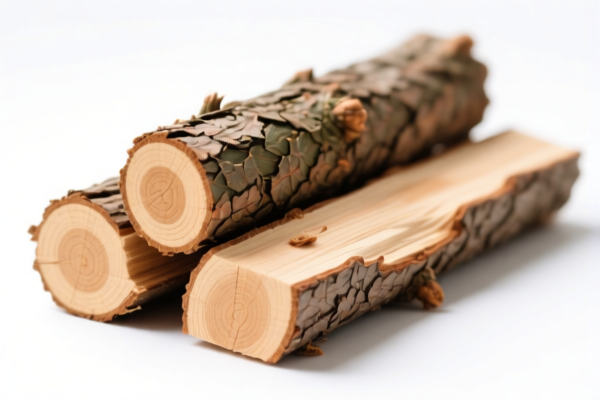
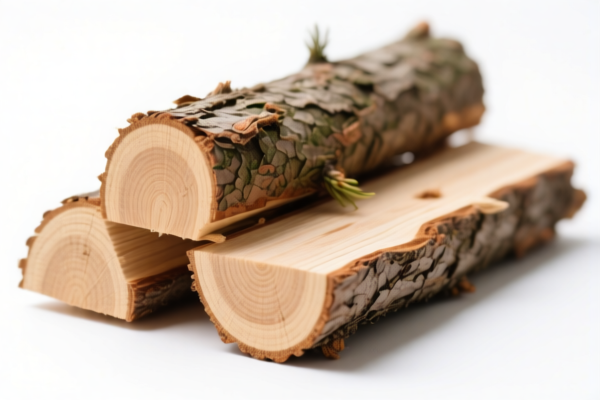
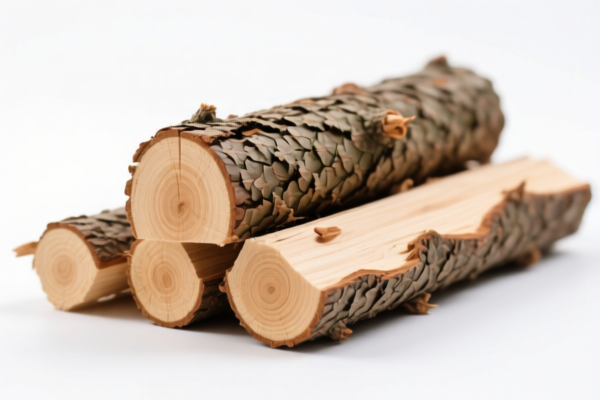
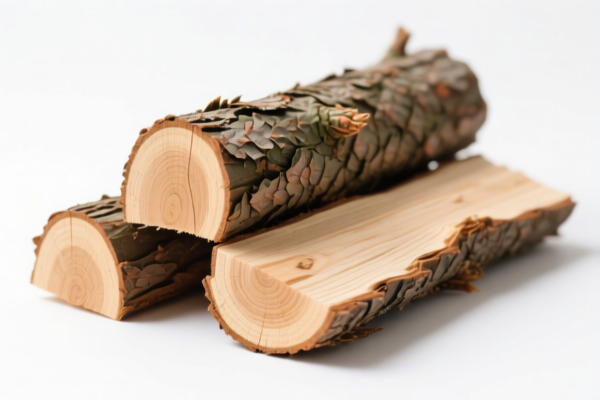
AI Analysis
🌲 Coniferous Wood for Industrial Use (in the Rough)
🌐 HS Code Reference & Customs Clearance Guide | 2026 Latest Tariff Breakdown | Strategic Clearance Strategy
📌 I. Product Definition & Classification: What Does "In the Rough" Mean?
Coniferous wood (softwood), when classified for industrial use in a "rough" state, refers to timber that has undergone minimal processing. The term "in the rough" (or "roughly squared") is a critical legal and technical definition in international trade. It signifies that the wood has been:
- Sawn or simply broken into logs/bolts.
- Planed or smoothed only on one or two sides (if any), but not dressed on all four sides.
- Not shaped into furniture parts, railway sleepers, or turned objects.
⚠️ Key Distinction:
- If the wood is smoothly planed on all four sides and dimensioned for immediate use (e.g., furniture boards, molding), it falls under HS 4409.
- If the wood is sawed but remains rough, retaining its natural bark or saw marks, and is intended for further industrial processing (like plywood, pulp, or construction framing), it falls under HS 4403 or 4407.
📦 II. HS Code Classification Details (2026 Latest Tariff Authority Match)
Based on the provided data, the following HS Codes are applicable for Coniferous Wood (Rough State). All codes listed below carry a 35% Total Tax Rate.
| HS Code | Product Description (Summary from Data) | Classification Logic | Tax Status |
|---|---|---|---|
| 4409.10.90.40 | Coniferous wood, rough state, for furniture manufacturing, consistent with unoverly processed wood characteristics. | Edge-provided wood (Planed/sanded) but still considered "rough" in specific contexts for furniture raw material. Note: This is an "other" sub-category. | ✅ 35% Total |
| 4407.11.00.52 | Coniferous wood, rough state, fully compliant with key limitations in classification explanations. | Wood Sawn/Chipped Lengthwise. This is the standard code for sawn softwood that is not further worked beyond sawing/chipping. | ✅ 35% Total |
| 4403.26.01.64 | Coniferous wood logs, rough/log-like, consistent with coniferous log category characteristics. | Wood Prepared for Felling/Log (Treated, painted, etc., or simply logs). If the wood is in log form (not sawn into planks), this is the correct classification. | ✅ 35% Total |
| 4403.25.01.64 | Coniferous timber, rough/processed state, consistent with classification features for coniferous wood logs and timber. | Wood Prepared for Felling/Log (Broadly). Similar to 4403.26, this covers rough timber/logs before significant sawing. | ✅ 35% Total |
| 4409.10.90.20 | Coniferous trees, rough/raw, inferred as "other" category, no material conflict. | Edge-provided wood (Other). Another "other" sub-category for edge-provided softwood that doesn't fit specific moldings. | ✅ 35% Total |
🔍 Critical Insight:
- The distinction between 4403/4407 (Logs/Sawn Wood) and 4409 (Edge-Provided/Molded) depends on the degree of planing.
- 4409 codes imply some planing or edge-working, even if described as "rough" in the summary.
- 4407 and 4403 codes imply sawing or log state with minimal to no planing.
💰 III. 2026 Latest Tariff Rate Breakdown (Including Surcharges & Policy Add-ons)
✅ Applicable Country: United States (US)
✅ Origin: China (CN)
✅ Effective Date: November 10, 2025 (and subsequent imports)
🎯 1. General Tax Structure for All Listed HS Codes
| Item | Content |
|---|---|
| Base Tariff Rate | 0.0% (Ad Valorem) |
| Section 301 / USITC Surcharge | +25.0% (From USITC Footnote 9903.88.01 or related Section 301 provisions) |
| IEEPA Surcharge | +10.0% (122 Clause Tariff, targeting Chinese products under IEEPA) |
| Total Tax Rate | 35.0% |
| Tax Calculation | CIF Value × 35% |
| De Minimis Exemption | ❌ Not Applicable (High tariff rates usually exclude de minimis benefits for this category) |
| Legal Basis Path | IEEPA:9903.01.25 → IEEPA:9903.01.24 → USITC:440X.XX.XX.XX → FOOTNOTE:9903.88.01 |
📌 Explanation:
- "Base Tariff 0%": Coniferous wood typically has a low base MFN rate.
- "USITC Surcharge 25%": This is the classic Section 301 tariff on Chinese goods, including timber products.
- "IEEPA Surcharge 10%": This reflects the additional 122 Clause tariff (or similar IEEPA-based levy) specifically applied to Chinese-origin goods.
- Total 35%: This is a significant cost factor. You must account for this in your landed cost calculation.
🛠️ IV. Customs Clearance Practical Advice (Real-World Pitfall Avoidance)
✅ 1. Required Documentation Checklist (All Mandatory)
| Document | Must Provide | Explanation |
|---|---|---|
| ✅ Commercial Invoice | ✔️ | Clearly state "Coniferous Wood, Rough State, for [Industrial Use]". |
| ✅ Packing List | ✔️ | Detail dimensions, weight, and quantity per package. |
| ✅ Phytosanitary Certificate | ✔️ | CRITICAL: Wood products are strictly regulated for pests. Must be issued by the country of origin. |
| ✅ Fumigation Certificate | ✔️ | Proof of treatment (e.g., MB or HT) to meet ISPM 15 standards. |
| ✅ Bill of Lading | ✔️ | Ensure HS Code and description match the invoice exactly. |
| ✅ Product Description | ✔️ | Avoid vague terms like "Wood". Use "Coniferous Wood, Roughly Squared, for Furniture/Craft". |
✅ 2. Declaration Tips (Key Mantra)
🔥 "Rough State Defined, Phytosanitary Certified, HS Code Matches, Tax Paid!"
| Scenario | Correct Declaration | Wrong Practice |
|---|---|---|
| Wood is Sawed but Unplaned | Use 4407.11.00.52 or 4403 codes. | Misdeclare as 4409 → Customs may reclassify and penalize. |
| Wood is Planed on 1-2 Sides | Use 4409.10.90.20 or 4409.10.90.40. | Declare as 4407 → Risk of duty adjustment (if 4409 has different rate, though here both are 35%). |
| Wood is in Log Form | Use 4403.26.01.64 or 4403.25.01.64. | Declare as 4407 → Incorrect classification for logs. |
| No Phytosanitary Cert | DO NOT SHIP. | Risk of seizure, destruction, or return. |
✅ 3. Special Circumstances Handling
| Situation | Handling Advice |
|---|---|
| Mixed Coniferous Species | If the shipment contains multiple types (e.g., Pine, Fir, Spruce), ensure the HS code covers the primary species or use the "Other" category (4403/4407/4409 subcategories for "other coniferous"). |
| Partially Processed | If wood is "rough" but has been debarked, it still falls under 4403/4407. If it is planed, it moves to 4409. Be precise. |
| Industrial Use Claim | Provide a letter from the buyer confirming the wood is for industrial use (e.g., furniture making, construction) to support the classification. |
| Country of Origin | Must be clearly marked as China on the label to avoid tariff evasion accusations. |
🌍 V. Global Main Market Clearance Comparison (2026 Latest)
| Country/Region | Recommended HS Code | Tariff (China Origin) | Certification Requirement | Note |
|---|---|---|---|---|
| 🇺🇸 United States | 4407.11.00.52 / 4409.10.90.x0 |
35% (0% Base + 25% Sec 301 + 10% IEEPA) | Phytosanitary + Fumigation | High Tariff. Must pay 35%. |
| 🇨🇳 China | 4407.11.00.52 |
~5-10% (Varies) | Phytosanitary | Import duty applies, but lower than US. |
| 🇪🇺 European Union | 4407.11.00 |
~0-4% (FTAs may apply) | Phytosanitary + ISPM 15 | No Section 301 tariff. |
| 🇯🇵 Japan | 4407.11.00 |
0-5% | Phytosanitary | Preferential rates possible. |
📌 Conclusion:
- The US is the most expensive market for Chinese coniferous wood due to the 35% combined tariff.
- Phytosanitary compliance is non-negotiable. Any pest risk leads to immediate rejection.
- Classification accuracy is vital. Misclassifying planed wood as rough sawn can lead to audits.
📌 VI. Common Mistakes & Pitfall Guide (Blood & Tears Lessons)
❌ Mistake 1: Declaring "Rough Wood" when it is actually Planed/Dressed.
👉 Consequence: Customs may reclassify to a different code, leading to penalties and delayed clearance.
❌ Mistake 2: Missing Phytosanitary Certificate.
👉 Consequence: Seizure of goods by USDA APHIS. Destruction or return at your expense.
❌ Mistake 3: Using generic terms like "Timber" or "Lumber" without specifying "Coniferous" and "Rough State".
👉 Consequence: Customs request for additional information, causing demurrage charges.
❌ Mistake 4: Ignoring the 10% IEEPA Surcharge.
👉 Consequence: Underpaying duties by 10% → Back taxes + Interest + Penalties.
✅ Correct Practice:
"Coniferous Wood, Rough State, Sawn, for Industrial Use, Fumigated, HS Code: 4407.11.00.52, Origin: China"
🎯 VII. Conclusion: Precise Classification, Cost Control, Smooth Clearance!
🎯 Remember the Mantra:
🔹 "Rough State? 4407/4403. Planed? 4409. Phytosanitary? Mandatory. US Tariff? 35%."
🔹 "HS Code Determines Duty, Tax Rate Determines Profit, Documentation Determines Clearance."
📌 Pro Tip:
If your wood is originating from Vietnam, Malaysia, or Thailand, you may qualify for lower tariffs (or exemptions from Section 301/IEEPA) due to FTAs or origin rules.
Recommend applying for a Pre-Ruling (ISF/ACE) with US Customs (CBP) to confirm the exact HS Code and tariff liability before shipment.
📣 Immediate Action:
📞 Contact a licensed Customs Broker + Provide Product Photos + Verify Phytosanitary Status
🚀 Ensure your coniferous wood clears US customs smoothly, legally, and profitably!
✨ Professional Customs Clearance Starts with Accurate Classification!
💼 Every Penny of Duty Saved is Pure Profit!
Customer Reviews
About HS Code Classification
The Harmonized System (HS) is an internationally standardized nomenclature developed by the World Customs Organization (WCO) to classify traded products. Over 200 countries use the HS system as the basis for customs tariffs, trade statistics, and import/export regulations.
Each HS code follows a hierarchical structure:
- Chapter (2 digits) — Broad category of goods (e.g., Chapter 84: Machinery and Mechanical Appliances)
- Heading (4 digits) — More specific grouping within the chapter
- Subheading (6 digits) — Internationally standardized breakdown, used by all WCO member countries
- National subdivisions (8-10 digits) — Country-specific extensions for further classification, such as US HTSUS 10-digit codes
Correct HS code classification is essential for smooth customs clearance, accurate duty payment, and compliance with trade regulations. Misclassification can lead to customs delays, overpayment of duties, or penalties.
When importing from CN to US, the applicable tariff rates may include:
- Most-Favored-Nation (MFN) rate — The standard duty rate applied to WTO members
- General rate — Applied to countries without trade agreements
- Trade remedy duties — Additional tariffs such as Section 301 (anti-dumping), Section 232 (national security), or countervailing duties
The information provided on this page is for reference purposes only. For official classification, please consult with your local customs authority or a licensed customs broker.