Coniferous wood for model making
CN → US| HS Code | Tariff Rate | Origin | Destination | Doc |
|---|---|---|---|---|
| 4421991500 | 35.0% | CN | US | Official Doc |
| 4421999880 | 38.3% | CN | US | Official Doc |
| 4404100090 | 35.0% | CN | US | Official Doc |
| 4407120019 | 35.0% | CN | US | Official Doc |
| 4404100080 | 35.0% | CN | US | Official Doc |
Product Images
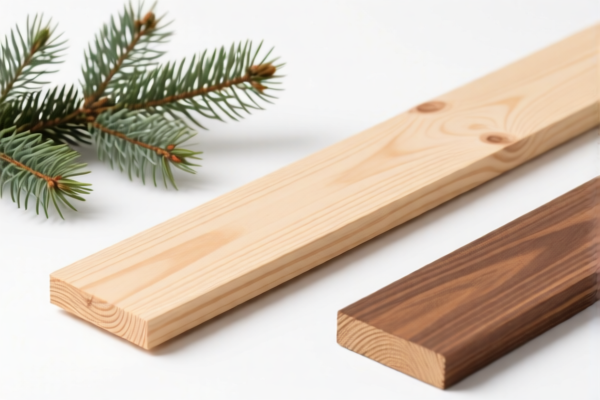
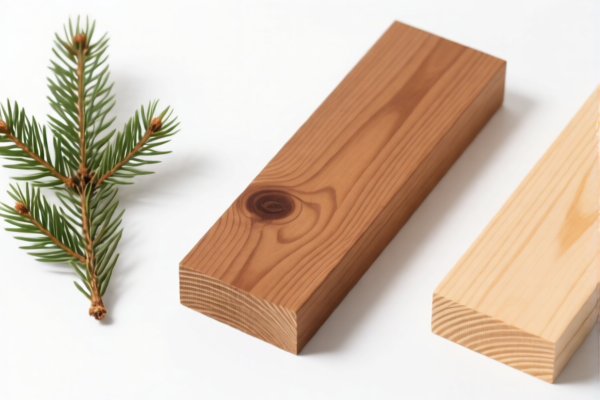
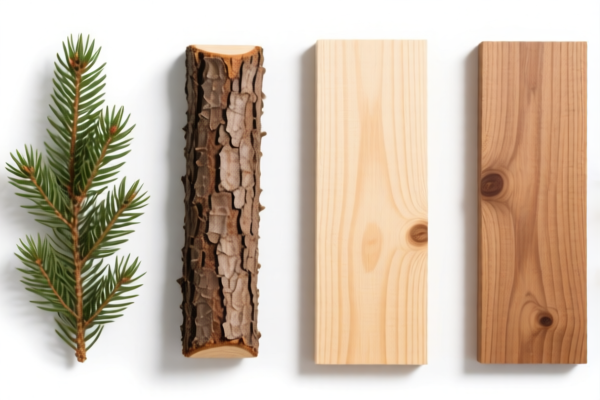
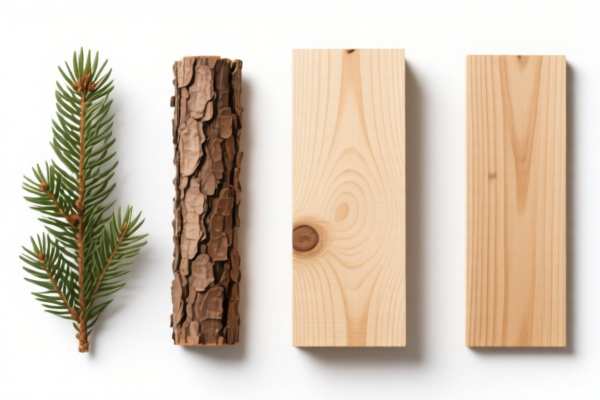
AI Analysis
🌲 Coniferous Wood for Model Making (Spruce/Pine)
🌐 HS Code Reference & Customs Clearance Guide | 2024-2026 Tariff Analysis | Professional Compliance Strategy
📌 I. Product Definition & Classification: What Exactly Is "Model Wood"?
Coniferous wood (primarily Spruce/Pine) used for model making is a specialized category in international trade. It is not merely "lumber" but often implies a specific degree of processing, finish, or utility intended for hobbyist, industrial, or craft applications.
In customs classification, the distinction lies in the level of processing: 1. Raw/Unprocessed Wood: Logs, sawn timber, or simple poles (Chapters 4401-4407). 2. Semi-Processed/Specific Shapes: Veneers, thin strips, or turned shapes (Chapter 4408-4409). 3. Finished/Assembled Wood Products: Ready-to-use model kits, carved pieces, or specific wooden artifacts (Chapter 4421).
⚠️ Key Distinction Point:
- If the wood is raw, unworked, or simply sawn → It falls under 4407 (Sawn wood) or 4404 (Wood charcoal/squares).
- If the wood is finished, carved, or constitutes a specific model product → It falls under 4421 (Other wood articles).
- Misclassification Risk: Declaring a finished model piece as "raw lumber" (4407) may lead to audits if the processing level exceeds basic sawing.
📦 II. HS Code Classification Details (Source Data Analysis)
Based on the provided data for "Model Spruce Wood", here are the applicable HS Codes and their corresponding tax structures. Note that all entries include specific US tariff adjustments (Section 301 + Section 122).
| HS Code | Product Description (Summary) | Classification Logic |
|---|---|---|
| 4421.99.15.00 | Model spruce wood; Material: Wood; Form: Wooden articles for models | Finished/Semi-Finished: Classified as a specific "wooden article for models." This is the most direct classification for finished model components. |
| 4421.99.98.80 | Model spruce wood; Material: Wooden; Category: Other wooden articles | General Wooden Article: Falls under "Other" wooden products. Slightly broader than 4421.99.15.00 but still within the "wooden articles" chapter, implying some processing. |
| 4404.10.00.90 | Model spruce wood; Material: Coniferous; Form: Other wooden products | Wood Charcoal/Squares/Peeling: Classified under Chapter 4404 (Wood charcoal; wooden strips/poles). Implies wood processed into strips, poles, or similar forms for models. |
| 4404.10.00.80 | Model spruce wood; Material: Coniferous; Form: Poles, Posts, Stakes | Structural Wood: Classified as poles/posts/stakes. Used if the model wood comes in rod/stake forms (e.g., balsa sticks, dowels). |
| 4407.12.00.19 | Model spruce wood; Material: Spruce; Form: Wood not further worked than sawn/ peeled | Sawn Timber: Raw or simply sawn spruce wood. Applies if the wood is essentially lumber used for DIY models without complex shaping. |
| 4407.12.00.20 | Model spruce wood; Material: Spruce; Form: Wood longitudinally sawn/ sliced | Planed/Smoothed Timber: Spruce wood that has been sawn longitudinally, potentially smoothed but not shaped into a final model part. |
🔍 Critical Note:
- All HS Codes above are subject to identical total tax rates in the source data due to the specific origin (likely China to US) and trade policies.
- The distinction is primarily for customs declaration accuracy. Using4407for a finished model kit may be flagged as undervaluation or misdeclaration if the "model" nature is evident.
💰 III. 2024-2026 Detailed Tariff Rate Analysis
✅ Applicable Country: United States (US)
✅ Origin: China (CN) (Inferred from "122 Section" and typical trade context)
✅ Effective Time: Current rates as per source data
🎯 1. Common Tax Structure for All Listed HS Codes
Despite different HS codes, the total tax burden is remarkably consistent across all categories for this specific commodity profile.
| Tax Component | Rate | Explanation |
|---|---|---|
| Base Duty (MFN) | 0.0% - 3.3% | Varies by HS code. - 4407/4404 series: Usually 0% (free entry for many woods).- 4421 series: May have a small base duty (e.g., 3.3% for 4421.99.98.80). |
| Section 301 Tariff | +25.0% | Add-on Tariff: Imposed on Chinese goods under Section 301 of the Trade Act. Applies to almost all wood products from China. |
| Section 122 Tariff | +10.0% | Special Add-on Tariff: Likely refers to specific administrative duties or recent policy updates (e.g., de minimis changes or specific sectoral tariffs). |
| TOTAL EFFECTIVE RATE | 35.0% - 38.3% | 35.0%: For HS codes with 0% base (4421.99.15.00, 4404, 4407). 38.3%: For HS code with 3.3% base (4421.99.98.80). |
📌 Detailed Breakdown:
- For4421.99.15.00,4404.10.00.90,4407.12.00.19,4404.10.00.80:
0.0% (Base) + 25.0% (Sec 301) + 10.0% (Sec 122) = 35.0%
- For4421.99.98.80,4407.12.00.20:
3.3% (Base) + 25.0% (Sec 301) + 10.0% (Sec 122) = 38.3%
(Note: Source data lists 4407.12.00.20 at 35.0%, implying its base is 0%. Please verify base rate with latest HTSUS.)⚠️ De Minimis Exemption?:
- ❌ NO. Section 301 and Section 122 tariffs cannot be avoided via the $800 de minimis rule (Section 321) if the goods are from China and subject to these specific tariff codes.
- Result: Full tax liability applies to every shipment.
🛠️ IV. Customs Clearance Practical Advice
✅ 1. Required Documentation Checklist
| Document | Requirement | Reason |
|---|---|---|
| Commercial Invoice | ✔️ Must specify "Spruce Wood for Model Making" | Clear description avoids ambiguity between "raw lumber" and "model kit." |
| Packing List | ✔️ List contents by weight/volume | Wood is dense; accurate weight is crucial for freight and duty calculation. |
| Species Certificate | ✔️ Confirm "Spruce" (Picea sp.) | Customs may require species confirmation to apply correct HTS code (e.g., distinguishing from Pine/4407.12.00 vs other conifers). |
| Phytosanitary Certificate | ✔️ Mandatory | Critical: Raw wood products almost always require a phytosanitary certificate to prove freedom from pests (IPPC stamp). Without it, goods will be seized or destroyed. |
| Fumigation Certificate | ✔️ If not heat-treated | Alternative to phytosanitary cert, proving wood was treated to ISPM 15 standards. |
✅ 2. Declaration Strategy (Crucial for Avoiding Delays)
🔥 "Declare the Form, Not Just the Material!"
| Scenario | Recommended HS Code | Risk if Misdeclared |
|---|---|---|
| Finished Model Kits (Pre-cut, labeled) | 4421.99.15.00 |
Declaring as 4407 (Lumber) may lead to questions on "why is raw wood sold as models?" |
| Raw Sticks/Dowels (Unlabeled, basic shape) | 4404.10.00.80 or 4407.12.00.20 |
Declaring as 4421 (Articles) might be seen as over-processing. |
| Veneer Sheets | 4408 (Not in data, but common) |
If misdeclared as 4407, duty differences may apply. |
| Unprocessed Logs/Planks | 4407.12.00.19 |
High Risk: If these are intended for models but look like construction lumber, customs may inspect for pests. |
✅ 3. Specific Clearance Tips
-
Phytosanitary is Non-Negotiable:
Even if the wood is "model wood," if it is natural wood, USDA APHIS will require proof of treatment. Ensure your supplier provides an IPPC stamp on the packaging. -
Avoid "Generic" Descriptions:
Do NOT use just "Wood." Use:
"Processed Spruce Wood Strips for Model Aircraft, Heat Treated, HTS 4404.10.00.90"
This clarity speeds up CBP review. -
Tariff Mitigation Strategy:
- Since the rate is ~35-38%, consider:
- Supply Chain Diversification: Sourcing wood from Vietnam, Malaysia, or Russia (if applicable) may lower Section 301 impact (but check for other tariffs).
- Processing in Third Country: If wood is rough-sawn in Country A, processed into models in Country B, and shipped from B, it might gain new origin rules (complex, requires legal advice).
- FTZ (Foreign Trade Zone): If importing large volumes, using an FTZ can defer duties until the goods are sold or distributed.
🌍 V. Global Market Comparison (2024-2026)
| Region | HS Code Trend | Approx. Duty (China Origin) | Key Requirement |
|---|---|---|---|
| 🇺🇸 USA | 4421 or 4407 |
35.0% - 38.3% | Phytosanitary Cert, Section 301/122 Tariffs |
| 🇪🇺 EU | 4421 or 4407 |
6.0% - 9.0% | EUTR (EU Timber Regulation), FSC/PEFC Certification |
| 🇨🇳 China | 4421 or 4407 |
5.0% - 15.0% | Import License (for some wood species), CCC (if electronics included) |
| 🇯🇵 Japan | 4421 or 4407 |
6.0% - 10.0% | Phytosanitary Cert, ISPM 15 Compliance |
📌 Insight:
- The US market is the most expensive for Chinese wood products due to Section 301 and Section 122 tariffs.
- EU and Japan focus more on sustainability (FSC) and pest control than high tariffs.
- If you are not shipping to the US, consider routing through a non-China origin to save costs.
📌 VI. Common Pitfalls & How to Avoid Them
❌ Pitfall 1: No Phytosanitary Certificate
👉 Consequence: Goods held at port, fumigation ordered ($$$), or returned/destructed.
✅ Fix: Require supplier to provide IPPC stamp and phytosanitary cert before shipping.
❌ Pitfall 2: Misdeclaring "Model Wood" as "Construction Lumber"
👉 Consequence: If caught, customs may claim misdeclaration of value/nature, leading to penalties.
✅ Fix: Be honest. If it's small-scale wood for models, declare as 4404 or 4421, not 4407 (which implies bulk construction timber).
❌ Pitfall 3: Ignoring Section 122 Tariffs
👉 Consequence: Unexpected 10% charge at customs, hurting profit margins.
✅ Fix: Include 10% in your landed cost calculation. It is mandatory for Chinese-origin goods under current policy.
❌ Pitfall 4: Confusing "Spruce" with "Pine"
👉 Consequence: Wrong HTS code. Spruce is 4407.12.00, Pine is 4407.13.00. Different rates/subcategories.
✅ Fix: Verify botanical name with supplier.
🎯 VII. Conclusion: Smart Sourcing, Clear Customs
🎯 Key Takeaway:
"Wood is Wood, but Tax is Tax!"
- For China-origin Spruce Model Wood, expect 35-38% total duty to the US.
- Phytosanitary Certificates are your most critical document.
- Choose the most accurate HS Code based on the form of the wood (strips vs. planks vs. finished models) to avoid customs delays.
📌 Pro Tip:
If you are importing large volumes, consult a customs broker about HTS Code 4421.99.15.00 vs. 4407.12.00.19.
- 4421 implies "articles" (processed).
- 4407 implies "sawn wood."
- If the wood is pre-cut for models, 4421 is more accurate and may have better clearance prospects than 4407, which is often flagged for pest inspections.
📣 Immediate Action:
📞 Confirm Phytosanitary Status with your supplier.
📦 Verify Wood Species (Spruce vs. Pine).
💰 Calculate Landed Cost including 35-38% duty.
🚀 Ensure Smooth Customs Clearance with precise documentation!
✨ Accurate Classification, Lower Risk, Faster Clearance!
💼 Your Wood Products Deserve Professional Handling!
Customer Reviews
About HS Code Classification
The Harmonized System (HS) is an internationally standardized nomenclature developed by the World Customs Organization (WCO) to classify traded products. Over 200 countries use the HS system as the basis for customs tariffs, trade statistics, and import/export regulations.
Each HS code follows a hierarchical structure:
- Chapter (2 digits) — Broad category of goods (e.g., Chapter 84: Machinery and Mechanical Appliances)
- Heading (4 digits) — More specific grouping within the chapter
- Subheading (6 digits) — Internationally standardized breakdown, used by all WCO member countries
- National subdivisions (8-10 digits) — Country-specific extensions for further classification, such as US HTSUS 10-digit codes
Correct HS code classification is essential for smooth customs clearance, accurate duty payment, and compliance with trade regulations. Misclassification can lead to customs delays, overpayment of duties, or penalties.
When importing from CN to US, the applicable tariff rates may include:
- Most-Favored-Nation (MFN) rate — The standard duty rate applied to WTO members
- General rate — Applied to countries without trade agreements
- Trade remedy duties — Additional tariffs such as Section 301 (anti-dumping), Section 232 (national security), or countervailing duties
The information provided on this page is for reference purposes only. For official classification, please consult with your local customs authority or a licensed customs broker.