Connect Wood Tips
CN → US| HS Code | Tariff Rate | Origin | Destination | Doc |
|---|---|---|---|---|
| 4418999195 | 38.2% | CN | US | Official Doc |
| 4418919110 | 38.2% | CN | US | Official Doc |
| 4418919140 | 38.2% | CN | US | Official Doc |
| 4421912000 | 39.9% | CN | US | Official Doc |
| 4421992000 | 39.9% | CN | US | Official Doc |
Product Images
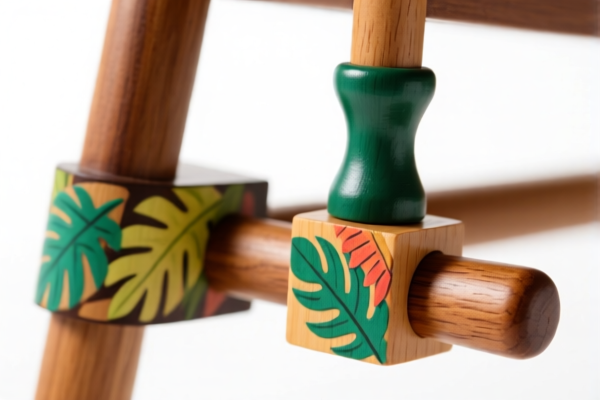
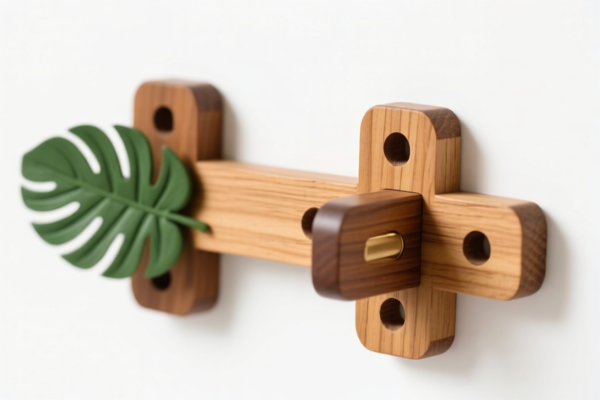
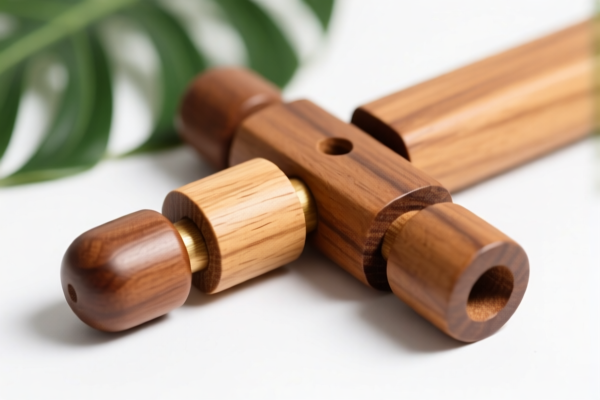
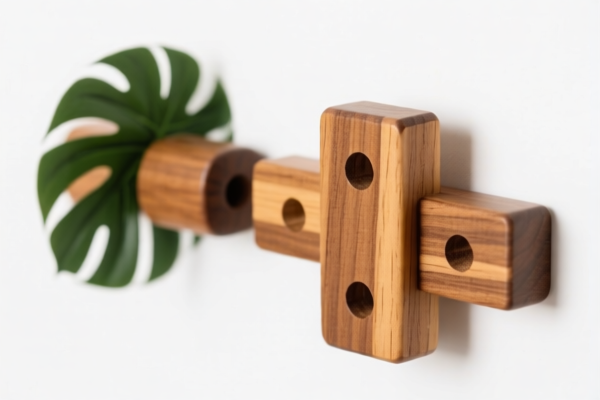
AI Analysis
🌲 Wood Tips (Connectors) for Furniture & Construction
🌐 HS Code Reference & Customs Clearance Guide | 2026 Latest Tariff Analysis | Professional Clearance Strategy
📌 I. Product Definition & Classification: What Exactly Are "Wood Tips"?
Wood Tips, also known as Wood Dowels, Tenons, or Wooden Connectors, are small, cylindrical or pin-like wooden components used primarily to join pieces of wood together in furniture making, cabinet construction, and light carpentry. Unlike nails or screws, they rely on glue and friction for structural integrity, offering a clean, invisible joint.
⚠️ Key Classification Distinction:
- If the item is a structural building component (e.g., large joinery parts for houses/buildings) → It falls under Chapter 44 (Buildings/Carpentry).
- If the item is a small connector/dowel (e.g., for furniture assembly) → It may fall under Chapter 44 (Other Wood Articles) or sometimes be misclassified.
- Critical Note: For US Customs purposes, small wooden connectors are often scrutinized under 4421 (Other wood articles) vs. 4418 (Carpentry). The distinction lies in whether they are considered "parts of buildings" or "other wood articles."
📦 II. HS Code Classification Details (2026 Latest Tariff Authority Comparison)
Based on the provided data, there are two main classification paths depending on the perceived usage and form of the wood tips:
Path A: Classified as "Carpentry/Building Wood Products" (Chapter 4418)
| HS Code | Product Description | Applicable Scenario | Tax Rate |
|---|---|---|---|
4418.99.91.95 |
Other architectural woodware and constructions for buildings; Other (incl. Wood Tips if deemed structural) | Large-scale construction, structural joinery | 38.2% |
4418.91.91.10 |
Other carpentry and joinery; Other (incl. Wood Tips as small building fittings) | Small building fittings, decorative wood parts | 38.2% |
4418.91.91.40 |
Other manufacturing structural wood members; Other (incl. Wood Tips as structural components) | Structural connectors, tenons for framing | 38.2% |
🔍 Reasoning for Path A:
- If the wood tips are large, hardwood, or explicitly sold as building materials (e.g., for decking, framing, or structural furniture), Customs may view them as "Carpentry" or "Structural Wood Members."
- The summary states: "Material matches; form/usage fits 'other manufactured structural wood members' definition for parts/components."
Path B: Classified as "Other Wood Articles/Connectors" (Chapter 4421)
| HS Code | Product Description | Applicable Scenario | Tax Rate |
|---|---|---|---|
4421.91.20.00 |
Other wood articles; Wooden dowels, pegs, spindles, etc. | Small wooden dowels, pins, furniture connectors | 39.9% |
4421.99.20.00 |
Other wood articles; Other (incl. Wood Tips as non-structural connectors) | General-purpose wooden connectors, pins | 39.9% |
🔍 Reasoning for Path B:
- If the wood tips are small, uniform, and intended for furniture assembly or general woodworking (not heavy structural building), they are better classified under 4421 as "Other Wood Articles."
- The summary states: "Material matches; form 'connector' belongs to the category of wooden dowels/parts, no material conflict."
💰 III. 2026 Latest Tariff Rate Breakdown (Including Surtaxes & Policy Add-ons)
✅ Applicable Country: United States (US)
✅ Origin: China (CN)
✅ Effective Date: From November 10, 2025 (and subsequent imports)
🎯 1. Path A: 4418.99.91.95 / 4418.91.91.10 / 4418.91.91.40
(Architectural/Structural Wood Products)
| Item | Details |
|---|---|
| Base Tariff | 3.2% (ad valorem) |
| Section 301 Surtax | +25.0% (USITC Footnote 9903.88.01) |
| Section 122 Surtax | +10.0% (Trade Act of 1962, Section 122) |
| Total Tariff Rate | 38.2% |
| Tax Calculation | CIF Value × 38.2% |
| De Minimis Eligibility | ❌ Not Eligible (deny_de_minimis) |
| Legal Basis Path | Section 301: 9903.88.01 → Section 122: 19 U.S.C. 2142 → USITC: 4418.xxxx |
📌 Explanation:
- The 3.2% is the standard MFN rate for wood products.
- The 25% is the Section 301 tariff on Chinese wood products.
- The 10% is a specific Section 122 tariff applied to certain Chinese imports.
- Total: 38.2%. This is a high tariff bracket.
🎯 2. Path B: 4421.91.20.00 / 4421.99.20.00
(Other Wood Articles/Dowels)
| Item | Details |
|---|---|
| Base Tariff | 4.9% (ad valorem) |
| Section 301 Surtax | +25.0% (USITC Footnote 9903.88.01) |
| Section 122 Surtax | +10.0% (Trade Act of 1962, Section 122) |
| Total Tariff Rate | 39.9% |
| Tax Calculation | CIF Value × 39.9% |
| De Minimis Eligibility | ❌ Not Eligible (deny_de_minimis) |
| Legal Basis Path | Section 301: 9903.88.01 → Section 122: 19 U.S.C. 2142 → USITC: 4421.xxxx |
📌 Explanation:
- The base rate for "other wood articles" is slightly higher at 4.9%.
- The 25% and 10% surtaxes remain the same.
- Total: 39.9%. This is the highest tariff bracket in the dataset.⚠️ Critical Warning:
- Both paths incur Section 301 (25%) and Section 122 (10%) surtaxes.
- Total taxes range from 38.2% to 39.9%, depending on the precise classification.
- No de minimis exemption applies. Even small shipments are subject to these taxes.
🛠️ IV. Customs Clearance Practical Advice (Avoiding Pitfalls)
✅ 1. Documentation Checklist (All Required)
| Document | Mandatory? | Notes |
|---|---|---|
| ✅ Product Specification Sheet | ✔️ | Must specify material (wood type), dimensions, and use (furniture vs. building). |
| ✅ Product Photos | ✔️ | Clear images of the tips/dowels, showing scale and texture. |
| ✅ Commercial Invoice | ✔️ | Describe as "Wooden Connectors" or "Wood Dowels," NOT "Nails" or "Hardware." |
| ✅ Packing List | ✔️ | Detail quantity, weight, and packaging method. |
| ✅ Country of Origin Certificate | ✔️ | Essential for Section 301 and 122 determination. |
| ✅ Declaration of Use | ✔️ | Specify if for "furniture assembly" or "building construction" to support HS Code choice. |
✅ 2. Declaration Tips (Key Mnemonics)
🔥 "Wooden Tips, Not Nails; Furniture vs. Building, Choose Carefully!"
| Scenario | Recommended HS Code | Risk if Misclassified |
|---|---|---|
| Small wooden dowels for furniture | 4421.91.20.00 (39.9%) |
If declared as "nails," may face different regulations; if declared as "building parts," still 38.2%. |
| Structural tenons for house framing | 4418.91.91.40 (38.2%) |
If declared as "furniture parts," may still be 39.9% if Customs disagrees. |
| Decorative wood pins | 4421.99.20.00 (39.9%) |
High tax; ensure material is truly wood, not plastic-coated. |
✅ 3. Special Cases
| Situation | Handling Advice |
|---|---|
| OEM Custom Sizes | Provide design drawings to justify "other manufactured structural wood members" (4418) if larger. |
| Mixed Materials | If tips are wood with metal pins, classify as mixed goods; may change HS Code entirely. |
| Treated Wood | If wood is chemically treated, declare treatment type; may require additional certificates. |
| Small Sample Shipments | Even samples are subject to 38.2-39.9% tax; no de minimis. |
🌍 V. Global Market Comparison (2026 Latest)
| Country/Region | Recommended HS Code | Tariff (CN Origin) | Certification | Notes |
|---|---|---|---|---|
| 🇺🇸 USA | 4418.99.91.95 or 4421.91.20.00 |
38.2% - 39.9% | FSC (optional) | High tariffs due to Section 301 & 122. |
| 🇨🇳 China | 4418.99.91.95 or 4421.91.20.00 |
3.2% - 4.9% | No special certs | Low tariffs, no surtaxes. |
| 🇪🇺 EU | 4418.99.91.95 or 4421.91.20.00 |
0% - 2.4% | FSC, CE | No surtaxes; preferential rates may apply. |
| 🇬🇧 UK | 4418.99.91.95 or 4421.91.20.00 |
0% - 2.4% | UKCA | Post-Brexit rules; generally low tariffs. |
| 🇦🇺 Australia | 4418.99.91.95 or 4421.91.20.00 |
0% - 5% | None | Low tariffs; no surtaxes. |
📌 Conclusion:
- The US is the only major market imposing high additional tariffs (38-40%) on Chinese wood tips.
- China, EU, UK, and Australia have significantly lower or zero tariffs.
- Consider supply chain diversification if targeting the US market heavily.
📌 VI. Common Mistakes & Pitfalls (Lessons Learned)
❌ Mistake 1: Declaring wooden tips as "nails" or "hardware"
👉 Consequence: Incorrect HS Code; potential penalties for misdeclaration.
✅ Correct: Declare as "Wooden Connectors" or "Wood Dowels."
❌ Mistake 2: Ignoring Section 122 Tariff (10%)
👉 Consequence: Underpayment of taxes; fines and back taxes.
✅ Correct: Always include Section 122 in cost calculations for US imports.
❌ Mistake 3: Assuming de minimis exemption for small shipments
👉 Consequence: Shipment seized or taxed upon entry; delays.
✅ Correct: Prepare for 38-40% tax even for small volumes.
❌ Mistake 4: Misidentifying material (e.g., plastic-coated wood)
👉 Consequence: Wrong HS Code; potential rejection.
✅ Correct: Clearly state "Wooden" in description; provide material composition.
🎯 VII. Conclusion: Precision in Classification Saves Money!
🎯 Remember the Mnemonic:
🔹 "Wood Tips, Not Nails; 38-40% Tax, No Way Out."
🔹 "Section 301 + Section 122 = High Cost; Plan Ahead!"
🔹 "Furniture vs. Building, Choose Wisely; 38.2% vs. 39.9%, Small Difference!"
📌 Tips:
- If your wooden tips are originally from Vietnam, Mexico, or Thailand, you may qualify for tariff exemptions.
- Consider applying for an Advance Ruling from US Customs to confirm the HS Code before shipment.
- For high-volume imports, explore duty drawback programs if re-exporting.
📣 Immediate Action:
📞 Contact a professional customs broker + Provide product photos + Apply for HS Code Advance Ruling
🚀 Let your wooden tips clear customs smoothly, efficiently, and cost-effectively!
✨ Professional Clearance Starts with Accurate Classification!
💼 Every cent of your cost deserves precise calculation!
Customer Reviews
About HS Code Classification
The Harmonized System (HS) is an internationally standardized nomenclature developed by the World Customs Organization (WCO) to classify traded products. Over 200 countries use the HS system as the basis for customs tariffs, trade statistics, and import/export regulations.
Each HS code follows a hierarchical structure:
- Chapter (2 digits) — Broad category of goods (e.g., Chapter 84: Machinery and Mechanical Appliances)
- Heading (4 digits) — More specific grouping within the chapter
- Subheading (6 digits) — Internationally standardized breakdown, used by all WCO member countries
- National subdivisions (8-10 digits) — Country-specific extensions for further classification, such as US HTSUS 10-digit codes
Correct HS code classification is essential for smooth customs clearance, accurate duty payment, and compliance with trade regulations. Misclassification can lead to customs delays, overpayment of duties, or penalties.
When importing from CN to US, the applicable tariff rates may include:
- Most-Favored-Nation (MFN) rate — The standard duty rate applied to WTO members
- General rate — Applied to countries without trade agreements
- Trade remedy duties — Additional tariffs such as Section 301 (anti-dumping), Section 232 (national security), or countervailing duties
The information provided on this page is for reference purposes only. For official classification, please consult with your local customs authority or a licensed customs broker.